Robert Colvile

Thatcherism shows where Britain went wrong – and how it can go right

From our UK edition

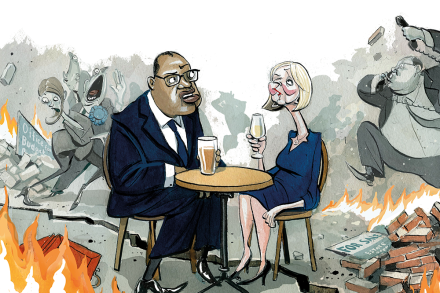
It is a hundred years since Margaret Thatcher was born. Fifty years since she took over the Conservative Party. Thirty-four years since she was forced from office. Today’s voters are Thatcher’s grandchildren – even great-grandchildren. So why do we still care? Thatcher warned that the great temptation in politics was to ‘lose sight of the eternal truths and choose the popular, quick fix’ The last couple of weeks have seen a parade of Thatcher-philia. At Conservative Party Conference there were Thatcher portraits, a Thatcher mosaic, even an exhibition of her dresses. There have been cardboard cutouts, a gala dinner at the Guildhall in her honour, even an AI Thatcher-bot. No wonder William Atkinson of The Spectator thinks it’s long past time for the party to move on.

Katy Balls, Gavin Mortimer, Sean Thomas, Robert Colvile and Melissa Kite

From our UK edition

31 min listen

On this week’s Spectator Out Loud: Katy Balls reflects on the UK general election campaign and wonders how bad things could get for the Tories (1:02); Gavin Mortimer argues that France’s own election is between the ‘somewheres’ and the ‘anywheres’ (7:00); Sean Thomas searches for authentic travel in Colombia (13:16); after reviewing the books Great Britain? by Torsten Bell and Left Behind by Paul Collier, Robert Colvile ponders whether Britain’s problems will ever get solved (20:43); and, Melissa Kite questions if America’s ye olde Ireland really exists (25:44).  Presented by Patrick Gibbons.

Unless the Treasury is tamed, there’s no solution to Britain’s problems

From our UK edition

The Tory era is not (quite) over yet, but already the obituaries are in. In particular, two new books from Torsten Bell and Paul Collier seek to bury not just Rishi Sunak and his cabinet but the whole economic approach that the Conservatives have taken since 2010, or perhaps even 1979. Let’s start with Bell – until very recently head of the Resolution Foundation thinktank, and before that the man who, as Ed Miliband’s policy director, gave us the joy of the EdStone. Great Britain? sets out a comprehensive list of the ways in which we have become a ‘stagnation nation’: low investment, high inequality, insufficient house building, stingy benefits, low-paid labour and so on.

What crisis?

From our UK edition

41 min listen

On this week's podcast: For the cover of the magazine Kate Andrews assesses the politics of panic, and the fallout of last week's so-called fiscal event. She is joined by Robert Colvile, director of the Centre for Policy Studies think tank to discuss where the Conservatives go from here (00:57).Also this week:Does the future belong to Sinn Fein in Northern Ireland?This is the claim that Jenny McCartney makes in this week's Spectator. We speak with journalist Melanie McDonagh and politician Mairia Cahill about what this could mean for Irish reunification (15:58).And finally:Are red kites magnificent or a menace?Paul Sargeanton says in his article for The Spectator that red kites should have never been reintroduced back into the UK.

Have we reached the end of ‘The Great Acceleration’?

From our UK edition

Ah well. It was a nice try. A few years ago I wrote a book called The Great Acceleration, arguing that the world around us is speeding up and that this is on balance a good thing. Enter Danny Dorling with a new book called Slowdown: The End of the Great Acceleration and Why it’s Good for the Planet, the Economy and Our Lives. Cue a mischievous commission from The Spectator’s literary editor, doubtless hoping for a good old-fashioned nerdfight. The problem with this cunning plan is that Dorling, an Oxford geography professor and demographer, has written a very strange book indeed — and one that shows the extent to which the modern left has driven itself into an intellectual cul-de-sac. Let’s start with the part that’s relatively uncontroversial.

Dancing with robots

From our UK edition

Back in 2012, a team at Google built a state-of-the-art artificial intelligence network and fed it ten million randomly selected images from YouTube. The computer churned through them, and announced that it kept finding these strange things with furry faces. It had, in other words, discovered cats. Artificial intelligence has, all of a sudden, become the next big thing again. It is not so much sweeping across our world as seeping into it, with a combination of enormous computing power and the latest ‘deep learning’ techniques promising to give us better medical diagnoses, better devices, better recipes and better lives. Soon, it might even be able to give us new Beatles songs.

Notes on the type

From our UK edition

Back in 1997 the New Yorker published a piece lampooning the proliferation of ‘Notes on the Type’ — those oleaginous mini-essays informing us that ‘this book was set in Backslap Grotesque Italic Semi-Detached, a variant of Bangalore Torpedo Moribund adapted in 1867 from a matrice by the Danish chiseller Espy Sans, a character if ever there was one’. In the years since, the situation has gone from worrying to insufferable. Many non-fiction books now suffer from a severe case of distended colophon — sentence after rococo sentence, in the best M&S chocolate-box language, on the lineage of the type and typographer, on the amusing top notes of blueberry and persimmon that can be detected in the prose.

Bye, George

From our UK edition

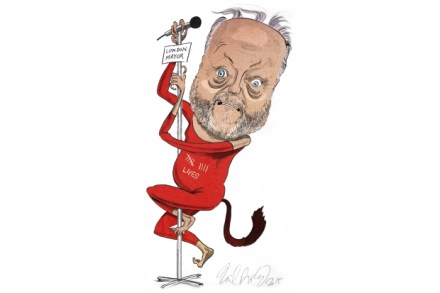
The race to be London Mayor is the biggest personality contest in politics. And one personality looms largest: George Galloway, back from Bradford and seeking his fortune on the capital’s streets. In his public appearances, the Respect party leader has been on his usual bombastic form. But dig a little deeper, and it becomes apparent that his campaign — and his career — is on the shakiest ground. In 2012, Galloway won the Bradford West by-election by 10,000 votes: a staggering coup. But at the general election this year his party was drummed out of town. Not only did Galloway lose, but Respect’s four councillors (who had only recently rejoined after a spat with their leader) have abandoned it again. Its registered headquarters is now a tanning salon.