Francis Beckett

The history of modern Ireland, seen through the lives of its leaders

From our UK edition

My passion for history was ignited by political biography when I was a teenager. You read the life story of a person who – if the writer is any good – captures your attention like the protagonist of a novel; and along the way, almost by chance, you learn about the great events in which the person was a player. My strongest memory of Disraeli, from a 1951 book by Hesketh Pearson, is his maiden speech in the House of Commons in 1837, when, after being heckled and jeered at for his flamboyant dress and delivery, he said: ‘Though I sit down now, the time will come when you will hear me.’ These days I not only read biography but write it.
James Heale, Svitlana Morenets, Philip Hensher, Francis Beckett and Rupert Christiansen

From our UK edition

38 min listen

On this week’s Spectator Out Loud: James Heale analyses the state of the Conservative leadership race (1:09); Svitlana Morenets reports from the site of the Kyiv children’s hospital bombed this week (5:56); Philip Hensher examines the ‘Cool Queer Life’ of Thom Gunn (12:13); Francis Beckett reviews ‘The Assault on the State’ arguing in favour of bureaucracy (21:20); and, Rupert Christiansen reveals why he has fallen out of love with Wagner (27:05).  Presented by Patrick Gibbons.

Why state bureaucracy is crucial to our happiness

From our UK edition

Most days, outside the local courtroom where I live in Finchley Central, a man holds up a placard that says in big black capitals: ALL OUR BRAINS ARE MICROCHIPPED BY THE SECURITY SERVICES. It’s a foolish conspiracy theory, of course, but it’s also a symptom of the fear and loathing of the state which has grown in recent years and which, according to this lucid and persuasive book, threatens to return us to a time when we were governed by the whims of a monarch whose wishes were implemented arbitrarily by his family, friends and flatterers. The problem, say Stephen E. Hanson and Jeffrey S. Kopstein, is not that this presages an end to democracy.

Chris Mullin’s eye for the absurd remains as keen as ever

From our UK edition

Journalists seldom get to the top in politics. They find it hard to trot out the dreary virtue-signalling that political communication often requires. Chris Mullin, I suspect, finds it almost impossible. He was a Bennite, but the Bennites quickly discovered he was unreliable. The Blairites might have welcomed him had they not suspected, rightly, that he would get the line wrong sooner rather than later.  There’s an endearing vanity in the way Mullin reports every kind remark made about his previous published diaries The only journalist to have made the top job in politics is Boris Johnson, and he crashed and burned. My friend Denis MacShane, who has ability and charm, also crashed and burned on his way up.

The visionary genius of Harold Wilson

From our UK edition

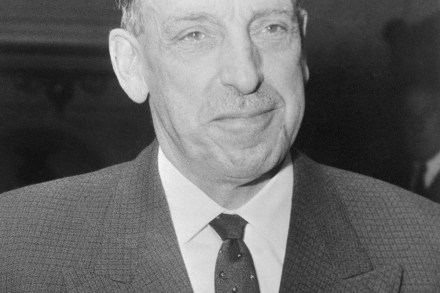
‘Our generation owes an apology to the shades of Harold Wilson,’ the polling guru Peter Kellner once told me. Had Wilson not firmly resisted pressure from President Lyndon Johnson to send troops to Vietnam, Kellner and I were both old enough to have fought there. But in 1968 we loftily despised Wilson for twisting and turning to stay out of Vietnam and keep his party together. ‘What are the two worst things about Harold Wilson?’, we asked. ‘His face,’ we replied smugly. Britain has never quite forgiven Wilson for his cleverness. His reputation suffered a catastrophic decline in the immediate aftermath of his premiership.

Should the Duke of Windsor have been tried for treason?

From our UK edition

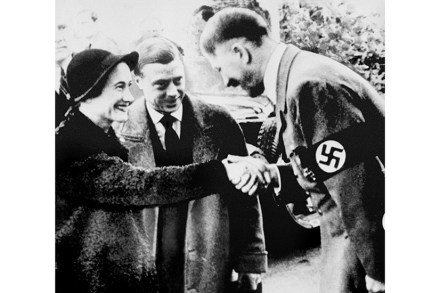
In Traitor King, Andrew Lownie shows how the Duke of Windsor — the former Edward VIII, who abdicated in 1936 — gave aid and comfort to his country’s enemies before and during the second world war. Reading this meticulously researched book, it seems extraordinary that he remained at liberty. A less deferential society would have interned him in 1940 along with the followers of his friend Oswald Mosley, most of whom were far less dangerous. He could even have been tried for treason after the war. To Lownie, the duke was an aberration, a one-off. But in Tea with Hitler, Dean Palmer shows us a family into which he fitted naturally.

Britain can be as prone to fascism as any other nation

From our UK edition

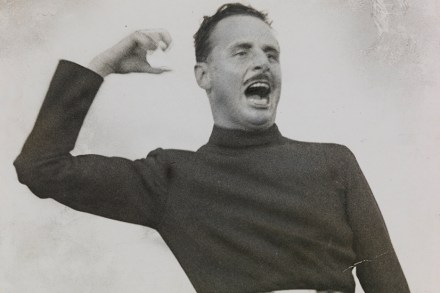
It’s easy to dismiss the fascistic ideologues who populate Graham Macklin’s book as reactionary cranks of no significance. It’s also a mistake. Fascists have edged uncomfortably close to the mainstream of British politics ever since the British Union of Fascists was founded in 1932 by Oswald Mosley, who two years earlier had been a government minister. In 2009, two British National Party candidates were elected to the European Parliament. The seats were lost in 2014 because the BNP votes transferred en masse to Ukip. If you doubt that the spirit of the BNP infused Ukip, you have only to look at what has happened to it since Nigel Farage decamped.