David Honigmann

What does it say about Britain that the Palace of Westminster is crumbling?

From our UK edition

Many political scientists are oddly uninterested in politics. Their fascination is at a level of theory; but the means through which decisions are made in practice, through specific conversations and arguments and accommodations between actual people, strike them as so much gossip – or, worse, journalism. Jan-Werner Müller, a professor of politics at Princeton, best known to general readers for his trenchant, well-timed and comfortingly short What Is Populism?, here wanders like a niche flȃneur through the territory in between the personal and the theoretical: the ways in which people and politicians are variously welcomed, channelled, liberated and constrained by their concrete environments.

The misery of working with Chuck Berry

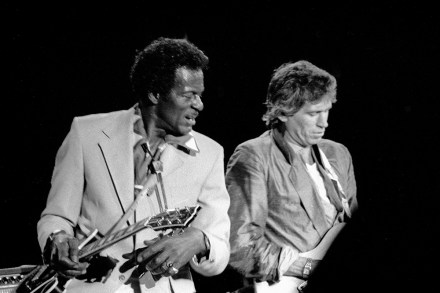
In Ian Leslie’s John & Paul, the creative relationship between the titular Beatles is treated as a platonic love story. Matt Thorne widens the paradigm with seven more pairings, variously rivalrous, amorous, respectful, disrespectful and occasionally frankly tenuous. The 11 American and three British musicians here have careers that collectively cover seven decades of popular music. There are three dynamics at play. First, there are the Thucydides tensions, where a waning power tangles with a rising one. Frank Sinatra invites Elvis Presley to join him on a television show; Keith Richards throws a filmed concert with Chuck Berry. (Richards, for once, is the younger partner.) The older player is not always generous.

An entertaining demolition of futurology

From our UK edition

Half of the British political world thinks we are insufficiently scared about the present; the other half thinks we are insufficiently excited about the future. The latter is a non-partisan movement, or at least a cross-partisan one. From fully-automated luxury communism, through centrist Abundance, to the more right-coded Looking for Growth, all the way to Anglo-futurism (somehow paradoxically simultaneously futurist and reactionary), policy thinkers are rejecting incrementalism and learned helplessness and articulating provocative future visions that could – with a tweaked planning system and Natural England ritually immolated – lie just a couple of parliaments away. All these movements could usefully learn from Could Should Might Don’t. It is less clear that anyone else will.

Max Jeffery, Cosmo Landesman, Henry Blofeld, David Honigmann and Rachel Johnson

From our UK edition

29 min listen

On this week’s Spectator Out Loud: Max Jeffery reports from court as the Spectator and Douglas Murray win the defamation cause brought against them by Mohammed Hijab; Cosmo Landesman defends those who stay silent over political issues; Henry Blofeld celebrates what has been a wonderful year for test cricket; David Honigmann reflects on the powder keg that was 1980s New York, as he reviews Jonathan Mahler’s The Gods of New York; and, following the Oasis reunion, Rachel Johnson reflects on her run ins with the Gallagher brothers.  Produced and presented by Patrick Gibbons.

The powder keg of 1980s New York

From our UK edition

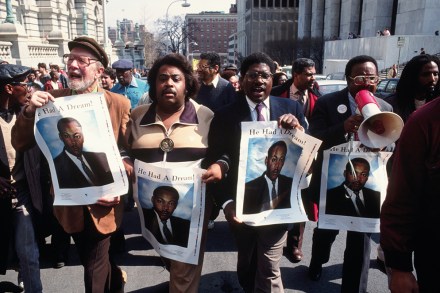
The Bonfire of the Vanities, Tom Wolfe’s romp through the status and racial anxieties of 1980s New York, begins with an unnamed mayor being Mau-Maued by Harlem activists. As he soaks up the abuse, he fantasises about the confrontation spreading: Come down from your swell co-ops, you general partners and merger lawyers! It’s the Third World down there!... Staten Island! Do you Saturday do-it-yourselfers really think you’re snug in your little rug? You don’t think the future knows how to cross a bridge? This fictional world, a collision of riches and poverty and criminal justice and electoral politics, maps neatly on to the period described in Jonathan Mahler’s new book.

‘Genius’ is a dangerously misused word

From our UK edition

For several centuries, the word ‘celebrity’ meant fame. A couple of hundred years ago, it acquired a secondary meaning of a person overendowed with that quality, and this has now largely driven out the previous usage. In parallel, the same journey has been travelled by ‘genius’. Once an essence that attached to works or deeds, it now also refers to people – celebrities of accomplishment, no field too trivial. Helen Lewis teases out the consequences of this shift and makes a modest plea for its reversal.

Bringing modernism to the masses in 20th-century Britain

From our UK edition

The second world war was won in the cafés of central Europe – the intellectual milieu that produced Edward Teller, Leo Szilard and Eugene Wigner, and before them Albert Einstein. But even though America was an alluring destination, many of the 1930s escapees from Nazism ended up in Britain. There were scientists in their number, too, but Owen Hatherley concentrates on the newcomers’ effect on how post-war Britain looked. He examines their role in photography and film; in the design of printed books; in art, especially public art; and in architecture and town planning. Perry Anderson’s 1968 essay ‘Components of the National Character’ was dismissive of the impact of the diaspora.

Who’s still flying the flag for Britpop?

From our UK edition

There’s only one Cincinnatus in the Cotswolds, and it’s not Boris Johnson. Over the Rainbow tells the story of how, once again, Alex James was torn from his life in a very big house in the country to fulfil his national duty to play bass with Blur. The tale comes in the form of a diary, like Brian Eno’s wonderful A Year with Swollen Appendices, except that this is a year with inflated egos. To make sure our sympathies are in the right place, it begins with a preamble at the end of December 2022, during which the author attends a series of parties, each more wearisomely smug than the last. Then he sets up the stakes of the plot.

Some uncomfortable truths about World Music

From our UK edition

Joe Boyd’s masterly history of what some of us still defiantly call World Music – more on which later – takes its title from Paul Simon’s ‘Under African Skies’, but is really less about the roots of rhythm than its routes. A typical chapter will start with a song from a particular geography, then wind the clock back to the country’s history, then forward again to show how that history has contributed to the development of its music, and finally move outwards, following the trade winds as they carry the sounds around the world.

An AI visionary looks forward to the best of all possible worlds

From our UK edition

In 1993 Vernor Vinge popularised the notion of the Singularity – the point at which exponentially accelerating trends in multiple technologies move out of control in an endless positive feedback loop. Vinge was a science fiction writer; Ray Kurzweil is not. In 1993 he had already pioneered optical character recognition and synthesisers that could precisely mimic real instruments. His mission crystallised into making Vinge’s conceit a reality. He is principal researcher and ‘AI visionary’ at Google – and principal proselytiser, too, through any number of portentously titled books. The Age of Spiritual Machines (1999) set out his stall; The Singularity is Near (2005) staked a claim for human-level intelligence in computers by 2029 and a generalised apotheosis in 2045.

Thugs in drape jackets: when the Teddy Boys ruled the roost

From our UK edition

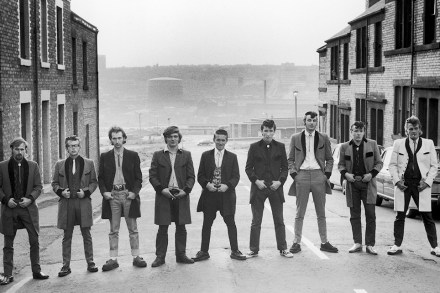
In the wake of wars, youth cults spring up, those too young to have fought behaving in a way to scandalise those who did. The Bright Young People were the younger siblings of those who perished, battalion by battalion, on the Western Front. (Come to that, it was after the end of the Peloponnesian War that Socrates’s corruption of the youth became intolerable to Athens.) So when Max Décharné describes the Teddy Boys as Britain’s first youth counterculture, what he means is that they were Britain’s first working-class youth counterculture. The Notting Hill riots of 1958 were largely blamed on Teddy Boys, possibly incited by Oswald Mosley’s sons  Décharné sketches in the elements that made the Teddy Boys a phenomenon.

Has crypto finally had its day?

From our UK edition

If you run an organisation, there are some reporters you definitely don’t want around: Ronan Farrow asking for comment; Madison Marriage or Dan McCrum with a couple of questions; Michael Wolff hanging out on a sofa taking notes. Michael Lewis is not one of those reporters. If he wants to spend time with you, you are about to be lionised as a decent person who sees just a bit more clearly than the fools who run the system of which you are a part, which will make you wildly rich (unless you’re an academic or a public servant) and famous. When Michael Lewis calls, people answer. Lewis raises enough questions for one to finish the book less sure of Bankman-Fried’s guilt than at the start When Zeke Faux calls, they often don’t.

The villains of Silicon Valley

From our UK edition

Historians joke that some parts of the world – Crete and the Balkans, for instance– produce more history than they can consume locally. The California town of Palo Alto produces more economics than it can consume, and therefore more politics, and therefore more culture. But this comes at a price. Malcolm Harris, a thirtysomething Marxist writer who grew up there, begins his book by citing the alarming rate at which his high-school classmates committed suicide, and argues that Palo Alto is haunted by the historical crimes on which it is built. He then itemises them across two centuries of history, tracing their influence from Stanford University and Silicon Valley out across the world.

The death of popular music in Cambodia

From our UK edition

The musical revolution of the 1960s reverberated widely. In many countries it was given added impetus by decolonisation. Newly independent nations adopted rock and roll, usually infused with local traditions, as a signal of modernity. From Addis Ababa to Dakar to São Paulo, officials and businessmen jived and swung and caroused in nightclubs, serenaded by bands with some measure of official sponsorship, if not directly employed by the government itself. Some of these stories ended unhappily. The Brazilian junta dispatched Tropicália musicians into exile. When the Derg seized power in Ethiopia, Swinging Addis came to a sudden halt. The ligueurs in Benin forced Angélique Kidjo and others to flee the country. But the most horrific tale of all was Cambodia.

James Bond and the Beatles at war for Britain’s soul

From our UK edition

‘Better use your sense,’ advised Bob Dylan: ‘take what you have gathered from coincidence.’ John Higgs is a master of taking what he can gather from coincidence – or, as he would insist, synchronicity. From the filigree of connections and echoes in the KLF (Discordianism through the lens of 1990s pop provocateurs) to the psychogeography of Watling Street to more recent deep dives into William Blake, he confronts the modern Matter of Britain: who wields power, and who resists it? Love and Let Die starts with another perfect coincidence, namely that it was 60 years ago – to be precise, 5 October 1962 – that saw the first Beatles single appear in shops and the first James Bond film appear in cinemas.

Stewart Brand: man of ideas and infuriating contrarian

From our UK edition

In his 2005 book What The Dormouse Said John Markoff traced the roots of the personal computer industry to the counterculture of the 1960s – a tale that owed as much to Jefferson Airplane as Jeffersonian ingenuity. Constantly popping up in that narrative is the adopted Californian Stewart Brand. Markoff wrote of his ‘Zelig-like penchant’ for being present at turning points in the story. Whole Earth, viewed one way, is an extended apology for that epithet. ‘The Zelig reference,’ Markoff says now, ‘is the wrong way to describe him, for there has been a consistent through line that has connected his various campaigns, crusades and inquiries over more than six decades.

The nearest thing to Paul McCartney’s autobiography: his guide to the Beatles’ songbook

From our UK edition

Whatever your favourite theory of creativity, Paul McCartney has a cheery thumbs-up to offer. You think the secret is putting in the hours? ‘We played nearly 300 times in Hamburg between 1960 and 1962.’ Or could it be a wide range of cultural inputs to assimilate and remix? The Arty Beatle hoovered up Shakespeare, Dryden, not just Desmond but Thomas Dekker, Berio and Cage and rock’n’roll and light jazz, and sublimated them all. In one of the great missed opportunities, when it came to arranging ‘Yesterday’, his first thought was Delia Derbyshire. Some people credit childhood trauma: McCartney recalls how his father Jim would weep alone in a neighbouring room after Paul’s mother died. The sexual drive?

For Ravi Shankar, music was a sort of religion

From our UK edition

When musicians from outside the Anglo-American pop mainstream achieve success in the West, there are conflicting reactions. Seun Kuti, the Afrobeat star, once complained to me that most world music celebrities are people who play much the same music as their peers to much the same standard and simply get lucky when a record company stumbles across them. In some cases, musicians from Asia and Africa have to be rocketed into orbit by the boost of an association with a pop giant, even if they then drop away: thus Ladysmith Black Mambazo with Paul Simon, or Buena Vista Social Club with Ry Cooder. Another explanation is offered by the Alchian-Allen theorem, which suggests that goods exported across borders tend to be of higher quality than domestic ones.