
It’s not more than a parlor game, perhaps, to speculate about history’s most crucial inventions. One invention often makes the next possible. Electric light revolutionized human productivity, allowing us to work well beyond sundown. The combustion engine and later the turbine engine collapsed our sense of distance, putting other continents within a day’s travel. We’re still debating what the internet’s done; how social media offers the double-edged sword of instant communication and addressability for good and ill; how it encourages the avatarization of ourselves as online presences. We’re both ourselves online and not quite ourselves, entirely embodied and yet psychically elsewhere.
Pokémon’s release sparked a worldwide craze and moral panic about children and video games
But then again, we’ve always experienced this on some level or another. It is a key condition of “play,” as propounded by the Dutch cultural theorist Johan Huizinga in Homo Ludens (1938). Play is a concept that is, he argues, older than culture. We are engrossed by play. At play, we forget worldly rules, appetites and obligations (work for the most part) beyond the game at hand. For Huizinga, play is many things, but it is in the first place an activity that is separate from “ordinary” life. It occurs in “the arena, the card table, the magic circle, the temple, the stage, the screen, the tennis court, the court of justice etc.” Today, play is most associated with the video-game console, the controller and the screen. In the history of play, the most crucial inventions have come from Nintendo.
Keza MacDonald’s charming and insightful history of Nintendo traces its origins as a manufacturer of playing cards in late-1890s Kyoto to the internationally admired and beloved powerhouse of gaming innovation it would become a century and a quarter later. And while some readers will know this trajectory, many will be surprised to learn of the diversity of business interests Nintendo has explored over the years – “instant rice, taxis and, notoriously but fleetingly, pay-by-the-hour love hotels.” The book is full of such curiosities.

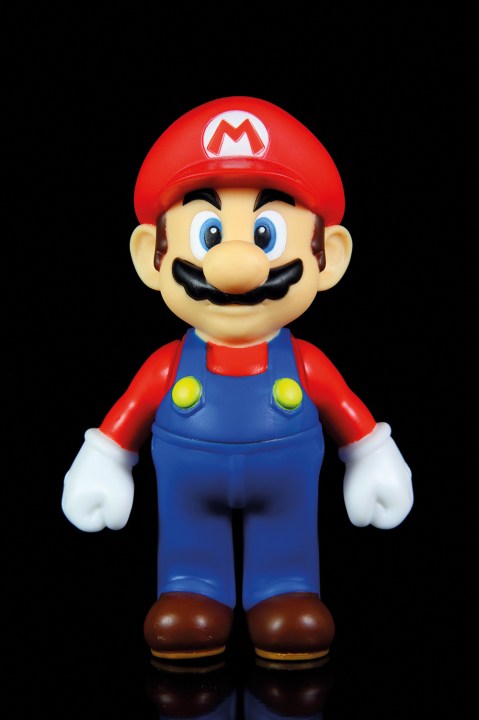
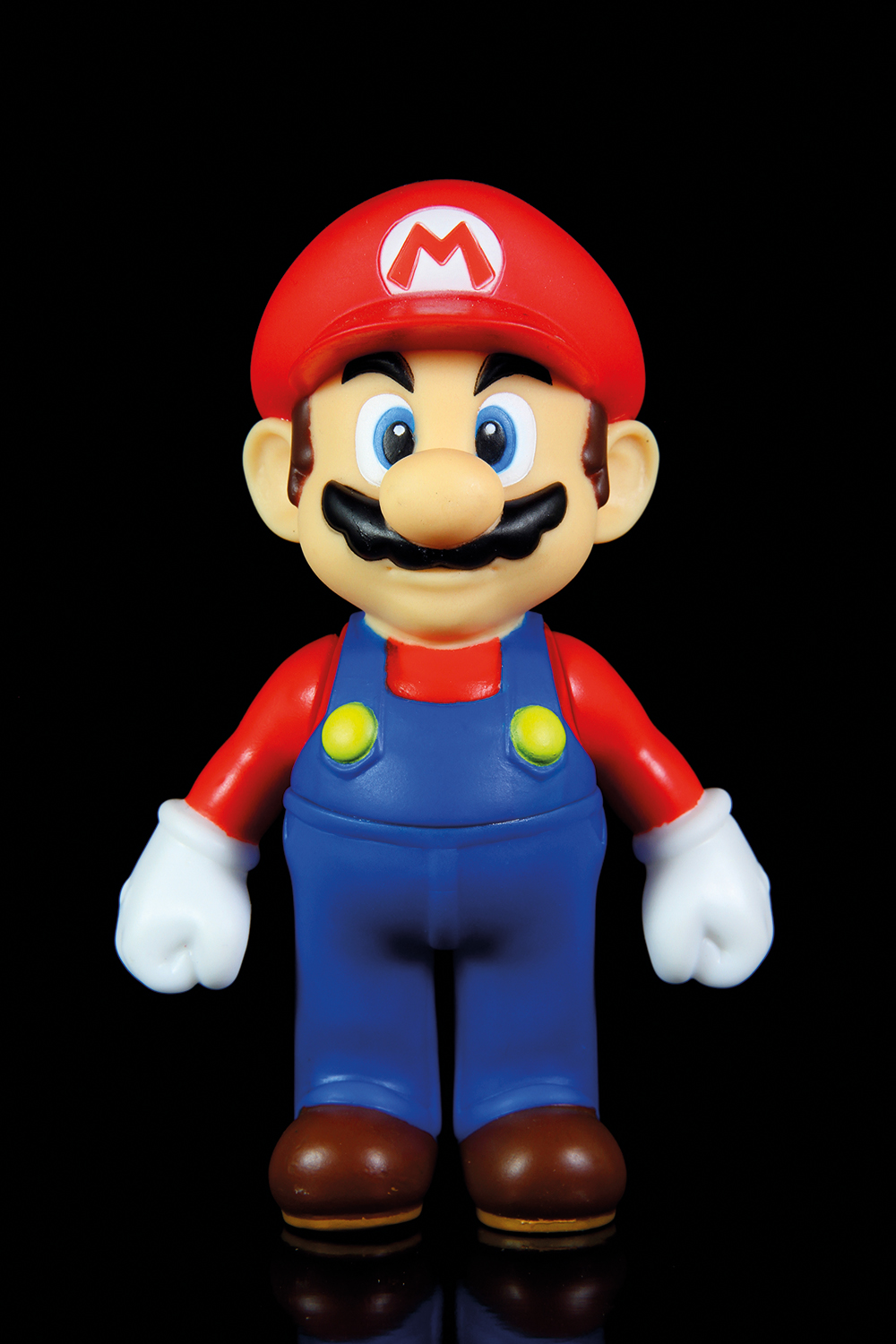
MacDonald’s story covers the company’s critical evolutions. In the early 1980s, the massively popular arcade game Donkey Kong introduced the character of Mario, who would go on to become Nintendo’s mascot and indeed an icon of Japanese culture. Prime Minister Shinzo Abe dressed as Mario and emerged from a green pipe at the closing ceremony of the Rio de Janeiro Olympics in 2016, ahead of Japan’s Olympic Games. In his first iteration, Mario was named “Jumpman” and was a carpenter, not a plumber. It was the popularity of Donkey Kong that helped launch the company’s first console, the Nintendo Entertainment System (NES) in 1983, and fundamentally relocated the video game from the arcade to the home. Mario appeared as a protagonist in his own right with the release of Super Mario Bros. in 1985.
What followed was a period of astonishing innovation which saw Mario invigorate players’ imaginations, running, jumping, flying through one adventure after another. Designed nearly concurrently with Mario, The Legend of Zelda (1986) further solidified Nintendo’s reputation for creativity and invention, giving the player a kingdom to explore in one of the first “open world” games.
In 1996, Pokémon was released for the Game Boy in Japan, sparking a worldwide craze and a subsequent moral panic about children and video games. To date, taking together its TV series, merchandise, trading cards, films, games and so on, the Pokémon franchise has earned more than $100 billion. MacDonald writes wonderfully on the less well-known games Metroid and Kirby and reflects powerfully on the popularity of Animal Crossing during the pandemic, where it offered a sense of community.
As much as the book relates the material achievements of the company, in her interviews with designers, producers and directors MacDonald also offers compelling insights into the philosophies which have underpinned its success. Gunpei Yokoi joined Nintendo in 1965 as an engineer hired to maintain the machines that made playing cards and later went on to invent the Game Boy. His personal design philosophy was “lateral thinking with withered technology,” which MacDonald rephrases as “finding new ways to work with what you already have and getting the most out of affordable components, rather than chasing the expensive technological cutting edge.” It remains Nintendo’s concept today.
What emerges most clearly is an institution committed to the kindred spirits of play, adventure and fun
Shigeru Miyamoto, the creator of both Super Mario Bros. and The Legend of Zelda, may enjoy the most name recognition among video-game designers. His colleagues describe him as prone to eureka moments, abounding with creative wisdom. MacDonald sums up one aspect of his approach as fun first: “If it’s not fun, it goes.”
This history is delightfully accented with professional expertise (MacDonald is the Guardian’s video-games editor) and eerily familiar personal recollections of encountering these games as a child – how many of us had a Christmas morning unwrapping a Super Nintendo? What we see is the picture of a company which has, over the years, fluctuated between conservatism and cutting-edge experimentation both in business and artistry, and whose employees are never quite sure how their consoles and games will be received by the public. Yet what emerges most clearly is an institution intrinsically committed to the kindred spirits of play, adventure and fun.






Comments