Caroline Moorehead

How interwar Germany became a breeding ground for evil

From our UK edition

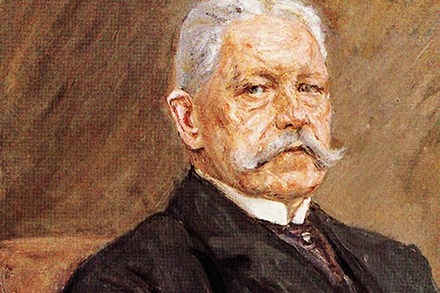
Did no one who lived through the Weimar Republic of 1918-33 see what was coming, asks Victor Sebestyen in his impressive new book. The politicians, the intellectuals, the foreign visitors who converged on Berlin in the wake of the first world war all wrote about the anti-Semitism and violence they witnessed, but virtually no one perceived where Germany was heading until it was too late. A great deal has been written about the Weimar years, much of it in hindsight; but Sebestyen, the author of bestselling books on Hungary and Russia, sets out to relate events as they unfold – to tell the story as it happened. The result is a fascinating portrait of how frighteningly easy it is for a democracy to crumble.

Living in the shadow of Etna

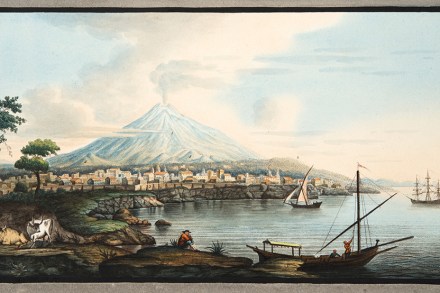
The early Greek inhabitants of Sicily peered into Etna’s crater and declared the volcano to be full of monsters. Its ‘impenetrable darkness’ reminded Coleridge of his opium addiction. Helena Attlee, whose hugely enjoyable The Land where Lemons Grow (2014) won acclaim, brings to her portrait of Etna a softer, more admiring, yet respectful, eye. Unpicking its geological and human history and a landscape ‘cobbled together from the expressions of the Earth’s unrest’ became for her a way of returning to the very beginnings of life. Mount Etna, almost 3,500 metres in height, is Europe’s biggest volcano and one of the most active in the world, grumbling and spewing for many months at a time.

Hiding from the Nazis in wartime Italy

From our UK edition

When memories come back to you, wrote W.G. Sebald in Austerlitz, his digressive novel about history and how it is remembered, their dreamlike quality sometimes makes you ‘feel as if you were looking at the past through a glass mountain’. Malcolm Gaskill’s exploration of the wartime adventures of his great-uncle Ralph, captured in Italian-occupied Libya in 1942, came from just such a memory, a ‘haunting’ dream experienced by his mother about her long-dead uncle. Finding a diary kept by Ralph while a prisoner, and fascinated by the ‘imperfections of memory’, Gaskill set off on a seven- year forage into the past that took him from archive to archive, retracing Ralph’s several attempts to escape.

Only Hitler could have brought the disparate Allies together

From our UK edition

‘Allies,’ declared Stalin on 8 February 1945, the fifth day of the Yalta Conference, ‘should not deceive one another.’ In order to defeat Hitler, Mussolini and the Japanese, the British, Americans, Soviets, French and Chinese had indeed all worked closely together. But in his meticulous, scholarly and highly enjoyable history of the second world war, Tim Bouverie makes plain just what this entailed: a collaboration that was both deep and rivalrous, riven by secret deals, prejudice, changing loyalties and betrayals, conducted by people who at different times admired, feared and despised one another, while in public most often remaining models of civility.

‘Life was good, very good, almost too good’ – Wallis Simpson’s year in China

From our UK edition

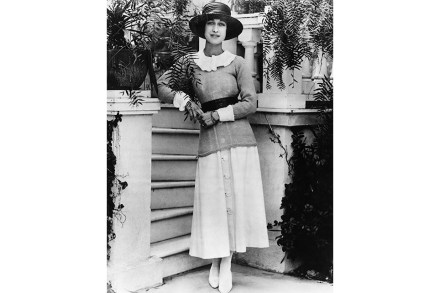
Few women have had more written about them, mostly of a critical, salacious nature, than Wallis Simpson, the American divorcee for whom Edward VIII gave up his crown. Much of the gossip has fed on what became known as the ‘China Dossier’, a supposed compendium of the year Simpson (or Spencer, as she then was) spent in China in the mid-1920s while she was trying to get a divorce from her heavy-drinking, abusive, naval first husband. As Paul French sets out to prove, the story of what she herself called her ‘lotus years’ is more prosaic, but no less fascinating. The ‘China Dossier’ was said to include details of opium addiction and a technique called the Shanghai grip Simpson arrived in Shanghai in the summer of 1924, hoping to make a fresh start.  She was 28.

You didn’t mess with them – the doughty matriarchs of the intelligence world

From our UK edition

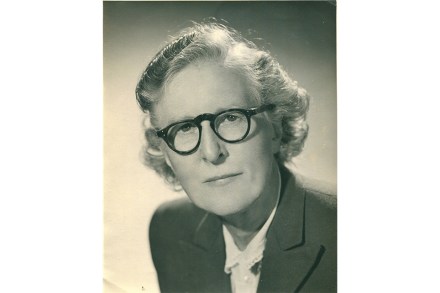
As Hilary Mantel memorably noted, history represents what people try to hide, and researching it is a question of ferreting out what they want you not to discover. Claire Hubbard-Hall’s plan to unearth the identities and lives of the legions of women who have worked unheralded in the British secret services was bold: looking for secrets in a doubly secret world. Miss Pettigrew was a ‘formidable grey-haired lady with a square jaw of the battleship type’ The first bureau was founded in 1909. It is perhaps not altogether surprising to learn that neither MI5 nor MI6 were very good to the female employees on whom they came increasingly to depend.

Agent Zo: the Polish blonde with nerves of steel

From our UK edition

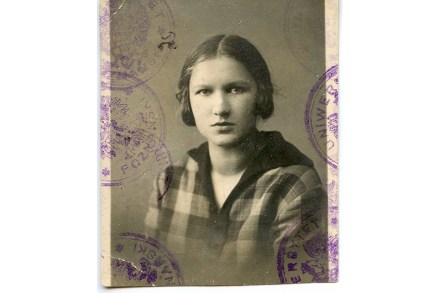
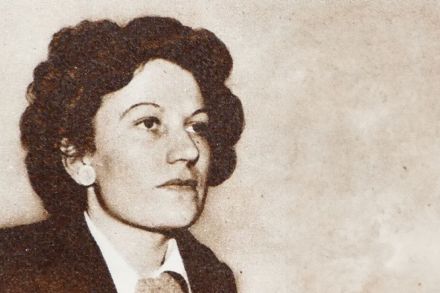
In recent years, far from diminishing, the number of books on the Nazis, Occupied Europe and the Holocaust – events that now lie three quarters of a century in the past – seem only to grow. New archives are opened and attics are raided for forgotten diaries and letters. One historian who has mined them with great skill is Clare Mulley, the author of books on spies and Hitler’s pilots. She has now unearthed a story about a bold and resolute Polish agent, Elzbieta Zawacka, who went by the name of Zo. Her adventures are extraordinary, and their background is no less fascinating.

Wishful thinking: Leaving, by Roxana Robinson, reviewed

From our UK edition

One evening, a man and a woman who haven’t met for decades bump into each other at the Metropolitan Opera in New York. It’s a familiar tale, but one to which Roxana Robinson brings many twists in her highly enjoyable latest novel, Leaving. Sarah and Warren were childhood sweethearts in a suburb outside Philadelphia. Sarah was uncertain, made biddable and cautious by cool, judgmental parents. Warren was bold and full of ambition and crazy-sounding dreams. They proved too much, too threatening, for the timid Sarah and she married a man she thought a safer bet. It turned out to be a mistake. Rob, who has electric blue eyes and an intimate manner, skitters from one improbable career to the next. They have two children, a boy, Josh, and a girl named Meg.

The misery of the Kindertransport children

From our UK edition

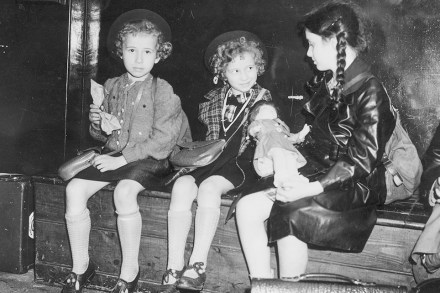
On the night of 9 November 1938, across Germany and Austria, Jews were attacked and their synagogues and businesses set on fire. In the days that followed Kristallnacht, a scheme was put in place to save children from Nazi persecution. Known as the Kindertransport, it would, over the following ten months, bring 10,000 children to the UK.  The Kindertransport – the word refers both to the means of transport and to the overarching programme – has always been regarded as a symbol of British generosity towards those in peril and seeking asylum. But it was all rather more complicated, as Andrea Hammel sets out to show.

The forgotten world of female espionage

From our UK edition

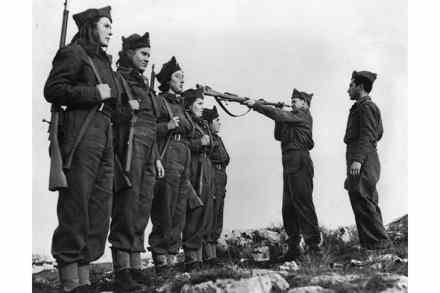
When the Germans occupied northern Italy in the autumn of 1943, they were pleased with the way that young Italian women, pedalling on bicycles around the country lanes in white socks and pigtails, smiled at them. The soldiers offered to help with their loaded baskets and gave them lifts in lorries. It took some months before they discovered that these smiling girls, known as staffette, were working as couriers, spies and carriers of weapons for the Resistance, then busy forming in the foothills of the Alps. When they realised their mistake, their reaction was often brutal. If caught, the women knew they would fare no better than the men.

The unimaginable horrors confronting the Allies in 1945

From our UK edition

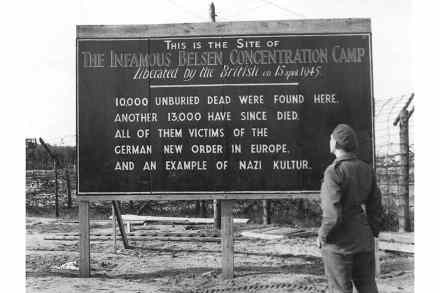
No one had prepared the Allied soldiers, as they began their invasion of the Reich early in 1945, for what they would find. The discovery by the Soviets of the extermination camp of Majdanek in July 1944, and Auschwitz in January 1945, had not really registered, not least because they had been partly emptied and demolished by the retreating Germans. In any case, no one – not the International Committee of the Red Cross, nor the Vatican, nor the British and American governments – had been able, or wanted, to believe what they had been told. The scenes of slaughter and horror that awaited the British, Canadian and American troops were unimaginable.

Has the role of resistance in the second world war been exaggerated?

From our UK edition

When in 1941 Winston Churchill famously declared that the newly formed Special Operations Executive, set up to encourage resistance movements, would ‘set Europe ablaze’, neither he nor anyone else could have known the extent of the help the partisans would provide to the liberation of the continent. Nor, indeed, did anyone envisage the fact that not all of them would prove as biddable to Allied wishes as they hoped. As Halik Kochanski shows in her compendious book on the six-year underground war, resisters came in all shapes and sizes, not easily controlled or corralled into categories. She divides her survey into three periods. The first runs from March 1939 and the occupation of Czechoslovakia to the German invasion of Russia in June 1941.

How the net finally closed on the Nazi henchman Andrei Sawoniuk

From our UK edition

Fedor Zan was 18, working on the river closing sluices, when, on a winter afternoon in 1942, he saw his childhood friend Andrei Sawoniuk standing in a clearing outside Domachevo, their town in Belarus. Sawoniuk had lined up 15 terrified women, all wearing the yellow Jewish star. As Zan watched, hidden behind the pine trees, Sawoniuk ordered the women to strip naked, shot them in the back and kicked their bodies into a newly dug pit. Fifty-seven years later, Zan was one of a dozen witnesses to give evidence against Sawoniuk at the Old Bailey, at the only war crimes trial ever held in Britain.

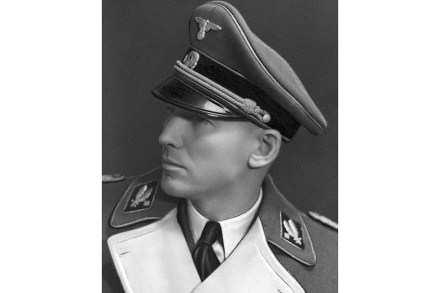
It’s still impossible for Horst Wächter to recognise his father as a Nazi war criminal

From our UK edition

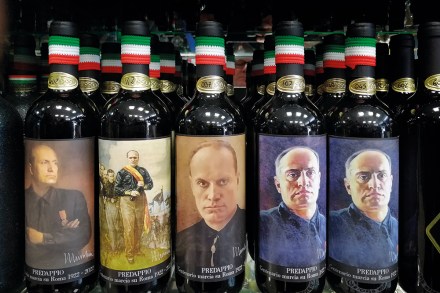
In 1926, while putting in place the repressive laws and decrees that would define his dictatorship, Mussolini appointed a new chief of police. Arturo Bocchini was 36, a lawyer and former prefect of Brescia, a cynical, vengeful, witty and corpulent Neapolitan. Under his 17-year tenure, fascist Italy became one of the most sinister and efficient police states of the years between the wars, with overlapping and rivalrous legal and illegal police bodies, fed by a vast army of informers and spies. Said to number around 10,000 at their peak, these men and women were to be found in every corner of Italian life, from the civil service to the Vatican, from industry to the Royal household, from the army to universities.

The ‘rumours’ we chose to ignore

From our UK edition

On 14 October 1942, the 23 Swiss members of the International Committee of the Red Cross met in Geneva to decide whether or not to go public with what they then knew about Auschwitz and the Nazis’ extermination plans. When they emerged two hours later they had voted, almost unanimously, to remain silent. As did the US state department, the British government and the Vatican — all in possession of the same evidence of mass murder across German-occupied Europe. The reasons given ranged from the danger of reprisals against Allied PoWs to the need to focus on military targets, and thus shorten the war. And, most importantly, because of a profound unwillingness to believe what they had been told.

Twists and turns of the Italian campaign

From our UK edition

When Rome fell to the Allies on 5 June 1944 General Harold Alexander, commander of the 15th Army, calculated that he would need just 12 weeks to reach the river Po and liberate Italy from the Germans. It took him nearly a year. Christian Jennings’s new book chronicles the months of heavy fighting, the advances and retreats and the enormous losses on both sides as the Allied forces stalled, and the enemy attacked. It was never going to be easy. Once the Italians signed the armistice with the Allies on 8 September 1943, turning their backs on their former Axis partners, the Germans moved quickly to occupy the whole of Italy. While the British and the Americans were arguing over their policy towards the defeated Italians, Hitler dispatched nine divisions down through the Brenner Pass.

Laughter and tears

From our UK edition

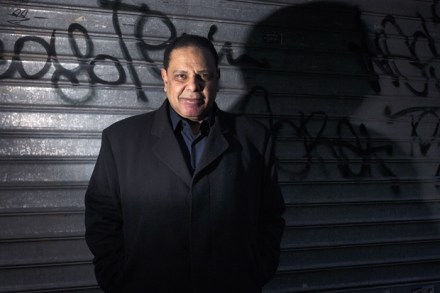
The Yacoubian Building, the first novel of the Egyptian writer Alaa Al Aswany, sold well over a million copies in 35 languages, was made into a film, and turned him overnight into one of the most listened to voices in the Arab world. What followed — Chicago, set in the city in which Al Aswany did his masters degree in dentistry, and some short stories — did not have quite the charm of his sprawling houseful of driven, troubled, passionate characters trying to survive in a country of extreme social ills. The Automobile Club of Egypt is a second Yacoubian, a saga built around an institution, rich in absurdity and colour and at the same time an important social satire and a harsh criticism of modern Egypt.

Picasso’s dealer

From our UK edition

When she was four, Anne Sinclair had her portrait painted by Marie Laurencin. It is a charming picture, a little dark-brown-haired girl with a white bow, very blue eyes and a white and pink striped blouse, and it was commissioned by Sinclair’s grandfather, Paul Rosenberg, one of the handful of most influential Parisian art dealers of the 1920s and 1930s. More interested in politics than family history, Sinclair — for 13 years the host of the prestigious French weekly television news show 7 sur 7 — waited until she turned 60 to explore the trunks of papers in her mother’s attic.

The Spanish Civil War hotel that Capa, Hemingway and Gelhorn called home

From our UK edition

In February 1924 the Hotel Florida, a ten- storey marble-clad building with 200 rooms, a glass-roofed atrium and red plush furnishings, went up on Madrid’s Gran Via. Along with the Ritz in Paris, certainly the most celebrated hotel in the literary world, the Florida became, during the two-year battle for the capital waged between Franco’s nationalists and the republican forces, the meeting place for an eccentric, glamorous and self-important assortment of war tourists, zealots, opportunists, romantics, dreamers, buccaneers and writers who had come to observe the fighting, file dispatches of variable truthfulness and proclaim loyalty to the republic.