Spectator Life

Spectator Life

An intelligent mix of culture, style, travel, food and property, as well as where to go and what to see.

AI is turning the world into slop

It seems AI is not just making everyone sound the same, but now everything must look the same too. I haven’t been able to walk into a pub, cafe or shop this summer without noticing the uncanny, slightly unreal sheen of an AI-generated poster. From caricatured cartoon children on a nursery advertisement to an abnormally glistening burger on a food menu, every billboard, flyer and sign now seems to have been regurgitated from the same ChatGPT printing press. We are hurtling ever closer to a flattened future in which everything converges toward the average, the mediocre, the visual mean There are many telltale signs that a sign is generic AI-slop.


ai slop

Meet the adult toddlers who play with toys

A colleague of mine has a sizable collection of sportscars. He has, he notes, every expression of his favorite, the Lotus Esprit. He lovingly cleans them, occasionally changes up the way they’re displayed. What he might then jokingly add is just how easy this is. The biggest of his cars is just a few inches long. They’re models, of the kind that small children might push over the carpet making “brrm, brrm” noises, once they’ve passed out of what the toymakers call the “bash and crash” phase, when motorway carnage is the name of the game.   What might appear strange to an older generation – overlooking their own love of train sets – is that this mid-life interest in toys is not unusual.

We don’t need more Austen adaptations. Or do we?

It’s a shame that Jane Austen can’t profit from selling the adaptation rights to her novels. In her own lifetime, she made but a modest living as a writer. Today, she would be fabulously wealthy.   As it is, the copyright has long expired, so it’s all fair game. In the last three decades alone, Austen’s stories have spawned over a dozen adaptations.

smell

The history and importance of smell for our antiseptic age

For smell historians and experts, of whom there are gratifyingly more than you’d think, a standard assumption to be skewered is that olden ages stank; the modern world doesn’t because hygiene and chemicals have banished stinks in the name of progress. According to this reading of history, banishing odors is a sign of progress. Civilization doesn’t smell. Neither Bjørn Berge nor William Tullett stand for this. For them, older times may have been smellier, but people were comfortable with living alongside middens, rotting corpses and foul tanneries. Smell in the modern age is now under threat and at risk of extinction or of being even more marginalized – Tullett uses the word “ephemeralized” – than it already is in this age of visual primacy and screens.

How the White House fell for the ‘Living Diet’

For the ancient Greeks, it was the shapely buttocks of the famous statue of Aphrodite kallipygos – literally “Aphrodite of the beautiful arse.” The female ideal also included small, pert breasts, pale skin indicative of leisure indoors, away from the sun, and fair reddish or blonde hair. The male ideal, by contrast, was that of the athlete, the body shaped by training in the gymnasium and the wrestling school (palaestra) for competition and, ultimately, war. Defined but not excessive musculature; broad shoulders and narrow waist; tanned skin glistening with olive oil and exfoliated by the scraping of a bronze strigil. And we know the Greeks preferred dainty genitals too – at least in art – as a sign of masculine continence and self-control.

Brown furniture isn’t dead

Throw out your grandfather clocks, the naysayers said, and banish your commodes to the scrapheap and junkshop. Brown furniture – invented in the Georgian and Regency eras and popularized for the mass market in the Victorian period – has been decreed by those tastemakers in the know to be as dead as Jacob Marley – a man who undoubtedly would have cherished those heavy mahogany bed frames and cabinets that were synonymous with his age – and showing even fewer signs of returning, even in spectral form.   The reasons for the apparent demise of brown furniture are less to do with a rejection of sturdy, well-built items that were once the pride and joy of any household and more because we are living smaller lives, in all senses.

brown furniture

Americans can’t write funny novels

If I recommended you an American novel called Stoner, what would you think? You’d probably assume it was some hallucinogen-inspired rubbish from the 1960s by someone who once met Allen Ginsberg. You wouldn’t think it was a plangent, devastating story about the failed life of an English literature academic. That’s because, if a campus novel like this were British, it would have been written by Kingsley Amis, Howard Jacobson or Evelyn Waugh. It would never have had such a terrible title and would also be comic rather than achingly sad. That’s the difference between British and American novels: American novels aren’t funny.

How to end the chaos in college football

For millions of Americans, September not only marks the beginning of fall, it marks the beginning of college football season. The fans pack enormous stadiums, watch on TV by the tens of millions, cheer for their favorite teams and boo their traditional rivals. There are very few fans supporting both Ohio State and Michigan, and neither is supporting Notre Dame. It’s the great American sport.  And it is in deep trouble.  The problem stems from the usual suspects: a few far-reaching court decisions affecting the players, the comatose response of the sport’s ruling body, the NCAA, and the looming threat of government action if private actors can’t solve the problem themselves. So far, those private actors have failed.

college football NIL

The Renoir heist was entirely predictable

Things are tough for French museums right now. A dawn raid on Tuesday at the Musée Renoir in Cagnes-sur-Mer resulted in the theft of two paintings by Renoir worth $10.5 million (another two were stolen but swiftly abandoned). On long term loan from the Musée d’Orsay, the paintings were seized when thieves sliced through the museum's garden fence with an electric saw. Following a spate of thefts from French museums in July, France’s patrimoine is undeniably under threat. The Louvre heist was inspirational While British museums (The Horniman, Pitt Rivers, Ashmolean, Fitzwilliam and occasionally British Museum) busy themselves with the return of their artifacts, the French, it would seem, struggle to keep hold of theirs.

coffee

Coffee-drinking is a cult

Ten years ago, I started getting migraines. They were so bad that when one struck, I babbled nonsense, couldn’t speak, type or write. The swelling in my head, which caused the migraine, was pressing on the language department of my brain. Once recovered, I was confused for days, repeating words three or four times in a row and not quite understanding what was being said to me. This all had to stop immediately, as communication is key to the smooth operation of my life. It was suggested to me that coffee is a common migraine trigger and if I was looking for a culprit I ought to start right there. I immediately cut out the black stuff and the migraines stopped.

Welcome to the Silicon Valley cinematic universe

Yesterday, a teaser dropped for Artificial, a biopic directed by Luca Guadagnino based on Sam Altman’s brief ouster from OpenAI in 2023. Earlier this summer, a trailer was released for The Social Reckoning, Aaron Sorkin’s Meta drama, which is a follow-up to his 2010 film about Mark Zuckerberg and the founding of Facebook, The Social Network. And in the past few days, audiences at the Venice and Telluride film festivals have been hyping up Nathan Fielder’s documentary You Can See Everything about the Theranos founder/fraudster Elizabeth Holmes, as well as Alex Gibney’s Musk documentary. (Gibney made an earlier documentary about Holmes, who has already been the subject of a biopic, played by Amanda Seyfried in The Dropout.

Why I love the NFL

The NFL season kicks off again today with the Seattle Seahawks hosting the New England Patriots in a Super Bowl rematch. It got me thinking about the growing popularity of the sport in my country, the United Kingdom. I got into the NFL at a time when my “soccer” team, Queens Park Rangers, were especially terrible. It was around 2022. The 16-hour round trips to away games in the less salubrious parts of the UK had begun to wear on me. After yet another 1-0 defeat on a cold rainy night in Stoke I realised I needed an escape. The balls-to-the-wall action of the NFL was exactly the thing my life was missing.  I decided to support the Seahawks.

We don’t swear like we used to

In the halcyon, innocent year of our lord 2004, there was a minor political scandal, if you can imagine such a thing. Then-Vice President Dick Cheney was questioned by a Democratic senator about his financial ties to a government contractor during a photo op. Cheney’s response was short but far from sweet: the inquisitive senator was told to go “fuck yourself.” A few years later, reminiscing happily about the moment during a radio interview, Cheney doubled down on his mot juste, saying “You’d be surprised by how many people liked that. That’s sort of the best thing I ever did.”  A sad state of affairs indeed, and I’m not talking about the long decline of inter-party discourse. I mean the decline of swearing, in its quality, if not quantity.

How to eat your way through Bourdain’s New York

To experience the Big Apple properly, you don’t just take a bite: you take a carbohydrate-laced mouthful. Think smoked salmon bagels thick with cream cheese or $2 pizza slices dripping with grease. Think warm, salted pretzels, or frankfurters from a street kiosk, or steaks as big as the genetically modified cows from whence they came. Even so, for the full I <3 NYC gastronomic voyage, there’s only one restaurateur whose bagel-crumb trail is worth following: Anthony Bourdain, of course. The “bad boy” Big Apple he represented is a city long devoured and spat out Why, eight years after his death, are we still feasting on our obsession with “Tony” (as last month’s biopic would have us call him)?

How Charles de Gaulle won over Gen Z

It turns out that this summer’s cinematic hero is not Spiderman or even Odysseus, but the French wartime leader Charles de Gaulle who has knocked both Marvel and Homer into a kepi (the French military hat he favored).   De Gaulle, a two-part, six-hour epic directed by Antonin Baudry has been a surprising hit in France and is in demand from all the major international markets, including those of Latin America, India and China. The buzz is remarkable for a foreign-language film starring a person who, although a national hero in his homeland, is not a global household name.

New Yorkers don’t get DC

I was in New York all summer, making a big fuss about DC to all those sophisticated cosmopolitans. They think it’s boring. They assume it’s full of squares and policy nerds and they’re right, but that characterization doesn’t do the capital justice. It’s my job as a Washington ambassador to accurately portray the city to the snobbish coastal elites, even to sex it up a bit (though it really doesn’t need my help in this respect). Regardless, it’s a job I take seriously. The obvious hook is, of course, espionage. Espionage is chock-full of charge and my choice motifs are all borrowed from the weighty catalogs of 007 and Richard Nixon’s Watergate scandal – wiretapping, martinis, guns, honeypots.

The journey to Assisi, 800 years after St. Francis

“Assisi – best spiritual vibrations anywhere I’ve been, along with India,” enthused the mustached British man next to me on the bus to Florence. Pleased to find a fellow anglophone, he chatted away happily, telling me how he’d retired, sold his house in London and moved to Assisi. He hadn’t yet learned Italian but could manage enough Sanskrit to read the Upanishads. A spiritual dilettante. Wonderful. It was 7:30 a.m., I’d missed coffee, breakfast and a train, and my feet, after walking for eight days and 115 miles to commemorate the 800th anniversary of the death of St. Francis, hurt. Yet when my companion gave his verdict on how Francis had transformed his world, my cranky heart warmed to him.

My cave house’s wonderful history

Provence Looking back on it, apart from this year’s wildfires, the stultifying heat of high summer in Provence isn’t so bad if you accept that the time to exercise is 6 a.m. and work is only possible before midday and from late afternoon onward. Holidaymakers and the better-off have pools to jump into and air conditioning to enjoy. But during the afternoons the rest of us lie almost naked on the bed under a ceiling fan, shutters closed, while the Rouge Noir varnish on our toenails melts. I’m told that Frenchmen sit in their underwear watching the Tour de France. One such afternoon about five years ago, Jeremy and I were lying side by side, inert, under the whirring blades of the fan, when we heard voices on the usually quiet public pathway below the bedroom window.

Wendell Berry’s homecoming

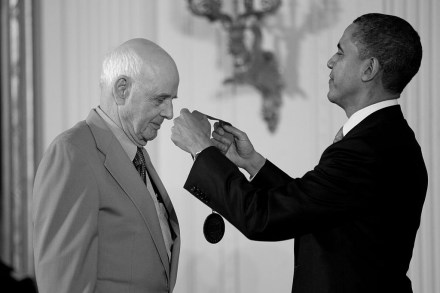
Wendell Berry, who died Monday aged 92, was a man who loved the soil and the soul. Writing from Kentucky, where his family has lived and farmed for generations, Berry built up, over more than sixty years, a corpus of fiction, non-fiction and poetry – all genres in which he distinguished himself – which, when taken as whole, reveals a profound and coherent philosophy of the earth and how it relates to human community.  Unfortunately, the average person probably doesn’t know who Berry is. Even those who have heard of him might only know his incendiary 1987 Harper’s essay “Why I Am Not Going to Buy a Computer” or his watershed 1977 takedown of maximalist agricultural practices, The Unsettling of America.

wendell berry

Why Wendell Berry mattered

Like most adults who write their thoughts down regularly, I was raised in a home by a mother who maintained piles of books strewn around the house. There were more books than anyone in our home could read combined, but you could find our favorites open on tabletops and dressers with a pencil, or another book, pinned in them to hold a page. Most of these books that were propped open were my mother’s and they included dozens of Wendell Berry’s works. I slowly absorbed a version of Berry’s way of thinking: through reading, through my mom’s infatuation with his work, through osmosis as I watched Cartoon Network next to open copies of Hannah Coulter and What are People For? Berry has begun to suffer the same literary fate as C.S.

wendell berry
clean cocaine

‘Clean cocaine’ isn’t worth it

Cocaine has a tendency to get the press all aflutter. So it's probably no surprise that the Daily Mail had a splash earlier this summer with a feature about a legal energy supplement compared – at least in the headline – to “clean cocaine.”  What on earth is this product, I wondered. It turns out that the reality is slightly less dramatic than the tabloids might suggest: Wildkraut – also known as Energy Sniff – is a powdered supplement from Austria which combines the dosage of caffeine you might otherwise get from a Red Bull with some esoteric alpine herbs. The one thing that it does have in common with cocaine is that it is intended to be snorted.  As someone more than partial to energy drinks, I was immediately curious.

Why the Japanese don’t need fat jabs

“You can never be too rich or too thin”: so said Wallis Simpson, would-be consort to Edward VIII. Or perhaps Dorothy Parker. Or perhaps Joan Rivers. No one really knows. But whoever said it, Japan appears to have had it engraved on its national escutcheon. Japan is officially the world’s thinnest rich country, with an obesity rate of just 4.3 percent of the population. By comparison, it’s 40 percent in the US. A close comparison to Japan is Bangladesh, where the rate is 4.5 percent – but where one in ten people is dangerously undernourished. These are extraordinary statistics. What on earth is going on?  The most reached-for reason is diet. Japanese food, so it is thought, is healthy and lean.

Real men don’t look like Clavicular

One of my favorite one-I-made-earlier aphorisms is “Men are the sum of their parts; women are some of their parts.” But now I’m wondering if it’s a bit out of date. When I thought it up, women were the only ones who bothered with “tweakments” and cosmetic surgery and generally turning themselves into living dolls, hoping to hook what in the common parlance is known as “a live one.” But now, with transplants for receding hairlines and male film stars no longer looking like their passport photos, I don’t think this is true anymore. Becoming a “lad” once meant swerving Sports Day, drinking beer and generally letting oneself go Where there is still a gap in male and female attitudes to looks is in dieting.

Gen Z are falling in love with Morrissey

There is a Smiths lyric for almost every moment. Whether it’s telling a friend that their jokes just aren’t funny anymore or being herded into the corner of a club and contemplating hanging the DJ, every song that contains Morrissey’s melodramatic teenage misery becomes useful vocabulary for the most mundane scenarios. Including visiting troops in Ukraine, as the British Prime Minister proved earlier this week. Gen Z is proving rather less doctrinaire about culture than previous generations Perhaps that is just one reason that helps explain why, more than 40 years after The Smiths first appeared, they are finding a new audience among those who were not even alive when the band split up, let alone released their first album.

Why climate skeptics are winning

Travis Cook is a man on a mission. Armed with just a sandwich board (“There is no Climate Crisis”), an array of literature and formidable scientific knowledge, the 32-year-old former mechanical engineer is on a 1000-mile walk around the UK to talk to people and try to dispel the climate gloom that we are customarily bombarded with. His is a message of climate realism (what the BBC might call “climate denialism”) and of hope. Far from being the lost cause this might once have seemed, he believes his message is beginning to be accepted. Fight the battles you can win “I love it,” he tells me of his daily interactions (he was at Hayling Island in Hampshire when we spoke). “It’s a good news message, so it’s easy to deliver, and it brings me joy.

I want to be a good father – like Machiavelli

Dante’s Beach, Ravenna When Machiavelli was tortured, then banished from Florence in 1513 to his modest farm in the Tuscan countryside, in the afternoons he used to “sink into vulgarity,” as he put it, and play cards and backgammon with the local men in the tavern next to his small house.

Prince Harry is escaping his own Hotel California

Various theories have been put forward for the surprise return of the Sussexes to the UK. They include the King’s cancer, the lack of English-style schools, missing old pals and the country house shooting season. But my gut feeling, as somebody who also headed home after living in California in the 1990s, is that the real reason is a combo of British Expat Burnout Syndrome and what Tom Wolfe described as “Going Broke on a Million Dollars a Year.” As with so many of us who flocked to California, Harry’s expat dream has fizzled out First, the expat thing. As with so many of us who flocked to California in search of sun, freedom and escapism, Harry’s expat dream has fizzled out.

Does Yogi Bear have a connection to yoga?

“Well, we all have areas of ignorance,” said my husband with a little too much relish, I thought. He was responding to my admission that I had reached a ripe old age without realizing that the words yoga and yoke had the same origin. Yoke has been used in English for more than 1,000 years and yoga only since about 1785, but it had been in use in Sanskrit since the first millennium BC. The meaning of yoga was held to be either the yoking and reining in of the senses, or the yoking and joining oneself to the Prana (life force), the Om (absolute) and the Universe.

wood yoga
dogs

If we allow dogs at weddings, why not a python?

Three women in my Tuesday weights class are getting married. While we squat and thrust and fling our kettlebells around, there’s nonstop talk of veils, decorations, modes of transport to the venue and whether anyone eats wedding cake these days. Men are allowed in this weights class but, oddly, none ever shows up. The major update from one of the brides this week was that the local register office had given permission for her dog to attend the ceremony. She duly bought “a little tux” for Badger, so he could look the part. How do we feel about dogs at weddings?