Mark Piesing

Are we prepared for a British Pearl Harbor?

From our UK edition

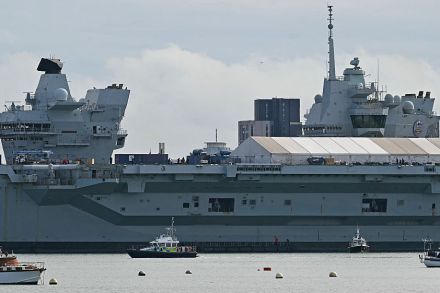
Barbarossa. Pearl Harbor. Swindon? Surprise attacks can, in a moment, change the course of history, the destiny of a nation and the future of a leader. After it was revealed this weekend that the Iranians have developed missiles capable of reaching the United Kingdom – and reportedly attempted to hit the UK-US military base on the Chagos islands – we should be more worried than ever about the possibility of a British Pearl Harbor style attack.

The inside story of how America got to the Moon

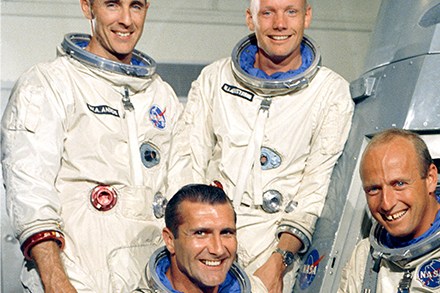
On March 16, 1966, Neil Armstrong and David Scott became the first astronauts ever to dock with another spacecraft when they linked their Gemini 8 capsule to the uncrewed Agena target ship. However, the cheers had barely died down at Mission Control Houston when Scott realized they had a problem. The conjoined spacecraft had begun a gentle leftward pitch. Armstrong and Scott watched in horror as the capsule’s gentle pitch became a tumbling motion that increased, turning the craft into a centrifuge. In desperation, Scott undocked the two ships before gravity ripped them apart. But Gemini 8 continued to spin faster. At 60 revolutions per minute, the astronauts began to slip into unconsciousness.

Gavin Mortimer, John Campbell, Mark Piesing & Daisy Dunn

From our UK edition

32 min listen

On this week’s Spectator Out Loud: Gavin Mortimer reports on the battle between the EU and farmers; John Campbell explains Lord Haldane’s significance to politics today; reviewing Polar War by Kenneth R, Rosen, Mark Piesing ponders who will rule the arctic; and, Daisy Dunn celebrates the history of poems on the underground. Produced and presented by Patrick Gibbons.

Gavin Mortimer, John Campbell, Mark Piesing & Daisy Dunn

Who will rule the Arctic?

From our UK edition

In 2007, two Russian submersibles descended from the ice at the North Pole to plant a small Russian flag on the sea floor more than two miles down. While the aquanauts were greeted as heroes in Russia, the reaction of other Arctic nations was somewhat less positive. ‘This isn’t the 15th century,’ complained the Canadian foreign minister. ‘You can’t go around the world and just plant flags.’ In response to the protests, President Putin – then Time magazine’s ‘Person of the Year’ – reassured the world: ‘Don’t worry. Everything will be all right.

Did Robert McNamara know Vietnam was unwinnable?

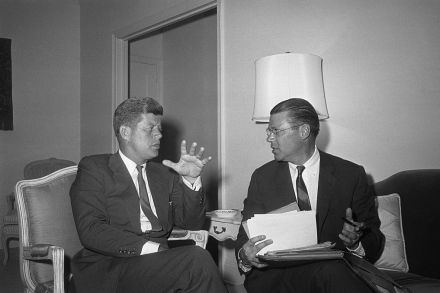
Former US defense secretary Robert McNamara was known in Washington as a relentless, humorless taskmaster or even “a computer on legs.” Then on February 9, 1962, a little over a year after taking office, McNamara made headlines when he danced the twist with Jackie Kennedy at a White House party. A few days later, the then-first lady sent by hand to McNamara a lighthearted Valentine collage she had made from the news coverage of their dance. After her husband’s assassination, their friendship deepened. Jackie’s opposition to the Vietnam War grew, as did her conviction that McNamara secretly opposed it.

mcnamara

Remembering Hiroshima 80 years on

From our UK edition

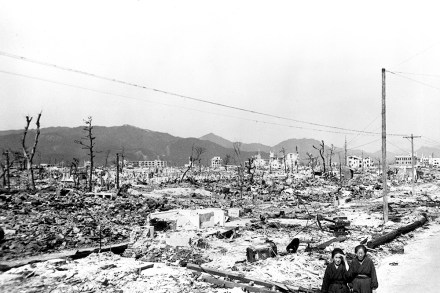
In October 1945, towns and cities across the United States celebrated ‘A Tribute to Victory Day’ in celebration of the United States’s military victory over Nazi Germany and imperial Japan. The biggest event was held in Los Angeles and broadcast live across the country. In scenes ‘reminiscent of the pre-war Nazi rallies at Nuremberg’, Iain MacGregor writes, more than 100,000 people crammed into the Memorial Coliseum to watch the ‘cinematic legend’ Edward G. Robinson lead a massive cast on giant stage sets recreating key moments of the defeat of the Axis powers. For the evening finale, in the glare of searchlights, three Boeing B-29 Superfortresses flew low over the stadium and, as the audience gasped, a huge mushroom cloud rose behind the stage.

The powerful, brutal story of Polish resistance fighter Elżbieta Zawacka

In May 1942, Agent Zo was in the home stretch after a long and risky mission that had placed her in Berlin, at the heart of Nazi Germany. As usual, she picked up a small stone and threw it at the second-floor window of her sister’s apartment in a grimy industrial city in occupied Poland, south of Warsaw. But no one in the flat turned on a light, the agreed signal. She threw another. Nothing happened. With a mounting sense of unease, she knocked at the door of a first-floor apartment, and a pallid face appeared. The terrified neighbor told her that the Gestapo had appeared two days ago and arrested the occupants. “Get away, by God. They are here!” she urged.

Zo

Giles Milton retells the story of the Grand Alliance as a cinematic thriller

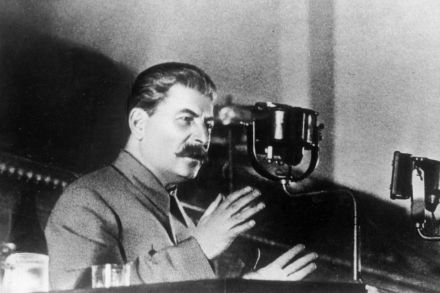
On June 22, 1941, the German army invaded the Soviet Union. Over the next four months, the Wehrmacht blasted through the Soviet defenses, taking millions prisoner and destroying thousands of tanks. By early December, German scouts were purportedly within site of the Kremlin. Even though the Wehrmacht was forced back from the gates of Moscow by the Red Army, the renewed German offensive in spring 1942 threatened to deliver the coup de grâce to the Soviet Union. That it didn’t was due to an unlikely alliance between British prime minister Winston Churchill, US president Franklin D. Roosevelt and Soviet dictator Joseph Stalin.

Alliance

A skillful retelling of one of World War Two’s most dramatic stories

Around lunchtime on a late September day in 1944, a young woman stepped into one of the most fashionable cafés on the Champs-Élysées. Her eyes still scanned the room for threats, even though her war had been over for many months. Known variously as Suzanne, Madeleine, Blanche, Ginnette or Tony, she had “amassed names and personas just as other women of her years and beauty amassed admirers. And she had amassed those too” in the service of her country. Two such admirers now sat opposite her in the café, and she had to decide which one she was going to spend the rest of her life with, and which she would never see again. Such is the climax of the epic story of love and betrayal that Nahlah Ayed tells, using unpublished interviews and archival and personal documents.

Ayed

War hero, bon viveur, Japanese spy: Frederick Rutland wore many masks

It is early in the morning on the “day of infamy,” Sunday, December 7, 1941. Two hundred and fifty miles north of Hawaii, six Japanese aircraft carriers are preparing to launch more than 350 aircraft in a surprise attack on the United States Pacific Fleet at Pearl Harbor. The fleet’s commander-in-chief, Admiral Husband E. Kimmel, had told a reporter the day before that the Japanese would be “damned fools” to attack the United States, ignoring the warnings that war was imminent. Around 7:30 a.m., the lead Japanese pilot fires a single flare, giving the pilots the “final go” signal. “Within an hour... the US Pacific Fleet was in ruins.” The American public, writes espionage historian Ronald Drabkin in Beverly Hills Spy, quite rightly demanded: “Whose fault was it?

rutland

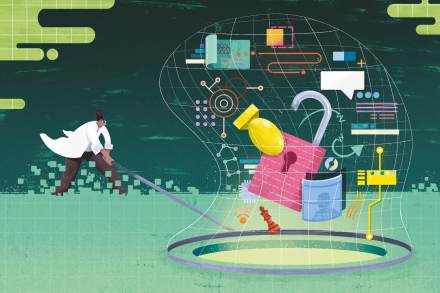
The gap between technotopia and dystopia are never far apart

Broken Arrow isn’t just the title of a mediocre 1996 film, but the term for a serious accident involving a nuclear weapon. Over the last seventy years, the United States has officially experienced thirty-two Broken Arrows, where a nuclear weapon has been in a crash or fire, accidentally been dropped — or just disappeared. Incredibly, six have been lost and never recovered. Artificial intelligence (AI) pioneer Mustafa Suleyman tells one such story in his new book, The Coming Wave: Technology, Power and the 21st Century’s Greatest Dilemma. In 1961, a B-52 bomber carrying two live hydrogen bombs broke up in the skies above Goldsboro, North Carolina. One bomb disintegrated when it plunged into a muddy field.

Suleyman