Owen Matthews

Owen Matthews

Owen Matthews is an Associate Editor of The Spectator and the author of Overreach: The Inside Story of Putin’s war on Ukraine.

Russia is becoming embarrassingly dependent on Beijing

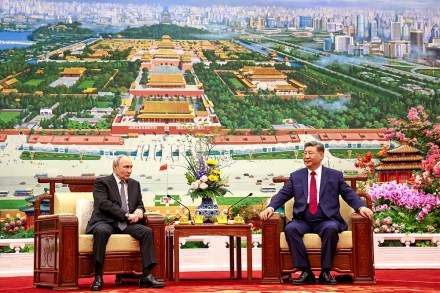
A week after Donald Trump was greeted in Beijing by well-orchestrated crowds of flag-waving schoolchildren, it was Vladimir Putin’s turn to pay a visit to China’s Red Emperor. Protocol-watchers spotted a distinctly lower level of pomp and circumstance afforded to Putin than to Trump – though Kremlin media were quick to emphasise that this was a working meeting, the latest of over 40 Putin-Xi summits over the last two decades. Both sides paid formal homage to the ongoing strength of the Dragon-Bear alliance. Xi observed that relations between Beijing and Moscow were at ‘the highest level of comprehensive strategic partnership’, as he called on both countries to oppose ‘all unilateral bullying’ in the international arena.

Starmer’s sanctions U-turn will put money in the Kremlin’s pocket

From our UK edition

The British government yesterday quietly issued two sweeping import licences for Russian oil and gas. This may ease European supply problems but makes a mockery of Sir Keir Starmer’s claims to be getting tough on Vladimir Putin. The first of the licences, released late last night with minimal fanfare, grants an indefinite general trade licence allowing imports of diesel and jet fuel refined from Russian crude in third countries. This means that fuel processed in India or Turkey from Russian oil can now legally enter the UK market.

I gave up drinking. Don’t call me teetotal

I hate teetotallers. The pitying looks they give you with their cold, unclouded eyes. Those patronising, bored smiles they smile, as though they are indulgently listening to the table-talk of children. Their uncouth early departures from the dinner table and tactless talk of early starts. Teetotallers are as bad as people who insist on whipping out their phones to film fellow guests when they’re dancing. They’re buzz-killing squares who should learn to live a little.   And yet … I have, despite my worse judgment, recently mounted the wagon. In my heart, I remain a devoted drinker. In my mind, I continue to see myself as the Falstaffian life of the party.

I gave up drinking… but don’t call me teetotal

From our UK edition

I hate teetotallers. The pitying looks they give you with their cold, unclouded eyes. Those patronising, bored smiles they smile, as though they are indulgently listening to the table-talk of children. Their uncouth early departures from the dinner table and tactless talk of early starts. Teetotallers are as bad as people who insist on whipping out their phones to film fellow guests when they’re dancing. They’re buzz-killing squares who should learn to live a little.   And yet … I have, despite my worse judgment, recently mounted the wagon. In my heart, I remain a devoted drinker. In my mind, I continue to see myself as the Falstaffian life of the party.

How Putin got the Hollywood treatment

Sometimes life disappoints you in interesting ways. I hated Giuliano da Empoli's 2022 book The Wizard of the Kremlin, a fictional political thriller about the dawn of Putinism, with a shuddering passion. I had, therefore, been looking forward to despising the film version when it arrived in cinemas last month, too.  Yet it turns out that TWotK, directed and co-written by French filmmaker Olivier Assayas, is an impressive film: visually stunning, well cast, a straight story well told. Paul Dano (the greasy-faced young preacher from There Will Be Blood) plays Vadim Baranov, the fictional ‘Wizard’ of the title, a whizkid theatre and TV executive tasked with creating and curating a successor to the ailing Boris Yeltsin.

The Kremlin’s secret plans for post-war Russia

A top-level Kremlin policy document discussing post-war political planning and how to neutralize potential ultranationalist discontent has been leaked to the Russian investigative site Dossier Center. Entitled "Images of Victory," the paper gives a rare insight into the inner workings of Russia’s political machine. Crucially, it shows that while the Kremlin remains officially indifferent to peace talks, behind the scenes apparatchiks are working hard on selling an inevitable stalemate to the Russian people by dressing it up as a species of victory. The document was leaked before President Trump's announcement today of a three-day ceasefire between Russia and Ukraine.

Putin

Russians no longer believe Putin’s war propaganda

A year ago, Russia marked the 9 May Victory Day celebration with a spectacular display of fireworks that lit up the Moscow sky. This year the fireworks have again been spectacular – but this time they have been caused by long-range Ukrainian attack drones slamming into refineries, pumping stations and factories deep inside Russia. In the Black Sea port of Tuapse, fireballs of burning gasoline 15 storeys high erupted over the local oil refinery, while rivers of burning fuel ran down the city’s streets. Firefighters took three days to extinguish the inferno, which created a plume of smoke so high it was filmed by skiers from the slopes of the Caucasus mountains more than 60 miles away.

How the Ukraine war could end in revolt

Ukraine and Russia are exhausted. Neither side is close to defeat and yet discontent is growing on both sides. In Russia, open criticism of the regime is spreading. Social media influencers have, bizarrely, led the charge. In Ukraine, fury is directed at press gangs who hunt down young men and force them, often violently, into the army. Today, the chances of some kind of political crisis in either Kyiv or Moscow seem more likely than a great breakthrough on the battlefield.  In Russia, there was a rare example of the Kremlin responding to criticism earlier this month when influencer Viktoria Bonya posted an Instagram video addressing Vladimir Putin. “The people are afraid of you, artists are afraid, governors are afraid,” she said. “There is a big wall between you and the people.

Ukraine

Don’t fall for Rome’s tourist traps

From our UK edition

Is any tourist attraction on earth really worth enduring a madding crowd to see? My mother, denied international travel for half her life by the Soviet state, made up for this deprivation by becoming the world’s most fanatically rigorous tourist. A major site left unseen or portion of a museum unexamined was, to her, as morally repugnant as leaving food on the plate or abandoning a book half-way through.   I, spoiled frequent flyer that I am, find crowds the ultimate holiday buzz-killer. Nowhere is this more true than in Rome, which clocked a record 52.92 million overnight visitors for the Papal Jubilee year of 2025 and, according to pre-bookings tracked by the local tourist board, is expecting even more tourists this summer.

It’s hard to believe that Starmer is getting tough on Russia

From our UK edition

Less than a fortnight ago, Sir Keir Starmer sought to signal that the British government was getting tough on Putin by authorising the Royal Navy to stop, search and if necessary impound so-called ‘shadow fleet’ vessels carrying Russian oil through the English Channel. On Wednesday, the Russian navy brazenly ignored Starmer and sent a frigate, the Admiral Grigorovich, to escort a pair of tankers through the Dover Straits. The British response was to send a Royal Fleet Auxiliary tanker to trail the Russian trio as they passed the white cliffs unmolested. To complete the humiliation, the Daily Telegraph’s acting defence editor Tom Cotterill filmed the whole incident from a hired boat hove-to in mid-Channel.

Ukraine’s allies are falling away

As Ukraine emerges battered but unbowed from the third and most terrible winter of the war against Russia, its people have proved that they can survive and fight on even as Vladimir Putin's troops destroy swathes of their country’s heating, transport and electricity infrastructure. But one thing that Ukraine cannot survive without is money – and that, the European Union seems critically unable to provide.  On Thursday, a European Union summit once again failed to remove a veto by Hungary’s prime minister, Viktor Orbán, on a €90 billion (£78 billion) tranche of funding for Ukraine.

British airports are a disgrace

From our UK edition

When was the last time you were shouted at by a stranger wearing a lanyard? Or spent hours in a crowded public space with low ceilings and no natural light? Or paid £8.50 for a Pret sandwich? I’ll wager it was in a British airport, the unnatural habitat of humiliation, discomfort and rip-offs. Not to mention ugliness, rudeness and inefficiency.  Airports do not have to be this awful. Traveling through Rome’s Fiumicino (officially Leonardo da Vinci) Airport, for example, is a joyful, uplifting experience. The place is full of light, superb espresso, fresh-made pasta, pizza and ice-cream. Hard-core junk food addicts can find a McDonalds and a KFC, but they’re tucked away in a corridor far from the glories of the Italian-only food court.  The shops are stunning.

How an illiterate peasant changed the course of modern history

There lived a certain man in Russia long ago. He was big and strong, in his eyes a flaming glow. You know the rest. Antony Beevor’s telling of the story of Grigory Rasputin will surely be the greatest literary chart hit of the year. That the life and death of one of history’s most extraordinary charlatans is a well-known and often-told morality tale doesn’t matter. Beevor makes no claim to have uncovered any great revelations. Rather, he carefully sifts Okhrana surveillance logs, court diaries, memoirs, the Empress’s correspondence and contemporary press accounts and, with his characteristically sharp eye for telling detail, extracts enough gems to decorate a whole Romanov party dress. For instance, the Empress’s letters to Rasputin make for startling reading.

Putin is enjoying the Iran war

After Iran unleashed a torrent of missiles against its neighbours – including those with whom it had enjoyed friendly relations such as Turkey and Azerbaijan – few regional leaders are in the mood to congratulate the new Supreme Leader Ayatollah Mojtaba Khamenei. Few, but not none. ‘At a time when Iran is confronting armed aggression, your work in this high office will undoubtedly require great courage and dedication,’ wrote Vladimir Putin in an official message of congratulation to Khamenei Junior. ‘I am confident that you will honourably continue your father’s legacy and unite the Iranian people in the face of these severe trials.

Will Turkey intervene in Iran?

With the exception so far of a single missile intercepted over Turkish airspace and a strike on an Azeri-controlled territory near the Iranian border, Tehran has so far declined to mess with the Turks, and for good reasons. Turkey is a member of NATO and attacking it would trigger Article 5 mutual defense measures. And it is NATO’s leading member, the United States, which is attacking Iran in the first place. A more serious restraining factor is Turkey’s own large and highly effective army – and its proven willingness to use it against weakened neighbors. Over recent decades Ankara hasn’t hesitated to send troops and launch bombing raids into both Syria and Iraq, occupying border regions when it decides that Turkey’s internal security is threatened.

How Silicon Valley is calling the shots on the battlefields of Ukraine

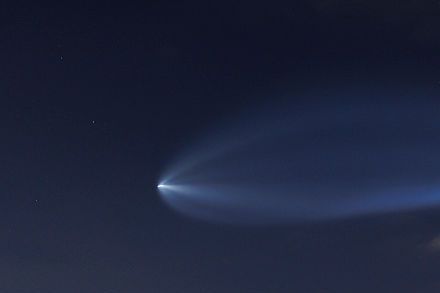
Sometime in the late morning of February 4, somebody at SpaceX headquarters pressed a computer key. A command line was beamed to Starlink’s 9,600 satellites in low Earth orbit. Their onboard processors, circling 550 kilometers above the Earth, instantly obeyed the command and fractionally changed their operational settings. Back down on the frozen ground, in the trenches, bunkers and ruined cities of Russian-occupied Ukraine, hundreds of Starlink terminals lost internet connectivity. As another freezing night set in, the Russian army’s drones and tactical comms went dark. “We are left without communication!” complained a frontline Russian military officer in a video posted on the Telegram channel “Voenkory Russian Spring.

‘More than half our squad were executed’: Inside Russia’s rotten army

The Russians are on the warpath – and Europe is Vladimir Putin’s next target. That was Sir Keir Starmer’s alarming claim at the Munich Security Conference earlier this month. Britons ‘must be ready to fight, to do whatever it takes to protect our people, our values, and our way of life’, Starmer warned. Britain and Germany’s top military commanders delivered the same message in a recent article. Russia’s military posture ‘has shifted decisively westward’, wrote Air Chief Marshal Sir Richard Knighton and General Carsten Breuer. Soon the Kremlin ‘may be emboldened to extend its aggression beyond Ukraine’. Really? According to much western coverage in mainstream and social media, the Russian army is crumbling, corrupt and inept.

Is the war in Ukraine any closer to ending?

Is the latest round of Russia-Ukraine peace talks, sponsored by the United States and currently under way in Geneva, likely to hasten the war’s end? Donald Trump seems to believe so. On Friday, the US President claimed that 'Russia wants to make a deal, and Zelensky will have to hurry. Otherwise, he will miss a great opportunity. He needs to act.' Europe, for its part, remains deeply sceptical and is urging Ukraine to fight on. As the EU's Foreign Affairs chief Kaja Kallas told the Munich security conference last week, 'the greatest threat Russia presents right now is that it gains more at the negotiation table than it has achieved on the battlefield.

How the Washington Post became a liability for Bezos

What does Jeff Bezos’s gutting of the Washington Post say about America’s sense of itself and of its place in the world? Bezos has scrapped much of the paper’s foreign coverage, as well as the books and sports sections. Over three hundred reporters and editors have been fired – including publisher Will Lewis. The Ukraine bureau has been closed, along with Berlin and the entire Middle Eastern and Iran team. You’d think there wasn’t much going on in the world. Does that mean that American readers are no longer interested in books or foreign news? That doesn’t sound true. The numbers of literate, educated and interested readers in the US who were devoted followers of the Post’s world-class books section and prizewinning foreign coverage haven’t collapsed.

Why is America determined to pick a fight with Poland?

Until very recently it was hard to find more stalwart allies of America in Europe than the Poles. Poland was an early supporter of Washington’s policy to expand Nato and actively pushed for a stronger US role in central and eastern Europe. The Poles also stood up as an enthusiastic member of every US-led military coalition, taking leading roles in Afghanistan and Iraq. It was to Warsaw that US President Joe Biden travelled – twice – in the wake of Putin’s invasion of Ukraine to give barnstorming speeches affirming that America would stand by Kyiv.  All the more surprising, then, that the recently appointed US ambassador to Warsaw chose to pick a diplomatic fight that threatens to snowball into a profound rupture between the two onetime allies.