Anne de Courcy

Streamlined chic or lacy froth: royal style wars of the 1930s

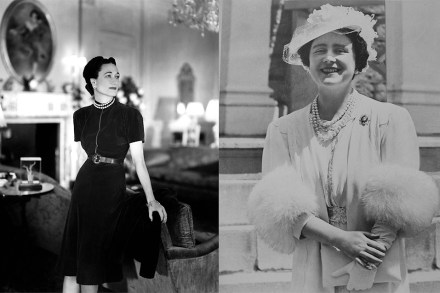
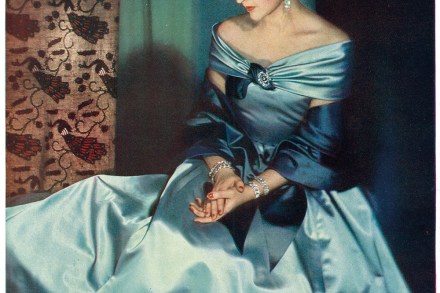
The semiotics of clothes, especially royal ones, can be fascinating, sending out powerful messages. Think of the jewel-studded, pearl-strewn portraits of Queen Elizabeth I or Princess Diana’s revenge-chic black dress. As a fashion queen herself (Justine Picardie was editor-in-chief of Harper’s Bazaar for more than seven years and has an acclaimed book on Chanel under her belt), no one is better placed to unpick the subtleties of royal public couture. So, judging by this book’s title, I was expecting a shrewd analysis of diplomacy dressing, with perhaps some behind-the-scenes vignettes. What happens if a royal lady unexpectedly gets a ladder in her tights at a crucial moment? Is there a colour code if three of them are out together? How do hats stay on in a gale?

Goddesses and courtesans: six centuries of the female body in art

From our UK edition

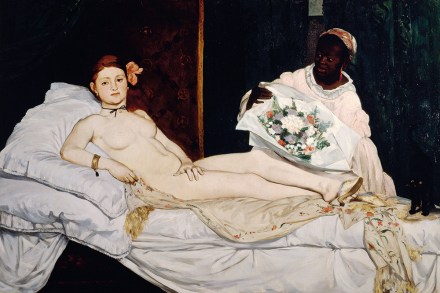
This is a book that many of us might like to have on our coffee tables – beautifully produced, not too heavy and full of pictures of pretty ladies, many of them with no clothes on. Its purpose is to show not only how artists have viewed the female body from the Renaissance to the present but also to explain how this body has been used to express both emotion and the attitudes of the day. Take Hiran Powers’s 1845 marble sculpture of a naked woman in chains, entitled ‘The Greek Slave’. This appeared after Britain had abolished slavery but before the American Civil War had put an end to it in the US. Thanks in part to the statue’s symbolism, beauty and perhaps also to its slight but titillating hint of bondage and thus of female subjection, it touched many nerves.

Paul Poiret and the fickleness of fashion

From our UK edition

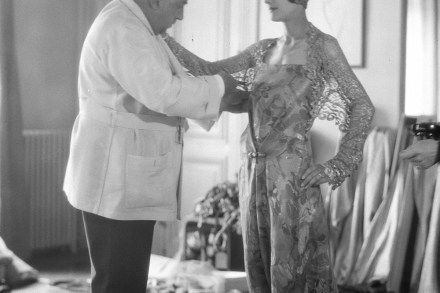
Such was Paul Poiret’s influence that he is the only couturier whose clothes are known to have caused several fatal accidents. At a time (1910-11) when fashion was loosening up he persuaded chic women into the hobble skirt, a garment so narrow round the ankles that only tiny, mincing steps were possible, with the result that several tripped over when stepping down from a pavement and one toppled from a bridge into a river where, unable to swim from the constriction around her ankles, she drowned.  In Mary E. Davis’s book, however, this dangerous garment gets only a brief mention.

The grand life writ small: a history of modern British aristocracy

From our UK edition

One of the facts that emerges from this detailed study of ‘modern British aristocracy’ is that the divorce rate among peers is roughly twice that of the rest of us, although the old unwritten adage that it didn’t much matter how you behaved provided discretion prevailed has long held good among many. Witness the 10th Duke of Beaufort, one of whose many mistresses, Lavinia, Duchess of Norfolk, would even boss the servants and change the menus when she stayed at Badminton. Most of these lady loves attended his funeral – but then, as Eleanor Doughty points out, the Duke’s relationship with the cuckolded husbands suggests ‘that embarrassment was not a word that figured in his dictionary’, since they were frequently invited to shoot at Badminton.

Deception by stealth: the scammer’s long game

From our UK edition

We all know that life is full of people who try to con us, often starting with a voice on the phone. ‘I’m speaking from the fraud department of your bank.’ ‘I’m your local BT engineer.’  No, you’re not from either my bank or BT. In all likelihood you are speaking from a scam farm somewhere in south-east Asia.  This book, however, deals with the serious con artists, the ones who infiltrate your life over a period of time, using psychological skills, imagination and often charm until they have finessed you into a position where you willingly hand them a large sum of money, often your life savings. Then whoosh! – and neither the scammer nor the money is ever seen again.

The mystifying cult status of Gertrude Stein

From our UK edition

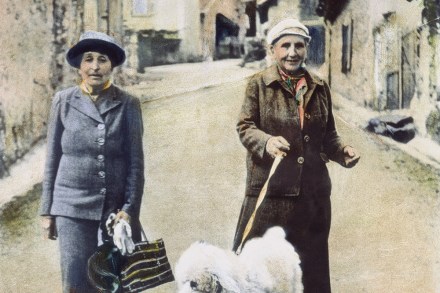
To most people, the salient qualities of Gertrude Stein are unreadability combined with monumental self-belief. This is the woman who once remarked that ‘the Jews have produced only three original geniuses – Christ, Spinoza and myself’. Of the reading aloud of her works, Harold Acton complained: ‘It was difficult not to fall into a trance.’ Even if you are as good a writer as Francesca Wade, it is still difficult to avoid the influence of what she herself calls Stein’s ‘haze of words’. So the first half of this impressively researched biography is cerebral rather than colourful.

The last of the great salonnières

From our UK edition

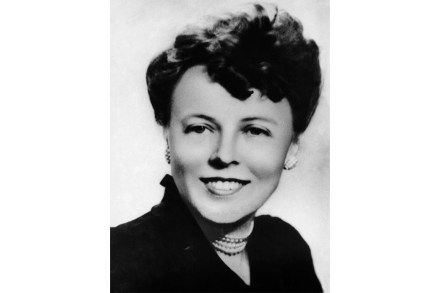
Lady Pamela Berry (Pam to everyone, so that is what I too shall call her) did many things in her life. She was president of the Incorporated Society of Fashion Designers and chair of the British Museum Society; and she conducted a passionate ten-year affair with the goatish Malcolm Muggeridge. But she was best known as a salonnière. In fact she was the last of the great salonnières of the past century. At her house in Barton Street, Westminster, within the sound of the division bell, she gathered parliamentarians, writers, aristocrats and wits, including the Lloyd Georges, Isaiah Berlin and Nancy Mitford. Across her table, where ‘gen con’ (general conversation) was the rule, flew barbs, ferocious arguments, political secrets and top-level gossip.

The unfairytale life of two European princesses

From our UK edition

This hefty book is more about context – the turbulent years of mid-19th-century Europe – than it is about its two protagonists. Details of the many popular uprisings of the time, plus the jockeying for position of the main players and the battles and intrigues involved, are so packed into its pages that teasing out the stories of the two empresses is not always easy. The early married life of Empress Elisabeth of Austria, known as Sisi, sounds appalling. Her older sister had been groomed to marry the young Emperor Franz Joseph, but the moment he saw Sisi, then only 15, she was the one he wanted. It was impossible to turn him down. Much of the future of Bavaria (her parents’ kingdom), let alone that of her own family, depended on his goodwill.

The Vikings never really went away

From our UK edition

For many people, the mental picture of a Viking is of a blond giant in a horned helmet leaping out of a sharp-prowed longboat to pillage and slaughter the terrified inhabitants of the nearest village or monastery. The horned helmet is a myth, but the Vikings were, in general, red-haired or blond and taller than the Anglo-Saxons (Scandinavians are still, on average, an inch or so taller than Britons) and for almost 100 years raiding the English coast was what they did. As ‘heathens’, the Vikingsconsidered neither monasteries nor churches sacred Thanks to their unrivalled expertise in boat-building, they were unmatched as pirates – looting, taking prisoners for slavery or ransom or exacting tribute for not so doing. They applied the same technique to land piracy.

The ambassador’s daughter bent on betrayal

From our UK edition

In June 1933, the 24-year-old Martha Dodd, the daughter of the newly appointed American ambassador to Berlin, arrived in the German capital with her parents and older brother. She knew little and cared less about politics. To her, Adolf Hitler, who had just seized supreme power in Germany, was merely ‘a clown who looked like Charlie Chaplin’.            To all her friends in Berlin, Martha would show odd bits of information from her father’s office The Berlin in which the Dodds found themselves was a ferment of intrigue, uncertainty, plots, counterplots, sudden disappearances and febrile gaiety.

Wondrous treasure troves: the Jewish country houses of Europe

From our UK edition

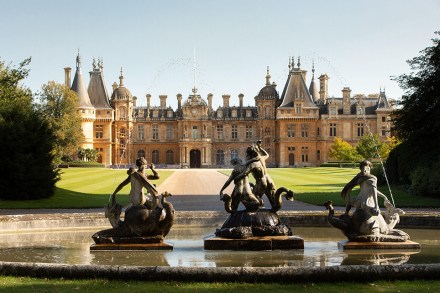
The words ‘country houses’ immediately make one think of England, yet only five of the 15 featured in this hefty, impressively illustrated book are in Britain. It is a compilation of essays: part histories of various Jewish families, part architectural descriptions and part stories of the chateaux, mansions, villas and, of course, country houses all over Europe, owned and sometimes built by these families. Each chapter is by a different author. The swimming pool was surrounded by such a profusion of lilies that the scent at night was overpowering  These homes had different functions. Some, like that of the German-born painter Max Liebermann, were built as traditional country retreats – his palatial town house was next to Berlin’s Brandenburg Gate.

From ugly duckling into swan – the remarkable transformation of Pamela Digby

From our UK edition

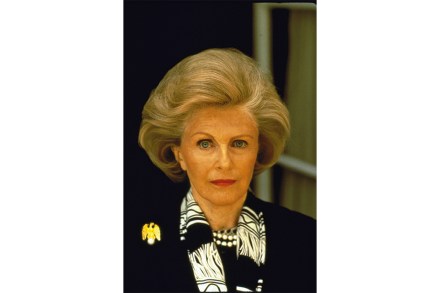
The tramp of lovers marching through our heroine’s bedroom in the first half of Sonia Purnell’s Kingmaker almost deafens the reader. But then not for nothing did Pamela Digby Churchill Hayward Harriman become known as the alpha courtesan of the 20th century. What is perhaps not so well covered is her decade-long influence on American politics before becoming the United States Ambassador to France under (no, not literally) Bill Clinton. The Hon Pamela Digby was born on 20 March 1920 and brought up quietly in Dorset, riding, hunting and meeting only those her parents (her father was the 11th Baron Digby) considered above the social plimsoll line. Early on she realised that what gave a woman supreme independence was great wealth – usually acquired through a man.

Iris Apfel’s talent to amaze

From our UK edition

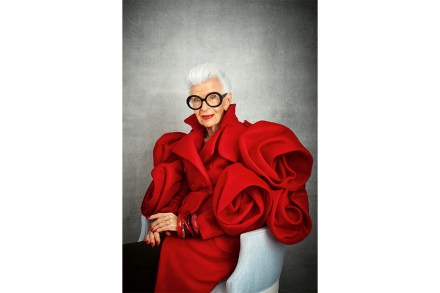
This is a book like no other. Part artwork and part compendium of a lifetime’s experience in design, it is meant to be looked at as much as read. Nor is it titled Colourful for nothing: entire pages are in vivid hues of vermilion, lime green, canary yellow, emerald and toffee. On them are displayed illustrations, patterns of fabric and family photographs, interspersed with chunks of prose or aphorisms. In short, it is an expression of its author’s philosophy, threaded through rather disjointedly with the story of her life. Iris Apfel is the only woman I can think of – with the possible exceptions of Diana Vreeland and Helena Rubinstein – who turned extreme plainness into an aspect of personal style.

From Cleopatra to Elizabeth Taylor, women have found jewels irresistible

From our UK edition

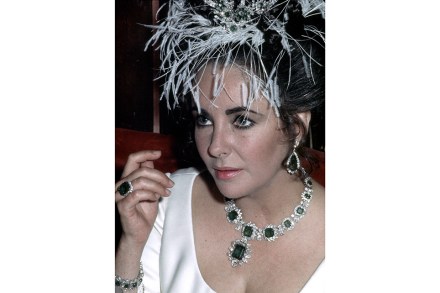
When workmen demolished an ancient building in Cheapside in 1912 they saw something glinting out of a broken wooden box. They had stumbled on what became known as the Cheapside Hoard – a collection of jewels dating from around 1600, its star, the Cheapside Emerald, a wonderful stone holding a miniature watch. It came from Colombia, still the source of the world’s finest emeralds, probably the world’s most ancient gems. The first recorded instance of them is on an Egyptian papyrus around 2400 BC. Their beauty and rarity made them the favourite of the élite, with Cleopatra probably their most famous fan. The Rockefeller Emerald fetched $5.5 million in 2017.

The perils of waiting on a Tudor queen

From our UK edition

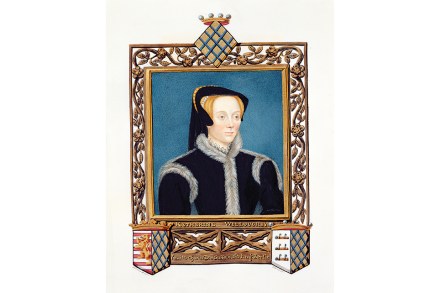
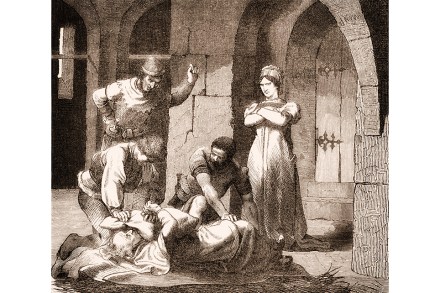
At 7 o’clock on a bleak February morning in 1542, King Henry VIII’s fifth wife Katherine Howard, so enfeebled by fear and misery that she could hardly stand, was half-led, half-carried from her cell in the Tower of London to the scaffold in a nearby courtyard. Watching as the axe fell on her mistress’s neck, and knowing it would be her turn next, was her lady in waiting Jane Rochford. This grisly scene illustrates the horror that underlay the glamour and magnetism of a court where ambition, intrigue, plot and counter-plot swirled in a giddying maelstrom and where balancing on the slippery tightrope of Henry’s moods was essential.

The identical twins who captivated literary London

From our UK edition

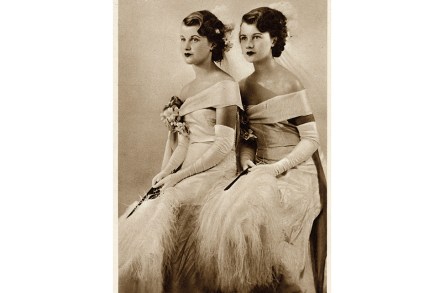
The dazzlingly beautiful identical twins Mamaine and Celia Paget were born in 1916 and brought up in rural Suffolk – not the greatest springboard, you would think, for lives at the intellectual heart of the mid-20th century. Yet the list of their friends reads like a roll call of literary notables: Dick Wyndham, Peter Quennell, Cyril Connolly, Bertrand Russell, Sacheverell Sitwell and Laurie Lee. Between them, the twins were proposed to by, among others, Arthur Koestler and George Orwell; had liaisons with Albert Camus and the formidably clever Oxford philosopher Freddie Ayer; quarrelled with Jean-Paul Sartre and Simone de Beauvoir; and received love sonnets from the historian and poet Robert Conquest. At the heart of this book, however, lies the girls’ twinship.

Love and loathing at Harold Wilson’s No. 10

From our UK edition

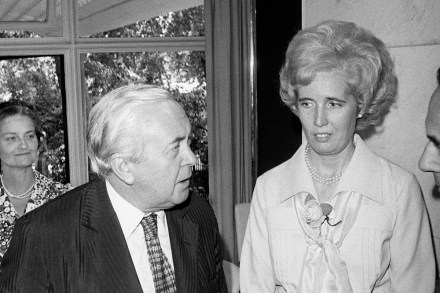
If Marcia Williams is thought of at all today, it is in terms of hysterical outbursts, a mysterious hold over the Labour prime minister Harold Wilson and, above all, the ‘Lavender List’ – Wilson’s 1976 Resignation Honours List in which Marcia is believed to have played a significant part. Linda McDougall, the widow of the Labour MP Austin Mitchell, gives an infinitely more nuanced and sympathetic picture of this extraordinary woman. I found her biography gripping, with its insider knowledge of government, its picture of the emotional dynamics of Downing Street and its sensational claim that Marcia may have been drugged by Wilson’s own doctor.

The many lives of George Weidenfeld, legendary publisher and ladies’ man

From our UK edition

‘You can go ahead,’ said the voice at the other end of the telephone. ‘The DPP has decided not to prosecute.’ It was the call that allowed the publication of Lolita, one of the greatest gambles of George Weidenfeld’s career. The moment George – it is impossible to think of him as anything other than George – had read this controversial book, available from the Olympia Press in Paris, known for its pornographic list, he had wanted to publish it himself; but as the law then stood, it would have been pulped immediately, owing to its story of a middle-aged professor who becomes obsessed with a 12-year-old girl and kidnaps and sexually abuses her.

The perils of being pope

From our UK edition

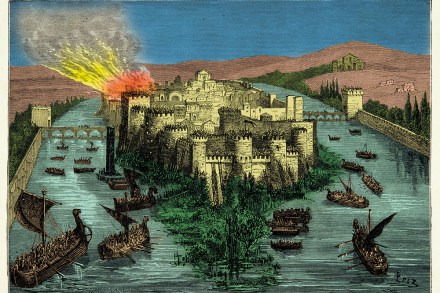
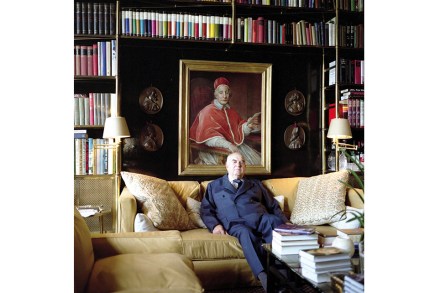
Rome in the 1st century AD pulsated with religion. The knowledge that they lived in a sacred city, protected by the gods, permeated the daily lives of its citizens. They would see oxen being led down cobbled streets to be sacrificed on marble altars or offerings of incense and wine being made when the gods or the emperor demanded. There were constant religious festivals. At the Lupercalia, childless women were beaten with goatskin thongs that promised fertility; at the Saturnalia, Romans shed their togas, drank heavily and gambled. Even non-citizens and slaves were obliged to take part in these religious ceremonies.

A canter through Britain’s racecourses

From our UK edition

Although it could hardly be less woke, the racing world is an excellent example of the diversity and inclusiveness we are all constantly urged to practise. Racecourses attract people of all classes, ages, creeds and economic status, some drawn by the spectacle, others by a love of horses or betting, and many just by the prospect of a good day out. Nicholas Clee, a committed racegoer, clearly enjoys the latter, and has hit on the idea of taking us round the racecourses of Britain and Ireland. There are 59 in Britain and 26 in Ireland, most of which he has visited several times. En route we pick up stories of horses, jockeys, trainers, the history of the race itself and, often, the best place to watch the spectacle.