Philip Hensher

Philip Hensher is professor of Creative Writing at Bath Spa University and the author of 11 novels including A Small Revolution in Germany.

A deadly imitation game: the fate of the British teenager who posed as a Russian oligarch’s son

This story is little more than a brutal anecdote, which Patrick Radden Keefe has chosen to tell at excessive length. It has the kind of fact-checked gravity that indicates a star American journalist bent on perpetrating an entire book. (‘Built in 1923 and originally known as the Empire Stadium, Wembley was the most iconic sporting ground in Britain.’) But it occurred to me more than once as I read it that it has the hallmarks of a particularly black London comedy by Dickens or Ben Jonson or Joe Orton. A violent knave, his activities previously limited to cheating the police, murdering his equally appalling criminal rivals, doing underhand deals and ripping off the rich, acquires an associate.

Ruaridh Nicoll, Angus Colwell, Mary Wakefield, Philip Hensher & Nicholas Farrell

From our UK edition

34 min listen

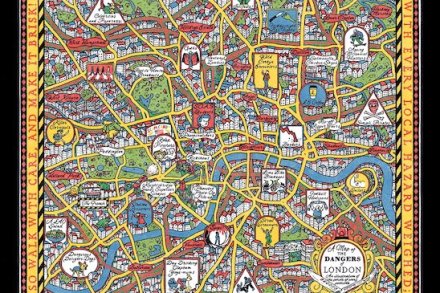
On this week’s Spectator Out Loud: Ruaridh Nicoll reads his letter from Havana; Angus Colwell takes us through an A-Z of London horrors; Mary Wakefield points out the glaring flaw in Keir Starmer’s 'cohesion plan; Philip Hensher reviews an increasingly reflective Alan Bennett; and finally, Nicholas Farrell reflects on Jeffrey Epstein, Silvio Berlusconi – and nudists in Italy. Produced and presented by Patrick Gibbons.

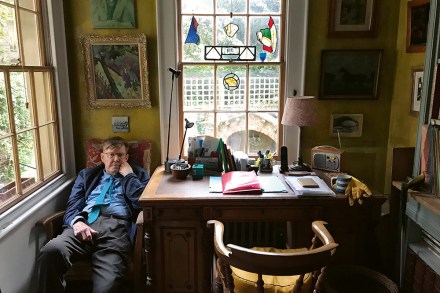
A revival of Alan Bennett’s early work is long overdue

From our UK edition

It is a curious literary form, the published diary. A surprising number of the classic diarists did write for eventual, usually posthumous, publication – Chips Channon under a 60-year embargo, A.C. Benson, Samuel Butler, in his wonderful notebooks, and surely the possibility was in the minds of Samuel Pepys and the Duc de Saint-Simon. More recently, great diaries have been published within the author’s lifetime. James Lees-Milne’s first instalment came out 30 years after the period it described. Alan Clark’s initial offering, covering 1983-92, appeared in 1993. Tony Benn’s hilariously tedious volumes emerged on a rolling programme which slowly caught up with the events they described.

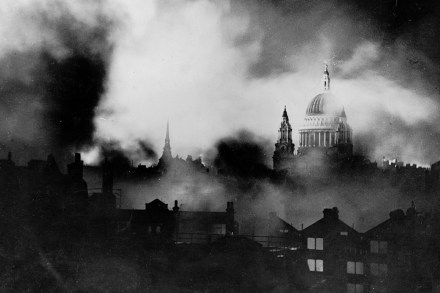
Blitz spirits: Nonesuch, by Francis Spufford, reviewed

From our UK edition

If you read books for a living, the calling probably started with a moment of utter entrancement: a novel you couldn’t bear to set down; a few unforgettable days, as Bleak House, Earthly Powers, The Woman in White or Titus Groan worked its unsuspected magic on its millionth reader. Such books are rarer these days, but they do still happen, and Francis Spufford’s Nonesuch is an absolute corker. Randall Jarrell once wistfully imagined a novel that would ‘bear up under the weight of hundreds of thousands of readers a plot that higher critics could call crude and that bewitched families could pad over in house slippers’. Nonesuch does the trick, and I won’t be the only reader whom it keeps up until 3 a.m. It’s a novel of immense confidence.

The doctor will patronise you now

How a profession speaks to its subjects is always of interest to a writer, sometimes perversely so. Over the past few weeks a persistent problem with my foot worsened and appeared to take charge of things. (This isn’t going to be a piece moaning about ill health, I should reassure you.) The hospital took soundings of the ulcer, now turned into infection: first with a probe, then an X-ray, then an MRI scan, and finally the consultant manifested himself. The infection was in the bone and showed no sign of retreating under the antibiotics. It looked as if an operation was unavoidable, to remove – the consultant paused in his explanation – ‘We’re just going to take a kind of little nibble at the toe,’ he said. I regarded him levelly.

Kemi Badenoch’s favourite book is the perfect choice

From our UK edition

Occasionally, the leader of a political party will be asked to name a favourite book. For years, this has produced a dispiriting response. Keir Starmer told an interviewer that he didn’t have a favourite novel or poem. On other occasions, he said that the comic Roy of the Rovers was his favourite book, and, more plausibly, two stories of helpless victimhood, The Trial and James Kelman’s unreadable A Disaffection. It might have seemed that the days were over, when Anthony Eden had been known to be passionately keen on Proust, Margaret Thatcher a great lover of English poetry, John Major an aficionado of Trollope (The Small House at Allington rightly singled out).

The ‘boring twenties’, population decline & happy new year

From our UK edition

35 min listen

A far cry from the ‘roaring twenties' of the early 20th Century, the 2020s can be characterised as the ‘boring twenties’, argue Gus Carter and Rupert Hawksley in our new year edition of the Spectator. Record numbers of young people are out of work but even those with jobs face such a dire cost-of-living situation that they have no money left over to spend on fun. Traditional cultural outings – like going to the theatre – are increasingly confined to older, richer generations. This is long-standing issue, but compounded by Labour’s economic policies. A slightly downbeat start to the new year here at the Spectator, but at least the episode provides a free dose of fun.

Christmas II: Dominic Sandbrook, Philip Hensher, Steve Morris, Christopher Howse, Michael Hann & Mary Killen

From our UK edition

41 min listen

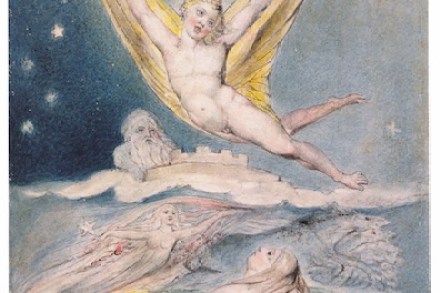
On this week’s special Christmas edition of Spectator Out Loud – part two: Dominic Sandbrook reflects on whether Lady Emma Hamilton is the 18th century’s answer to Bonnie Blue; Philip Hensher celebrates the joy of a miserable literary Christmas; Steve Morris argues that an angel is for life, not just for Christmas; Christopher Howse ponders the Spectator’s enduring place in fiction; Michael Hann explains what links Jeffrey Dahmer to the Spice Girls; and, the Spectator’s agony aunt Mary Killen – Dear Mary herself – answers Christmas queries from Emily Maitlis, Elizabeth Day, Rory Stewart and an anonymous Chief Whip of Reform UK.  Produced and presented by Patrick Gibbons.

The joy of a miserable literary Christmas

From our UK edition

A Christmas Carol is pretty well unavoidable around now, with Little Women trailing somewhat behind. There’s no shortage of alternative literary Christmases among the classics, however, often less sweetly heartwarming and more invigoratingly grumpy. Nigel Molesworth, it will be remembered, foiled all attempts to inflict A Christmas Carol on him. ‘It is just that there is something about the Xmas Carol which makes paters and grown-ups read with grate XPRESION, and this is very embarassing [sic] for all.’ For the Molesworths among us, there are plenty of alternatives to be had. Sometimes these are depictions of Christmas where no Christmas should be occurring.

Is ‘wind drought’ the latest climate catastrophe?

From our UK edition

Simon Winchester has found an excellent subject. While invisible, wind makes itself apparent through its effect on other things. This may mean flying detritus, scudding clouds and the rustle of foliage; or it may mean the ways in which it irresistibly alters and directs larger movements in society and culture. Much of the history of global capitalist exchange was driven by the trade winds, forcing the direction of money and goods into particular cross-continental patterns of advantage and disadvantage. Over the centuries, we have discovered more and more, understanding the westerlies and those high, savage rivers of air, the jet streams. Many significant events have been settled by wind.

Are Vermeer’s paintings really coded religious messages?

From our UK edition

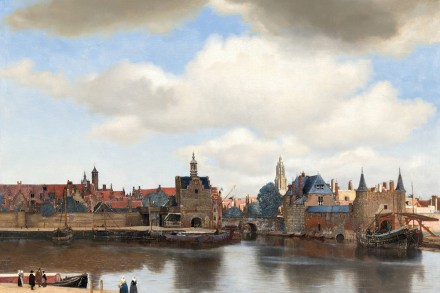
The Delft painter Johannes Vermeer, now probably the most beloved artist of the Dutch Golden Age, had an unusual career. His reputation in his lifetime was small. For some reason he painted almost exclusively for the van Ruijvens, so only those who knew the family would have been able to view much of the work. One foreign observer who did see a painting owned by a baker (probably handed over in security for a large overdue account) was incredulous at what the owner claimed was the value of a small picture by an unknown artist. After Vermeer’s death, and the sale of the collection for very little on the death of his patrons’ son-in-law, his name disappeared. He is hardly ever mentioned in any of the exhaustive and insightful 18th-century histories of Dutch painting.

Jilly Cooper’s novels could well become classics

From our UK edition

Dame Jilly Cooper, who has died at 88, had a remarkable career, turning herself from a sparkling writer for newspapers into the author of novels which survive, decades after they came out, very well. Few of the huge bestsellers of their day are read 40 years on – The Manxman, Peyton Place, Valley of the Dolls, Scruples all faded away. When one of Dame Jilly’s 1980s novels, Rivals, was filmed in 2024, it didn’t revive a forgotten favourite: like almost all her other novels, it had never disappeared from readers’ affections. Her books stand every chance of turning, in time, into classics of our literature. What makes the novels work so well is that her characters start to speak, and you remember them Cooper’s novels fall into two groups.

Kemi’s fightback, the cult of Thatcher & debunking British myths

From our UK edition

40 min listen

The Spectator’s cover story this week is an interview with Conservative leader Kemi Badenoch ahead of the Tory party conference. Reflecting on the criticism she received for being seen as slow on policy announcements, she says that the position the Conservatives were in was ‘more perilous than people realise’ and compares herself to the CEO of an ailing firm. Can Kemi turn it around for the Tories? Host William Moore is joined by the Spectator’s political editor Tim Shipman – who interviewed Kemi – alongside commissioning editor Lara Brown, and academic and author Philip Hensher. They discuss whether the ‘cult of Thatcher’ needs to die, Tim says he's more Disraeli and Bismarck to Lara's Pitt and Philip reveals what once got him sacked from the House of Commons.

Since when did the English love to queue?

From our UK edition

This is a treasure house of a book, filled with curiosities and evidence of a rare breadth of patient investigation. Anyone who has read one of Graham Robb’s books, from his early biographies of classic French writers, through a wonderfully amusing study of 19th-century homosexuals, to a series of historical and geographical studies of France and Britain, will not be surprised at that. What is new in this idiosyncratic history of the British Isles is Robb shifting some of his own encounters to the foreground. In previous books, the experience of bicycling has been fruitfully used.

What has the reparations movement ever done for victims of modern slavery?

From our UK edition

Slavery was – and importantly continues to be – a moral abomination. Its existence in the 21st century is a disgrace. Whole communities such as the Uighurs are subject to forced labour; two years ago it was estimated that 5.8 million people were living in slavery in China. And slavery is a problem much closer to home. Immigrants in the West are also at risk. A student of mine, an Indian national, enquired about the possibility of working at a Brick Lane curry house. He was told that they would ‘employ’ him, but that he would have to surrender his passport and sleep in a locked room on the premises.

Brideshead Revisited, 80 years on: from the archives

From our UK edition

43 min listen

This week's Book Club podcast marks the 80th anniversary this year of the publication of Brideshead Revisited. This conversation is from the archives, originally recorded in 2020 to mark its 75th anniversary. To discuss Evelyn Waugh's great novel, Sam Leith is joined by literary critic and author Philip Hensher, and by the novelist's grandson (and general editor of Oxford University Press's complete Evelyn Waugh) Alexander Waugh. What made the novel so pivotal in Waugh's career, what did it mean to the author and how did he revise it? And why have generations of readers, effectively, misread it?

Christopher Marlowe, the spy who changed literature for ever

From our UK edition

Stephen Greenblatt tells the story of being approached in the 1990s by a screenwriter who wanted to make a Shakespeare -biopic. Greenblatt repeatedly told him to forget Shakespeare and look instead at his predecessor Christopher Marlowe. The screenwriter knew what he was about and ignored Greenblatt’s advice – the result was Shakespeare in Love. The fact of the matter is that Marlowe’s life is the sort of thing that people assume would make a good film but in reality it was just too full of violence, passion and secret plots. By the time he was murdered at the age of 29 in 1593, Marlowe was enmeshed in far too much for a mere drama to set out. Biographies haven’t been lacking, many of them excellent. The allure is clear.

Give Eric Ravilious a rest

From our UK edition

How do artists sustain a reputation? We’d like to think it’s on the basis of their work. In the case of visual artists, it would be nice to think they make it because their art is beautiful, original or absorbing. It shouldn’t be a matter of what the art is about, or Benjamin West’s epic historical tableaux would be better paintings than Jean Siméon Chardin’s still lives. It shouldn’t be about the artist’s personality or history, or we would rate Benjamin Haydon (tragic suicide) over John Constable (domestically inclined Tory). On the other hand, it doesn’t always work like that.

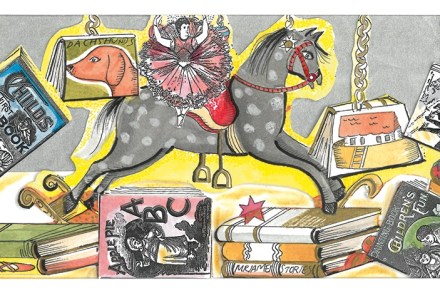
Public libraries deserve to shut – they’ve forgotten why they exist

From our UK edition

The usual piece about public libraries runs like this. Public libraries are for ‘more than just books’. They are in a desperate plight after years of cuts, or better still ‘Tory cuts’. Librarians, who are heroes, struggle to go on serving their local communities. Libraries are hanging on by a thread, and because of those government cuts can’t be as useful as they once were. The only solution, of course, is more money from central government to local authorities, who, of course, will dash to spend the extra millions on reinstating public libraries and not add it to other things they want to splurge on.