Spectator Life

Spectator Life

An intelligent mix of culture, style, travel, food and property, as well as where to go and what to see.

Monte Carlo isn’t glamorous

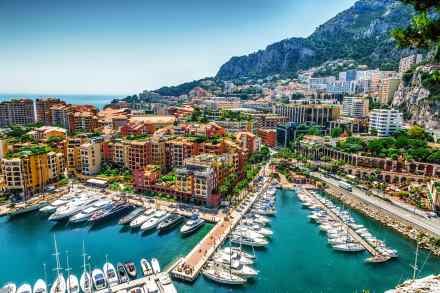
What does Monte Carlo conjure up? A glamorous casino where fortunes can be won and lost, but mostly lost? Men in evening dress at baccarat tables with beautiful women standing by? A tax haven for the glitzy rich on the Cote d’Azur? Fabulous Belle Epoque buildings? A refuge for Edwardian English invalids to escape the cold? Grace Kelly? The Grand Prix?  It was here that Max de Winter met the girl who became the second Mrs de Winter at the beginning of Daphne du Maurier’s Rebecca. "What do you think of Monte Carlo, or don't  you think of it at all?" he asked her. "I said something  obvious and idiotic about the place being  artificial," she recalled.  Well, she was pretty much correct.

The joy of licorice

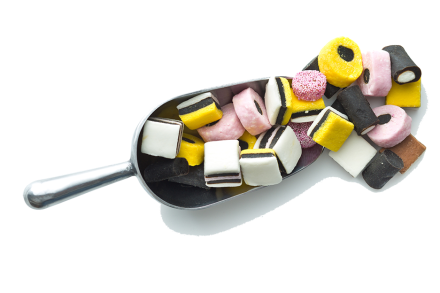
“I’ll swap you two of my rolls for three of your spogs.” That was the sort of thing you’d hear round the tuckshop in morning break when we schoolboys swapped and bartered our Liquorice Allsorts. We all had our favorites, spogs being the round pink or blue jelly buttons that had a coating of tiny sugar grains, while the pink or yellow coconut rolls featured a plug of licorice surrounded by coconut ice. Pontefract Cakes were another schoolboy favorite: small round discs of licorice that were allegedly one of, if not the oldest commercial sweets in the world. In the 11th century, Benedictine monks introduced licorice to Pontefract, Yorkshire. At that time, the plant’s roots were commonly chewed to soothe sore throats, ease coughs and help digestion.

Gentleman’s Relish is no more

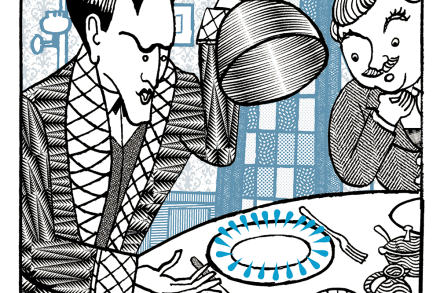
It is the early hours of the morning and an email drops into my inbox. Lacking any kind of willpower, I open it. Now I’m wide awake. Because this isn’t the usual PR slop that starts my days. It’s a tip-off. A big one. A reader has discovered something about a company and they are urging me – me! – to investigate. Adrenaline surges. This must be what it felt like to be Woodward. Or Bernstein. Only my informant is pointing me in a slightly different direction. Their intel is on Gentleman’s Relish: the incredibly niche spread is disappearing from our shelves. It has been available in the House of Lords dining rooms – but for how much longer? Online supermarkets and delis are showing it as out of stock. What is going on?

gentleman's relish

My take on marry me chicken

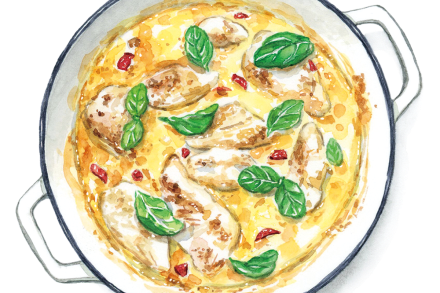
I am not in the habit of bringing viral TikTok recipes here. It is a safe space, away from digestive biscuits submerged in yogurt masquerading as cheesecake, baked oats, or sugary instant coffee whipped up like foam (if you don’t know what I’m talking about, ignorance is bliss). No, here we are in the realm of tried-and-tested vintage recipes. So why am I letting marry me chicken into this sacred place? For the uninitiated, it first popped up a decade ago on an American food website called Delish, but it became the most-searched recipe on the New York Times in 2023. It’s a simple concept: chicken cooked in a creamy, tomatoey sauce that is so delicious that the person to whom you serve it will get down on one knee.

marry me chicken

Make mine a Moka pot

It’s strange the things that can trigger amity or affection. At the beginning of the capsule/pod coffee-maker craze, when George Clooney, with his come-to-bed eyes, was seducing the world with Nespresso machines, I bonded with my eldest daughter’s Italian boyfriend over the Bialetti Moka pot. Notwithstanding the expense and waste of the capsule coffee makers, I need at least three pods to get the lights on in my head in the morning. I’ve never had a good coffee from any of them. Contrast that with the cute, economical, environmentally friendly little Moka, the smallest of which – one cup – costs about $30 and, depending on the quality and freshness of the coffee used, makes a better cup than any café or restaurant.

A trip to Fortnum’s turned me into an expert present-giver

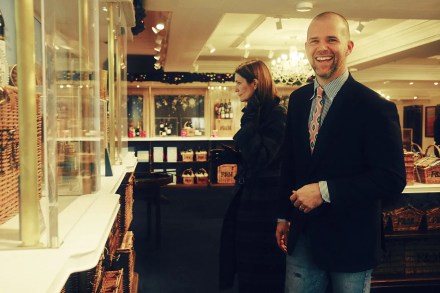
I had only been to Fortnum & Mason once before. The first time I went, I wasn’t sure what I was getting in to. I remember that the distinct, pale eau-de-nil (mint green) exterior – its signature color – was framed by cream trim and Georgian sash windows stacked neatly across several stories. It was charming and slightly whimsical, like a confectioner’s box scaled up to building size. My maiden voyage was with the British skateboarder and artist Blondey McCoy, who excitedly led my wife around the hallowed halls as an unofficial tour guide during the bustling Christmas season last year, sporting an infectious Cheshire-cat grin. I was jetlagged and generally not festive, but the energy was palpable. I began to turn from a Scrooge into a believer.

fortnum

How I won over a Scrooge-like New Yorker

Like all men, my dear friend Chris Black is an absolutely terrible person to shop with. He behaves only marginally better than a boy toddler. As we stood on the street outside Fortnum’s, this New Yorker’s greeting to me was, “I’m not really a Christmassy kind of person.” How anyone could say this when they are about to enter the Father Christmas of department stores is beyond me. Fortnum & Mason, with its crimson carpets and twirling mahogany doors, counters groaning with marzipan and chocolate and its gracious staircases and red-coated butlers transport even the most jaded shopper to a gentler time when Christmas shopping was an “outing,” one that you dressed up for, before people had even imagined scroll-and-click retail.

How to make an unforgettable Christmas dinner

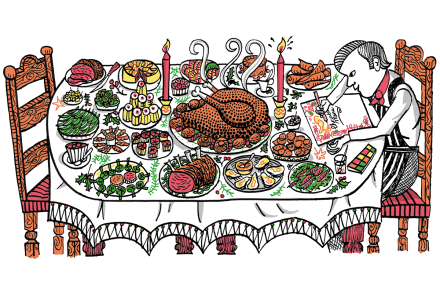
In the early 1970s, celebrity chef Jacques Pépin and his wife bought a dilapidated house in the Catskills so they could go skiing on the weekends. It was a real fixer-upper. Groups of friends would come up from New York City and pitch in on the renovation effort, and Pépin would serve dinner at the end of the day. These weekends were so much fun Pépin decided to memorialize them by hand-lettering and painting special menus. How Pépin convinced his friends to let him sit in the kitchen sketching petits poissons and heads of broccoli while they slaved away at framing and drywalling his winter getaway is, admittedly, mysterious.

Christmas
barbecue

Why winter is the best time for a barbecue

Summer is usually associated with outdoor cooking which is a perfectly reasonable association. But standing over a hot grill or smoker when the mercury is rising is not the most pleasant of activities. Whatever you are cooking becomes seasoned with droplets of sweat. Another oft-overlooked issue, particularly when it comes to smoking meats, is that temperature regulation of the cooking apparatus can be difficult when the ambient heat surrounding it is working in synergy with the heat inside it. While I have a friend who does competition cooking and isn’t a stranger to winning (he pushes his smoker up to 300°F) most of us lack the requisite skill for smoking a pork shoulder or brisket at that heat and pulling out a tender product at the end.

Bourbon

When it comes to bourbon, provenance matters

My wife Amber and I returned home, to the heart of where it all began for me – the Bluegrass. A day at the races at Keeneland felt like stepping into a painting: the autumn sun catching the coats of the Thoroughbreds, the crowd humming with excitement. The next night, we watched on as the Kentucky Wildcats nearly toppled Texas under the lights at Kroger Field, the air electric with hope. But it was afterward, on the backroads, that Kentucky spoke loudest. Horses grazed behind old stone fences; the sweet, yeasty scent of mash rolled out of the distilleries that dot the countryside. In those quiet miles, I remembered how deeply I love this place and how fiercely I’ll defend her bounty, both her people and her goods.

Anne of Green Gables perfected the kitchen mishap

There’s something wickedly entertaining in reading about other people’s kitchen debacles, whether actual or fictional. They’re just so relatable. The jelly that won’t jell in Louisa May Alcott’s Good Wives is cruelly hilarious, but the best culinary catastrophe in classic fiction, for my money, is in Anne of Green Gables. Stylish guests, including the upper-crust Mrs. Chester Ross, are dining at Green Gables and our ebullient Anne is on her very best behavior. All goes well until Marilla arrives with the pudding and a pitcher of pudding sauce. On spotting the pudding sauce, our heroine’s eyes grow wide and terrified.

kitchen mishap
croissants

Is this the end of the French croissant?

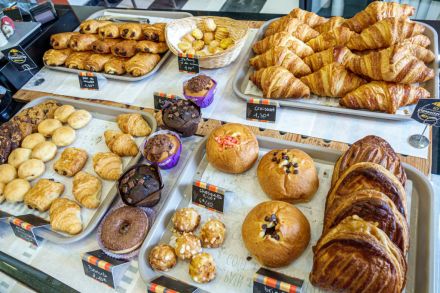
Occasionally, a French person reveals – without any malice or superciliousness – that they run on an alternative operating system from us Brits. And on an entirely different motherboard from our American cousins. Over the years of gathering supporting anecdotes, a surprising theme has emerged: butter. Take my first visit to Paris, more than 30 years ago. I innocently asked for butter with my croissant. Simple answer: “Non.” Naturally, I remonstrated. The waiter retorted: “A croissant eeez butter!” And, in fairness, he had a point. Upon biting into said viennoiserie, I had to concede: it was nothing like the dry grocery store versions I was used to. Moments later, a small pot of raspberry confiture was graciously placed on my table.

Go to Cicoria for the food, stay for the opera

Smart Italian restaurants in cultural destinations are like buses: you wait ages for one and suddenly two come along at once. I recently praised Locatelli at London’s National Gallery. Returning to the city, it is the turn of Cicoria at the Royal Ballet and Opera, Covent Garden; a joint under the aegis of Angela Hartnett, well-known for her upscale restaurant Murano in Mayfair, her casual chain Cafe Murano and her frequent appearances on the box. Surprisingly few of the world’s great opera houses have given much thought to catering, although things are improving. I ate very well recently at Madrid’s Teatro Real and you can push the boat out with caviar at the Met in New York.

cicoria
zohran mamdani

Zohran Mamdani’s policies will make restaurants bland and expensive

There’s no shortage of catastrophic predictions for New York City under Zohran Mamdani’s leadership. While we probably won’t see breadlines, the wildly expensive, exhaustingly derivative restaurants that dominate the New York food scene are likely to become more dominant. Mamdani’s big pledge on food is to “make halal eight bucks again.” But it’s a “false promise” of street-food affordability according to Heritage Foundation economist Nicole Huyer. She says Mamdani’s economic program, which includes higher taxes, steeper leasing regulations and a pledge to raise the minimum wage to $30 an hour by 2030, will effectively make restaurants even more expensive.

When did restaurants get so boring?

The New York Times recently released its annual list of America’s Top 50 restaurants – and the perfectly predictable honorees highlight just how beholden the restaurant industry is to the tastes of a would-be cosmopolitan class. The casually refined, vaguely ethnic-fusion cuisine that you stumble upon even in America’s most provincial places is rife. From New York to Los Angeles and everywhere in between, America’s restaurant industry has never been more diverse. Yet somewhat counterintuitively, it’s also never offered more of the same. Often, these restaurants propose some mix of French staples (think mother sauces, patisserie) or Italian comfort food (pasta, pizza) fused with Latin, Asian and/or Middle Eastern flavors.

restaurants
tomato

Why I haven’t created a tomato-cannabis hybrid

Jean-Louis was leaning out of his second-floor window. “Bonsoir, Dan!” I could hear the rumblings of a social gathering behind him – no music, just a cacophony of French voices battling for supremacy. I bonsoired him back and that would have been that, only my dog took the opportunity to evacuate by his front gate. “Montes boire un verre!” Jean-Louis was clearly drunk, but after 12 years of cordial nods, I momentarily allowed myself to believe I’d cracked the inner circle of village winemakers. And so, poop bag in hand, I politely accepted. Right away, it was clear that the vibe was off. Everyone had stopped talking and was looking at me as I stepped into the kitchen.

restaurants

Can American restaurants thrive in Britain?

To mark the arrival of Carbone in London and the imminent opening of Straker’s in New York, The Spectator’s Angus Colwell spoke with writer Gage Klipper about the differences between British and American restaurants, whether bad-boy chefs are back in – and which eateries couldn’t exist anywhere else. ANGUS COLWELL: Shall we talk about Carbone, which has just arrived in London? GAGE KLIPPER: For sure. I’m a certified Carbone hater: New Yorker, born and raised, but for me, Carbone just never really fit the New York vibe. It’s the Instagram person’s idea of what New York fine dining should be. Of course, they cater to this old-school, showy New York sensibility, but it’s not really New York in any real sense.

In memory of Saul Zabar

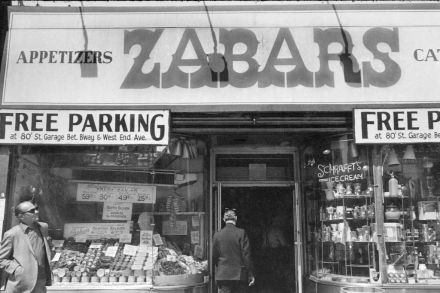
On what is controversially called Columbus Day weekend, which this year fell uncontroversially at the end of Sukkot, my wife, daughter and I found ourselves in our native habitat: New York. Naturally, this meant a trip to Zabar’s, though because our daughter is a toddler who travels by stroller when she is not toddling, I decided to make this Saturday different from all other Saturdays: “to” Zabar’s meant this time “up to but, alas, not inside.” After all, weekends are always a madhouse in the country’s most famous “appetizing” store, founded in 1934, but especially so four days after patriarch Saul Zabar’s death on October 7 (of all days) at the age of 97. An awful lot of pilgrims journeyed last week to the mecca of this self-described “lox-smith.

zabar’s

There’s more to pumpkins than you might think

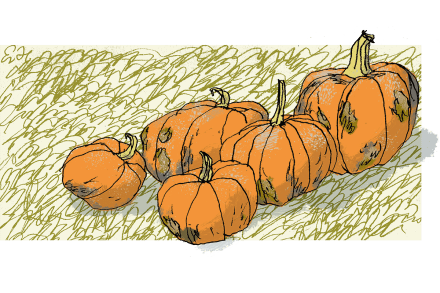
There’s a famously untranslatable expression in Virgil’s Aeneid: lacrimae rerum. Latin scholars, always fond of threshing things out, have devoted reams of analysis to proving just how untranslatable it is. As is typical of academics, however, they go to lots of trouble to establish its utter untranslatability – and then turn around and translate it anyway. When pumpkins aren’t being cozy, they generally denote a sense of emptiness or artifice Word for word, lacrimae rerum means “The tears of things” (or, depending on your school of thought, “The tears for things.”) But each scholar has his slant on the sadness.

pumpkins
baking

Don’t let science stop you from baking

Sometimes, cooking is art. Other times, it’s science. When it comes to baking, both are involved, which is what can cause problems for those who are otherwise skilled in the kitchen. Whereas throwing together ingredients and tossing them in the slow cooker or on the grill can produce delicious results, baking demands precision. I have experienced great successes when making a host of dishes that don’t require me to get overly scientific A little too much sugar in the dough can cause cookies to flatten, caramelize or end up burned. Setting an oven to the wrong temperature – or failing to preheat – can produce bread or cakes that are unevenly cooked.

Acropolis

In praise of the Acropolis Museum Café and Restaurant

In the global poker game of cultural repatriation – otherwise known as who nicked what from whom – the Greeks seriously upped the ante with the opening of the Acropolis Museum in 2009. This lavish display of archaeological treasures in a light-filled building designed by the Swiss architect Bernard Tschumi is, alongside the recently opened Grand Egyptian Museum in Cairo, an exemplar of such a building’s mission to educate and inspire. In the tradition of polemic buildings, it is also a $200 million plea to return the Elgin Marbles from the British Museum to Greece.

Why Eleven Madison Park had to put meat back on the menu

Eleven Madison Park, perhaps the finest of New York’s fine-dining establishments, is adding select meat dishes back to its prix fixe menu after an ill-fated foray into veganism after the pandemic. Chef Daniel Humm announced the move in the New York Times, citing all the predictable reasons for ditching a plant-based menu. First and foremost: the finances. “It’s hard to get 30 people for a corporate dinner to come to a plant-based restaurant,” Humm told the Times, noting the negative feedback from diners over the years. Still, he framed the move in moral terms, explaining how he didn’t “realize that [the vegan menu] would exclude people.” To this, I can only muster an eye roll.

Eleven Madison Park

Why I was right to ban vegans

I remember the day I heard my culinary hero Daniel Humm had decided to make Eleven Madison Park’s menu plant-based. It was as profound as the day Princess Diana died and as pivotal as the birth of my first child, Lily Elvis. The news tore the joy from my heart as well as all the love and respect I had for Humm. The toil, tenacity and sheer stamina it took him to earn his three Michelin stars is extraordinary. Who am I to criticize one of the greatest chefs alive today? I’m a nobody. Yes, I’ve worked at three-Michelin-starred restaurants, served Queen Elizabeth II and starred in the BBC’s Great British Menu but I’m just a cook: nothing more and nothing less.

vegan

Is ‘carbon butter’ really good for us?

All butter is made from carbon, but not all butter is carbon butter. This is the name being given to a new environmentally friendly, 100 percent ethical lab-made food product. There’s not an udder, churn or milkmaid in sight. Carbon butter is yet another one of those foods of the future we’re told about, with wide-eyed, breathless enthusiasm, that will transform the way we eat as well as our health, save the planet and make sure there are enough calories to go round when the world hits a population of 10 billion, at some point in the next decade or two. A few years ago, it was cockroach milk – four times more nutritious than cow’s milk, said Bloomberg, excitedly – plant-based meat and “cultured oil.” Now, it’s the turn of carbon butter.

butter

My quest for the perfect Christmas broccoli

I adore broccoli, but I despise seeing it shrink-wrapped and kidnapped in the grocery store. The sight of those slightly compressed, yellowing florets sweating under fluorescent morgue lighting is a rude tap on the shoulder from dystopia. That’s why I was in my basement in late August, cleaning out the propagation tent while everyone else was still at the beach. My goal each year is to enjoy homegrown broccoli with Christmas dinner. In this corner of the Mediterranean, that’s about as likely as a French civil servant answering the phone after lunch. But with precision timing and bloody-mindedness you can pull it off. And after years of suffering those supermarket specimens, I’m determined to.

broccoli

Locatelli has entered the premier league of museum dining

Does your museum feel tired and run down? Is the entrance unwelcoming? The bookshop shabby? The restaurant a mere café? If so, call Annabelle Selldorf, the German-American architect whose talent and sensitivity have made her the go-to person for reviving weary museums. Her recent transformation of the Frick in New York has been widely acclaimed and she will soon start work on the Wallace Collection in London. But the latest masterwork has seen Selldorf sprinkle her fairy dust on the Sainsbury Wing of London’s National Gallery. Those with long architectural memories will recall how in 1984, the then Prince of Wales christened the proposed new wing of the Gallery “a monstrous carbuncle on the face of a much-loved and elegant friend.

Locatelli

Dive bars will save the West

On the wall of a dive bar in Washington, DC, hung a poster for Michelangelo Antonioni’s The Passenger. The bar had the same name as the film. The movie (more boring to watch than metal melting) follows a disillusioned Anglo-American journalist roaming the African desert, indifferent to the landscape and the war he’s supposed to report on. He trades identities with a dead arms dealer and leaves behind his wife, job and old life, thinking that doing so will fix the emptiness. It doesn’t. He is incapable of caring. He has no convictions, not even when living in danger, not even when he meets someone new. The Passenger tells the story of Western men who have become indifferent observers with no cause to embrace, men who seek meaning in escape rather than responsibility.

Jack Nicholson in “The Passenger” (1975) by Michelangelo Antonioni (Getty)

Eric Trump is storming the cider industry

When a name as famous as “Trump” is smacked on the side of a bottle in dazzling gold letters, one might be forgiven for assuming that whatever lies within is the product of too much money and too much time. All the gear, no idea, as they say. Yet in Charlottesville, on a pretty magnificent 1,300-acre estate, Trump Winery confounds expectations – thanks largely to its master wine and cider maker, Jonathan Wheeler. Jonathan has watched the winery’s tumultuous history unfold with the sort of resilience that would make a diplomat blush. The saga began with John and Patricia Kluge, who briefly enjoyed the distinction of being America’s wealthiest couple until a certain Bill Gates took their crown in the early 1990s.

Café

How to café hop like a Parisian

You will be familiar with the 1930s line, “Whenever I hear the word culture, I reach for my gun.” Whenever I hear the word culture I reach for the nearest restaurant. Culture makes me hungry and there is no better place to post-mortemize the latest exhibition or concert than from a comfortable seat in a local joint. For 19th-century progressives, railway stations were the most in-your-face examples of a new and better world. “The railway station is the highest monumental and artistic expression of the industrial and commercial genius which so specially characterizes the era in which we live,” César Daly proclaimed in 1861.