Spectator Briefings
Sponsored content
Sponsored content
How to watch the World Cup with ExpressVPN
For football fans keen to soak up the atmosphere of the 2026 Fifa World Cup, it’s hard to beat being there. But if travelling to the US, Canada and Mexico is off the cards, there’s a trick to help you get the next best thing at home. With ExpressVPN – an official supporter of the Fifa World Cup – you can watch local coverage of the tournament from anywhere in the world, without leaving the UK. Enjoy America’s commentators, Canada’s half-time discussions or Mexico’s post-match analysis, with no flights, tickets or sky-high hotel bills to deal with. Most broadcast and streaming services are geo-blocked, meaning they can only be accessed from specific locations.

Ettinger’s guide to packing the essentials
A long weekend is a peculiarly British art form: just enough time to escape, but not quite long enough to justify overpacking. The seasoned traveller knows that restraint, paired with the right accessories, is the key to arriving both prepared and unburdened. The secret lies not in how much you bring, but in how well you choose it. Start, as ever, with the bag. A proper weekend holdall sets the tone, and few do it better than the Ettinger Cotswold Weekend Bag. Crafted with a reassuring solidity and understated elegance, it encourages discipline. Its capacity is generous without being cavernous, which is precisely the point — it gently insists that you edit your wardrobe to the essentials.

Join KYN at their exclusive London events
For those seeking something beyond the conventional, KYN offers a transformative approach to post-surgery care and later-life living. With residences that feel like private homes, and a philosophy rooted in dignity, autonomy and warmth, KYN sets a new benchmark in care. KYN’s pioneering approach to care is built on a foundation of clinical excellence, holistic wellbeing and advanced nutrition. This is elevated through a life enrichment and wellbeing programme, innovative technology and beautiful, homely interiors delivered with unobtrusive hospitality. Spectator readers are invited to attend one of KYN’s refined and informative specialist events this summer.

Building the future, grounded in the past
While Sherborne Schools have thrived in our honey-coloured buildings for 1,300 years, we have always felt slightly ahead of the curve, happily steering away from any short-term, educational fads. We have educated tens of thousands of forward-thinking pupils, from actors, generals and musicians, to scientists, business leaders and global figures, male and female. But we are especially proud this year to be celebrating the 100th anniversary of the arrival at Sherborne of Alan Turing, who, thanks to his pioneering work in computing, did as much as anyone to influence the world in which we live. To honour him and to further Sherborne Schools Group’s reputation as a first mover in education, we are launching an initiative in Turing’s name to nurture the next generation of technologists.

How a family-owned tailor created fashion’s most famous street
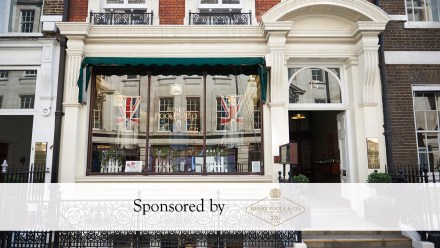
As Henry Poole & Co celebrates its 220th anniversary, we reflect on the people, patronage and craftsmanship that have shaped our house since 1806. James Poole was born in Shropshire, around 1782. In January 1806, he arrived in London at a moment of national mourning. The funeral of Horatio Nelson had just taken place, and the capital was filled with the splendour of naval and military dress. Establishing himself in Everett Street behind Bloomsbury Square as a linen and mantua draper, he quickly turned his attention to military uniforms. The exquisite quality of his work brought him to prominence, and he became known for producing finely cut, regulation-perfect uniforms at a time when precision and presentation were paramount. Henry Poole & Co.

We’re delivering a smoke-free future, today
At Philip Morris International, our mission is clear: To reduce smoking by replacing cigarettes with better smoke-free alternatives for legal-age consumers. Learn more at PMI.

Digital IDs and how ExpressVPN can protect your privacy online
Britain is gearing up for the age of the digital ID. While the government recently backtracked on plans to make digital ID mandatory for everyone working in the UK, the £1.8 billion scheme hasn’t gone away: planning is ongoing for a ‘voluntary’ programme to be rolled out by 2029, with a public consultation expected to take place this year. The government claims that ‘digital identity systems can offer efficiency, fraud reduction and privacy protection’. But critics have warned that they come with significant risks, including data breaches, surveillance, user profiling and function creep (where a ‘voluntary’ digital ID becomes compulsory in more scenarios than expected).

A retirement roadmap
Planning in your thirties and forties Retirement may seem like a lifetime away, but the earlier you can start paying into a pension, the better. Get into the habit of paying into your pension and get to grips with the basics of planning for retirement. If a company employs you, they are legally obliged to pay into a pension for you, and you’ll also have to pay in a set amount too. The government tops up these payments. An Isa can be a tax-efficient way of saving for the future. In particular, stocks and shares Isas can be a powerful way to supplement your pension pot, offering the potential for higher returns over time, without having to pay tax on the growth.

Getting Ahead for Society
GSK is committed to transforming healthcare by focusing on prevention. In collaboration with the NHS and Government, GSK aims to shift the focus from sickness to prevention, aligning with the Government’s 10-year plan. Through science, innovation, and strategic partnerships, GSK is developing medicines and vaccines, advancing research, and investing in early detection and education to help get ahead of illness. Health Challenges Facing the UK Neale Belson, General Manager, GSK in the UK The UK faces a growing burden of preventable illnesses, threatening both lives and NHS sustainability. Conditions like respiratory diseases, cancer, and antimicrobial-resistant infections are increasing pressure on services, costing billions annually and reducing quality of life for millions.
Move over private members’ clubs: the future of care homes
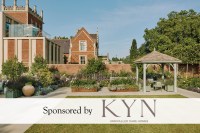
KYN has set a new benchmark for later life, delivering unrivalled care in beautiful, high-functioning homes filled with warmth and dignity. KYN’s ethos was informed by the founding team’s personal experiences with their families' quest for care. The approach to care means a deep consideration of who residents truly are: what interests them, what has shaped them, what inspires, nurtures and strengthens them. Each team member in each home makes it their mission to know each resident as a biographer would research their subject. Taking its name from the old English saying of one’s ‘kith and kin’ – your friends and family – belonging at KYN means being cared for in a way that makes you feel truly seen and understood as an individual.
‘Let’s be open-minded about hydrogen’
The 2018 film First Man is a spectacular story about Neil Armstrong and how the USA rose to the challenge of putting man on the moon. Humanity thrives on setting challenges and then doing everything possible to meet them. We stretch our technological knowledge, and we invest enormous sums into research and development. Dr Steffen Hoffmann, Managing Director, Bosch UK & Ireland As the film depicts so brilliantly, when these challenges are met, it’s a thrilling moment. When Armstrong walked on the Moon in 1969, millions of people around the world shared the sense of triumph and benefited from the technological innovations that made it possible for decades after.

How ExpressVPN can protect you from identity theft
Identity theft is a serious and growing problem in the UK, with more than 118,000 cases reported in the first six months of this year alone. Last year, the National Fraud Database logged the highest number of fraud cases on record, and identity theft made up the single biggest category – due in part to AI driving more sophisticated and harder-to-spot schemes. The consequences of identity theft can be severe, including unauthorised accounts being opened, loans taken out or insurance claims made in your name. This can affect your financial affairs, hurt your credit score and even have legal repercussions.

How you could save money with ExpressVPN
Since the Online Safety Act came into force in the UK, there has been a surge in the popularity of VPNs, or virtual private networks. These offer a simple and legal way to browse the internet privately, safely and anonymously. But VPNs come with a host of surprising other advantages, too – from cheaper holidays and streaming to exclusive sports and games. VPNs work by disguising where the user is accessing the internet from – allowing UK-only restrictions to be bypassed. You install the VPN, connect it to your choice of servers outside the UK, and then head to whatever website you want to visit. This means no demands for your ID documents in the age of the Online Safety Act – but it also means you can unlock a whole world of unexpected benefits and deals.

Backing British energy skills and jobs key to unlocking growth
What workforce is needed to deliver UK economic growth while meeting energy transition goals? A new training facility focuses on welding, engineering and other practical skills as part of a public and private sector joint investment in the UK energy workforce In Aberdeen, a state-of-the-art facility – which has just opened its doors to students – offers a blueprint for success. One of its backers, Shell UK, says the specialist centre will help upskill, reskill and empower a new generation of energy professionals. It will play a key role in the change needed to unlock growth through the energy transition.


An Elstree childhood
Set in 150 acres of idyllic West Berkshire countryside, Elstree is also home to childhood fun and adventure. The school nurtures a strong belief in ‘children remaining children’ for as long as they can. The school aims high for pupils and is proud of both outstanding Common Entrance results and an excellent Scholarship record. Pupils go on to top UK senior schools including Bradfield, Downe House, Eton, Marlborough, Radley, Wellington and Winchester. With a tremendous spirit of ‘giving things a go’, Elstree places emphasis on nurturing unique talents and fulfilling individual potential.

An education designed around the individual
Nestled in the heart of Dorset, Clayesmore has spent more than 130 years helping young people uncover what success means to them. Academic excellence is just one part of a wider educational journey that supports personal growth, confidence and self-belief. This is a school where everyone is known – not just by name, but for who they are. Teachers take time to understand each child’s strengths, challenges and aspirations, creating an environment where individuals are seen, supported and encouraged to thrive. The journey begins in the Prep School, where a structured and nurturing setting gives younger individuals a strong foundation. Early access to specialist teaching in subjects such as art, music, languages and sport sets the tone for a rich and balanced education.

How to browse privately in the age of the Online Safety Act with ExpressVPN
Browsing the internet just got a lot more complicated. On 25 July, the Online Safety Act came into force across the UK, requiring a range of websites to verify the age of their visitors. To do this, users are being asked to hand over valuable personal data – such as ID documents, credit card details and selfies. With the ever-present threat of data leaks and breaches, many are nervous about surrendering this kind of information without knowing who might see it or how securely it will be stored. There are questions over how firms will handle information about individuals’ private browsing habits, and how they will keep it safe from hackers or hostile agents.
Latest from Coffee House
Why Prince Harry and Nigel Farage hate ‘the Establishment’
The poor old Establishment! In the 71 years since the expression was first coined in The Spectator, it’s never taken such a kicking. In his speech this week, calling for a by-election in his Clacton constituency, Nigel Farage declared: ‘This will be a people versus the Establishment by-election.’ He added: ‘The Establishment have now decided that they can't beat us fairly – so they've chosen to use foul means.’ Surely Nigel Farage, a fabulously rich, Dulwich-educated MP, and Prince Harry, the Old Etonian son of the King, are the Establishment Prince Harry hates the Establishment, too. When he lost his legal challenge over getting government security in May 2025, he described his court defeat as a "good old-fashioned Establishment stitch-up".

When did travelling on buses become so intolerable?
You frequently hear the charge today that the social contract in Britain has broken down. And there is much evidence to support this accusation. The epidemic of shoplifting, the tacit acceptance of fare evasion, rampant mobile phone-snatching in the capital, and most seriously of all, the fragmentation of our once much-vaunted multicultural society into a hotch-potch of mutually-suspicious and resentful ethnic and religious groupings: empirical research and personal testimony points to a society undergoing a process of disintegration. The demeanour of London bus drivers today perhaps reflects how fed up they are of having to deal with members of the public For many people, nowhere is this development more evident than in the normalisation of incivility on public transport.


The Chinese plot to destroy Musk’s Starlink satellites
Does China have a plan to destroy Starlink, the low-earth orbit satellite system which provides internet connectivity to tens of millions of people – including Ukraine’s military? That is just one of the extraordinary revelations in a year-long investigation by the Insider, Der Spiegel, and Le Monde. Their report is based on a set of power-point presentations from a secret 2023 Russo-Chinese military conference, as well as a working protocol from negotiations held in Moscow in June 2023, that were leaked last year to the German magazine Der Spiegel. This confidential material appears to provide detailed evidence that military cooperation between Moscow and Beijing is far closer and deeper than previously understood.

Fact check: Rupert Lowe on Joe Rogan
The American right has developed a morbid fascination with Britain over the past two years, particularly after Elon Musk began tweeting about grooming gangs. Some European influencers have found it lucrative to present Britain and parts of the continent as having ‘fallen’, posting videos of crimes by immigrants and appearing on American podcast networks as weary ambassadors from broken countries to warn: ‘It could happen here.’ Yesterday evening the Joe Rogan Experience podcast released a two-hour interview with Rupert Lowe, leader of the Restore party. Was Lowe there merely to create content – or is Restore a serious political party? Some of his statements suggest it’s the former rather than the latter. https://www.youtube.com/watch?

How long can Burnham’s kumbaya politics last?
Labour MPs today lined up to kiss the feet of their new king and Britain’s inevitable next prime minister, Andy Burnham. Nominations from the Parliamentary Labour party to take over from Sir Keir Starmer opened this morning, with Burnham confirming in a social media video that his expected coronation is ‘starting to feel very real’. When it comes to the crunch issues of slashing the welfare bill and cracking down on immigration, there is only so much group therapy that some MPs can take before they descend into another heated spat Backbenchers from across the PLP posted pictures of themselves pledging allegiance to the MP for Makerfield. For the first time in a while, a palpable sense of optimism and unity swept through Labour’s ideologically disparate ranks.

Burnham’s social media push gets reeled in
https://twitter.com/andyburnham/status/2075157937744441661 Andy Burnham has taken an incredibly enthusiastic approach to social media – so much so that he seems to spend more time answering questions on Reddit than he does from journalists. It’s fair to say the MP for Makerfield’s digital output has been far superior to that of Sir Keir Starmer. His videos are slicker, more entertaining and have a quality of authenticity that the outgoing Prime Minister’s categorically do not. But now it seems poor Andy may be riding the social media wave a little too hard and fast. At 11 a.m.