In Ian Leslie’s John & Paul, the creative relationship between the titular Beatles is treated as a platonic love story. Matt Thorne widens the paradigm with seven more pairings, variously rivalrous, amorous, respectful, disrespectful and occasionally frankly tenuous. The 11 American and three British musicians here have careers that collectively cover seven decades of popular music. There are three dynamics at play. First, there are the Thucydides tensions, where a waning power tangles with a rising one. Frank Sinatra invites Elvis Presley to join him on a television show; Keith Richards throws a filmed concert with Chuck Berry. (Richards, for once, is the younger partner.)
The older player is not always generous. It would be a stretch to describe Sinatra’s career in 1960 as on the slide, but he is feeling the challenge of newfangled rock and roll – “the most brutal, ugly, degenerate, vicious form of expression it has been my displeasure to hear.”
Famous is breezy in its narrative and nerdy in its apparatus
Presley, for his part, is just out of the army and trying to revive the career that had stalled while he was in uniform. Sinatra’s reputation, by contrast, has never quite recovered from evading military service in World War Two. In the broadcast from the Fontainebleau Hotel in Miami, they swap songs: Sinatra mugs through “Love Me Tender” and Presley performs a generous, heartfelt “Witchcraft.”
Berry was a formative presence in the birth of rock music, with a peerless songbook. He was also a terrible person to work with – cantankerous, deceitful and sly. Taylor Hackford’s film of the concert ends with Richards almost catatonic with stress from the whole experience. Thorne explores some of the reasons why his personality curdled, but gives the last word – unprintable here – to one of the many backing musicians he cheated.
Then there are the amorous drive-bys. David Bowie, at a commercial peak and creative nadir, duets with Tina Turner making a comeback that eclipsed her previous fame as a duo with her abusive husband, Ike. If we believe the lipreaders decoding their onstage chat, their relationship went beyond the recording studio. Similarly, the affair between Madonna – one of whose enduring talents is that she always picks her collaborators excellently – and Tupac Shakur, who was murdered soon after, in 1996, reinvigorated her music.
Finally, there are clashes of ego. At the height of his fame, Paul McCartney goes to see the Supremes play at the Talk of the Town in London and describes the concert as “the showbusiness event of the year.” Thorne reads that as “a dismissal so poorly disguised as a compliment that it sours mid-sentence.” Perhaps; but under stress McCartney can be unintentionally maladroit when it comes to public pronouncements, as when he described John Lennon’s 1980 murder as “a drag.”
Paul Simon and Lou Reed might not obviously seem to have much in common, but Thorne finds what parallels he can: both were Jewish musicians from New York; both were “literate men who loved pretending not to be”; both were doo-wop fans; both were married to musicians (eventually); both were short. Thorne concentrates on Simon’s career, becalmed in pre-Graceland doldrums, making One-Trick Pony, a film and an album about a Simonian alter ego who is an unremitting failure, with Reed playing the producer making the singer’s life a misery. In real life, with Simon, it was sometimes the other way round. One-Trick Pony was a film about a flop that itself flopped. The account here almost makes you want to watch it.
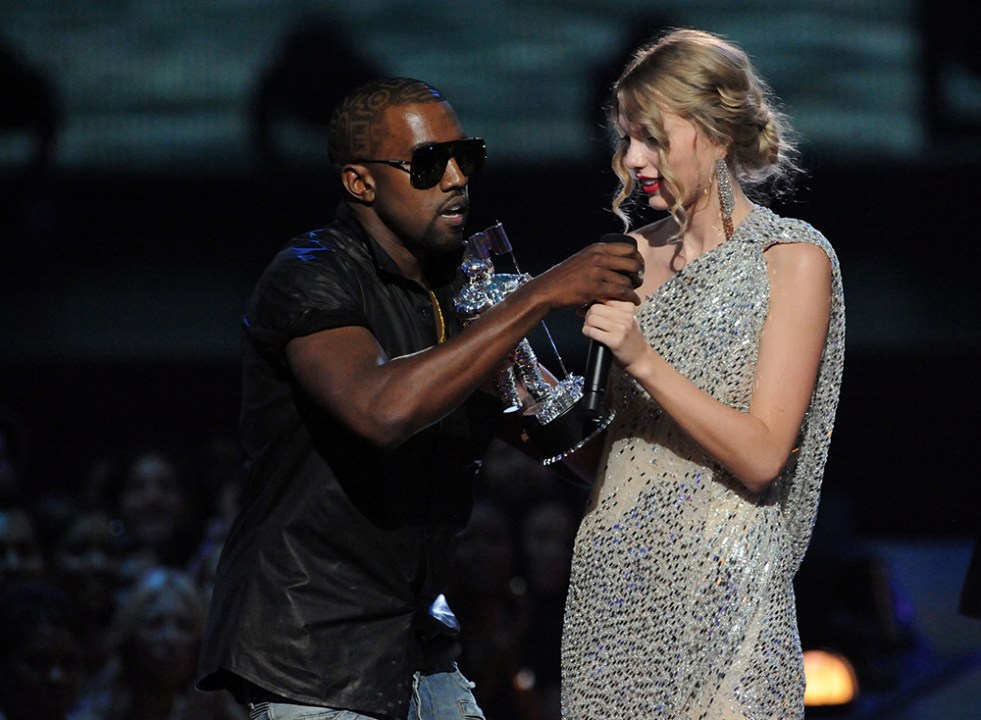
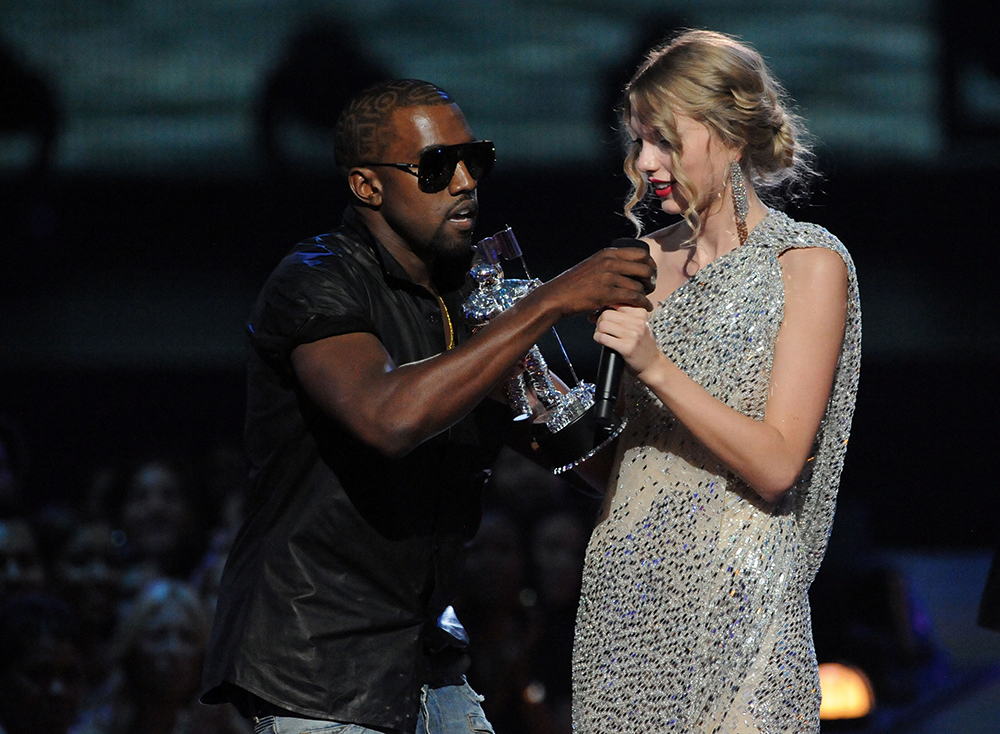
The last chapter covers the extended feud between Kanye West, currently known as “Ye,” and Taylor Swift. This started when the rapper took to the stage at MTV’s 2009 Video Music Awards to protest Swift, then aged 19, winning Best Female Video for “You Belong With Me”: “Imma let you finish, but Beyoncé had one of the best videos of all time.”
A clash that might more sensibly have been greeted with a shrug instead saw people picking sides, from Barack Obama (who rebuked West), all the way down. There were rapprochements, there were betrayals, there were accusations of bad faith. Swift went on to be the kind of phenomenon who moves macroeconomic indicators and registers on the Richter Scale, while her antagonist’s career spiraled off into dark corners that force his fans to make ever wilder excuses – Thorne being no exception.
Famous is breezy in its narrative and nerdy in its apparatus. At its best it illuminates the wider tactics and strategies – and costs – of fame. Paul Simon was not the only singer to branch out into film. There are quick recaps of the filmographies of Sinatra (excellent in The Manchurian Candidate); Presley (charismatic in dire films); Bowie (Labyrinth comes in for praise); Turner (well cast in Mad Max Beyond Thunderdome) and Madonna (Thorne is over-harsh on Desperately Seeking Susan and far too exegetic on Dick Tracy).
The book is perhaps most acute on the pressure of sustaining a career after setbacks – McCartney after Magical Mystery Tour, for example, or Madonna and Simon and Bowie fumbling the follow-ups on what were at the time their biggest hits. In some cases, the wellspring of inspiration contains its own poison. The continued non-release of West’s promised album is a sad place to end.





Comments