Terrific scripts, marvelous acting and glamorous locales – plus that haunting theme song – made HBO’s Succession superlative television. The show also took the sheen off being a billionaire. Who among us, watching Logan Roy (a barely veiled stand-in for media mogul Rupert Murdoch) mess with his children’s psyches, didn’t think “Isn’t it perilous to be quite so loaded?”
Journalist Gabriel Sherman’s new book prompts a similar, aversive recoil. Every family has squabbles, but the Murdochs have fallen out with shocking animosity. Though it’s hyperbolic to claim, as the author does, that the struggle for control of News Corp broke the world, his gruesomely detailed account reveals how shattering the battles have been to those who fought them.
Murdoch strode, colossus-like, across the Anglophone world.
Last September, Murdoch’s daughters Prue and Elisabeth, and his second-born son James, accepted $1.1 billion each in exchange for their stake in the family companies, leaving the eldest son, Lachlan, to succeed their father. All four children should have taken the money and run – far away – years ago. Murdoch for decades strode, colossus-like, across the Anglophone world, but at home he fostered competition and rivalry.
“Expand or perish!” was Rupert’s creed starting out in the 1950s in Australia, when he leveraged small newspapers he inherited from his father to buy more papers along with magazines and a TV station. In 1968, aged 37, Murdoch moved to the UK, acquiring first London’s News of the World and subsequently the Sun, the Times and the Sunday Times. The British establishment deplored his racy recasting of the Sun, with its bare-breasted Page 3 girls. Their disapprobation didn’t bother Murdoch. “I answer to no one but the public. They tell me what they want and I give it to them.”
Murdoch was delighted to enter the US market by acquiring the flailing New York Post in 1976 and installing himself as editor-in-chief. The next year he endorsed Ed Koch for New York City mayor and turned the tabloid into “a virtual arm of the Koch campaign,” Sherman writes. Post reporters signed a petition protesting his interference, which Murdoch summarily dismissed. “It’s my newspaper. You just work here and don’t you forget it,” he responded.
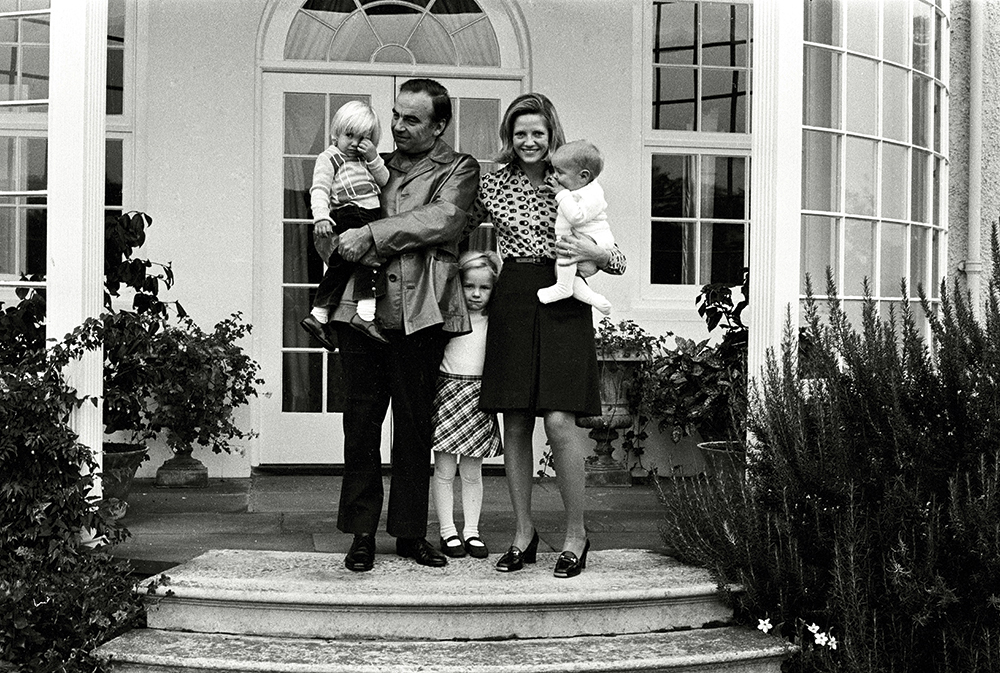
Murdoch called the 1980s his “expansionary lunge” period. He bought a Hollywood studio, 20th Century Fox; Metromedia, the largest operator of independent television stations in the US; and the Herald Times Group, a rival newspaper chain to his own in Australia. Murdoch’s children rarely saw him during these years. Prue, his daughter by his first marriage, lived in Australia. Liz, Lachlan and James, from his second marriage to Anna Torv, grew up in a Fifth Avenue duplex. “The kids learned from an early age that shoptalk was the surest path to their father’s heart,” Sherman writes. Lachlan shared with his father “an atavistic love of conservative politics, newspapers and Australia,” giving him an edge in the contest for Rupert’s approval. But Liz refused to be overlooked because she was female, and James, the “more intellectual and rebellious” son, in Sherman’s words, bucked authority to get attention. The family pattern was set.
When Murdoch traveled to China in 1993 to pitch Fox television shows to the Chinese state broadcaster, he became enthralled with the possibilities of the vast, relatively untapped market. At home, Anna beseeched him to step back from his businesses so they could enjoy retirement together. Instead, in 1998, he asked for a divorce after 31 years. Rupert confessed to his children: “I have met a nice Chinese lady.” Wendi Deng was 29, the same age as Elizabeth, and worked at Star TV, the Hong Kong-based satellite service Rupert, then 67, had acquired.
Anna settled for $100 million, a fraction of Rupert’s fortune, in exchange for dictating the terms of an irrevocable family trust. Control of News Corp would fall to Prue, Liz, Lachlan and James after Rupert’s death, and each child would get one vote. “Crucially, any subsequent children Rupert had would get no votes,” Sherman reports. Rupert married Deng in June 1999, the same month his divorce from Anna was finalized.
In the 2000s, Liz, Lachlan and James all spent time working for Rupert, and he played his children off against each other à la Logan Roy. Each child was convinced, for a while, that they were his preferred successor. The early favorite, Lachlan, quit News Corp and moved to Australia in 2005, infuriated that his father had allowed executives Roger Ailes and Peter Chernin to undercut him. Rupert subsequently promised Liz the throne if she agreed to sell him Shine, the independent television production company she had built. Once that sale closed, he passed her over.
James had success with British Sky Broadcasting, but was caught up in the News of the World phone-hacking scandal in 2011 after taking over the UK newspaper arm of News Corp. Liz advised her father to fire James to salvage the company’s reputation and Rupert agreed, directing her to fire her brother. “Liz was desperate for her dad’s approval – and to take out a sibling rival – so she went to James’s office,” Sherman writes. “James was gutted, not only by his sister’s betrayal but also by their father’s cowardice.” James eventually stepped down in February 2012; sister and brother did not speak for years.
Who would have thought Murdoch would make Mick Jagger look like a supportive partner?
After Murdoch launched the Fox News cable channel in 1996 as a conservative-leaning alternative to CNN, his political power grew alongside its skyrocketing viewership. Meanwhile, Deng never accepted that the two daughters they had together, Grace and Chloe, would have no voting rights at News Corp. When Murdoch confirmed this on Charlie Rose show, she was so enraged she forced him to sleep in the garage at their ranch in Monterey, California. In spring 2013, Lachlan urged his father to investigate rumors that Deng was cheating on him, possibly with former British prime minister Tony Blair. Blair and Deng denied an affair, but Rupert jettisoned his third wife that summer.
Who would have thought Rupert Murdoch could make Mick Jagger look like a supportive partner? Wife #4 was the beautiful, blonde Texan-born model Jerry Hall, previously married (quasi-legally) to Jagger. When Murdoch wed Hall in 2016, he promised never to cheat on her as the Rolling Stones singer had. And Jerry proved especially devoted when Covid struck in 2020 and doctors told Rupert, then 89, he must avoid infection at all costs. The couple isolated. Rupert spent his days following the stock market and conducting Zoom meetings.
Murdoch’s children resented Jerry for restricting access to their father during lockdown – especially the two youngest, Grace and Chloe, whose mother she had, in their eyes, usurped. In spring 2022, Rupert told Hall to leave their Montana ranch as Grace was flying in and preferred not to see her stepmother. (Hall later learned Grace had come to persuade her father to shell out $1.6 million for a famous DJ to play at her 21st birthday party.) Hall sent Murdoch an angry message as she headed back to California but “never anticipated his answer would be to divorce her by email,” Sherman writes. Her husband’s terse message began: “Jerry, sadly I’ve decided to call an end to our marriage.” (According to Sherman, Jagger, with whom Hall remained on good terms, helped her remove the 32 surveillance cameras she discovered in the Oxfordshire house she received from Murdoch in the divorce.)
We learn that Murdoch disdains President Donald Trump and considers him unfit for office, but Fox News played a vital role in getting Trump elected. As the network became increasingly MAGA, Prue, Liz and James became uncomfortable with it. But the decisive event in clearing Lachlan’s path to the top occurred in 2017, when most of 21st Century Fox, where James was chief executive, was sold to the Walt Disney Company while his older brother, who had returned to News Corp as co-chairman, retained oversight over all the family’s holdings. In 2020, James resigned from the board of News Corp, due, he explained, “to disagreements over certain editorial content published by the Company’s news outlets and certain other strategic decisions.”
The final act of the succession drama unfolded after Rupert announced his intention to strip Prue, Liz and James of voting rights so that Lachlan could preserve the conservative editorial bent of Fox and News Corp. Murdoch argued this change in the trust’s terms was necessary to protect the empire’s commercial value for all his heirs. When the three “objecting children,” as they were called, sued to block this, a showdown in front of a probate judge was inevitable.
This book is propulsive and screenplay-like with one dramatic scene after another
“Have you ever done anything successful on your own?” Murdoch’s lawyer pressed James as he testified in a Nevada courtroom in September 2024. As further humiliating questions were lobbed at him, James noticed “Rupert tapping on his phone and realized he was scripting the questions,” Sherman writes. Still, this round went to James and his sisters. The judge rejected Rupert’s plan as “a carefully crafted charade” to “permanently cement Lachlan Murdoch’s executive role.” Months of negotiations over a buyout followed, before Prue, Liz and James received a billion-plus dollars each, to add to the massive fortunes they had already inherited from their father.
Sherman previously wrote the screenplay for The Apprentice, a 2024 film about Trump’s early years in the New York real-estate business. Bonfire of the Murdochs is propulsive and screenplay-like itself, with one dramatic scene after another, drawn from Sherman’s numerous interviews with countless people still smarting from Rupert’s predations.
In Succession, Logan Roy memorably tells his children: “I love you, but you are not serious people.” After the Nevada trial, Rupert sent a note to Prue, Liz and James. He’d read their testimony over twice, and concluded that he was correct: they were “unfit” to inherit the business. In the future, he wrote, he would speak to them only through lawyers. See? You’re better off without all that dough.


Comments