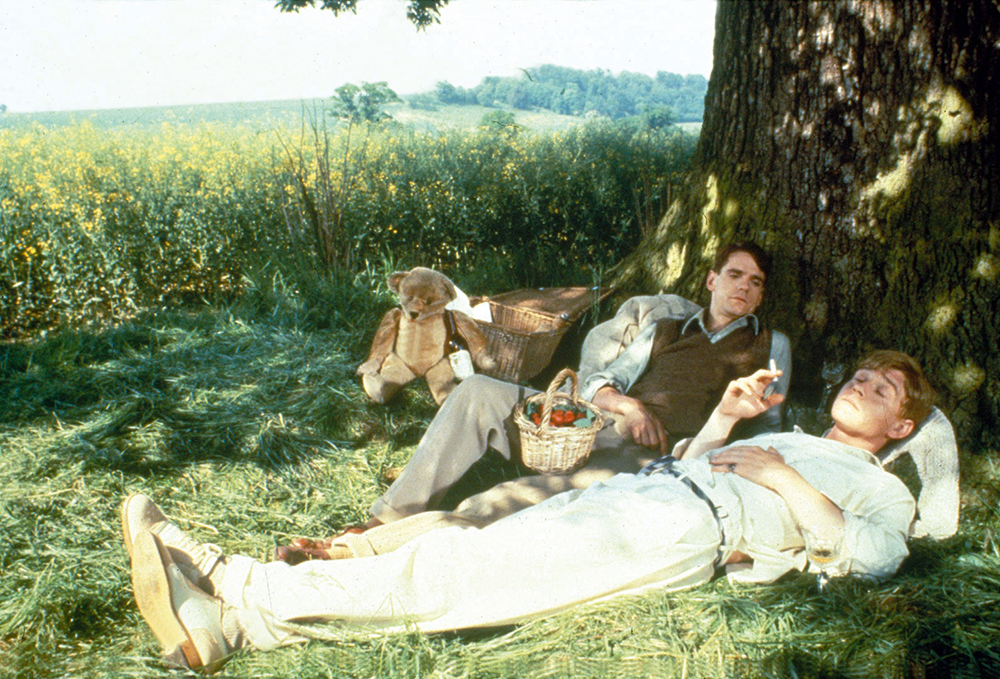
“However British you are, I am more British still,” said the American expatriate novelist Henry James, explaining his fascination with all things aristocratic and Anglo. It’s a type of fascination that’s only gathered steam over the years. A grand representative of the establishment, Lady Anne Glenconner, sold thousands of copies of her first book, Lady in Waiting, in the US, and recently discovered that her (admittedly predominantly homosexual) American fanbase has taken to throwing Lady Glenconner-themed costume parties.
Meanwhile, Carla Kaplan, whose biography of Jessica “Decca” Mitford, Troublemaker, went on sale at the end of last year, discovered that Decca, known as “the Queen of the Muckrakers,” has a manic following among cowboys and long-haul truckers. Though both writers were astonished by these things, they shouldn’t have been. The British Invasion is all about posh lit these days. But why do books on the aristocracy go down like a cup of Earl Grey?
It boils down to the eternal posh quandary: what is a room?
On the one hand, British swells shouldn’t seem so very strange to an American audience. The Old and New World have long been yoked together, with buccaneering Whartonesque girls and limp Jamesian bachelors feeding the transatlantic imagination. In real life, as Heirs and Graces author Eleanor Doughty points out, a huge swathe of grand British estates owed their continued existence to the American dime. Doughty points out that “between 1870 and 1914, 60 peers married American women and, more often than not, American women with money.” It is a lasting irony that the so-called “dollar princesses” cemented a status quo that was in danger of dying out with the socialist reforms and massive tax hikes of the early 20th century. Mary “May” Goelet, an heiress of the day, married Henry “Kelso” Innes-Ker, 8th Duke of Roxburghe, in 1903 and saved his ducal bacon. May ended up pumping so much cash into her husband’s birthright, Floors Castle in Scotland, that, as her great grandson Lord Ted Innes-Ker says, “for one hundred years, Floors hasn’t been touched because May had spent such a lot of money and such a lot of time filling it. To this day, walking around, she’s there.”
This might have been a plotline straight out of the great halls of Downton Abbey. It is another fact universally acknowledged that, ever since Brideshead Revisited hit their screens in 1981, the American fascination with Aris-Telly has shored up many a crumbling stately home. Canny TV execs are the dollar princesses of the day when it comes to American saviorism.
Doughty puts down the enduring literary relationship between the two countries to “an element of wonder of the old country, the motherland.” Charlotte Mosley, who has published five books on her in-laws, the Mitfords, identifies different fans of the aristocracy. Broadly speaking, when she has events in New York, the trendy and progressive crowd are drawn to Decca, a card-carrying communist for much of her life. While in Palm Beach, where Mosley gave a talk with Jessica’s sister “Debo,” the Duchess of Devonshire, the better-heeled Floridians “were a different type of audience altogether”: drawn to aristocracy, not activism.
Whit Stillman’s first film, Metropolitan, encapsulated an upper-class dandyism that owes much to his heroes of English literature, including Jane Austen, George Eliot, Anthony Trollope, Oscar Wilde, Evelyn Waugh and Anthony Powell. Stillman acknowledges that there’s certainly a snobbish element to literary Anglophilia. But what is more important is the direct literary line that can be traced from when “we were to a certain extent the same country. Jane Austen was born in 1775 when we politically still were (though just barely).” Although the authors Stillman cites as British influences do happen to be preoccupied with elite and inaccessible worlds, it is not wholly their Britishness that so appeals to him.
The writer, activist and bookworm Barbara Bush (Jr.), who knows a thing or two about hereditary privilege, has a different take. She has always adored British writing because “the atmosphere of beautiful grand old moody houses in the countryside is hard to beat.” For Bush, it is the imaginative leap that she has to take that makes for what she describes as “exotic escapism.” Bush believes this sort of escapism is particularly powerful for Americans, precisely because they “don’t really get the class system.”
At its best, posh lit should have the precision of a history book, the mystique of a fairy tale and the salaciousness of the grubbiest tabloid on the news stand. If it combines all three, hefty sales are assured. Lady Glenconner’s Manners and Mischief (her fifth book since her debut at the age of 87) gives a glimpse behind the red velvet curtain into the otherwise inaccessible world of royal life. In this case it’s a plastic shower curtain that is being twitched, as Lady Glenconner – who was lady in waiting to the Queen’s sister, Princess Margaret, for 31 years – remembers being taken for a snoop around the Queen’s rooms at Buckingham Palace. Princess Margaret showed her “a very charming bedroom, but what really struck me was the line of celluloid ducks wearing crowns lined up in order of size on the side of the bath.”
Doughty’s Heirs and Graces is equally brilliant on the specifics of dotty aristocrats and the dottier stately homes they wander about in. Wentworth Woodhouse, the South Yorkshire pile of the Earls Fitzwilliam, is a fine example of this. It is believed to have 365 rooms, one for every day of the year, although it’s hard to count them. It boils down to the eternal posh quandary: what is a room? “We’ve got alcoves which could be the kitchen in a London flat,” says the house’s archivist, David Allott.
Doughty explains that various systems have been put in place over the years to ease the passage of the house’s muddled guests. These systems take their lead from the German scientist Justus von Liebig who, when visiting Wentworth in the 19th century, “insisted on being provided with a pack of wafers, so that by dropping them in a continuous line from the smoking room to his bedroom he might the next morning find his way back again.” Subsequent guests were given confetti to plot their course about the house, and were advised to bring three hats so as not to have to walk “about a quarter of a mile from one entrance to another in order to fetch the hat which might have been left at the other.”
Troublemaker, Kaplan’s magnificent addition to the churn of what Decca sardonically called “the Mitford Industry” gives gleaming insights into its blue-blooded subject. We learn that Decca, who had known Elizabeth II when she was Princess Lilibet, and had “never been much impressed by the royals,” told her great friend Maya Angelou that, “when the princesses were little, I tried to spread a rumor in London that they had been born with webbed feet which was why nobody had ever seen them with their shoes off.”
When Decca’s first husband Esmond Romilly, desperate for visas for the two of them, went to the American consulate for his medical examination, he very nearly failed. “The examiner asked Esmond if he had varicose veins,” and Romilly, who “had no idea what they were, but was anxious to please,” confirmed that he most certainly did. Thankfully he was allowed to recant this once it was explained to him that they were a hindrance, not a help, to the application.
There shouldn’t be anything shameful about losing yourself in grand families and the stories behind them
The life of Decca Mitford demonstrates a fascination with patrician English origins which then morphed into all-American activism. Brought up in eccentric austerity by her formidable parents Lord and Lady Redesdale, Decca fled a life of pet lambs, rats and chinless gentry for America where she both lived and lampooned the American Dream.
She was never too much of a dyed-in-the-wool socialist to dust off her “aristocratic imperiousness” when she thought it would help. In fact, Decca’s inimitable Mitfordishness got her laughed out of court, dodging a potential 25-year prison sentence.
When called before the House Un-American Activities Committee during the height of the Red Scare to answer for her role as secretary of the Bay Area Communist party, Decca turned up “dressed to the nines” in an outfit picked for her by her sister Nancy in Paris and a “special HUAC-hearing hat” sent by her mother-in-law from New York.
After mulishly refusing to give the names of her comrades, Decca caused the court to “erupt into hysterical laughter” when she misheard a question. The panel, who were at their wits’ end, had sarcastically asked whether she was a member of the very right-wing Tennis Club. Believing that they were asking whether she was affiliated with the politically divisive Tenant’s Club, she haughtily refused to answer. The “room cracked up” and Decca was allowed to leave that day without having to turn over a single file. After four days in hiding, she walked away scot-free.
There shouldn’t be anything shameful about losing yourself in grand families and the dynastic stories behind them. It helps with your history, as well introducing an Alice in Wonderland other-worldliness which makes life more beguiling. “I’ve always been fascinated with aristocracy. I’m really interested in the Ivy Leagues, the final clubs, all the really old-money families, the concept of old money,” said the singer Lorde, with refreshing honesty. She is not alone. Long may the blue-blood mania last.




Comments