Maria Albano

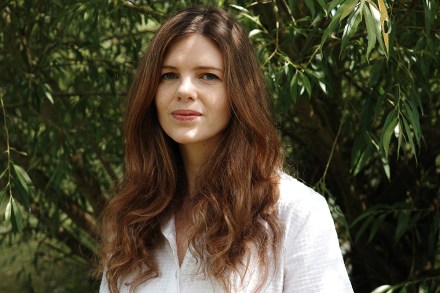
Maria Albano is a writer based in Cambridge

‘A lost generation’: My Year in Paris with Gertrude Stein, by Deborah Levy, reviewed

From our UK edition

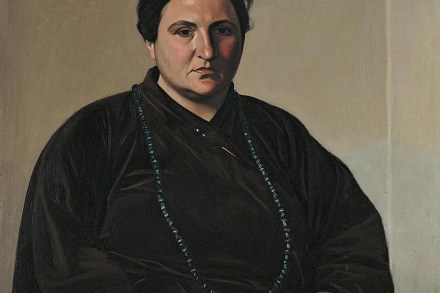
In a 2013 interview, Deborah Levy said: ‘Modernism is the soft typewriter of the womb that made me.’ But what made Modernism? My Year in Paris with Gertrude Stein is Levy’s attempt to answer the question. In this novel, an unnamed narrator from London moves to Paris to write an ‘essay’ on Stein, the American patron of the avant-garde. There she meets Eva, an enigmatic illustrator whose blue eyes make everyone go ‘Awww’, and Fanny, a fashionable finance consultant with a thriving sex life. As the three search for Eva’s missing cat (originally called It and renamed Bob by Fanny), the narrator chases after Stein’s many trails but struggles to bring her into focus.

George Saunders’s thoroughly Dickensian novella

George Saunders’s luminous new novella Vigil begins with a fall of a kind – lower-key, sinless and very funny: “What a lovely home I found myself plummeting toward, acquiring, as I fell, arms, hands, legs, feet, all of which, as usual, became more substantial with each passing second.” With the fallen narrator landing headfirst, ass “in the air and fresh new legs cycling energetically,” the story’s tone is set. Though explicitly modeled after Charles Dickens’s A Christmas Carol, Vigil is quintessentially Saunders in its combination of user-friendly stylistic innovation, straight-faced satire and a deep dive into Big Moral Questions.

Being a bookseller isn’t what it was

From our UK edition

Every Christmas, I throw off my doctoral gown, slap the monographs, the Collected Works and the many-volume Letters back onto their library shelves and uncloister my bibliomania for a seasonal stint at the local bookshop. What pulls people like me into bookselling – even if only for a month during the holiday seasons – is not the famously slim pay, but the chance to put their love of books in the service of others. The pleasure of selling a book whose power has been felt in one’s own life – the delight, in other words, of making a present of something good and consequential – more than makes up for the low wage.

Odd man out: The Burning Origin, by Daniele Mencarelli, reviewed

From our UK edition

This terse, unsparing novel can be summed up thus: after nearly a decade’s absence, the successful designer Gabriele Bilancini returns home to suburban Rome, where he wrestles with an identity crisis. His family and friends – his intimates before he moved to Milan and raced up the social ladder – feel like shameful reminders of his proletarian origins, which he keeps hidden – in ‘the way you hide a sin’ –  from the Milanese élite he is anxious to fit in with. In Milan, where he works and lives with his girlfriend Camilla, the daughter of his mentor, the celebrity designer Franco Zardi, Gabriele dresses smartly, limits lunch to ‘a salad with full protein’ and purges his speech of any signs of his unsophisticated upbringing.

Patrick Ryan’s second novel doesn’t pretend to be perfect

Patrick Ryan’s second novel is a small-town family saga that spans three generations, four wars, 11 presidents and many a watershed moment along the way. Ryan understands that big stories are made of small moments, not the other way around, and Buckeye is a fine illustration of how drawing-room tensions can fester and become matters of historical significance. In 1945, very few young men can be seen walking the streets of Bonhomie, Ohio. Cal Jenkins, a hardware store clerk with one leg shorter than the other, is one of them. The superheroes in the comic books he reads are versions of himself, but for the limp. Cal is married to Becky, whose occasional séances with her childhood friend Janice he initially brushes off as an innocuous, if slightly odd, pastime.

Buckeye

A season of strangeness: The Hounding, by Xenobe Purvis, reviewed

From our UK edition

‘Summer was the season of strangeness,’ muses Temperance, the barmaid at Little Nettlebed’s only alehouse. ‘People behaved peculiarly then.’ Temperance’s aside anchors the dramatic irony at the heart of Xenobe Purvis’s debut novel The Hounding, set in an 18th-century Oxfordshire village in the grip of a drought. In the villagers’ eyes, through which much of the story is told, this strangeness starts with the Mansfield sisters, five orphaned girls leading a reclusive life on a farm across the river, in the sole care of their blind grandfather, John. The girls’ free manners, in flippant disregard of the era’s orthodoxies, fill onlookers with mistrust.

Ocean Vuong’s newest work is an affecting celebration of misfits

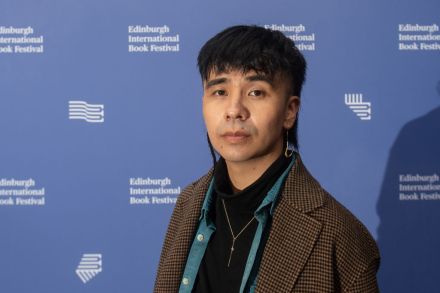
Ocean Vuong’s writing is heavily influenced by his own experiences. The protagonist of his first coming-of-age novel, On Earth We’re Briefly Gorgeous, is a carbon-copy of the author. Vuong was born in Vietnam in 1988. While serving with the US Navy, his American grandfather fell in love with “an illiterate girl from the rice paddies” who gave him three children. When one of them, Vuong’s mother, was identified as mixed-race by a policeman, the family was displaced to a refugee camp in the Philippines and finally made it to Hartford, Connecticut, where Vuong was raised by his mother, aunt and grandmother. His family story merits a book of its own.

Vuong

Helen DeWitt’s brilliance and unsuccess

No one ever expects an author simply to minuet her way into a book deal and, if lucky — merely “talented” doesn’t usually do the trick — into commercial success. But the publishing jukes and vaults that have earned Helen DeWitt the title of “America’s Great Unlucky Novelist” rather resemble the vertiginous motions of a mazurka on pogo sticks. Disagreements with her editors led DeWitt to attempt suicide twice. Her first novel, The Last Samurai, remained out of print for eleven years after its publisher went bankrupt. Before DeWitt was able to publish her second novel, Lightning Rod, another ten years lapsed.

dewitt