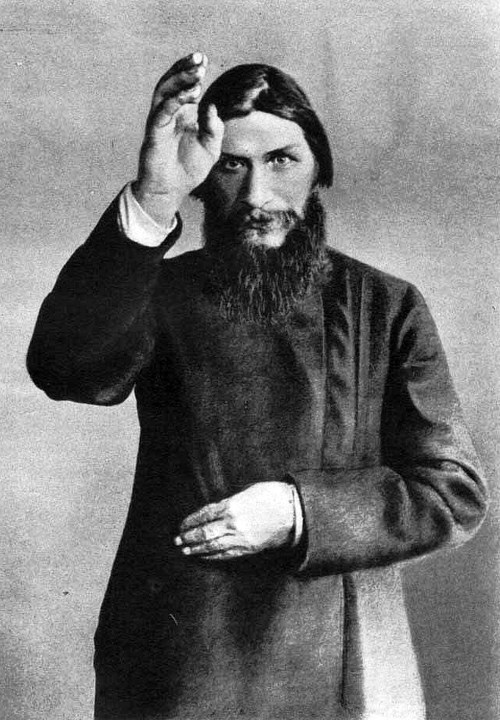


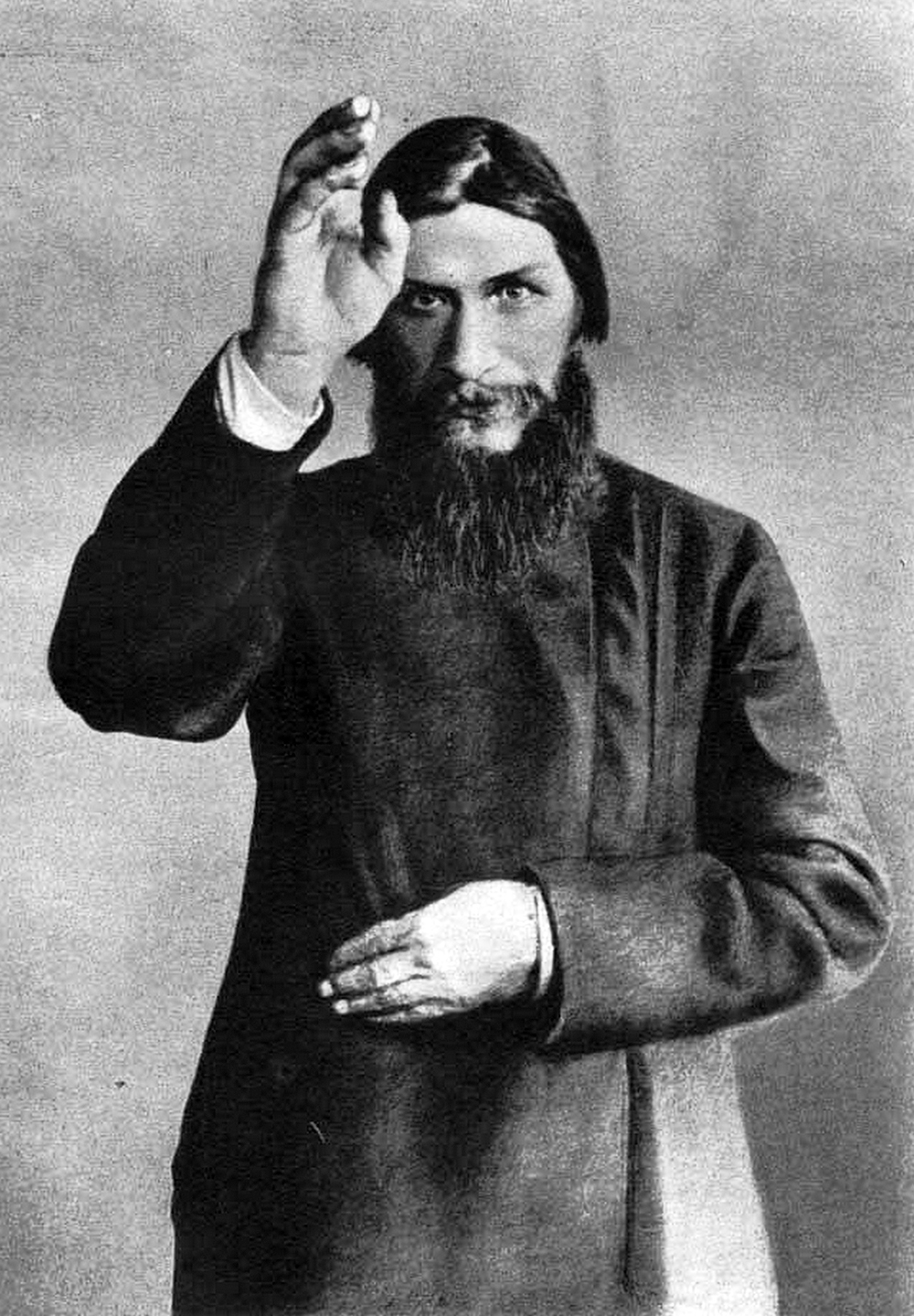
There lived a certain man, in Russia long ago. He was big and strong, in his eyes a flaming glow. You know the rest. Antony Beevor’s telling of the story of Grigory Rasputin will surely be the greatest literary chart hit of the year.
That the life and death of one of history’s most extraordinary charlatans is a well- known and often-told morality tale doesn’t matter. Beevor makes no claim to have uncovered any great revelations. Rather, he carefully sifts Okhrana surveillance logs, court diaries, memoirs, the Empress Alexandria’s correspondence and contemporary press accounts and, with his characteristically sharp eye for telling detail, extracts enough gems to decorate a whole Romanov party dress. For instance, the empress’s letters to Rasputin make for startling reading. She wrote:
My beloved and unforgettable teacher, savior and mentor. How tiring it is for me without you. My soul is calm and I can rest only when you, my teacher, are seated next to me and I kiss your hands and lay my head on your blessed shoulders. Oh, how easy things are for me then.
A gambling empire called the Compass, organized by Rasputin’s self-appointed secretary Aaron Simanovich, printed its own deck of cards featuring Rasputin’s face as the king of spades.
How did Rasputin repeatedly succeed in stanching the Czarevich’s bleeding?
And there are extensive quotes from the hilarious reports of the secret police agents sent to watch over Rasputin’s outrageous erotic chevauchées through St. Petersburg’s high and low society. One sober-sided copy wrote: “26 May. Rasputin and the prostitute Tregoubova came home in Manus’s car in an inebriated condition. While saying goodbye, he kissed and fondled Tregoubova passionately. Later he sent the porter’s wife to fetch the dressmaker Katia, but she was not at home.”
The picture that emerges is of a man not worldly enough to be really cynical. He seems to have sincerely believed that, through him, God had helped to save the poor Czarevich from life-threatening bouts of hemophilic bleeding. But once he had achieved his Svengali-like hold over the credulous empress, he did not hesitate to exploit, and indeed boast about, his influence in the crassest terms. In the archives of St. Petersburg’s public library I have held some of his handwritten notes to the empress. The script is childlike and the begging messages equally infantile. Rasputin was no Machiavelli but a venal man, promoted to a position far above what his simple intelligence could comprehend.
George Orwell once compared England to a family with all the wrong people in charge. The observation was far truer for imperial Russia. Everyone in that story was in the wrong job. Nicholas II would, like George III, have been far happier as a simple country gentleman. (Sergei Witte, Nicholas’s one-time minister of finance, waspishly remarked that the Czar was a “well-intentioned child.”) Alexandra was better suited to fretting over imperfectly polished silver spoons than helping to direct the fate of an empire at war. Rasputin himself should have remained a hard-drinking, philandering holy man (he was never actually a monk). But that’s not how history works.

At the heart of the story is of course a family tragedy of biblical proportions. Doomed by heredity to occupy positions of power wildly unsuited to their temperaments and talents, Nicholas and Alexandra were further cursed by an ancestral genetic disease that made their exalted inheritance unbearable. Add to that the dynastic catastrophe of bearing four intelligent, healthy children who happened all to be the wrong sex. One wonders what these people had done to bring such divine wrath on their heads.
It is no surprise, then, that Alexandra turned to morbid religiosity, spiritualism and hypochondria and developed a childish faith in a series of charlatans, of whom Rasputin was only the last and most influential. Yet one’s sympathy for Alexandra’s desperation must be mitigated by her idiotic insistence on wielding authority over appointments and policies of which she had no understanding. Foolishness, combined with haughty stubbornness, is not attractive in anyone, but in the consort to a similarly bird-brained but cowardly autocrat, willfulness multiplied by ignorance was a recipe for world-historical disaster.
The fall of the house of Romanov is a thoroughly plowed over piece of history. In addition to his Nicholas and Alexandra (1967), Robert K. Massie also wrote The Romanovs: The Final Chapter (1995), detailing the discovery of the imperial family’s remains. Douglas Smith, Edvard Radzinsky and Colin Wilson have also written books specifically on Rasputin. Then there is Lost Splendor (1954), Prince Yusopov’s fanciful version of his own role in Rasputin’s death. This last is a rare instance of a bodice-ripping account of a murder written by the killer himself. One example of Yusopov’s zinging but unreliable prose runs:
This devil who was dying of poison, who had a bullet in his heart, must have been raised from the dead by the powers of evil. There was something appalling and monstrous in his diabolical refusal to die.
Despite the crowded historiographical field, Beevor finds a fresh angle. His thesis is that the myth was actually a key part of Rasputin’s political and ultimately historical impact. From lurid contemporary accounts about his (fictional) sexual predations on the Empress and her daughters to tales of his telepathic powers and exaggerated reports of the scale of court corruption, it was the myths that did as much damage as the reality. “Whoever this man was, the sphere of his influence was enormous,” wrote the poet Alexander Blok, just after the February Revolution. “His days passed amid the unique atmosphere of hysterical adoration and permanent hatred. Some prayed to him; others sought to destroy him.”
There is simultaneously more and less to the Rasputin story than meets the eye
By the time the revolution broke out in 1917, the officer corps was so demoralized by tales of treason and debauchery at court that hardly a sword was raised in the Czar’s defense. “Nearly every foreign and domestic misfortune was said to be caused by treachery and blamed on the Czar, his court and his ministers,” writes Beevor. As General Konstantin Globachev, the last chief of the Petrograd department of the Okhrana and an exasperated chronicler of Rasputin’s endless debauches, observed: “By the end of 1916 the prevailing mood was that nobody in the government camp would stand up and defend the regime in the event of a decisive attack.”
There is simultaneously more and less to the Rasputin story than meets the eye. There was no deep state conspiracy to bring the Empress and the (not so) holy man together. The string of idiotic decisions made by both Nicholas and Alexandra as their realm hurtled towards disaster were just that –mistakes by silly, frightened people into whose hands fate had placed the reins of power. But the deeper and more mysterious aspect of the story is how Rasputin worked his mesmeric charm, and how he repeatedly succeeded in stanching the young heir’s bleeding. The answer lies, says Beevor, in “that no-man’s-land between truth and myth, between fact and fantasy.”
His book is a well-sourced, morally serious and often darkly comic account of how a barely literate peasant from Siberia came to precipitate the collapse of one of the greatest autocracies in the world. Rasputin – now there was a cat who really was gone.






Comments