Ian Buruma

Why Hitler’s suave architect escaped the noose at Nuremberg

At the Nuremberg trial of the main Nazi war criminals, one man stood out: Hitler’s favourite architect and later armaments minister, Albert Speer. He cut a gentlemanly figure in a gallery of rogues. The strutting, smirking Hermann Goering reminded Rebecca West, who attended the trial, of ‘a tout in a Paris café offering some tourists a chance to see a black mass’. Julius Streicher, the Jew-baiting brute, was like ‘a dirty old man of the sort who gives trouble in parks’. On the same bench, all declaring their innocence in the face of overwhelming evidence of monstrous crimes, were the lantern-jawed SS leader Ernst Kaltenbrünner, the sour-faced ex-champagne salesman Joachim von Ribbentrop, Fritz Sauckel, the thuggish slave labour chief, and the rest of the sorry gang.
The extraordinary courage of Germany’s wartime ‘traitors’

From our UK edition

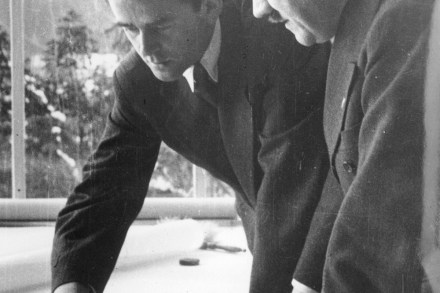
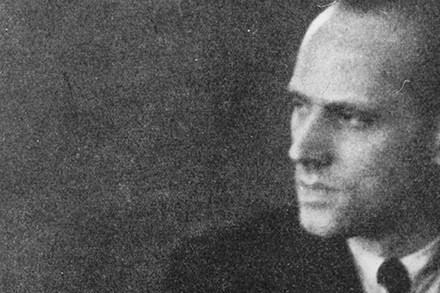
I once interviewed the late Enoch Powell for this magazine (the article never appeared, for reasons I forget). One thing he said on that occasion stuck with me. He remarked that loyalty to one’s country should be unconditional. I asked him what he thought people should do if their country were taken over by a criminal regime. After a short pause Powell replied that some people were luckier than others. I failed to press him further on this point, but it struck me as an unsatisfactory answer, and it still does. Jonathan Freedland has written a very good book on precisely such unlucky people: German patriots who hated Hitler and everything he stood for.

Paul Wood, Matthew Parris, Ian Buruma, Hermione Eyre and Francis Young

From our UK edition

34 min listen

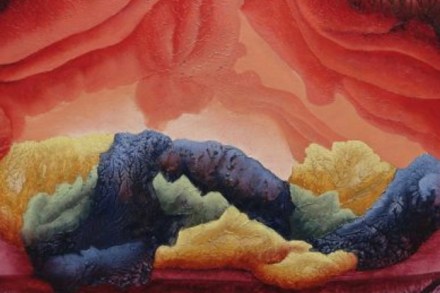
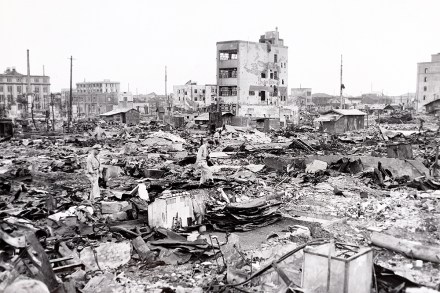
On this week’s Spectator Out Loud: Paul Wood reads his letter from the Vatican (1:17); Matthew Parris warns Conservatives from embracing causes that could lose them as much support as they would gain (7:31); reviewing Richard Overy’s Rain of Ruin: Tokyo, Hiroshima and the Surrender of Japan, Ian Buruma argues that the atomic bombs were not only immoral, but ineffective (15:35); Hermione Eyre examines the life and work of the surrealist artist Ithell Colquhoun (23:03); and, Francis Young provides his notes on Shrove Tuesday (29:12). Produced and presented by Patrick Gibbons.

Any form of saturation bombing is a stain on humanity

From our UK edition

At 8.15 a.m. on 6 August 1945, a B-29 bomber called Enola Gay dropped ‘Little Boy’ over Hiroshima. The thermal radiation from the atom bomb was 900 times more searing than the sun. An estimated 118,661 civilians died, horribly. Survivors staggered about with their skin in shreds, their intestines hanging out and their blacked and bleeding faces grotesquely disfigured. Upon hearing the news, President Harry Truman called the bombing ‘the greatest thing in history’. Why the US unleashed the terrible bombs over Hiroshima, and three days later over Nagasaki, has been much debated ever since. In his excellent short book on the subject, Richard Overy writes: The question asked is usually ‘Was it necessary?

The problem with westerners seeking enlightenment in Asia

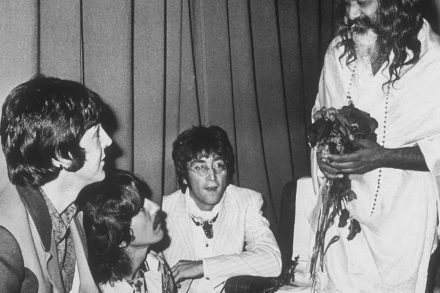
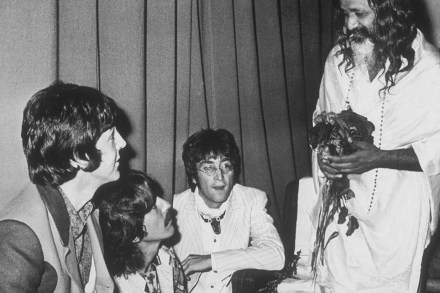
Call it a prejudice if you like. Living in Japan in the 1970s, I had a slight aversion to a particular type of westerner. He — for it was mostly a he — usually lived in Kyoto, sometimes wore a kimono and liked to sit in ancient temples chasing after that presumably blissful moment of enlightenment, awakening, satori, or whatever one wishes to call it. These seekers were less interested in Japan as a society of human beings. They wanted to float in higher spheres. As Christopher Harding explains in The Light of Asia, the Zen adepts, the Buddhist chanters, the rock-garden worshippers, the kimonoed fools (in my no doubt blinkered eyes) were part of a long western tradition.

Asia

The Dreyfus Affair continues to haunt France to this day

From our UK edition

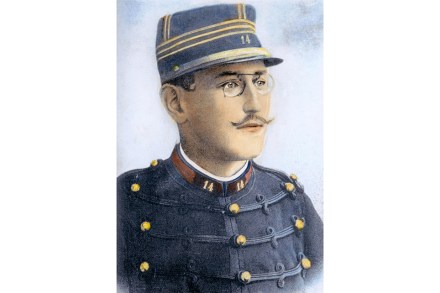
A short new book on Captain Alfred Dreyfus, the proudly patriotic French army officer who was falsely accused in 1894 of being a German spy, and whose court cases divided France into two warring camps, could not have been better timed. For the division sounds horribly familiar. Liberal, democratic, secular, cosmopolitan, urban France was pitted against provincial, religious, authoritarian, anti-immigrant, chauvinistic France. Dreyfus, an assimilated Alsatian Jew, was first sentenced by a military court, using faked documents and trumped-up charges, to life imprisonment on Devil’s Island, off the coast of French Guiana.

The problem with westerners seeking oriental enlightenment

From our UK edition

Call it a prejudice if you like. Living in Japan in the 1970s, I had a slight aversion to a particular type of westerner. He – for it was mostly a he – usually lived in Kyoto, sometimes wore a kimono and liked to sit in ancient temples chasing after that presumably blissful moment of enlightenment, awakening, satori, or whatever one wishes to call it. These seekers were less interested in Japan as a society of human beings. They wanted to float in higher spheres. As Christopher Harding explains in The Light of Asia, the Zen adepts, the Buddhist chanters, the rock-garden worshippers, the kimonoed fools (in my no doubt blinkered eyes) were part of a long western tradition. He identifies two ancient western perceptions of the ‘East’, by which he really means India, China and Japan.

Ian Buruma: Collaborators

From our UK edition

49 min listen

My guest in this week’s Book Club podcast is the writer and editor Ian Buruma, to talk about his new book Collaborators: Three Stories of Deception and Survival in World War Two. A Chinese princess who climbed into bed with Japanese nationalist gangsters; an observant Jew who sold his co-religionists to the Nazis; and Himmler’s personal masseur. Ian describes how their stories link and resonate, and how murky morality gets in a time where truth loses its meaning altogether.

The myth of Japan’s warrior spirit

From our UK edition

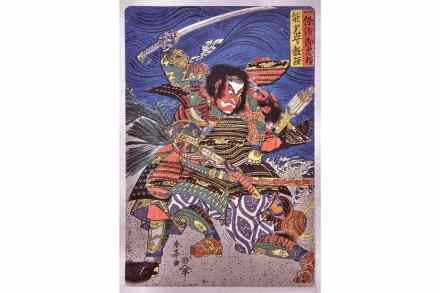
Should we fear a new martial spirit in Japan? Is there a samurai lurking inside those armies of grey-suited corporate men waiting to spring forth? Even though Japan’s constitution, drawn up by the Americans after the war, forbids military combat abroad, the fear of a Japanese militarist revival has never quite gone away, especially in China where memories of Japanese wartime atrocities are kept alive and easily manipulated for political ends. One of the candidates to become the new Prime Minister of Japan, the former foreign minister Fumio Kishida, has promised to strengthen national security against China. He even hinted at the importance of defending Taiwan.

Orange alert | 26 January 2017

From our UK edition

That the US should have elected as president someone like Donald Trump came as a shock. But the US is a strange country, given to periodic outbursts of political madness — though perhaps never quite as mad as this. That the Dutch, often caricatured as pragmatic, bourgeois, phlegmatic, business-minded, tolerant and perhaps a little boring, might in March pick a party led by a vulgar rabble-rouser with dyed blond hair to be the biggest in the land is more surprising. But the rise of Geert Wilders, leader (and only official member) of the Freedom party, shows how populism is sweeping across the Netherlands too. Wilders was one of the main attractions at the recent far-right jamboree in Koblenz, where he hailed Brexit, Donald Trump and what he called the Patriotic Spring in Europe.

Vote for freedom!

From our UK edition

One of the most appealing arguments for Brexit is that it will make British citizens freer than they are now. The greatness of Great Britain lies, after all, in its long history of relative freedom. But now, so the proponents of Brexit like to claim, Britain is shackled by the tyranny of the EU, as though ‘Brussels’ were some alien dictatorship in which Britain plays no part. Columnists huff that Britain is now just a colony of this ‘foreign superpower’. That the EU exists as a superpower would come as news to most people in Brussels — and everywhere else. The European Union has no army and no joint foreign policy, and cannot be described as a state, federal or otherwise.

Ian Buruma’s notebook: Teenagers discover Montaigne the blogger

From our UK edition

Bard College in upstate New York, where I teach in the spring semester, is an interesting institution, once better known for sex, drugs and rock ’n’ roll than academic rigour. This has changed, thanks to Bard’s president, Leon Botstein, who conducts orchestras when he is not presiding. This semester, I am teaching a class in literary journalism. I asked my students to write a short essay about their favourite writer of non-fiction. This proved to be difficult for some, since they had no favourite writers of non-fiction; indeed they had never read any literary non-fiction at all for pleasure, certainly not at book length. But several did come up with a name: Michel de Montaigne. They really liked his essays.

Russian Notebook

From our UK edition

It took me more than three hours by taxi to get from Moscow’s Sheremetyevo Airport to the centre of town. My Bulgarian friend, Ivan Krastev, a shrewd political analyst, describes the difference between Russia and the Soviet Union as one between traffic jams and queues. Queues were tedious, freezing in winter, but sometimes convivial. Traffic jams are just as tedious, warmer, but often lonely. Compared with the last time I was here, in 2001, I notice more ethnic diversity in the streets: dark Middle Eastern-looking faces from the Caucasus, Chinese-looking people from the various Asian republics, an area which a well known American expert once described as Trashcanistan. Moscow is a magnet for poor migrants, legal and illegal.

A flame lit at Rugby

From our UK edition

 Pierre, Baron de Coubertin (1863-1937) was a very odd cove. Inspired as much by a rural fête in Shropshire known as the Much Wenlock Olympics as by ancient Greece, he invented the modern Olympic Games. The original spur for his sporting endeavour was the Franco-Prussian War of 1870, which ended in a terrible French defeat. Coubertin, scion of a minor aristocratic family, became obsessed with French weakness. His aim was to, as he put it, ‘rebronze’ the male population, to bolster French virility through regular exercise and sports. When we think of sports now, we think mainly of athletics (derived from ancient Greece) and team sports (derived from England). In the Baron’s day, the dominance of Greek and British games was not yet so clear.