Carson Becker

Gavin Newsom, the everyman elitist

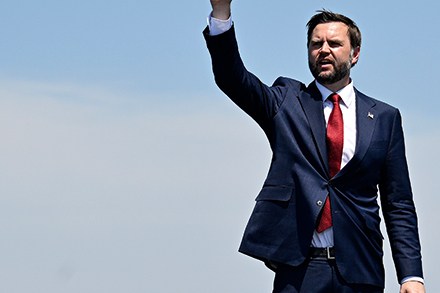
Young Man in a Hurry is California Governor Gavin Newsom’s attempt to explain himself to a divided country that may soon find him vying for its presidency. He alternates between candor and wile in answering the book’s central question: who is Gavin Newsom? In these pages he constructs a striking hero’s journey, illuminating an insular world of inherited wealth, hereditary political power and ideological contradiction that few Americans will have been exposed to. But he also casts himself as a struggling underdog, a folksy type whose patrician image belies a life of perseverance and a unique set of emotional and psychological deprivations.

The radical networks that hijacked the 1970s

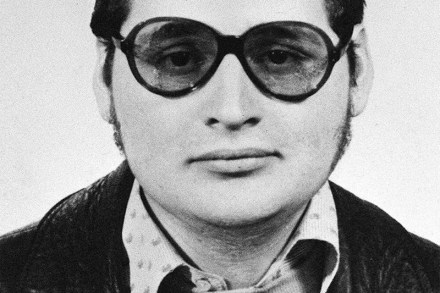
Airplane hijacking, like the mode of transport itself, became common in the 1960s. A practice largely confined to the United States, it was invariably a means for ordinary criminals to extort ransom money or flee to Cuba. In 1968, the hijacking of an El Al flight by the left-wing Popular Front for the Liberation of Palestine revealed the political utility of the act: in exchange for the safe return of its plane and passengers, Israel released 16 Arabs from its prisons. Encouraged by this outcome, the PFLP launched a spate of similar operations. One such mission, the hijacking of a TWA flight in 1969, revealed that prisoner exchanges and ransoms weren’t the only upside of this new tactic.

Andrew Ross Sorkin reconstructs the 1929 crash

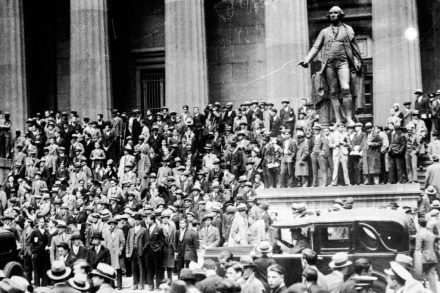
During the great financial panic of 1907, the banker J.P. Morgan locked the titans of the financial world in his lavish private study to determine which banks to rescue and which to let fail. This intervention saved the banking system, restoring public confidence. But trust in Wall Street was shaken to its core. Six years later, Congress passed the Federal Reserve Act, which sought to stabilize the American financial system by establishing a central bank to regulate credit and serve as lender of last resort. By the mid-1920s, the very mechanisms that were designed to promote stability had fueled a surge in stock market speculation.

1929 crash

How Finland joined the West

From our UK edition

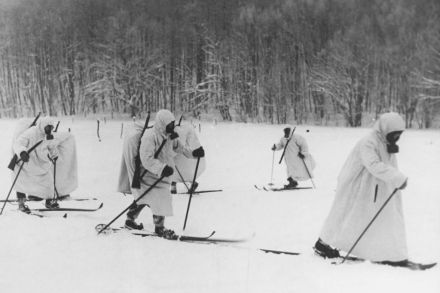
Finland’s entry into Nato in 2023 dealt a major blow to Russia in the Baltics. For years, President Putin had warned his Finnish counterparts that a decision to join the alliance would be met with an appropriate response, but the implicit threat has been slow to materialise. In February, Russia reconstituted its Leningrad Military District, a Soviet-era administrative region tasked with defending Russia’s northwestern territories, but otherwise there’s been a palpable quiet in the far north. In recent weeks, this has begun to change. On 18 November, the sole fibre optic cable linking Finland and Germany was severed, and hours after a cable connecting Sweden and Lithuania was also cut.

Viktor Orban’s adviser has made a big mistake

From our UK edition

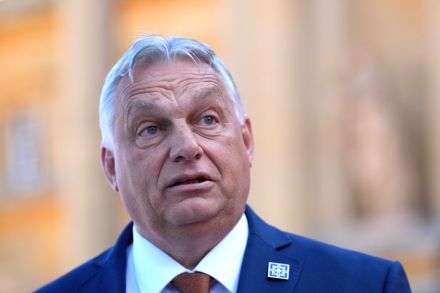
This week Balazs Orban, the bespectacled political director to the Hungarian Prime Minister (and of no relation to him), has found himself in trouble after a podcast interview he gave on Wednesday. He seemed to imply that Ukraine should not have resisted the Russian onslaught – and that if Hungary had been in a similar position, it would have given up without a fight.  ‘We probably wouldn't have done what President Zelensky did two and a half years ago, because it's irresponsible,’ Orban said. ‘Because obviously he put his country into a war defence, all these people died, all this territory was lost – again, it's their right, it's their sovereign decision, they had the right to do it. But if we had been asked, we would not have advised it.

The airport dividing Poland’s politicians

From our UK edition

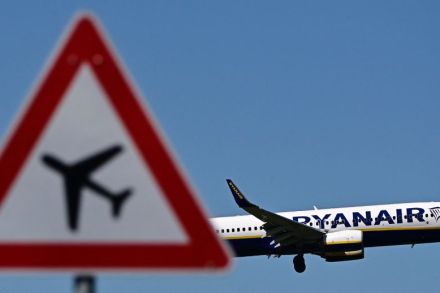
In 2017, the Polish government set out to build one of the largest airports in Europe on the outskirts of Warsaw. The project, known as the Central Communication Port, or CPK, was meant to combine a new international airport with a high speed railway network, connecting the Polish capital and the country’s peripheral regions. With the austerity of the communist era fading from memory, the CPK has come to symbolise the rapid development of Poland, a nation which has risen from political obscurity to become the EU’s sixth largest economy and one of Nato’s strongest military powers. Following last year’s parliamentary elections, and the subsequent change of government, conflicting visions for Poland’s future have brought the entire project to a standstill.

Bulgarian Tsar: the West is not in decline

From our UK edition

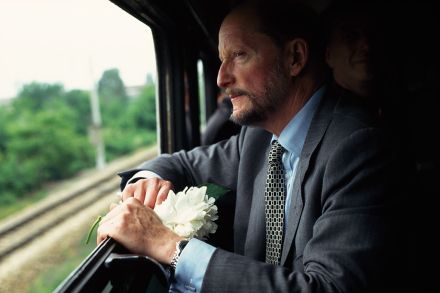
Bulgaria has rarely been the master of its own fate. Throughout history, neighbouring powers have often succeeded in imposing their will upon it. Nevertheless, Bulgaria has endured. There are few who can attest this with greater authority than Simeon II, who reigned as Bulgaria’s last Tsar from 1943 to 1946 and returned, after five decades of communist-imposed exile, to be elected Prime Minister between 2001 and 2005. In a meeting at Vrana Palace in Sofia, the 86-year-old former monarch told me that Bulgaria has missed a chance to mediate between the West and Russia.  Simeon inherited the throne from his father, the modest, self-effacing Tsar Boris III, who died under mysterious circumstances in 1943, 13 days after returning from a turbulent meeting with Adolf Hitler.

How can Poland’s Law and Justice party revive its fortunes?

From our UK edition

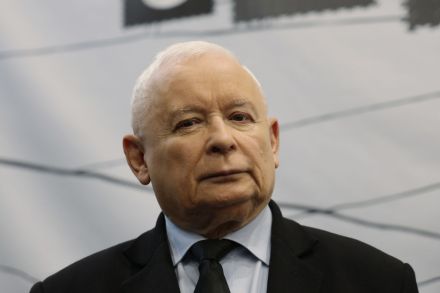
After narrowly losing power in October’s parliamentary elections, Poland’s conservative Law and Justice Party (PiS) has spent the last four months battling the reforms of Donald Tusk’s ruling coalition. Jaroslaw Kaczynski, who co-founded PiS in 2001 and has served as its chairman since 2003, must now adapt to his role in opposition. On Saturday, Kaczynski said that he would seek another term as the leader of PiS, but this won’t be an easy task. After the excitement of the last few weeks, which has included showdowns with the government over its takeover of public media and the arrests (and subsequent presidential pardon) of two opposition figures, some members of PiS’s leadership have begun to do some soul searching, and not all of them see a future with Kaczynski in charge.

Donald Tusk sends police after journalists

From our UK edition

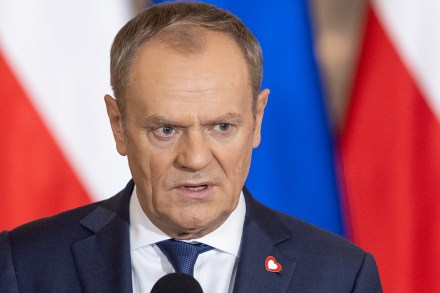
Donald Tusk’s return to power in Poland’s autumn election was interpreted by many as the victory of centrism over populism. The rogue right-wing Law and Justice party (PiS) had been cast out and decency prevailed once more: this was, at least, the narrative presented to the world’s media. In Warsaw, things looked very different. On the campaign trail Tusk repeatedly promised to ‘depoliticise’ the state-owned media and restore the rule of law. Once he was sworn in as Prime Minister last month, it didn’t take him long to resort to authoritarian methods that would have led to an international outcry if a supposed moderate had not been behind them.