Latest from Coffee House

Latest from Coffee House

All the latest analysis of the day's news and stories

Vance is back in the box seat

“We gotta take care of business this November,” said Vice President J.D. Vance, demurely, at the Republican convention last night, “then we’ll worry about what comes next.” He was referring to the chants of “28! 28!” that emanated from the exuberant MAGA crowd – an appeal for him to be the next Republican presidential nominee.

Vance

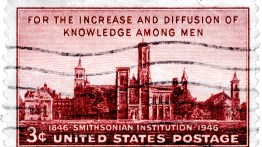
Lonnie Bunch’s long march through the Smithsonian

Lonnie G. Bunch III, the first black head of the Smithsonian Institution, is stepping down after a tenure of some seven years. NPR had the news: “In 2019, Bunch was named secretary of the Smithsonian, becoming the first historian and the first African American to hold the position.” The Wall Street Journal also got the memo: “The first Black historian to lead the world’s largest museum and research complex says he’s retiring and will leave by year’s end.” NBC looked behind the headline. “Bunch, the first Black person and first historian to lead the institution, has said he would have retired a year ago but felt he had to stay to defend the institution from the White House attacks, the person said.

Twenty-five years after 9/11, is America growing complacent?

The ghostly silence and calm that settled over Washington, DC is what many in the city remember most about the aftermath of the 9/11 plane hijackings and ensuing destruction of the Twin Towers and a portion of the Pentagon.  City streets were emptied of traffic. The airports closed and most public transit came to a halt. Not since British troops burned the Capitol and the White House during the War of 1812 had there been an attack of that magnitude on mainland America. The threat has not gone away. It has since morphed into smaller-scale events carried out by lone actors  Virtually all of the nation’s elected leaders and much of its bureaucratic workforce were evacuated.

Why did the British government label Charlie Kirk supporters ‘extremists?’

One year ago, Charlie Kirk was shot dead; the British government immediately got to work. Following Kirk’s murder, the Research, Information and Communications Unit (RICU), a UK government counter-extremism and anti-terrorism unit, began monitoring thousands of social media channels, gauging the reaction of what they describe as “Extreme Right-Wing” (ERW) activists. RICU has stirred controversy over its role in coordinating ‘controlled spontaneity’ campaigns in the aftermath of terrorist attacks Published here for the first time, a memo written by RICU reveals that officials assessed that “Extreme Right-Wing” activists, including Tommy Robinson, would use Kirk’s assassination to “push pro-free speech narratives.

‘A failure of imagination’ did not cause 9/11

On a balmy autumnal evening in October 2001, a secret task force assembled by the CIA and the Pentagon met in a nondescript concrete-and-glass corporate building at the end of Fiji Way, a run-of-the-mill thoroughfare 20 miles west of Los Angeles. That task force, however, was anything but run-of-the-mill. Dubbed the Entertainment Industry Task Force, it comprised 30 of Hollywood’s most renowned filmmakers and creatives, including household names such as Oliver Stone (Platoon), David Fincher (Fight Club), and Randal Kleiser (Grease). Their mission was to imagine the next devastating terrorist attack, mere weeks after the 11 September 2001, attacks set fire to the Manhattan skyline and shook the world.

Americano Presents

Will Pete Hegseth run for President?

Inside Jared Kushner’s Albanian adventure

19 min listen

What is behind Albania’s so-called “Flamingo Revolution,” and why has Jared Kushner found himself at the center of it? Freddy is joined by Ian Thomson to discuss Kushner’s controversial plans to build luxury resorts on Albania’s coastline, the protests they have sparked, and the country’s long-running battles over land and property. They also explore Albania’s turbulent history, the legacy of communism, and why the country’s ancient traditions and rapid growth as a tourist destination are colliding with Trump-era ambitions for real estate development. Learn how to earn yield on gold, paid in gold, at Monetary-Metals.com/Americano Produced by Abigail Brierley. https://www.youtube.com/watch?

Don’t believe everything that AI companies say

Two big stories are driving interest in artificial intelligence this week. The first is the resignation of Jacob Coxon, a researcher at Anthropic (maker of Claude) who used to work for OpenAI. He said in a statement on X: https://twitter.com/hilbertspaess/status/2097476196791709843?s=20 Coxon went on to say that “the people building AI earnestly believe that it could kill us all by the end of the decade”, and that employees at Anthropic are aggressively driving forward because they believe they are in the only company capable of managing the technology safely and ethically. At OpenAI, “many have not deeply internalized the civilizational stakes.”  Scary stuff.

AI

Would Sadiq Khan back a rave in a mosque?

I must return, regrettably, to the subject of the Church of England. Readers with long memories may recall the year of our Lord 2024. In February of that year, the people who are meant to care for Canterbury Cathedral allowed a “silent disco” to take place over two nights in the place where St Thomas à Becket was martyred. Two thousand revelers turned up to take part in what became known as “a rave in the nave.” Naturally the Church of England authorities denied that this constituted any sort of defilement of one of England’s holiest places. Fast forward to September of that same year and it was Peterborough Cathedral’s turn. That was when it announced an Ibiza-themed nightclub evening with DJs spinning an “epic” set of “soul, funk and contemporary hits.

Can we just stop AI?

On Tuesday, a 27-year-old British researcher called Jacob Coxon walked out of Anthropic, the San Francisco lab that has made “AI safety” its raison d’être. As he left, he announced on X that he was quitting not just the company, but the whole industry. He did this, he said, because the people building AI seriously believe it could kill us all by the end of the decade. And yet they still rush on, researching something that might extinguish our species. In a normal industry, Coxon’s old employer might have dismissed his laments as wild scaremongering. Instead, Evan Hubinger, who actually runs Anthropic’s alignment science (i.e. the business of keeping AI safe), publicly agreed, and put the odds of mass human extinction within a decade at more than one in ten.

My friend Charlie – and the line between good and evil

A year ago, on the afternoon of September 10, 2025, I was 20 feet away when my friend Charlie Kirk was murdered, shot dead for holding a public debate on whatever topics the students of Utah Valley University wanted to talk about. I spent the rest of the day in the waiting room of Timpanogos Hospital, first hoping for a miracle and then coming to grips with the miracle that did not come. I had little to do except reply to the dozens of messages pouring in, asking how I was holding up. Over and over, I shared how I honestly felt: I was heartbroken, but beyond that, I felt ill, sick to my stomach not just over the friend I had lost in the most horrible way imaginable, but over what it meant for the country Charlie loved so dearly. America's freedom of speech is nigh-absolute.

The desperation of the ‘Trump Dividend’

"People don’t need no jobs," said Mike Judge’s marvelous comic creation, President Dwayne Elizondo Mountain Dew Herbert Camacho. "I’m gonna tell you what people need, people need money, lots and lots of money… we gonna print so much damn money, I’m gonna give every single American one million dollars. Ain’t gonna be no more one percenters. Everybody’s gonna be million percenters." President Donald Trump hasn’t yet gone full Camacho. But he’s getting there. Last night, at the glitzy Republican midterm convention in Dallas, Texas, he introduced the "Trump Dividend" – a $5,000 reward for every adult US citizen on the condition that his party keeps the House and Senate in November.

We need to talk about Lindsay Clancy

The declaration of a mistrial in the filicide case of Lindsay Clancy coincides, for me uncomfortably, with a new UK reissue of my 2003 breakout novel We Need to Talk About Kevin. The book concerns a mother whose son becomes a high-school mass murderer. She agonizes over whether something has always been wrong with him or something is wrong with him because something is wrong with her. Prior to publication, I’d imagined that the commercial hook would be the frequency with which self-pitying adolescents were taking their misery out on their classmates and teachers, since when I wrote the novel school shootings had yet to be fictionalized. Instead, what hit a cultural nerve was “maternal ambivalence.” The text dares to explore parenthood in de-romanticized terms.

Oil at $100 a barrel is a disaster for Trump

When Donald Trump's political obituary comes to be written, none of his colorful phrases over the years will seem quite as outrageous as his remark in June, when the Consumer Prices Index hit 4.2 percent: "I love the inflation." He later claimed that he meant he loved the inflation figures because they weren't as high as they could have been. But that isn't going to wash: he had scorned the very people who had voted for him, and for whom inflation is a very big deal, by dismissing inflation as something unimportant.  He won't be making the same mistake, presumably, now that oil prices have hit $100 a barrel once more, for the first time since July.

oil

Why were women banned from the Eiffel Tower?

The French are accustomed to rancorous debates about the threat to women’s rights posed by religious orthodoxies – especially Islam, with its restrictive tradition of hijabs, burkas and abayas to cover the female body. Only last week, France’s far-right leader Marine Le Pen, who is far ahead in the polls, declared that she will make illegal Islamic headscarves worn in public. The far left, which panders to the Muslim vote, shot back with a promise to repeal the ban on abayas in French schools. This week, few in France were expecting a scandal over religion and women’s rights that has nothing to do with Islam.

Britain Israel

Britain’s sanctions against Israel will backfire

The historian Niall Ferguson, sometimes of this parish, said: “The law of unintended consequences is the only real law of history.” The new British Prime Minister Andy Burnham’s government is getting a lesson in that with its new sanctions on goods from Israeli settlements. The sanctions are meant to help the cause of a Palestinian state but may have the opposite effect. As an added bonus, they could hit British exports to the US. Ben-Gvir demanded international sanctions against Britain as long as we remain in possession of territory ‘violently stolen from the Argentine people’ The “comprehensive reset” of British policy towards Israel comes in the middle of a rancorous Israeli general election campaign.

Why Britain’s West Bank sanctions are savvy politics

British PM Andy Burnham’s move to impose sanctions on West Bank settlements is politically savvy – but not because it will achieve his purported aim of advancing a two-state solution. For one thing, the impact in Israel will be minimal. Ed Miliband was clear that the new sanctions regime will target those “providing services such as construction or financing for Israeli settlements,” while trade within the Green Line will continue. Yet the principal providers of such services to the settlements are Israeli banks, major companies and the Israeli government itself. Short of Miliband sanctioning them, the policy is unlikely to achieve much. The economies of the West Bank and Green Line Israel are completely intertwined.

west bank sanctions

A Houthi-Saudi war is the last thing the Middle East needs

On my second day as Britain’s ambassador to Yemen, just after the so-called “Arab Spring” in January 2011, I visited one of the capital’s more important tribal sheikhs. This was not, by diplomatic standards, an entirely routine call. I had 23 armed bodyguards, an advance reconnaissance party, and a considerable convoy of vehicles for what was, in geographical terms, a fairly short journey through the capital, Sanaa. The precautions were justified. My predecessor but one had been attacked with an RPG by a young terrorist acting on behalf of al-Qaeda in the Arabian Peninsula. Yemen has always been a country where hospitality and danger sit surprisingly comfortably alongside one another.

What we really saw at the Portsmouth migrant boat protest

What happened in Portsmouth last night was extraordinary. Citizens waded into the bitter sea to try to prevent the arrival of foreign men who were all but ferried in by the authorities. Ordinary people stepped up as reluctant, unpaid border guards while actual border guards rolled out the red carpet for a hundred blokes from heaven knows where. Everyday Brits stood vigil over our shores while the state threw those shores open to all-comers. The last frontier of our kingdom’s hard-won sovereignty is a ragtag line of fuming Portsmouth locals How do we even define this? What do we call it? The media has reached for that small, familiar word “protest,” as if this were a mere outburst of public anger over government policy. It was so much more than that.

Even playgrounds are no longer safe in Ceuta after the migrant invasion

Ceuta, population 83,000, suffered what is being described as its worst night of vandalism last night since some 70,000 migrants poured across the Moroccan border at the end of July. Vehicles and rubbish containers were set alight in several districts, fires were started among belongings in migrant encampments and police intervened in several fights between migrants. Madrid puts the number remaining in its North African exclave at around 5,000. But current estimates in Ceuta suggest it is almost double. Night after night, Spanish television shows disturbing scenes from Ceuta Nearly 13,000 pupils are due to return to school today under an extraordinary security operation.

Ukraine is losing the war

Vladimir Putin has not changed his war aims a jot since 2022 and remains determined on fighting on. Donald Trump has no new plan for peace other than bringing the Ukraine war to an end on Putin’s terms. And Kyiv is running out of money and men to defend itself, just as surely as it has already run out of Patriot interceptors to defend its skies against the Kremlin’s barrages. Those are the three depressing takeaways from the latest round of shuttle diplomacy in Moscow and Kyiv by Trump’s son-in-law Jared Kushner and special envoy Steve Witkoff. On the eve of their departure, Trump said his boys would be presenting “a new plan” for Ukraine. It quickly became clear that no such initiative existed.

The lesson Cambridge should – but won’t – learn from Jason Arday

With the Jason Arday episode set to become one of the most important and symbolic stories of the year, and his death one of its foremost tragedies, it is appropriate and timely that there should be an investigation into the whole sorry affair. As Cambridge University announced on Friday, it will launch a two-part investigation into whether it could have done more to support the professor, who was found dead at an address in south London on August 14, a week after he resigned as professor of sociology of education at the university.

The triumph of Giorgia Meloni

Giorgia Meloni’s right-wing government this weekend became the longest surviving Italian government since the fall of fascism in 1945. It is a remarkable achievement for a woman who identifies as a conservative, but who has been relentlessly branded as “the heir to Mussolini” and a far-right threat to democracy because she was once a post-fascist. Regardless, Italy’s first female prime minister has become the standard bearer of the European right as the people of Europe continue to pivot right. Elections next year look likely to bring the right to power in both France and Spain.

How the AfD made history by winning in Saxony-Anhalt

The Alternative for Germany (AfD) is on the verge of leading a state government for the first time in history. According to the preliminary results announced on Monday morning, the AfD achieved 43.8 percent in the state election of Saxony-Anhalt, more than doubling their voter share compared to the previous election in the state in 2021. The AfD achieved 43.8 percent in the state election of Saxony-Anhalt, more than doubling their voter share Meanwhile, the Christian Democratic Union (CDU), the party of chancellor Friedrich Merz, lost 20 percent and fell to 17.2. The election result from Sunday is not only damaging to the CDU, but to all historically established parties in Germany. They might not be able to prevent the AfD from governing for the first time.

Lindsay Clancy and the inversion of feminism

In January 2023, Lindsay Clancy strangled her three children in her basement and then tried to kill herself. On August 20 this year, several hundred women dressed in pink lined the street outside Plymouth Superior Court, where she was being tried for murder. Some called out “I love you,” as her lawyer went past. One of them shouted, “Team Lindsay.” Many mothers have frightening thoughts; very few become killers like Clancy The gathering had been organized by Renee Kimball, who had never met Clancy and had driven down from Maine. She had been following the trial via a livestream. She told Court TV it was neither a protest nor a rally, and that the point was “to show Lindsay support; to show her peace, to show her calm.

lindsay clancy

The oil field at the heart of Milei’s Falklands threat

If Andy Burnham, Britain’s new and surprisingly well-liked Prime Minister, were looking for another quick popularity boost, he might decide to order the deployment of a flotilla of Royal Navy vessels towards the South Atlantic today – so as to warn the Argentinians off the Falkland Islands. A good bit of gunship diplomacy is exactly what Britain needs at this point in history. Nothing would delight the public more than sticking one up the Argies again, especially after the England football team lost to a particularly unpleasant Argentinian side in the World Cup this summer. Of course, Burnham will not channel his inner Margaret Thatcher when it comes to the Falklands. Partly that’s because his entire political mission is to undo the harms of Thatcherism.

Will Pete Hegseth run for president?

19 min listen

Is Pete Hegseth positioning himself for a 2028 presidential run….or is he on the verge of being fired? The Spectator’s Sarah Beth Spraggins joins Americano to discuss the Secretary of War’s future, his loyalty to Trump, and the growing questions over his handling of the Iran war. They also explore Hegseth’s evangelical faith and Washington church, as well as his controversial personal and romantic history. Learn how to earn yield on gold, paid in gold, at Monetary-Metals.com/Americano Produced by Abigail Brierley and Henry Lloyd.

Reform UK is a party in crisis

Deputy heads have rolled. Britain’s populist Reform UK party, in the person of chairman Lee Anderson, announced this morning that Dan Jukes, Nigel Farage’s right hand man, and James Orr, the party’s head of strategy, have stood down and abandoned the party conference. “They have left the building and they won’t be coming back,” Anderson said. Footage screened by Channel 4 on Thursday night showed Jukes appearing to suggest a way to get around electoral law to secure a foreign donation of £500,000 ($675,000). A reporter posed as a UK-based son of an American father, who was to give money to the son to give to Reform after being wooed by both Orr and Jukes.

Laura Loomer shouldn’t dictate US deportation policy

Eleven years ago, on a cold midnight in Los Angeles, I lay on a chaise lounge at the pool of the (now abandoned) Standard Hotel, made famous in Sex and the City. I was gossiping with the Carrie, Samantha, Miranda and Charlotte of the nascent online right: Breitbart editor and podcaster prototype Milo Yiannopoulos; his then assistant, the future think tank wonk Allum Bokhari; VICE’s politics editor Grace Wyler; an anti-abortion activist who was, for some reason, wearing a gay sex harness as a blazer, and a blonde Canadian named Lauren Southern, who wore a beanie that said “libertarian” and would go on to announce she had “left the right” every two years whenever she needed a check.

laura loomer
putin russia

Is Europe brave enough to keep pointing the finger at Putin?

Just under a month after three drones were discovered in quick succession at Leipzig airport, the German government took the unexpected step of publicly naming the country behind the incidents. Standing alongside foreign minister Johann Wadephul on Tuesday afternoon, the German minister of the interior, Alexander Dobrindt, announced: “The German government has concluded that Russia is responsible for the hybrid attack in Leipzig on 4 August.” According to Dobrindt, the German government was able to conclusively determine Russia’s involvement thanks both to a police investigation and findings made by the intelligence services.

Marine Le Pen’s Muslim headscarf ban is popular, not populist

Marine Le Pen has promised to ban women wearing Muslim headscarves if she becomes president next year. The leader of the National Rally declared on X: “I will submit to the French people, by referendum, a bill to combat Islamist ideologies with numerous powerful measures, including the banning of the Islamist headscarf in public spaces.” Le Pen may be out of step with the rest of the political class but she is speaking for a majority of the people France has led the way among European countries on the issue of conservative Islamic dress. In 2004, for example, a law was passed prohibiting the wearing of conspicuous religious symbols in schools. It applied to Christians, Jews and Muslims, but France was accused of using the bill to persecute Islam.

‘Clean cocaine’ isn’t worth it

Cocaine has a tendency to get the press all aflutter. So it's probably no surprise that the Daily Mail had a splash earlier this summer with a feature about a legal energy supplement compared – at least in the headline – to “clean cocaine.”  What on earth is this product, I wondered. It turns out that the reality is slightly less dramatic than the tabloids might suggest: Wildkraut – also known as Energy Sniff – is a powdered supplement from Austria which combines the dosage of caffeine you might otherwise get from a Red Bull with some esoteric alpine herbs. The one thing that it does have in common with cocaine is that it is intended to be snorted.  As someone more than partial to energy drinks, I was immediately curious.

clean cocaine
cripple

Call me a cripple

In case you missed it (well done, if so), last week Will Self wrote an extraordinary rant on Substack attacking various journalists for how they wrote about Jason Arday and demanding they be held responsible for his death. It reminded me of one of those dogs in a pub that starts barking at some imagined threat to its owner, then gets carried away with the excitement of its own barking until it totally loses its mind and has to be taken outside to calm down.