2025: a year of tears, tariffs & taxes
Michael Simmons reflects on some of the economic highs and lows of 2025.
AAPL
213.43 (+0.29%)
BARC-LN
1205.7 (-1.46%)
NKE
94.05 (+0.39%)
CVX
152.67 (-1.00%)
CRM
230.27 (-2.34%)
INTC
30.5 (-0.87%)
DIS
100.16 (-0.67%)
DOW
55.79 (-0.82%)
Michael Simmons reflects on some of the economic highs and lows of 2025.
Featured economics news and data.
Does having money really matter that much? There are those, usually with quite a bit of it, who want us to care less about materialism. But, unequivocally, money really does matter – not because of any status it supposedly brings, but for the freedom it buys: freedom to choose how we live and how we look after others. Considering this, it seems that the deep disillusionment with mainstream politicians in recent years stems from a protracted and ongoing period of stagnant living standards over which they have presided. But the truth is that the average person has not got poorer since the global financial crisis. They have got a little
What’s wrong with planning a once-in-a-lifetime holiday? Or dreaming of buying your first home? Nothing, of course – unless it hinges on the death of your elderly mother. Increasingly, it seems, many people’s future plans depend on such family tragedies. The sorrow of losing a loved one, soothed by an inheritance pay cheque. Friends speak openly about moving into a bigger house once their inheritance ‘comes through’ There is something unpalatable about the idea of using a deceased relative’s estate to repay a loan you chose to borrow, or finally booking the cruise that has been sitting in your Tui basket since your father’s first dose of chemo. But more
Until Rachel Reeves tightened the rules in last month’s Budget, Motability customers were able to sink into the leather seats of a top-of-the-range Mercedes. But however luxurious the upholstery, it can’t have been as thick and durable as the rhinoceros skin of Motability boss Andrew Miller. He has just been awarded a 23 per cent pay rise to £924,000. There are no prizes for guessing who is contributing to the largesse shown to him by his board. Nearly half of Motability’s £8.1 billion spending last year was covered by the government’s exploding welfare budget. Motability has been under the spotlight Just how impervious to public opinion do you have to be to accept
The Spectator’s Michael Simmons in conversation with Greg Jackson, CEO & Founder of Octopus Energy and non-executive member of the Cabinet Office Board.
The Bank of England’s Monetary Policy Committee (MPC) has just voted to cut interest rates to 3.75 per cent and in doing so has delivered the Chancellor an early Christmas present. The five to four decision brings rates down to from the 4 per cent they’d been held at since August. The cut is the fourth this year and means base borrowing costs are now at their lowest rate since February 2023. The cut has happened because swing voter and Bank Governor Andrew Bailey switched his vote. Markets had anticipated the move, with trades implying a cut had 90 per cent odds. However, the fact the decision swung on a knife edge
Half a billion pounds of taxpayers’ money will be spent on rejoining the EU’s Erasmus+ student exchange programme. With libraries closing, criminals being let out of jail early and funding for maths and classics in schools slashed, it is the clearest indication yet of where this government’s priorities lie. Rejoining Erasmus+ simply means that working people will now be funding these young people’s excursions The decision to re-enter the Erasmus+ is widely touted as ‘permitting’ UK students to access study opportunities on the continent. The reality is that many university courses have always offered students the opportunity to spend some time studying abroad, whether in the EU or elsewhere. Rejoining
For the second month in a row, inflation has fallen. Figures released by the Office for National Statistics show that last month the Consumer Price Index fell to 3.2 per cent from 3.6 per cent in October. November’s reduction is the largest since September 2024. For the government, this is very good news. High inflation over the past six months has intensified pressure on Labour to tackle the cost-of-living crisis. This was clearly reflected in last month’s Autumn Budget, with Rachel Reeves announcing freezes to rail fares and fuel duty, as well as measures to lower household energy bills. If inflation continues to decline at this rate, the Chancellor will
35 min listen
Advertising guru – and the Spectator’s Wiki Man columnist – Rory Sutherland joins Damian Thompson for this episode of Holy Smoke. In a wide ranging discussion, from Sigmund Freud and Max Weber to Quakers and Mormons, they discuss how some religious communities seem to be predisposed to success by virtue of their beliefs. How do spiritual choices affect consumer choices? Between Android and Apple, which is more Protestant and which is more Catholic? And what can modern Churches learn from Capitalism? Produced by Patrick Gibbons.
In Colombia’s enormous Magdalena River basin, an ecological anomaly has triggered an extraordinary debate among ecologists. Ought some invasive species – in this case hippos – be tolerated, or even welcomed, for the ecological role they play as proxies for prehistoric keystone species lost thousands of years ago? In the early 1980s, infamous trafficker and kingpin Pablo Escobar smuggled four hippopotami – one male, three females – from an American zoo to his private menagerie at Hacienda Nápoles. Years later, on 2 December 1993, Escobar was shot dead by members of the Colombian national police’s search bloc in a shootout in Medellín. After his death, Escobar’s collection of exotic animals
Junior doctors, now known as resident doctors, will strike from December 17 to 22, which Wes Streeting has said will ‘wreck Christmas’. The doctors are demanding a 26 per cent salary rise over the next few years to make up for the erosion in their pay in real terms since 2008 – this is on top of a 28.9% increase they have had over the last three years. Michael Simmons takes a look at their claim over the erosion of their pay in real terms, explains why Wes Streeting is right to call them ‘moaning minnies’ and offers an alternative solution instead.
Imagine you are a keen Brexiteer and opponent of net zero plans, especially of the idea of being forced to buy an electric vehicle (EV). There are plenty of people like you; there is much evidence to suggest that the two things go together. But you must now be feeling a little confused. It must be dawning on you that, in terms of your freedom to buy the vehicle that you want, you would have been better off had Britain remained in the EU. Europe has just made the decision to relax the ban on petrol vehicles from 2035 to 2040 – while in Britain it is still planned to
The British economy is shrinking. Figures just released by the Office for National Statistics (ONS) show that GDP fell by 0.1 per cent in the three months to October. The contraction came after growth of 0.1 per cent in the three months to September. On a monthly basis the economy shrank by 0.1 per cent in both September and October after remaining flat in August. Most economists had expected Britain’s economy to grow. The slow-down was driven by production, which shrank 0.5 per cent, as well as construction, which shrank by 0.3 per cent. Meanwhile, services remained flat. Liz McKeown, Director of Economic Statistics at the ONS, said the production
There were ‘too many leaks’ ahead of the autumn Budget, Rachel Reeves admitted this morning as she faced MPs on the Treasury Select Committee. The Chancellor acknowledged there had been ‘too much speculation’ before her statement last month which was ‘inaccurate [and] very damaging’. Much of the scrutiny focused on reports that the Treasury had considered raising income tax, in what would have been a clear breach of Labour’s manifesto promises last year. In an unprecedented scene-setting speech on 4 November – three weeks before the Budget – Reeves dropped heavy hints about income tax rises. However, nine days later, it emerged this was not in fact going to happen,
10 min listen
The Chancellor laid our her plans to scrap the two-child benefit cap in the Budget last week. Previously Rachel Reeves and the Prime Minister were against lifting the cap, but pressure from Reform and the back benches meant the government u-turned. The Resolution Foundation has backed this policy, arguing that it will help lift children out of poverty. But is this based on dodgy data? Michael Simmons investigates.
God bless Netflix: I’ve just watched all 28 episodes of Foyle’s War, the 1940s detective series set in Hastings and London that first aired on ITV more than 20 years ago. Pedants may have spotted minor anachronisms or been irritated by London scenes filmed in Dublin, presumably for tax breaks. But for me, the whole oeuvre – Spitfires, ration books, moustaches and all – stands as a monument of meticulous and compelling period drama. And as an amateur actor who always struggles to keep a straight face on stage, I’m in awe of Michael Kitchen’s gift of expressing Detective Chief Inspector Foyle’s moral outrage and inner pain by the tiniest
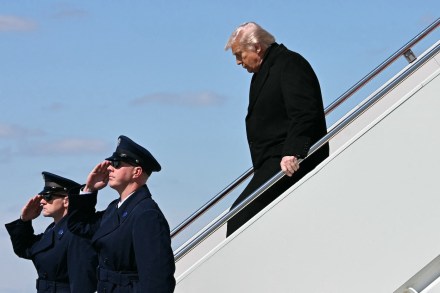
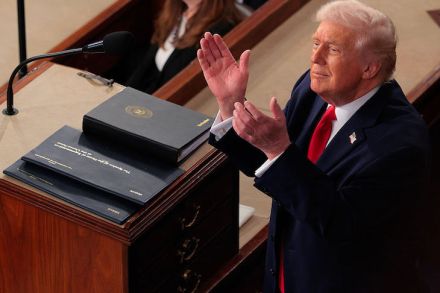
President Donald Trump dozed off during his cabinet meeting on Tuesday. Who could blame him? Listening to Secretary of State Marco Rubio drone on about Russia would prompt souls less hardy than Trump to catch some shuteye. What should be keeping Trump awake, or at least uneasy, is the shaky state of the American economy. The federal government may not be releasing much data, but the payroll processing company ADP is reporting that private employers cut 32,000 jobs last month. The losses were heavily concentrated among small employers who have been slammed by Trump’s capricious tariff policy. The only positive sign has been in the data centre industry, where investments
‘Banks don’t vote and citizens don’t love them, so they’ll always be the Chancellor’s target of choice,’ I wrote in September when one of this autumn’s many false Budget trails pointed towards a left-pleasing extra surcharge on bank profits. But it didn’t happen: partly because Rachel Reeves was love-bombed by Goldman Sachs chief David Solomon and JPMorgan chairman Jamie Dimon, promising new investment in the UK if she held off; partly because she had evidently figured out that a raid on banks that already pay higher tax rates than in any other major financial centre – many of whose bosses are already packing to move to Dubai – would make