Spectator Life

Spectator Life

An intelligent mix of culture, style, travel, food and property, as well as where to go and what to see.

Welcome to Transnistria: the country that’s not a country

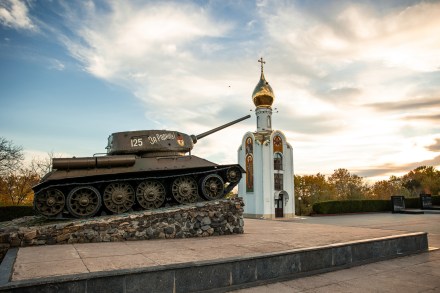
I’ve been on holiday to a country that doesn’t officially exist. It has its own border, passport, flag, currency and army but no one recognizes it – not even its main sponsor, Vladimir Putin. Transnistria is sandwiched between its proper motherland Moldova – which is itself really Romania – and Ukraine, which Putin thinks is part of his motherland. Confused? It doesn’t get any easier.  In 1992 there was a short war between the newly created state of Moldova and separatist, ethnic Russians which resulted in nearly 1,000 deaths and the breakaway "country" (via a peace accord) policed by Russian "peacekeepers.

Transnistria

What really killed off the traditional B&B

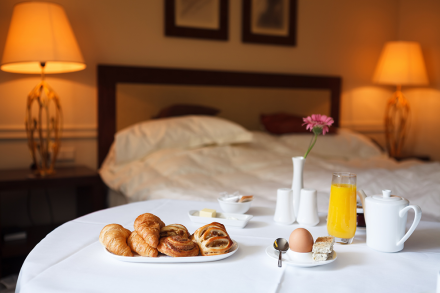
To B&B or not to be B&B? That is the question. Whether it’s nobler to offer breakfast to a guest is not in question, but whether it’s possible has been my dilemma since I started my guest house. After reading Ross Clark on The Spectator website saying that he longs for the traditional B&B, all I can say is I’ve really tried to be that landlady he describes, in pink fluffy slippers, frying bacon in a house with Artex walls. I’ve tried to take people who roll up late at night, I’ve tried to put the second B back into the enterprise, and I’ve tried to cope with customers who, like Ross, want the option of a cooked breakfast but not a fry-up – porridge, made just the way they want it, which is different for every single customer.

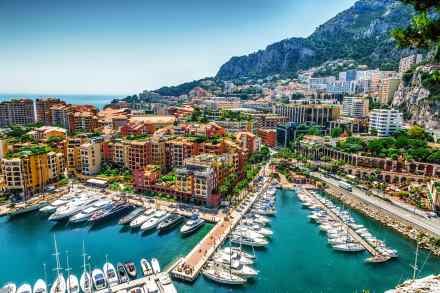
Monte Carlo isn’t glamorous

What does Monte Carlo conjure up? A glamorous casino where fortunes can be won and lost, but mostly lost? Men in evening dress at baccarat tables with beautiful women standing by? A tax haven for the glitzy rich on the Cote d’Azur? Fabulous Belle Epoque buildings? A refuge for Edwardian English invalids to escape the cold? Grace Kelly? The Grand Prix?  It was here that Max de Winter met the girl who became the second Mrs de Winter at the beginning of Daphne du Maurier’s Rebecca. "What do you think of Monte Carlo, or don't  you think of it at all?" he asked her. "I said something  obvious and idiotic about the place being  artificial," she recalled.  Well, she was pretty much correct.

Americans think they want the ‘real Ireland.’ They don’t

As the first Americans of the season got out of their car I scrunched up my face and groaned. “They’re all like that, remember?” said the builder boyfriend. “What if the bed gives way?” I demanded. “How will they even fit in the bed?” The BB shrugged. “Who cares?” he said, with his usual sunny attitude. I don’t mean to suggest these people were overweight. I mean they were giants. I’m sure their depth was right for their height. There was just an awful lot of them, and we are not the Premier Inn, with super-king beds that sleep two medium-sized horses. She was in sportif wear. He was tousle-haired and bearded, dressed in a flowing shirt and baggy trousers.

ireland

My heated argument about Italy’s birthrate

Dante’s Beach, Ravenna We were having dinner in the Osteria del Tempo Perso (the Hostelry of Lost Time). It is in the old city which in the 5th century was the last capital of the western Roman empire as, besieged by various types of barbarian, the final fall drew ever nearer. I was drinking again. The rules are simple: I can drink when abroad, defined as anywhere outside the province of Ravenna, which I rarely leave; or else when anyone foreign – i.e. non-Italian – comes to visit, which is even rarer. My younger brother Simon, the KC, had come for a long weekend with his second wife Cyrena, two of his four children from his first marriage, Sam (33) and Rufus (28), and his stepdaughter, Jemima (22).

My Chernobyl holiday

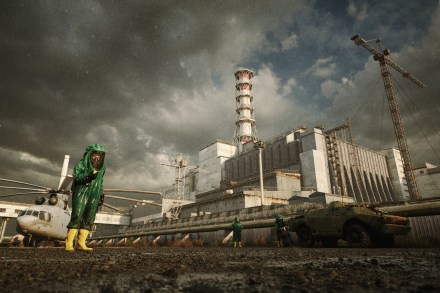
There are few things that look sadder than an abandoned sports field. I spent longer than I meant to sitting on a decaying bench looking out over the forest that was once the intended playing surface for the Stroitel Pripyat soccer club. The sky above was cerulean, cloudless and entirely still. The only life came from my hand-held Geiger counter which spluttered and crackled, telling me that I was in a territory that wasn’t fit for a stroll, let alone 90 minutes of lung-bursting athleticism.

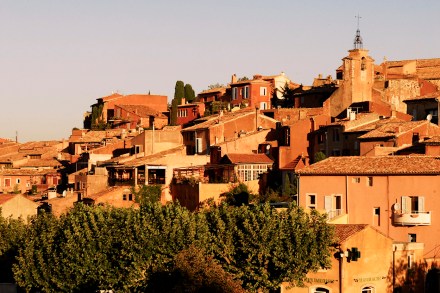
What happened to Provence?

The best time to visit Provence, I always advise when asked, is in the spring before the scorching heat and summer crowds. I have been spending time in the south of France since the early 1990s. Provence was fashionable in those days. Peter Mayle’s massively successful book, A Year in Provence, inspired thousands to pull up stakes and move to southern France to emulate his idyllic life in the Luberon hills. Some settled farther west in the Dordogne, famously called "Dordogneshire" for its concentration of British expats. Mayle became a one-man publishing industry, following up with sequels including Toujours Provence and Encore Provence. Thirty years ago, I stayed with friends who owned a renovated farmhouse with a spectacular view of the Dentelles de Montmirail.

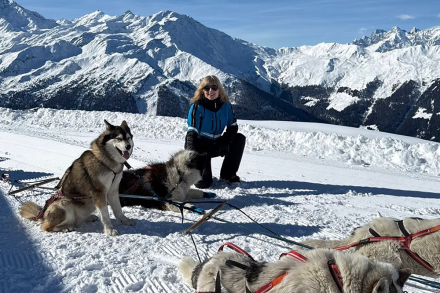
Never pass up a chance to ski

The snow is deep and crisp and even, the sky bluer than blue, and beneath my Black Crow skis the soft hiss of fresh powder. I’m rehearsing my excuses as I carve my wiggly way down a well-upholstered piste. “I’ve gone skiing by mistake,” I cry out on the pure mountain air. I’m almost embarrassed by my own excess as this is my second ski break of the year, and to go twice before Easter during a war and an energy crisis is giving peak first-world indulgence. Still, as I like to say, I have not one but two Agas, “just not in the same house,” so what the heck. Here goes. My two ski trips in two months, then.

ski

Won’t someone please think of Dubai’s influencers?

The human spirit is incredibly resilient really. Even in the depth of our concern over the Israeli-American war against Iran, the worry about what might come next, we can still find time to feel a warm and comforting sense of schadenfreude over the large number of British women with stapled-on lips who are cowering in their Dubai apartments as the Iranian shells come raining down. The name under which these women collectively labor is "influencer," a term which, like "content creator" is close to meaningless and both could be usefully replaced by "shitgibbon" or "unemployable." We laugh at their sense of entitlement, their shock that the real world has intruded upon their private Idaho You do not know these people, any of them, I suspect.

dubai

Ice and identity in Lublin, Poland’s forgotten city

A Real Pain was one of my favorite films of recent years, a tragicomic exploration of family, history, place and identity featuring two Americans in Poland – specifically in Warsaw and Lublin. My wife was also quite smitten – with Lublin as much as the film – and on the back of this began planning a weekend in the eastern Polish city. I was a little wary of such an overtly fan-like step – this felt one notch down from trying to emulate an influencer, of all the awful modern things. But she’s very good at arranging interesting weekends overseas on a minuscule budget so on this question I relented. And so it was that I found myself recently arising at 3 a.m. and heading to London's Luton airport, on which I felt sure Poland would prove an upgrade.

Le Sirenuse: the loveliest hotel in the world

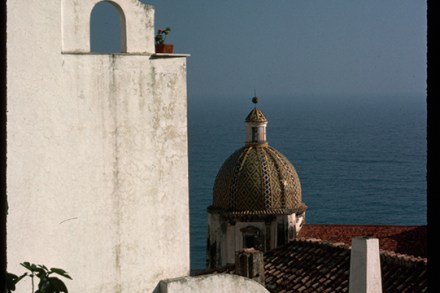
Look out from the balcony of your room at Le Sirenuse and you’ll see the trio of rocks jutting out of the Tyrrhenian Sea that gave the hotel, one of the last true greats in the world, its name. The three jagged islets form an archipelago, which is said by the Greeks to have been the home of sirens whose enchanting songs lured sailors to their deaths. Le Sirenuse, a scarlet palazzo wedged into the cliff-face of Positano, boasts similar powers of attraction. In a place known around the world for its beauty, Le Sirenuse stands out. It has developed a reputation as the loveliest hotel in the world; somehow, it exceeds that billing.

Don’t bother visiting Rome

As a general rule, once a city erects turnstiles to tourist attractions which were once free to visit, it is time to go elsewhere. Never more so than in the case of Rome. Last week the Italian capital introduced a €2 charge to visit the Trevi Fountain. Tight-fisted tourists like me will still be able to see the Trevi from a distance – it happens to stand in a public street. The charge will be only for sad Instagrammers who want to get close enough to chuck their coins in the water. The city’s tourism department has suggested the fee is needed to manage the throngs of holidaygoers. Even then, God forbid, they won’t be able to take off their sandals and take a dip – that will earn them a €500 fine. Which raises the question: why bother visiting the fountain at all?

Inside the gruesome world of the ‘human safari’

“People don’t actually do that, right?” my publisher asked nervously. “No one actually goes on a human safari, do they?” Eight years ago, I didn’t know for sure. There had certainly been rumors for years that wealthy foreigners were traveling to conflict zones to kill civilians at random. Gradually I had concluded that some people were indeed heading off to complete their bucket list of horrors. In my novel To The Lions, I placed the “human safari” in a fictional refugee camp in southern Libya. Concrete proof, however, was almost impossible to find. Several times during my years as an investigative journalist, I heard stories about nightmarish things going on in places where law and order had collapsed.

Charleston notebook: following an English country band through the Holy City

My impression of Charleston, a city I’ve been visiting since my late teens, is that it is oddly more European than American. Real Charlestonians, they say, have more in common with their cousins across the pond than with their compatriots in America’s big cities. I've found that to be true. I’m here for the birthday of one such real Charlestonian, my friend Toto. A former White House staffer, Toto now works in the private sector, but he is destined for a return to politics – his great grand uncle was an accomplished South Carolina statesman and Toto, as he puts it, "feels a deep sense of purpose and mission to ensure South Carolina continues to be the greatest state in union".

Franco Zeffirelli’s slice of paradise in Positano

If you say the name Franco Zeffirelli to anyone under about 40, you’re likely to be met with bemusement. Find any opera or film lover over that age, however, and you will be greeted with a warm exclamation – “Ah!” – followed by a recitation of the Italian director’s greatest achievements. From his emergence in international culture in the 1960s with his seminal film of Romeo and Juliet to his legendary work on stage with such operatic titans as Maria Callas and Plácido Domingo, Zeffirelli became synonymous with tasteful, intelligent productions of the classics, all of which made him, for a time, the best-known cultural figure in Italy. It is fair to say that Zeffirelli, who died in 2019, didn’t always get it right, personally or politically.

Uzbekistan by high-speed rail

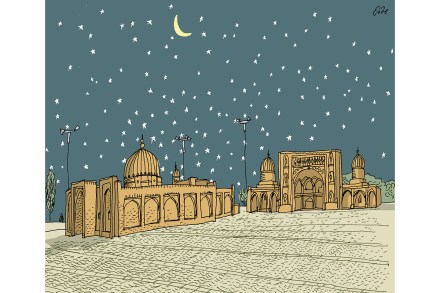
I am in Tashkent, the capital of Uzbekistan. I am standing in a historic complex of madrasas and mosques, courtyards and dusty roses and I am staring at the “oldest Quran in the world.” It is a strange and enormous thing: written in bold Kufic script on deerskin parchment; it was supposedly compiled by Uthman ibn Affan, the third Caliph of Islam, who was murdered while reading it. And so it is, as I linger here and reverently regard the Book, while scrolling my phone for more fascinating info, that I discover the world’s oldest Quran is actually in Birmingham. Yes, that’s right, Birmingham, England. It’s probably in some obscure library, lodged between a thesis on post-colonial emojis and a flyer for Falafel Night.

In awe of Fuji-san

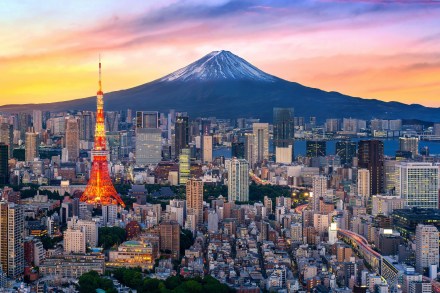
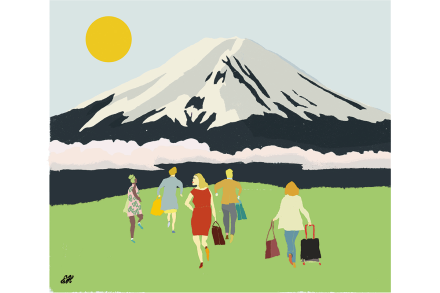
My personal version of hell? Shibuya station, Tokyo. Shibuya Scramble is one thing: the busiest pedestrian intersection on the planet, it sees two million people elbow each other, every day. But the train station that thousands of them are trying to get to? That’s where my hopes go to die. A place where you’ll find me near tears, wondering if I’ll ever see my loved ones again. It’s almost impossible to navigate, spread across a dizzying number of floors and stuffed with throngs of human beings speaking a dozen languages. New platforms spring up all the time, often at the top of an unassuming escalator, or via a tiny hidden exit of the Hikarie shopping mall. There are (one or two) signposts, sure, but my Japanese leaves much to be desired.

Fuji

The theater of the Galápagos Islands

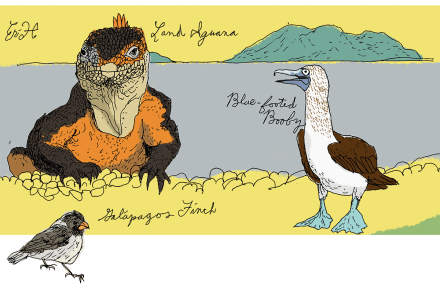
It was stiflingly hot in the middle of the Pacific Ocean. I was exploring the eastern Galápagos Islands, living cheek-by-jowl on a former casino ship with a cast of characters plucked straight from a murder mystery novel: a former British supermodel, an Ecuadorian presidential candidate, the ex-drummer of a band who once supported the Who and an influencer couple who looked like they had stumbled off the set of Triangle of Sadness. The stars of the show – and boy did they know it –were the sea lions While the trip had all the ingredients to cook up an irresistible whodunit, I was not just there to inspect the wildlife on board but to observe the wildlife off it.

Is this America’s most racist town?

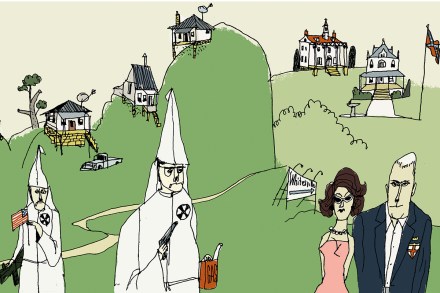
On a suffocatingly humid Friday morning in August, I sat in a rental car parked outside the home of Thom Robb, the leader of the Ku Klux Klan, wondering if I should knock on his door. A shirtless, muscle-bound, heavily tattooed carpenter who lived down the road – and swore he wasn’t racist or a Klansman – said Robb was “a really nice guy” who wouldn’t mind my turning up at his house without an appointment. Klansmen, I reckon, aren’t “nice” guys by definition, and as Robb’s mean-sounding dog barked at me from the other side of his fence, I feared the neighbor was setting me up to get my head blown off.

racist

Confessions of a bear hunter

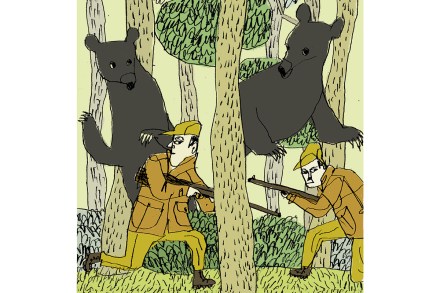
Southwest Virginia, October. Gravel groaned under my creek-numbed feet. I looked up at a mountain laid out like a fist and I climbed toward the most violent knuckle. But before I got there, the world turned on its side. I don’t know for sure why I collapsed. Maybe it was food poisoning, maybe a heart attack. I felt my face resting on cold stone and gripped the dark walnut of my rifle stock as I passed out. Eleven hours later, a new day started. A distant pickup truck with glass-pack mufflers fired up, then idled in a deep rumble. I stood – before the sun came up – and did squats for warmth, surprised I felt as good as I did, but I had a decision to make: walk off the mountain or hunt my way out. May as well hunt.

bear

Fresh tracks in ancient territories

By complete fluke, my delayed shuttle bus rose through the Coast Mountains at dusk. I pressed against the window, outing myself as a tourist amid seasonaires snoozing through another spectacular sunset. Hot pinks and deep purples streaked between towering pines, transforming the outline of snow-capped peaks. I’d crash with local friends for a month, with support from Vail Resorts to explore stories beyond the slopes. Tales of Whistler Kids ski school were already family lore – I’d once visited as a 10-year-old, buzzing to see snow. Stuck at Vancouver International, I’d pulled up a chair at Salmon n’ Bannock on the Fly – Canada’s only Indigenous restaurant in an airport. As travelers, how often do we pause to ask whose land we’re actually on?

Snowshoeing with septuagenarians

Wading through breakup grief, I’d hit the haziest stage of recovery, somewhere between lying horizontal in dark rooms, and shaving my head. Short of purchasing clippers, I’d resolved to write about wellness travel. Clad in regulation white cotton pajamas in the Western Ghats of India, my lifestyle habits had been judged (hard) and my thoughts about aging, recalibrated. A vigorous wellbeing regimen had revealed my 34-year-old body to be pushing 40, metabolically. Confronting? Yes. Salvageable? Also yes. (More mindfulness, fewer cigarettes, and – my addition – no men). Next stop: I’d pull on my hiking boots for a flight out of sweltering Mumbai, to icy Tokyo.  Post-Covid, Japan dominates algorithms and bucket lists.

The $130 billion train that couldn’t

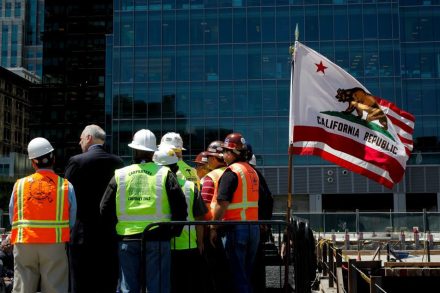
In the annals of stupid and poorly run schemes, the California High-Speed Rail project ranks among the worst. Its future, even a dramatically scaled down one, has become ever more precarious since the Trump administration’s Department of Transportation rescinded $4 billion in funds already granted the project. Governor Newsom has already filed a suit to reverse the action, but he can’t legislate away the reality that this project is an abject embarrassment. When voters approved $9 billion for the plan in 2008, the California High-Speed Rail Authority estimated that it would cost $33 billion and start running by 2020 – and that was just for the San Joaquin Valley portion. The cost has since ballooned to $130 billion, and no stretch is operational.

High-speed rail construction site in San Francisco, California

Exploring Edinburgh, from Princes Street to Pitlochry

I’m blinking through floor-to-ceiling windows that perfectly frame a pristine view of Edinburgh Castle, standing magnificent against an improbably cloudless Scottish sky. The elegant writing desk in the Archibald Signature Suite at 100 Princes Street hotel has all the makings of an elevated “work-from-home” set up, but the scenery – and the collection of aged single malt I know to be upstairs – make concentration an uphill battle. This luxury townhouse right on, you guessed it, iconic Princes Street was made for luxuriating, not hunching over laptops. Ducking into the entrance on Princes Street feels exclusive, like knowing a secret.

pitlochry

An epic journey on horseback through Kyrgyzstan’s mountains

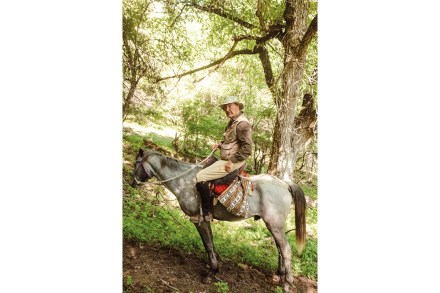
If you tell friends you are going to Kyrgyzstan, they look blank, or think you are talking about Kurdistan, although the two are 2,000 miles apart. If you get the choice, choose Kyrgyzstan. Like so many, I first learned of the place because of Alexandra Tolstoy: writer, adventurer, horsewoman and cousin of the author of War and Peace. She discovered the romance and beauty of the place for herself when she rode 5,000 miles of the Silk Road by horse and camel in 1999. Since then, she has ridden in Kyrgyzstan most years, taking parties of 12 or so into the lower slopes of the vast Tian Shan mountains, the highest range west of the Himalayas. Blonde, fearless and always elegantly turned out, she leads. We follow.

Kyrgyzstan

Plastic-free paradise

“Welcome to Wayanad. From here, all plastic is banned.” Prasanth was on a mission, belly pressed to the carpet of his car, legs sticking out on the roadside. He emerged triumphant, brandishing a forgotten Coca-Cola bottle and carrier bag before starting the ignition. Crossing into the high-altitude, hilly state of Kerala, he pulled up at a designated recycling spot.  Ephemera rained out of my upturned tote bag upon strict instruction to hand over any plastics. At Wayanad’s border, two impassive security guards eyed my friend and me as we instinctively sank back in our seats. A regular driver for tourists, Prasanth shrugged off the routine check, pointing to a sign as we were waved on.  “1,000 rupees fine! See?

india

What’s the matter with Los Angeles?

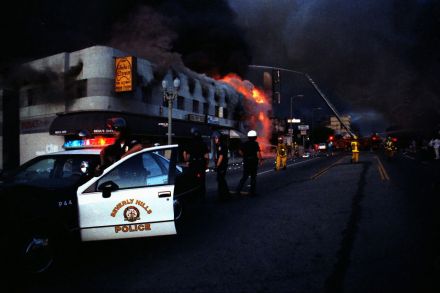
Los Angeles is reeling once again from urban disturbances, as it did in 1965, 1992 and 2020. After each outbreak the city is widely seen as a hopeless disaster that epitomizes everything wrong with American cities. That’s ironic because since its infancy Los Angeles sought to develop a new model of post-Dickensian urbanity – what the early 20th century minister and writer Dana Bartlett called “the better city” – one dominated by middle class single family homes. At the time, the city that was among the whitest, and most protestant in the nation. Bartlett predicted it would become “a place of inspiration for nobler living.”The strategy, a combination of vaulting ambition and careful planning, worked brilliantly.

LA Riots

Why I’m ditching ‘authentic’ travel

I’ve always heard Americans describe the food in Rome as “authentic,” though maybe that’s only relative to our three square meals of Little Debbies, reconstituted meat and freeze-dried astronaut food. The things we eat are not authentic food. But abroad, authenticity means anything sourced locally and served by a very small old woman with limited English. If a nonna told me she’d fished anchovies out of the Trevi Fountain and plucked chicory from cracks in the sidewalk, I’d swoon and think: they really know how to do it right in Europe. Authenticity, to me, also means a little discomfort. Bones in your rabbit stew. Lugging a suitcase up a dirt road. Getting pickpocketed.

authentic

Why western Canada should join the US

I was born in Saskatchewan and have no intention of returning. It’s the Siberia of Canada, an area bigger than France – where I now live – with the population of Buffalo, New York. It’s sucked dry by Ottawa. Elon Musk was here, and left. And it has winter temperatures of -40 degrees. Alberta has slightly more going for it: skiing, bears. But Albertans aren’t gruntled, either. The last time I was in Calgary I had lunch at the elite Ranchmen’s Club and the chatter was seditious. The talk was of Wexit – the separation of western Canada from the bloodsucking east. Then there’s Plan B. While it’s possible that western Canada could go it alone – seceding from the dominion and declaring independence – it’s hardly the only option.

Canada