Helen Barrett

The nightmare of filming A Hard Day’s Night

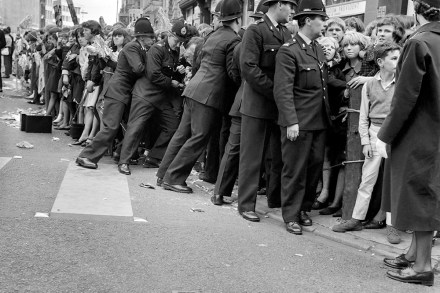
It would be easy to dismiss A Hard Day’s Night, the Beatles film made in 1964, as a throwaway period piece. The plot hurls the Fab Four into a meta narrative, playing themselves while a director – a seething Victor Spinetti – panics as the boys are delayed on their way to a televised variety performance by mishaps, distractions and stampeding fans. The film was thrown together to fit the group’s breakneck schedule – scripted over a few weeks in January by Alun Owen, shot by Richard Lester by May and out in cinemas in July. In her absorbing, concise book, Samira Ahmed sees the film not as a cursory promo but as a watershed in British culture – ‘a kind of cinematic big bang’.

The spiritual yearnings of David Bowie

From our UK edition

What did David Bowie mean by ‘No confessions/ No religion’ in his lyrics to ‘Modern Love’? Peter Ormerod proposes what at first seems an unlikely theory – that Bowie was talking about Gnosticism, the complex spiritual, though not religious, belief that God lies beyond the material world and that all humans carry a divine spark within. Ormerod admits that perceiving intellectual depths in a hit single sounds far-fetched – ‘an attempt to find weight in a scrap of fluff’. But he points out that Gnosticism, with its rejection of organised religion and its trust in God and man, was one of Bowie’s lifelong obsessions: a sincere enthusiasm he shared with Leo Tolstoy and Carl Jung.

Nostalgia for the 1980s New Romantic scene 

From our UK edition

It is hard to write the history of a subculture without upsetting people. Events were either significant or inconsequential depending on who was there, which leads to absurdities. When Jon Savage wrote England’s Dreaming, his history of punk, Jenny Turner berated him in the London Review of Books for being ‘a bit of a Sex Pistols snob’. Ironically, the most exclusive British subculture of them all seems to have escaped infighting over who or what mattered, possibly because so few people were part of it. The Blitz, Steve Strange and Rusty Egan’s much mythologised early 1980s nightclub, had a brutally selective door policy.

What will the cities of the future look like?

From our UK edition

At the Pacific Design Center Gallery in Los Angeles, artists have created an imaginary enormo-conurbation into which humanity’s billions have been herded, surrendering what’s left of the planet to wilderness. Views of Planet City, the resulting temporary exhibition, is all Blade Runner-esque, purple-neon cityscapes in miniature, VR games and costumes melding world cultures into one. The show riffs on Edward O. Wilson’s Half Earth hypothesis, the biologist’s 2016 proposal to remove humanity from half the planet to allow ecosystems to recover. It is an entertaining, clever and provocative exhibition, but it is fiction: it does not offer a set of instructions.

Ian Thomson, Andrew Watts, Sam Leith, Helen Barrett and Catriona Olding

From our UK edition

32 min listen

On this week’s Spectator Out Loud: Ian Thomson reflects on his childhood home following the death of his sister (1:20); Andrew Watts argues that the public see MPs as accountable for everything though they’re responsible for little (7:40); Sam Leith reveals the surprising problem of poetical copyright (13:47); Helen Barrett reviews Will Noble’s book Croydonopolis and explores the reputation of a place with unfulfilled potential (19:48); and, Catriona Olding ponders moving on from loss to love (26:09).  Produced and presented by Patrick Gibbons.

Never pour scorn on Croydon

From our UK edition

‘So f-ing Croydon,’ was the worst insult David Bowie could think of to describe a person or thing that revolted him. ‘Less of a place, more of a punchline,’ was a recent swipe by Sue Perkins, the Croydon-born comedian who grew up at the tail end of the town’s golden era of rampant employment, ambitious cultural venues and well-endowed private schools. London’s outermost, southernmost, most populous borough is an easy target for condescension: too brash, yet too poor; too try-hard, yet too lethargic; too ambitious, yet not ambitious enough. As the Croydonian author John Grindrod has written, locals are accustomed to Croydon’s ‘very existence – our existence – provoking outrage’. Croydon, neither London nor suburb, can’t win.

Her weird name was the least of Moon Unit Zappa’s problems

From our UK edition

On Frank Zappa’s first date with Gail Sloatman, he blew his nose on her skirt. As acts of territory-marking go, it’s hard to imagine something more equivocal. But Gail, a 20-year-old secretary at Los Angeles’s Whisky a Go Go club, must have read it as love. She built her life around the musician, composer and ‘rock’s most committed iconoclast’, as his New York Times obituary described him, for 27 years, until his death from prostate cancer in 1993, aged 52. A year after that first, snot-filled seduction, the Zappas were married, a week before Gail gave birth to Moon Unit, the first of four children. Moon’s name is not a compound noun: Unit is her middle name, given to reflect how her arrival turned two people into a single family – Frank’s idea.

Before the Blitz: the dynamism of British architecture

From our UK edition

Gavin Stamp was a prolific and unusually level-headed architectural writer and historian. Less emotional than Ian Nairn, pithier and more immediate than Nikolaus Pevsner (he knew both men), Stamp wrote definitive books on grand and humble subjects. These ranged from his hero Edwin Lutyens, to brutalism, to Sir Giles Gilbert Scott’s scarlet telephone boxes of 1935. The last he first defended in a piece for The Spectator 50 years later, which led to a campaign that saved a clutch of them. For Stamp, journalism and campaigning bled into one another. He co-founded the Thirties Society in 1979 – now the influential Twentieth Century Society – to save the era’s buildings.

The proposed cities of the future look anything but modern

From our UK edition

California Forever is an American 21st-century utopian vision, a new city to be built on 60,000 acres of dusty farmland 50 miles outside San Francisco. This latest plan for ‘safe, walkable neighbourhoods’, unveiled late last year and yet to be approved, is financed by Flannery Associates, a consortium of tech venture capitalists led by a former Goldman Sachs trader. Despite its ultra-modern backers, California Forever looks nothing like a modern city. Its promotional material is pure English nostalgia, something close to Metroland, with dreamlike vistas, charming streets, rowing boats, bicycles, sunrises and endless trees. If renderings are to be believed, the future is Blytonesque.

Why do the British still dream of bricks and mortar?

From our UK edition

In Building Soul, Thomas Heatherwick’s recent Radio 4 series, architects are villains. According to the puckish designer of Google’s King’s Cross campus, the profession is in thrall to a ‘cult’ of modernism, intent on forcing us to live in houses that make us ill and work in offices that make us depressed. Is property ownership a natural state? When did we start toregard homes as investments? Heatherwick is often accused of over-simplification. His latest attack on the architectural profession, and his blaming of Le Corbusier as miscreant-in-chief, is worse. It misrepresents how and why buildings come to be. They are the work not of lone fanatics but of countless competing forces, and mostly political will.

In praise of the Dome

From our UK edition

London’s City Hall stands empty. The bulbous, Foster + Partners-designed ‘glass testicle’ — in Ken Livingstone’s words — occupies one of the best sites in the capital: Thames-side, squaring off to the Tower of London, and overlooking Tower Bridge. But in December, its occupiers — the Mayor, the London Assembly and the Greater London Authority — deserted their glitzy £43 million headquarters for a cheaper building more than five miles east at the Royal Docks in Newham. It took them less than 20 years to outgrow their purpose-built home. According to the architectural commentator John Grindrod, City Hall is a giant glass-and-steel metaphor.

Abstract and concrete: the beauty of brutalism

From our UK edition

Nothing divides the British like modernist architecture. Traditionalists are suspicious of its utopian ambitions and dismiss it as ugly; proponents romanticise it, yearn for the civic principles that built it and gloss over its failings; the young see period charm in flat roofs and straight lines, while the old associate them with deprivation; the wealthy mostly avoid it — and many people have no choice but to live in it. Nearly 100 years after Le Corbusier set out his five points of modern architecture the British are still arguing about its merits, partly because we still live with so much of it: housing, offices and civic and industrial buildings. Two new books may change our perspective — or at least convince us that neither side is entirely right.

Celebrating Tony Wilson, the founder of Factory Records

From our UK edition

To many people Tony Wilson was a bigmouth Mancunian, brash music impresario and jobbing television presenter. But to the generation that came of age in the late 20th century he was a guide to the future. We have him to thank for ushering in the strangest, most revelatory pop music to the cultural mainstream. Wilson was among the first to spot the significance of catalytic bands such as the Sex Pistols, Joy Division and Happy Mondays and to champion them through his countless media projects. Factory, the scrappy record label he co-founded in 1978, produced some of the biggest-selling records of the 1980s, with a spirit of ‘subversion through inefficiency’. Wilson opened the Hacienda in 1982, the best nightclub in the city.

The man at the heart of punk: the late Pete Shelley recalls his Buzzcocks years

From our UK edition

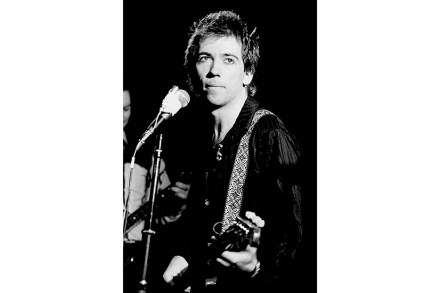
Manchester, in the words of the artist Linder Sterling, is a ‘tiny little world’. Nearly three million people live in its sprawl, but its centre is compact. Like-minded Mancunians have always found one another easily. Cultural life is febrile, which partly explains how, in the pre-digital late-20th century, England’s third city produced such startling bands: Joy Division, the Fall, New Order, the Smiths, the Happy Mondays and Tony Wilson’s era-defining Factory record label — and Buzzcocks, less celebrated, but without whom Manchester’s creative energy would have failed to detonate. Pete Shelley was Buzzcocks’s charismatic co-founder and chief songwriter, whose sharp lyrics and bratty vocals shaped much of British punk.