Culture

Culture

The good, the bad and the ugly in books, exhibitions, cinema, TV, dance, music, podcasts and theatre.

Ditchling Museum’s guiding dream

Arts feature

The charming East Sussex village of Ditchling lies at the foot of the South Downs, its narrow streets lined with ancient houses and pubs. For much of the 20th century it was home to a community of artists and craftsmen, the most famous of whom are Eric Gill and David Jones, master and pupil. In 1985, two sisters, Hilary and Joanna Bourne, founded a museum to preserve and celebrate the wealth of local creativity. It is this museum that reopened at the end of September after a major overhaul and redevelopment by Adam Richards Architects. The results are very fine indeed: this is one of the loveliest small museums I have visited, the lucid spaces well laid out, the plan and the detailing equally considered.

Where’s the fun, Barbican? 

Exhibitions

Pop Art Design, curated by the Vitra Design Museum and currently at the Barbican, opens with Richard Hamilton’s 1956 ‘Just what makes today’s homes so different, so appealing?’. Made as a poster for the Whitechapel show This is Tomorrow, it’s a witty collage of consumer fantasies scissored out of magazines, reminding us that interest in popular culture among British artists operated as a humorous, semi-anthropological collegiate research project. In part, British Pop was a riposte to the lushness of American consumerism from a small island that had won the war but had lost the peace. Pop Art in the United States got under way later and many American Pop artists had had first-hand experience of commercial art.

The Lisson show is so hermetic, sometimes we flounder for meaning

Exhibitions

The title of the Lisson Gallery’s new show, Nostalgic for the Future, could sum up the gallery’s whole raison d’être. From its inception in 1967, the Lisson has championed the cutting edge, providing a British and European platform for the major conceptual and minimal artists from the States — Sol LeWitt, Carl Andre and Dan Flavin among them — and following that in the 1980s with its promotion of New British Sculptors such as Anish Kapoor and Tony Cragg. While this generation wittily subverted the material world to question our position within it, their heirs in turn seem more interested in querying the position of art in the world — still subversive, but more hermetically so.

‘Squiggle, squiggle, ooh, good…’ Tate St Ives shows how sexy the octopus can be

Exhibitions

One of the more exotic attractions at the 1939–40 World’s Fair in New York was Salvador Dalí’s ‘Dream of Venus Pavilion’, which behind its surreal façade — an architectural marriage between Antoni Gaudí and a coral reef — catered to the public’s aquatic fantasies of spume-born goddesses and topless sirens. Something similar is going on behind the cool modernist exterior of Tate St Ives. Aquatopia: The Imaginary of the Ocean Deep is a bottom-trawler of an exhibition that dredges the depths of the human psyche for fishy fantasies.

Peter Phillips: I saw the other side of John Taverner

Music

When I first met John Tavener in 1977, he was still largely known for his dramatic cantata The Whale, which had been performed at the Proms in 1969. By then both John and his Whale had acquired considerable glitter, partly by having the veteran newscaster Alvar Lidell associated with it, and partly through its eventual connection with the Beatles, who had issued it on their Apple label in 1970. He never wrote anything quite like it again, though one notices that even this early and iconoclastic piece is based on the bible. I always wondered what his now famous religious sense really consisted of. I never fully bought the unsmiling preacher, which became his public persona in later life, since in private he was never like that.

Jennifer Lawrence is plain brilliant in The Hunger Games: Catching Fire

Cinema

In the future, everyone will have silly names. Some people will be called Haymitch Abernathy. Others will be Effie Trinket or Finnick Odair. And they’ll all live in various districts, numbered from one to 12. And because those districts rebelled against the ruling regime that one time, their children might be selected for an annual televised extravaganza called the Hunger Games. It’s a bit like school sports day, only bloodier. The kids have to kill each other with an excruciating variety of sharp implements. The winner is the one who doesn’t end up with a spear through their neck — and all glory be to them. Or at least that’s what I learnt from The Hunger Games (2012).

Baroque opera shows vicious people can sometimes be happy — and we’re glad they are

Opera

Visits by English Touring Opera are always to be looked forward to, but this autumn it has surpassed itself with three baroque works, two of them masterpieces and the third a fascinating rarity, all performed by casts of astonishingly high calibre, and produced helpfully, resourcefully, with simple elegant sets, which are all that is needed, though they probably cost a thousandth as much as the eye-catching splurges that we often see in London. First up, anyway at the Arts Theatre Cambridge, was the rarity: Cavalli’s Jason (intelligent to translate the titles where possible, since all the operas are sung in English). Apparently, it was the 17th century’s most popular opera, though that must be hard to determine.

Finally — a play about insomnia that cures insomnia

Theatre

Athol Fugard is regarded as a theatrical titan but I usually need a microscope to find any trace of greatness in his work. The Island is set in a South African prison camp in the 1960s. Two banged-up lags, John and Winston, are toiling in the noonday heat. The governor torments them with a Kafka-esque prank. They’re placed at opposite ends of a sandpit and given shovels and wheelbarrows. Each must amass a dune of gravel, which his colleague is forced to deplete. This backbreaking futility is supposed to grind their spirits into nothing. It fails. Released from punishment at sundown, they retreat to their cells where they express themselves with abandon. They amuse each other with frolicsome monologues. They swap reminiscences about good old chums from home.

Why doesn’t Doctor Who travel far from Britain? 

Television

If I could go back in time, I’d watch Doctor Who from the very first episode. I wasn’t born in Britain, and with the 50th anniversary of the series hurtling towards us like an Earth-bound Tardis, I’m wondering if I might understand this cultural touchstone better if I’d grown up in the country, along with the show. But Doctor Who neophytes are in luck, because there’s a tiny loop in the time-space continuum whereby we can quickly catch up on Time Lord lore. To celebrate the 50th, the BBC has commissioned a host of programmes, many setting out to explain Doctor Who’s place as a British icon. This week there’s An Adventure in Space and Time (BBC2, Thursday) and The Ultimate Guide to Doctor Who (BBC3, Monday). Whoosh! Off we go then.

What Jackie did after JFK was assassinated

Radio

A surfeit of anniversaries this week reminded us that on the day of President Kennedy’s assassination, C.S. Lewis (born 1898) and Aldous Huxley (born 1894) also died. Three such different figures are hard to imagine — Kennedy, the wily politician, Lewis, the tortured academic, Huxley the cool intellectual. Lewis is the one whose image and personality don’t fit; a man who appears cast from a different age from Kennedy and also from Huxley, who you can well imagine wielding an iPod and Twitter account. Yet it’s the pipe-smoking, tweed-suited Lewis who has been given the celebrity treatment this week, while the coolly cynical Huxley has been silenced, with not a feature or reading to be heard.

Mass destruction in an age of mass media

More from Arts

Catalyst: Contemporary Art and War at the Imperial War Museum North (until 23 February) is alone worth a trip to Manchester. The exhibition shows how artists living in the age of mass media have explored conflict in the age of mass destruction. The most successful works are not those that ‘make a statement’ but those which address the viewer, usually by embarrassing their indifference and inspiring empathy. Taysir Batniji’s ‘Gaza Homes’ is a set of mock estate agents’ particulars for bomb-damaged houses. Captions about ‘well appointed’ rooms, ‘airy living space’ and ‘beach access’ are a joke in bad taste.

Dining with a Picasso

More from Books

We had decided to dine out with our latest Picasso. The Picasso sat at the head of our table. It looked at us both. We sat looking at each other. We did not move lest we realised, fork poised, that the naked, smudge-faced boy with the horse was drinking our wine.

One Great Thing gets embarrassing for the Yes campaign in Scotland

Big Country's song ‘One Great Thing’ is an anthem for the Scottish Yes campaign: it was soaring in the background during an item recorded at a ‘Yes’ rally on the Today programme the other day. And since Big Country's bagpipe-sounding guitars were one of the joys of my adolescence and I've been partial to a check shirt ever since, my heart soared along with it. ‘Yes,’ said Jim Lafferty from the Yes campaign's communications office, appropriately enough, when I rang to ask how it had come about. ‘It was suggested by Jim Downie and Will Atkinson of the creative team.’ I understood that they had not, however, spoken to the band, having gone straight through to the record company about the rights.

Do you think this painting is worth $48.4 million?

Arts feature

Earlier this year a painting by Jean-Michel Basquiat, depicting two figures stoned on the hallucinogenic drug PCP, was offered for sale at Christie’s in New York. ‘Dustheads’ was given an estimated sales tag of $25–35 million. In the end, the hammer came down at $48.8 million, a sum that easily broke the previous record for the artist, $26.4 million, which was achieved last November. It was the fourth time in 12 months that Basquiat’s record price had been smashed, and confirmed the artist’s dominance of the contemporary market. Such record-breaking at auction tends to elicit valedictory statements from auction houses and Christie’s Loic Gouzer duly obliged: ‘“Dustheads” is pure, concentrated energy, freedom and honesty.

The painter of poetry

Exhibitions

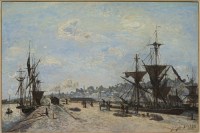
The famous court case in which Ruskin accused Whistler of ‘flinging a pot of paint in the public’s face’ continues to rumble through the public response to art in this country. The man in the street, the man on the Clapham Omnibus and most of the men who drive black cabs all like their art to be recognisable. (Perhaps women are less hidebound.) Their definition of skill is the ability to paint with photographic fidelity, and they prefer art to tell a story. James Abbott McNeill Whistler (1834–1903), leading exponent of ‘art for art’s sake’, painted pure visual poetry rather than the hard facts of detailed realism. His paintings are supremely atmospheric: subtle and allusive, they suggest rather than state, evoke rather than describe.

‘Miley Cyrus vs Lily Allen’ is not a worthy battle for feminism

If ever there was reason to believe that feminism has lost its way, then it is found in the current debate about bottoms. It all began with twerking – the sexualized dance that no one had heard of until popstar Miley Cyrus squeezed into some PVC underwear, and twerked to Robin Thicke’s song Blurred Lines. The term entered the Oxford Dictionary of English in August. Bottoms are now all over the place. Last night was the annual Victoria’s Secret show - and, much to the delight of news desks, there were bottoms aplenty. It has become increasingly difficult to open a paper without seeing news about belfies (bum-selfies), bum implants and of course, twerking.

Nevertheless

Poems

Like the machine the day had churned in dark circles, But when at last I came back the whole contraption Had stopped too soon, all its baggage had halted In a stubborn wish to stay there and nowhere else. I wouldn’t know when this had happened, Maybe some time in the first half-hour while I Was abroad it had issued a rap, a shudder, A shake, and a stillness. Its red warning Stayed alight on the closed door. Its water Wasn’t going to break into any outlet, Its porthole gave onto a darkness that refused Any sound or movement, and I found myself Looking out for comfort at a clear night sky. It hadn’t stopped.

The Butler, about a black domestic in the White House, is too painfully obvious

Cinema

The Butler tells the story of an African–American butler at the White House who served eight American presidents over three decades and it plays as a ‘greatest hits’ of the civil rights movement, along with whatever else they decided to throw in, like Vietnam, apartheid, and Lyndon B. Johnson on the can. (Actually, Lyndon B. Johnson on the can was rather the highlight.) It is heavy-handed, predictable, bland and so contrived in its sentimentality I sniggered at what should have been the moments of emotional impact. However, all was not lost, as I did have a nice little doze, which, as it was a morning screening, set me up quite nicely for the rest of the day. So there was that, but only that, alas.

‘Keeler’ is not just about Tory bigwigs chasing nymphettes around the pool

Theatre

It’s an unlovely venue, for sure. Charing Cross Theatre, underneath the arches, likes to welcome vagrant plays that can’t find a home elsewhere. The dripping exterior, opposite a gay love-hub named Heaven, feels as if it’s paved with tears. The foyer is scented with mildewed chip fat and the ink-black auditorium looks like a closed-down fleapit from the 1950s. Perhaps this air of neglect explains why few of its productions win rave reviews. Keeler, starring Paul Nicholas, got an unfair monstering. The play is an absorbing docudrama, which explores the relationship between Stephen Ward and his protégée Christine Keeler. Their flatshare was a complex and unusual set-up. Ward was multitalented, socially ambitious, intelligent, charming and articulate.

The ENO’s Magic Flute ignores everything that makes Mozart’s opera great

Opera

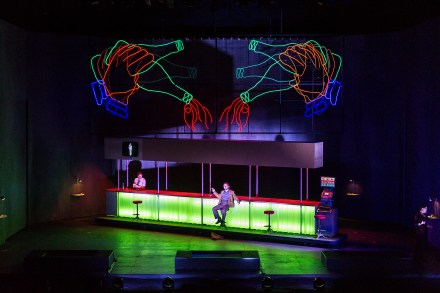
A new production of The Magic Flute is something to look forward to, if with apprehension. How many aspects of this protean masterpiece will it encompass, and how many will be neglected or distorted? The answer, in the case of Simon McBurney’s effort at the Coliseum, is that almost everything that contributes to the work’s greatness is ignored or reduced, so that an evening that should be spent in a state of growing elation merely induces irritation deepening to rage, with patches of life-draining boredom. Not that the first-night audience shared my view, to judge from the roar of applause that greeted the final curtain, and the frequent guffaws and outbursts of clapping during the work.

The Royal Ballet’s triple bill was danced to perfection

More from Arts

There was a time when the term ‘world première’ was not as fashionable as it is these days. Great works simply ‘premièred’, and their artistic status was not diminished by the fact that the opening had not been advertised as a globally significant event. Which is what ‘world première’ implies, even though it is seldom the case. The term has a sensationalistic ring to it, and should therefore be used carefully and sparingly. According to a recent press release, David Dawson’s The Human Seasons is the second of the five ‘world premières’ that the Royal Ballet will perform this season.

James Delingpole: Is the fight against environmentalism the new Cold War?

Television

Gosh it isn’t half irksome when someone who went to the same school as you but is considerably younger than you ends up doing dramatically better than you. But hats off to Dominic Sandbrook: his new series Cold War Britain (BBC2, Tuesday) is an absolute delight. Sandbrook has that rare gift of making things you thought you knew pretty well already seem startling and fresh. Take Churchill’s Fulton, Missouri speech. ‘Ah,’ I said expertly to the Fawn, a good five minutes before the programme reproduced the famous recording, ‘From Stettin in the Baltic...’ But what Sandbrook does is both put it in context and give it a human dimension that brings the whole business alive.

Radio 4’s All In The Mind is a perfect example of why we still need the licence fee

Radio

Best line of the week came on Monday from the composer John Tavener, and was given added poignancy by the announcement the following day that Tavener had died. He told us, ‘Life is a creeping tragedy; that’s why I must be cheerful.’ It’s a sankalpa, or inner resolution, he held on to especially in his last years as he endured an illness that stopped his heart four times and once kept him in intensive care for six months. For a while the experience of near-death shut down his creativity completely. He had, he told us, ‘no sense of that other life which until then had enriched him’. Tavener was talking on Start the Week, which on Monday welcomed back Andrew Marr after his remarkable recovery from catastrophic illness.

The Discerning Eye show is full of great art pieces. I know because I chose them

More from Arts

If you want to buy a picture or a piece of sculpture and have lots of money or not very much, or if you just want to look at more than 450 contemporary works, then the Mall Galleries is the place to go. For some 20 years the Discerning Eye charity has held an annual exhibition of work by invited artists, plus contributions from an open submission, selected by a panel of six — two artists, two collectors and two critics. The charity’s aim is to encourage a wider understanding of the visual arts — an aim that surely no one can disagree with — and the commission it charges on sales helps to fund study bursaries.

Paris: Parc life

Features

Autumn in Paris has been immortalised in one of Rainer Maria Rilke’s most poignant poems. Having left his wife in Berlin, Rilke moved to Paris in 1902 where he wrote ‘Herbsttag’ (Autumn Day). ‘Whoever is alone now, will remain so for long. He will stay up late, write long letters and wander restlessly in the avenues as the leaves drift.’ If you have ever taken a solitary walk in the gardens of Versailles as the sun glints coldly on the bright autumn colours, you will know that feeling. For four months of the year, from December to March, living in Paris is like being trapped inside Tupperware. The grey skies are more immovable even than in London. So if you are planning a trip, go in October or November when an Indian summer can produce wonderful effects.

‘You can’t handle the truth!’ — the greatest courtroom dramas of all time

Arts feature

Our legal system is pure theatre and always has been. Many barristers stand accused of being failed actors and vice versa. Judges love the dressing-up box and a chance to give their gavel a good bang. With murmuring galleries, shocking verdicts, swooning witnesses, cries of ‘all rise’ and ‘take him down’, the flummery and drama of the courtroom has always supplied a rich genre for film, theatre and telly. Now there’s a chance to see one of the more serious courtroom classics in the West End. Twelve Angry Men — originally written for the screen and directed by Sidney Lumet — is about a grumpy New York jury deciding on the fate of an ethnic kid accused of stabbing his father. If guilty, it’s the electric chair.