Robert Gorelangton

Queen bitch

From our UK edition

In 1950, Bette Davis had a string of recent flops behind her. She was 41, married to an embarrassing twerp (her third husband), and her career was spiralling above the plughole. She only got the lead part in All About Eve when Claudette Colbert — who was all signed up — ruptured a disc while doing a rape scene on another film. The story goes that with Colbert shrieking in traction, the producer Darryl Zanuck, who hadn’t spoken to Davis since using the words ‘You’ll never work in this town again’, was obliged to offer her the part. It didn’t take much. No sane actress could resist Joseph L. Mankiewicz’s fabulous script with its sophisticated wit and refreshing cynicism.

Moor and more

From our UK edition

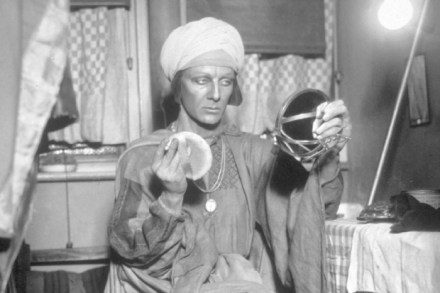
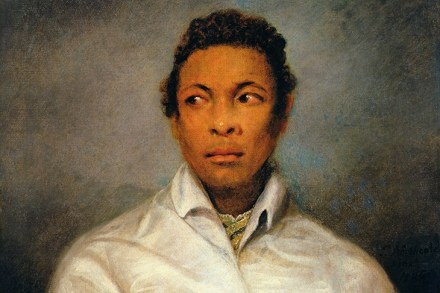
In 1824 an ambitious teenage actor fled to England from his native New York where he had been beaten up once too often. He built a career here, being billed as ‘a Most Extraordinary Novelty, a Man of Colour’. What audiences encountered, however, was not the expected comedy of a simpleton mangling the Bard. They got instead an actor of thrilling charisma and deep natural ability. Ira Aldridge soon became the first black actor to play Othello, taking over the part from the brandy-sodden genius Edmund Kean, who died mid-run due to what one obituary called his ‘vortex of dissipation’. Thanks to a slew of highly prejudiced reviews in London, Ira became a classic example of a tour de force who was forced to tour.

Tail-end Terry

From our UK edition

It is often said that Terence Rattigan’s ‘thing’ was his homosexuality and that his disguising of it coloured everything he wrote. But he had, I think, another secret up his sleeve that is still little known. He was a tailgunner in the RAF. Indeed the service was his family and a thread of blue serge runs through his career. He died in 1977, aged 66. After Harrow and Oxford, the war rudely interrupted his dazzling entrée as a dashing young Thirties playwright. After basic training, Rattigan was assigned as a wireless operator and airgunner to a squadron of Sunderlands, hunting enemy submarines in the Atlantic. One moment he was banking nice fat royalties from West End hits such as French Without Tears.

All white on the night

From our UK edition

Shakespeare’s ‘Wars of the Roses’ will have no ethnic minority actors in the cast when the shows (two Henry VI plays and Richard III) open at the Rose Theatre, Kingston upon Thames, later this month. A sprinkling of so-called BME (black and minority ethnic) actors in Shakespeare has been the norm for ages now. So the decision by the director to go with an all-white cast has caused much hurt and concern from the actor’s union Equity, the Guardian, and from various groups promoting racial diversity in the arts. From all the fuss, you’d think the plays are being directed by a hooded white supremacist.

North Cornwall

From our UK edition

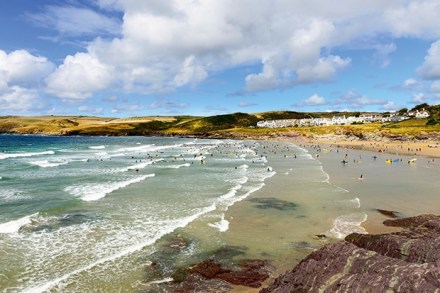
In a documentary filmed at the end of his life, Sir John Betjeman, who lived in the village of Trebetherick on the Camel estuary in north Cornwall, famously regretted not having had more sex. That problem doesn’t seem apply to today’s party crowd in the area. Nearby Rock and Polzeath are thronging with bingeing public-school teenagers, traffic jams of gleaming 4x4s, and new-build houses with plasma screens, wet rooms and all that hedge-funders require. David Cameron has body-boarded at Polzeath on recent holidays, his security detail bobbing like seals around him. For children of the 1960s, memories of frugal holidays in north Cornwall include pasties, fathers in baggy shorts, and limbs turning blue with cold.

The birth of a barrel of cider

From our UK edition

The fabulous October weather is now just a memory but it made for a golden, old-fashioned apple day down in Somerset. The plan was to pick and convert a mound of sugar-rich Redstreaks — about 400 kilos — into a rather special vintage. We would pour the apple juice into an oak hogshead, freshly emptied of its whisky, to make a cider tinged with a 20-year-old malt. How good does that sound? The idea of the get-together was the idea of designer Bill Amberg and publisher Damian Jaques, who is a cider boffin. Various friends and their families convened by an old barn with a nearby orchard. We tipped piles of apples on to a mat. The children rinsed the fruit in buckets and chucked them into a tall macerating contraption.

A brown-noser’s history of the Old Vic and National Theatre

From our UK edition

The moment Waterloo Bridge was planned across the Thames, a new theatre to serve the transpontine coach trade was inevitable. The Old Vic opened in 1818. Originally called the Royal Coburg, it could seat a whopping 3,800. Kean was the first great actor to perform there. In 1831 he played Richard III, King Lear and Othello in one week. After giving his Moor, he came on, still blacked up and doubtless drunk, and let the heckling swine have it: ‘I have never acted to such a set of ignorant, unmitigated brutes as I see before me.’ Theatre back then sounds such fun. The amazing thing about the Old Vic is that it never burned down like all other theatres of its vintage; instead, its story is one of constant financial disaster.

I’m disappointed this director didn’t plunge the knife into Dustin Hoffman

From our UK edition

At the age of 75, the theatre director Michael Rudman has got around to his memoirs, their title taken from the mouth of Willy Loman in Death of a Salesman, the play in which Rudman once directed Dustin Hoffman to great acclaim. The author is also Felicity Kendal’s other half, making him a figure of envy for much of male Middle England. A tall ‘Texan Jew’ who went to Oxford, Rudman has quite a CV. He started at the Traverse in Edinburgh, where with the approval of the theatre’s chairman Nicholas Fairbairn he put on drugs and porno plays. An award-winning stint at the Hampstead Theatre followed, then a spell at the National Theatre. He later ran the Chichester Festival Theatre before going to the Sheffield Crucible.

Indiscretions from two veteran producers

From our UK edition

Stars, playwrights and even set designers are constantly being lionised in the papers. But why not producers? They, after all, are the ones who choose the plays, the stars, and then make it all happen. Duncan Weldon and Paul Elliott are two veteran cigar chompers who’ve been in the business for 45 years. They’ve made and lost a packet, over and over again. They never seem to learn. Like all producers, they love their wives almost as much as they love a hit. Over lunch in the West End, I discussed the knack of being and staying a producer. Great exponents such as Cameron Mackintosh and Bill Kenwright have always had loyal teams. But Elliott and Weldon are in a way the true odd couple. They shared an office on the Aldwych (Ivor Novello’s old suite of rooms) for 37 years.

Julian Mitchell on Another Country: ‘I based it on my fury and anger and I wrote it fast and it flowed’

From our UK edition

Today’s top public schools are plush country clubs with superb facilities, lovely food, first-class teaching, no fagging, no beating and, one imagines, minimal sexual interference from the staff. Most even have things called girls. While excellent at turning out world-class actors, the public schools these days are far too nice and unbrutal to be of any use as dramatic material for a play. Julian Mitchell’s play Another Country (1981) belongs to another era. It is a tale of sadistic, crumpet-munching prefects lording it over traumatised fags; homosexuality is rife and there’s brutal jockeying for position among the prefects — all good training for the cabinet jobs these teenagers one day expect to enjoy.

The ‘detestable, bombastic, egocentric’ detective — Hercule Poirot lives on

From our UK edition

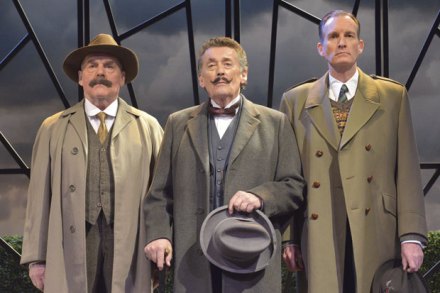
With all the enormous fuss over Sherlock on the telly, David Suchet’s recent retirement from Poirot should not be forgotten. What an incredible innings! The actor finally hung up his patent-leather shoes after a quarter-century of playing the sleuth in 70 stories. The case is not closed for fans, however. Agatha Christie’s Belgian brainbox — to whom a speck of dirt on a cuff is more agonising than a bullet wound — has already returned. He is on stage in the form of Robert Powell, famous for once playing Jesus of Nazareth. The play is Black Coffee, Christie’s first play and the only one with Hercule Poirot in it. Poirot, a Belgian refugee from the first world war, made his début in her first book, The Mysterious Affair at Styles.

‘You can’t handle the truth!’ — the greatest courtroom dramas of all time

From our UK edition

Our legal system is pure theatre and always has been. Many barristers stand accused of being failed actors and vice versa. Judges love the dressing-up box and a chance to give their gavel a good bang. With murmuring galleries, shocking verdicts, swooning witnesses, cries of ‘all rise’ and ‘take him down’, the flummery and drama of the courtroom has always supplied a rich genre for film, theatre and telly. Now there’s a chance to see one of the more serious courtroom classics in the West End. Twelve Angry Men — originally written for the screen and directed by Sidney Lumet — is about a grumpy New York jury deciding on the fate of an ethnic kid accused of stabbing his father. If guilty, it’s the electric chair.

Ta-ra, Dame Edna — Barry Humphries bids goodbye to his chattier half

From our UK edition

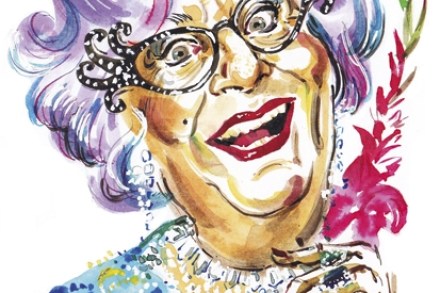
Dame Edna is hanging up her tiara. From now on the ‘failed comedian’, as Edna calls her alter ego Barry Humphries, will have to make do without her. Her current tour includes a run at the London Palladium but after she’s graced the provinces, it’s adios, possums. Her last ever live show is currently bringing (I paraphrase her website) a spooky old resilience to people’s lives through laughter, prayer and a life-enhancing enzyme called Vitamin E —  that’s E for Edna. The truth is, Barry can’t face touring any more. He is 79 and sick to the back teeth of trendy hotels with their moody lighting and minimalist nonsense.

Gregory Doran interview: ‘I wanted some big hitters,’ says the RSC’s new supremo

From our UK edition

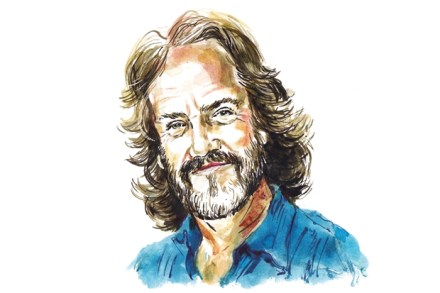
Gregory Doran has famously long glossy locks and is widely known to be a nice guy and an incurable Shakespeare nut. He has now taken over the reins at the Royal Shakespeare Company, with which he’s been associated for 26 years, working on both sides of the footlights, first as an actor and then a director. If you think he’s in the wrong job, blame Eileen Atkins. He first went to Stratford as a schoolboy to see her in As You Like It. ‘I went dancing out of the theatre and as we went back up the M6 in my mum’s beige Mini, apparently I turned to her and said, “That’s what I want to do when I grow up”.’ In fact, Doran, 55, has been putting on shows ever since the placenta hit the pedal bin, to use Maureen Lipman’s happy phrase.

Tell me a story! Anne Fine, Amanda Mitichison, Terence Blacker and Keith Crossley-Holland on the joy – and importance – of reading aloud

From our UK edition

A dark afternoon in December, aged about ten, I was in a class waiting for double geography. Mr Blake breezed in, told us to put our books away and, as a treat, he read us a story. It was ‘Oh, Whistle, and I’ll Come to You, My Lad’, the famous ghost story by M.R. James. Heads resting on our arms, we listened to this chilling tale of a scholar who takes a winter holiday at an English seaside town, finds a whistle buried in the sand engraved with the inscription of the story’s title, and makes the mistake of blowing it. An evil thing is summoned — a flapping, sheet-like, blind thing with a ‘horrible, an intensely horrible, face of crumpled linen’. Once heard, never forgotten.

Book of Mormon – religion hits the West End

From our UK edition

Hitchhiking through Salt Lake City as a student in 1976, I asked a local man, who was out shopping, directions to the nearest Salvation Army hostel. Rightly assuming I was down on my uppers, the man gave me his huge bag of groceries and walked off with a ‘bless you’. Say what you like about them, Mormons in my book are lovely. In several days spent in the most boring city on earth, I never met a nasty one. The Church of Jesus Christ of Latter-day Saints is now the subject of the much-hyped The Book of Mormon, which is finally about to open in the West End after a year of total triumph on Broadway.

Unacceptable faces

From our UK edition

A play called Rutherford & Son gripped audiences in London 101 years ago. Set on Tyneside, it was the David Hare-style leftie hit of its season. It depicted the unacceptable face of capitalism, a face that belonged to John Rutherford, who rules the family glassworks by fear, hated by his workers and his children alike. It’s still a fresh, brutal-up-north story of a monstrous control freak devoted to work and money and nothing else. The show has a terrific twist at the end and it was an instant hit in London, went to New York and was widely translated. But it became a big news story when the unknown author, K.G. Sowerby, was revealed to be a woman. Women did not write plays back then.

Going for a song | 12 December 2012

From our UK edition

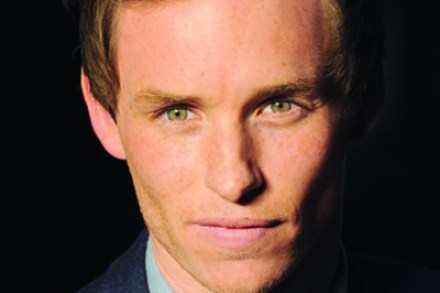
I once asked Donald Sutherland what it was like filming the famous naked love scene with Julie Christie in Don’t Look Now. He said, ‘It was just so horrible.’ I was telling this anecdote over a bacon sandwich to the freckled actor Eddie Redmayne, who, if he is hit by a bus tomorrow, will be remembered for the very rude sex scene he did in the telly adaptation of the novel Birdsong. He had to make love to the radiant French actress Clémence Poésy. What can that have been like? ‘The only thing I can say is: imagine if you had to do it. Her nipples had tape on while your bits are stuffed into a sock and there are 20 strangers watching you both. Then someone shouts “Action!” It’s horrendous!

The master’s lost voice

From our UK edition

There is hardly ever one of Noël Coward’s old plays not on tour or in the West End. Sometimes you think the commercial theatre would collapse without him. A ‘new’ Coward is therefore an event. Never performed or published, Volcano was written in 1956 when Coward was living permanently in Jamaica as a tax exile. The play is the result of his life out in the tropics well away from the Angry Young Men in their winklepickers who were ruling the roost back in Britain. What a life it was! After a hard day’s snorkelling, Noël would sit outside his house, sipping a cocktail served by a white-coated native, the sun setting over the Caribbean, no cheap airline tourists to pollute his coral-fringed paradise.

Fairground attraction

From our UK edition

Robert Gore-Langton talks to Professor Vanessa Toulmin about bringing the 27,000 Volt Girl and five-foot earwigs back into the public eye Vanessa Toulmin is that rare thing — an academic professor who grew up on a fair. From the age of ten she fried onions for the hotdogs, spun candyfloss, and took money for rides on the gallopers. She can remember, as a little girl, George the Gentle Giant (seven foot four) lurching home drunk with his chum Wee McGregor (two foot four) peeing on his shins. Her early life was like a Fellini circus film. As a teenager, Vanessa actually ran away from the fair to get some A-levels. Today  she has a chair at the University of Sheffield and is director of the invaluable National Fairground Archive.