Culture

Culture

The good, the bad and the ugly in books, exhibitions, cinema, TV, dance, music, podcasts and theatre.

Dear Simon Jenkins, please stop moaning about developers

More from Arts

When architectural preservationists meet at the tedious conferences and grim councils of despair that feed oxygen to their nihilistic and unventilated ‘heritage’ world-view, the word ‘developer’ is spat out with contempt. It is as though they are speaking of Satan and his diabolical agents, who used to appear in the horror novels of Dennis Wheatley that I so enjoyed in my youth. To hear Simon Jenkins, for example, refer to a ‘developer’ is to appreciate the impressive range over which the human voice can express contempt. To Jenkins, a ‘developer’ is a loathsome thing bent on profaning all that is sacred. ‘Developers’ despoil the countryside and debauch the city.

Deborah Ross: The Selfish Giant is not fresh, but it’s superbly performed

Cinema

The Selfish Giant is a British social-realism film in the tradition of all such films from Kes onwards, so it never feels particularly fresh, but it does feel real and true, is superbly performed, and it does pack quite an emotional punch. I had to gather myself afterwards, and I’m still gathering myself, and may be gathering myself for some time to come. So it’s good at what it does, even though what it does has been done before. At least I think that’s what I’m trying to say. I’m never really that sure. This is the second feature from Clio Barnard, whose first, The Arbor, was a portrait  of the Bradford playwright Andrea Dunbar, inventively told by fusing lip-synching with  first-hand testimonies.

Will the women of The X Factor stop perving?

Television

Will the women on ITV’s The X Factor (Saturday) stop perving? I suppose there are two ways to tackle the issue of gender equality — one is to dictate that nobody mention sexuality at all; the other is to make females slobber over the males the way men purportedly slobber over women all the time. The women judges of The X Factor are lurching towards the latter. ‘I’ve got my eye on you,’ Sharon Osbourne winked at a contestant, Nicholas McDonald. He is 15. She made him repeat the words ‘nearly sixteen’, because he pronounced it ‘sex-teen’. Young Nicholas is being sexualised before our eyes.

Grayson Perry is an inspired choice for the Reith Lectures

Radio

You’ve probably already read or heard somewhere that the inspiration for Grayson Perry’s current series of Reith Lectures on Radio 4 was none other than Lynda Snell. (I wonder if she knows.) What a coup for the establishment network, the home service, the epitome of right thinking and professional excellence. Here’s a cross-dressing potter from Essex, who revels in outrageous outfits and shockingly frank, message-ridden pots and tapestries about sex abuse and class warfare, daring to admit not just that he listens to The Archers but that he also takes his cue from Lynda’s determination to have someone (or something) from Ambridge installed on the Fourth Plinth in Trafalgar Square.

Jeremy Deller curates a fascinating and funny exhibition in Manchester

More from Arts

All That Is Solid Melts Into Air is an art show largely without art (at Manchester Art Gallery until 19 January 2014, then touring). No matter: Jeremy Deller, the curator, has found some surprising knick-knacks to illustrate how the Industrial Revolution has influenced popular culture. For instance, he plays rediscovered factory songs on a gloriously lurid jukebox. They are similar to Negro spirituals; but, while spirituals inspired R&B, our industrial folk music has descendants in heavy metal and rock. Deller charts this lineage by displaying the family trees of Noddy Holder and Bryan Ferry, reaching back to the 1790s. Continuity through time is Deller’s chief preoccupation.

The Morrissey myth

Features

Drinking in Corbières, a dingy basement bar just off St Ann’s Square, 30 years ago, you could bump into any number of groovy young Mancunians clustered round the jukebox, talking about the bands they were going to form. One night, as the jukey played ‘The Cutter’ by Echo & the Bunnymen, all evening long it seemed, there was talk of an odd duck from Stretford called Steven Morrissey. Nobody knew him but his name was in the wind. Soon he had formed The Smiths with a guitar player, Johnny Marr, whose sweet pop sound complemented, or supplemented, his partner’s predominantly sour words. For three years the collaboration worked, so long as you felt, as many teenagers have always felt, that the world was jolly unfair, and your place in it uncertain.

Tim Rice: How to get ahead in musicals

Arts feature

Like almost everyone else in the insane world of musical theatre, I don’t know how to create a hit. This hasn’t prevented me from contributing to, even originating, some. Most of these successes have come about by happy accident and could so easily have been disasters or stillborn but for matters or events beyond my control or totally unexpected. I suppose I could arrogantly claim that there was usually some artistic merit to the shows that did make it (and little to those that eventually flopped) but there must be many writers with wonderful musical ideas out there who have never had that vital unpredictable break. Like Napoleon, we all need lucky generals.

Andrew Lambirth: Emilio Greco’s early work is undeniably his best

Exhibitions

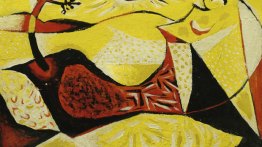
Emilio Greco (1913–95) is considered to be one of Italy’s most important modern sculptors, and certainly he was a successful one, enjoying considerable popularity and renown with his deliberately mannered re-interpretations of classical subjects. A figurative sculptor, Greco went in for elongated limbs and awkward yet dynamic poses that often have a surprising elegance and no little wit. His most celebrated work is ‘Monument to Pinocchio’ (1953) in the Tuscan hill town of Collodi, and one of the highlights of this new exhibition at the Estorick — no doubt intended to revive Greco’s reputation (on the wane since the 1970s) — is a bronze study for it.

Skymap Says We’re Nowhere Near Home

Poems

In Economy’s cramped haul it’s all I ever watch. Our course is laid on screen before me, a dotted line miles wide, plotting the next ten dry-eyed hours. This kind of travel is the loneliest of procedures: solo-piloting a pale track above computer-graphic continents.  Across the aisle a blindfold man dreams, ears cupped to rattling Springsteen.  It’s for me that the names of India’s cities ride at the horizon; that a picture aeroplane hauls its cartoon shadow. Just as I glaze over, the tracking shot pulls back: the round planet is ribboned in aerial desire paths. Our destination blinks and spins like a mandala. Nine hours, eight minutes. Below us, Japan: its wounded power station close to cracking open.

James Delingpole: The Wrong Mans leaves me gasping with exhilaration and glee

Television

Among the criticisms rightly levelled at the BBC are that its commissioning editors are overcautious, unimaginative, unadventurous and over-reliant on star names and proven formulae. So I really didn’t have much hope for The Wrong Mans (BBC2, Tuesday), the latest vehicle for the painfully ubiquitous James Corden. Since Gavin & Stacey — which I know we’re all supposed to have cherished beyond measure — Corden has become as inescapable a part of the BBC furniture as David Jason was in the Eighties, or Robson & Jerome were in the Nineties. If Corden had pitched a script based on the Albanian telephone directory, I’m sure the BBC would have commissioned it like a shot.

Last week’s all-female Today proved women make for a more uplifting show

Radio

Boy, we’ve had to wait a long time for this. But last Thursday morning something unusual happened on Radio 4; something so unexpected, so rich with potential. It happened at peak time in the morning. Eight o’clock. The Today programme. And it began with the news, read by a woman — Corrie Corfield. Of course, there’s nothing unusual about that these days. It’s been decades since the BBC was forced to admit that women can enunciate just as clearly as men and that their ‘lighter register’ is not more difficult to pick up for those who are hard of hearing. Afterwards, though, we had a female presenter, a female co-presenter, a female doctor as a guest, a female Cabinet minister and, wait for it, a woman talking about sport. It was brilliant.

Dreaming in the Renaissance

More from Arts

The exhibition The Renaissance and Dream at the Musée du Luxembourg in Paris (until 26 January 2014) explores how artists have wrestled with the furthest limits of the imagination, in forms ranging from the muscular elegance of Michelangelo to the luminous naivety of Lorenzo Lotto. In tackling a subject as inexhaustibly popular as dreams, the exhibition has avoided being either nebulous or anachronistic. Freudian psychoanalysis is mentioned only once in passing, and the paintings are allowed to speak for themselves. What’s more, these artists were not depicting their own dreams. They were plundering from history, myth and religion in a quest for vision unimpeded by time, place or conventional imagery.

Did gay Conservatives have it easier in the past? Tory Boyz makes me think they did

Theatre

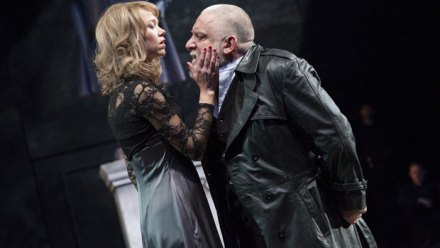
Bang! The race is on. James Graham is the celebrated author of This House, a superb examination of Labour’s administrative bellyflops during the 1970s, which premièred at the National last year. Some time ago, Graham was asked to update his 2008 play, Tory Boyz, about homosexuality in the Conservative party. Over the same period, the Tories have been furiously updating themselves. Who will embrace the future first? Graham’s play is a blend of then and now. He imagines an openly gay youngster working in the Tory policy unit, and he compares his experience with Ted Heath’s career in the 1950s. (That Heath was gay is taken for granted.) But the sprint is over before it’s even begun.

Michael Tanner: With seven scenes, Eugene Onegin really doesn’t need any more pauses

Opera

This year’s live relays of New York Met performances have a markedly Slav flavour, with Shostakovich’s rare The Nose next up, and later Dvorak’s Rusalka and, most interestingly, Borodin’s Prince Igor. It kicked off with Tchaikovsky’s Eugene Onegin, the most popular though not the finest of his operas. On the first night there were sustained protests both outside and inside the Met, against the Putin crony Valery Gergiev and against Anna Netrebko, a supporter of the plutocrat dictator. Odd that there aren’t more protests, when you think that people still get heated and even write books about musicians who stayed in the Third Reich, often acting courageously. There were no protests, alas, before the matinée that was broadcast.

Movement

Poems

Ten minutes — or less — before we step down at one of the ‘London Terminals’, ploughed land restarts and the newest cow-parsley spreads by the side of fields that held on through the April drought. The immediate foreground is dashing on past a stationary middle-distance while a forest on the horizon, darkly capped by clouds, races forward at the same speed. It’s comforting that the laws of perspective and motion apply as I saw them, forty years back, in some lines about love and apprehension. These fields we pass are still, as before, to be considered the green foundation of everything, sending out kind seeds into city yards and squares.

Come over here, Tom Stoppard

Radio

‘I was mad with jealousy,’ said Gwyneth Williams, the controller of BBC Radio 4. ‘I am mad with jealousy,’ she corrected herself, and I believed her. We were discussing Tom Stoppard’s Darkside, a radio play written to celebrate the 40th anniversary of Pink Floyd’s album Dark Side of the Moon. The play, which was perhaps the radio event of the summer, aired on Radio 2. ‘Mad with jealousy,’ she repeated, in case I had missed the point. Williams has spent the year revitalising Radio 4’s arts coverage. Stoppard’s perfidy aside, she has had marked success.

Welcome to the Randy Newman Hate Club

There was a line in Randy Newman’s very funny song 'Short People'  that I couldn’t quite work out, so I looked up the lyrics online. There were some observations about the song posted below the lyrics – I thought I’d share a selection with you.  'This song is just really f****d up... freedom of speech doesn't protect you from honest criticism or boycotts. People are allowed to express their disdain for stuff like this and even choose to not support it monetarily'. ‘because of that one song...it made my life and a lot of others harder than it should have been. it should have not been released....i am 4 ft. 9 inches and proud of it...i've been waiting for years to say this to him....

Ta-ra, Dame Edna — Barry Humphries bids goodbye to his chattier half

Arts feature

Dame Edna is hanging up her tiara. From now on the ‘failed comedian’, as Edna calls her alter ego Barry Humphries, will have to make do without her. Her current tour includes a run at the London Palladium but after she’s graced the provinces, it’s adios, possums. Her last ever live show is currently bringing (I paraphrase her website) a spooky old resilience to people’s lives through laughter, prayer and a life-enhancing enzyme called Vitamin E —  that’s E for Edna. The truth is, Barry can’t face touring any more. He is 79 and sick to the back teeth of trendy hotels with their moody lighting and minimalist nonsense.

Frank Holl: a forgotten talent much admired by van Gogh

Exhibitions

The Watts Gallery, just outside Guildford off the Hog’s Back, is a delightful place to visit at any season, with its permanent collection of work by G.F. Watts, whose studio it once was, and an ambitious programme of exhibitions on related subjects. But as autumn reaches over the hills a sense of the Victorian past may be even more closely felt and appreciated, and particularly a life of promise cut short, as was the case with Frank Holl (1845–88). Until this exhibition began to gather a fresh audience, few had heard of Holl or were able to summon an image by him to mind. This show brings together some 30 of his most famous works and offers us the chance to reassess an unfairly forgotten talent.

Arcadian

Poems

Shops that only pop up in your dreams are not unlike the ones you visit awake, except that what you buy then vanishes in the blink of an eye. In my case, it’s never anything practical but always some obscure edition of verse or a record salvaged from the Soviet archives and much of the delight’s in finding the shop itself, a shop that appears to be managed by sleep, yet exists along an everyday labyrinth part-shopping mall, part-walk-in monkish illumination. It feels somewhere I’d like to be in the afterlife — an old, darkly-panelled, cigarette- haunted, quiet centre of browsing, whose stairs twist out of sight above shelves laden with poetry, some of which I feel sure I must have bought before.

A Fledermaus worth seeing for all its inadequacies

Opera

Johann Strauss’s Die Fledermaus (but if it’s given in English, why not The Bat? Does that somehow sound too unglamorous?) is not only the greatest operetta ever composed, as everyone agrees, but also, in my view, a great work, to be ranked with the finest comedies in any genre. That is, beneath its featherbrained hedonism there is a core of seriousness, conveyed as usual by Strauss in glittering music that never lets you forget that all good things come to an end, usually sooner than you expect. But that is only part of its claim to an exalted status that the term ‘operetta’ seems to deny. As in many great comedies, several of the characters spend much of the time in disguise, and sing some of their most telling music when they are pretending to be someone else.

Introducing the celebs of Victorian reality TV

Television

Did Dr Jekyll turn into Jack the Ripper? Besides becoming evil Mr Hyde, did Robert L. Stevenson’s fictional creation morph into the serial killer who terrified Whitechapel? In a way, he did. A stage version of Stevenson’s novel was playing in the West End at the time of the East End murders. On stage, the actor who played both Jekyll and Hyde performed the switcheroo to such effect that women in the audience fainted. At the same time, the bodies of dead prostitutes — their internal organs expertly removed — caused many to surmise: a doctor did it. That good/bad doctor who was scaring everybody! A newspaper declared: ‘Mr Hyde is at large in Whitechapel.’ Some even pointed fingers at the actor, Richard Mansfield.

Talk Talk bears repetition

Music

First impressions always count, and they are almost always wrong. This is particularly pertinent if you review albums for a living, as I used to years ago. You would listen once, maybe twice, possibly three times if you were really being good, and then form an opinion, which was as much based on your preconceptions — and indeed taste — as on anything you had heard in the grooves. And then you would write your review. You would then forget about the record in question because there were so many others to listen to. It was essentially an industrial process, and it quickly ground my enthusiasm for music into dust. Music, though, is one of the few art forms, if not the only one, in which appreciation is inexorably tied to repetition.

Four good reasons not to watch The Fifth Estate

Cinema

Just how interesting you find The Fifth Estate may entirely depend on how interested you are in the whistle-blowing site WikiLeaks and its founder Julian Assange, in the first instance. This does not do what Senna did, for example, or what The Social Network did, and grip you in the places you didn’t know you could be gripped with a subject matter you’d no idea could be gripping. It’s not like that and I’ll tell you for why, in bullet points, because I’m just in a bullet-y mood today, and if you don’t use your bullet points — we are all allocated a certain amount at birth — they will start to atrophy and rot.

Sometimes Radio 3 tries to be too clever by half

Radio

Why are we still listening to the radio in 2013, to an outdated technology that has hardly changed in manufacture or output since it first appeared in the 1920s? How come TV did not wipe it out, as CDs wiped out the cassette and DVDs put paid to video? My guess is that it’s because sound was more important to us when we first came into the world and our eyes were still too blurry to take in much of what was going on. Our ears, though, were straightaway alert. Listening now, making connections through sound, keeps us in touch with that first consciousness, that initial awareness. It takes us back to the womb, to the prenatal state of hearing our mother’s heartbeat long before we could actually see her.

BFI has got carried away with its live broadcasts

More from Arts

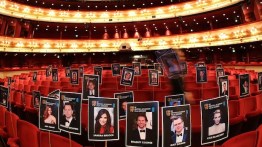
Live broadcasts into cinemas have become something of a commonplace, and a welcome one: operas, theatre performances, even radio programmes. But a live broadcast into cinemas of the audience entering another cinema is a new one on me. The idea is part of this year’s BFI London Film Festival, not as an avant-garde experiment but as a way of adding lustre to the closing-night gala: Saving Mr Banks, a sort of biopic of the film Mary Poppins with Emma Thompson as author P.L. Travers and Tom Hanks as Walt Disney (see image).