John Laughland

Confusion, snobbery and Pegida – a letter from Dresden

From our UK edition

Sachsenschweine — Saxon pigs — said the graffiti as my train moved out of Berlin on its way to Dresden. Germany is not as monolithic as it can seem: not only do some of its ancient kingdoms continue a ghostly existence as states of the Federal Republic, but also their populations nurture historic rivalries, at least on the football pitches. But the new popular movement in Dresden — Pegida, or ‘Patriotic Europeans against the Islamisation of the West’, no less — has thrown into relief keener intra-German divisions: not only those between immigrants and ethnic Germans but also those between many German voters and the country’s mortally politically correct establishment.
Ukraine: It’s not about Europe vs Russia

From our UK edition

To discuss the Ukrainian crisis in terms of a choice between Europe and Russia is misleading for several reasons. First, the European issue has been ruthlessly exploited by the Ukrainian opposition and its Western backers as an excuse for overthrowing the government illegally and by force. Opposition leaders have never distanced themselves from the most radical elements on the streets of Kiev, even though these include neo-Nazis. On the contrary, they have done everything to use their violence as a bargaining chip in their battle with the government.

Paris: Parc life

From our UK edition

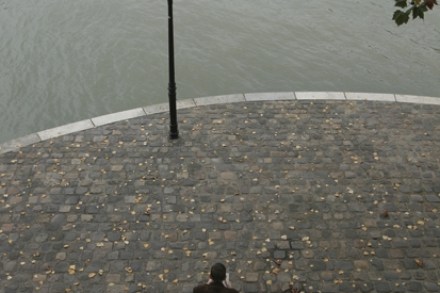
Autumn in Paris has been immortalised in one of Rainer Maria Rilke’s most poignant poems. Having left his wife in Berlin, Rilke moved to Paris in 1902 where he wrote ‘Herbsttag’ (Autumn Day). ‘Whoever is alone now, will remain so for long. He will stay up late, write long letters and wander restlessly in the avenues as the leaves drift.’ If you have ever taken a solitary walk in the gardens of Versailles as the sun glints coldly on the bright autumn colours, you will know that feeling. For four months of the year, from December to March, living in Paris is like being trapped inside Tupperware. The grey skies are more immovable even than in London. So if you are planning a trip, go in October or November when an Indian summer can produce wonderful effects.

Why France’s gay marriage debate has started to look like a revolution

From our UK edition

Paris: Revolutions are often sparked by an unexpected shock to an already weakened regime. As commentators in France remark not only on the crisis engulfing François Hollande’s government but also on the apparent death-rattle of the country’s entire political system, it could be that his flagship policy of legalising gay marriage — or rather, the gigantic public reaction against it, unique in Europe — will be the last straw that breaks the Fifth -Republic’s back. Opposition to the bill has electrified the middle classes, the young and much of provincial France. On Sunday 24 March, in the freezing cold, the 4km stretch from the Arche de la Défense to the Arc de Triomphe was full of people protesting against the bill.

A master of tactical retreat

From our UK edition

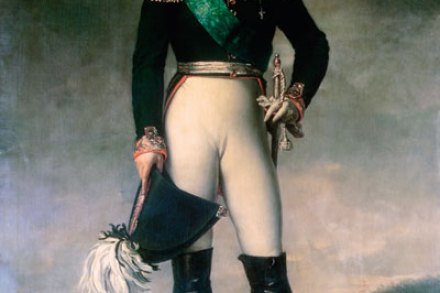
A fanciful and doubtless risky parallel between Charles de Gaulle and the Russian emperor Alexander I suggested itself while I read Marie-Pierre Rey’s superb new biography of the latter. Both men came to power through an act of political parricide: Alexander because he was tacitly complicit in the plot to overthrow his father, a plot which ended in Paul’s sordid murder in 1801, strangled with a scarf by the conspirator-courtiers after they discovered him cowering behind a screen in his bedroom; de Gaulle because he rebelled against his former mentor and the undisputed national hero from the Great War, Marshal Pétain, both on military strategy before the second world war and on the political choice to be made once it broke out.

Travel: Shop like a Roman

From our UK edition

When I am in Rome, I do as the Romans — I engage in rampant materialism. The eternal city may be — via the Church which has its headquarters there — the way to heaven; its population, however, is more interested in this world than the next. The city is full of superb shops, as the Italians’ gift for manufacture, and their seemingly effortless creation of beauty, remain undimmed by the advance of modernity. Rome is therefore a perfect destination for Christmas shopping because by visiting it, you can combine limitless consumerism with a warm glow of spiritual self-satisfaction. Isn’t that what Christmas is all about? Taxis and buses are plentiful in Rome but most tourists walk.

Travel: The charms of le barroux 

From our UK edition

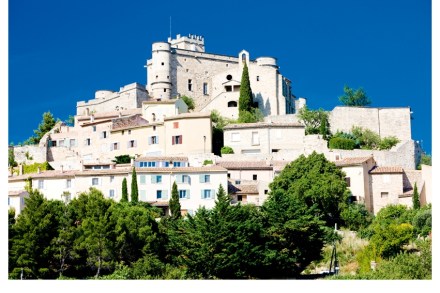
If you are looking for an undiscovered part of Provence, then you can forget about Le Barroux. Apart from the fact that both Petrarch and Pope Clement V spent their summers nearby in the 14th century, the pretty hilltop village topped by its disproportionately large castle has been the holiday destination of members of the British social stratosphere for generations. The Anglo-French descendants of Axel Munthe, the Swedish author of the spectacularly successful Story of San Michele — perhaps the first example of escapist travel literature — have a very beautiful house in the village, as did Prince Charles’s godmother. The Dowager Marchioness of Salisbury is just down the hill. It is not difficult to see why.

Deeply perplexing

From our UK edition

This book is about the fate of 230 French women sent to the German concentration camps in January 1943. Arrested as members of the Resistance, they first went to Auschwitz before being transferred to Ravensbrück and Mauthausen as the Allies advanced. In Auschwitz they witnessed some of the most terrible scenes in human history. Only 49 returned to France. The book’s whimsical but ultimately uninformative title belies a book which contains a wealth of historical information as well as some brilliant if horrific storytelling. The first 150 pages deal with the women’s Resistance activities — attending secret meetings, arranging safe passage to the free zone, running clandestine printing presses. The second part is about their experiences in the camps.

Vive les vacances!

From our UK edition

‘Vous partez?’ ‘Vous partez un petit peu?’ ‘Quand est-ce que vous partez?’ Since early June, Parisians have been asking and answering these questions remorselessly, their minds fixed on holidays and nothing else. Since early July, the capital has been emptying out dramatically: the markets are deserted, shops are boarded up, food supplies even run down. Children vanish as mothers take them to the country or send them on Scout camp, leaving the fathers to join the family when the office permits. The city will slow down even further in August, so much so that it does not even charge for street parking during that languid month.

Liberty, equality, fecundity

From our UK edition

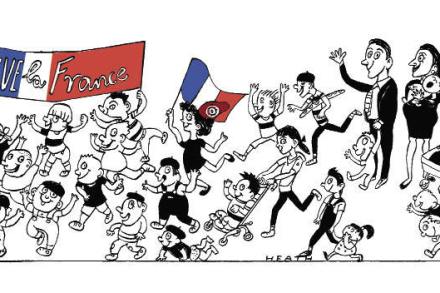
At a wedding in the Loire last weekend, in the grounds of the groom’s parents’ small château, an acquaintance from work unexpectedly materialised out of the crowd. In his early thirties, he introduced me to his blonde, gangling wife, maybe a year younger than he. The conversation turned to children: they have four, including a five-month-old baby — ‘and a fifth is on the way’. ‘Where are they?’ I asked. They were staying with his wife’s siblings, of which there are ten. The phenomenon of young parents and large families is widespread in France, and unique among Europe’s native populations with the exception of gypsy families in Slovakia or Albanians in Kosovo.

A right mess

From our UK edition

Observing French politics in the run-up to next spring’s presidential elections is like watching one of those slow-motion films of controlled car crashes in which a dummy and its vehicle are rammed into a wall. Nicolas Sarkozy is the dummy, who will make one last ungainly gesticulation as he lurches into catastrophe, and the coalition of liberals, centrists, free-marketeers, pro-Americans and careerists that carried him to power in 2007 is splintering as the laws of political aerodynamics wrench it apart. Two words explain this outcome: Le Pen. In 2002, the now governing party, the UMP, was created between the two rounds of the presidential election to support Jacques Chirac against Jean-Marie Le Pen.

Revenge tragedy

From our UK edition

As a hardened opponent of military interventionism and international war crimes tribunals, I find I am often floored when Rwanda is invoked. ‘How can you possibly advocate standing idly by when hundreds of thousands of people are being massacred?’ is a difficult question to answer. The events in Rwanda in 1994 have become the supreme moral reference point for interventionists, long after other similar causes célèbres have vanished from memory, because to contemplate the scale and method of killing there is to stare into the very heart of darkness. William Hague last year expressed the prevailing sense of certainty when he said casually, ‘We are all agreed that we would intervene if another Rwanda were predicted.

The end of the rainbow: a guide to the colour revolutions

From our UK edition

In contrast to the storming of the Bastille, the spate of revolutions which have flickered across our television screens in the last two decades have tended to adopt brand images connected with colours or plants. Most of them have wilted as quickly as they flowered. Whether Burma in 2007, Armenia in 2008, Tehran in 2009, any pro-Western demonstration is now immediately given a brand. And ‘revolution’ is proclaimed even if everything stays the same as before. The ‘rose revolution’, Georgia, 22 November 2003 The ‘rose revolution’ in Georgia turned on a disputed election. Street protests were organised by a group called ‘Kmara’.

Meet Italy’s answer to Boris

From our UK edition

Gianni Alemanno, Rome’s new right-wing mayor, tells John Laughland that it’s time for the Eternal City to adopt a ‘zero tolerance’ approach There are few people, I imagine, who could make Boris Johnson jealous, but Gianni Alemanno is probably one of them. Two days before Boris’s election as Mayor of London, the conservative Alemanno conquered Rome after the Italian Left had held the city for a decade and a half. His victory was part of a dramatic overall national victory for the Italian Right, whose no-nonsense political discourse may now set the tone for European politics as a whole. While Boris governs London from a hideous blob of glass and steel, Alemanno reigns over the Eternal City from an exquisite palace on the Capitoline hill.

Fish fries in Half Moon Fort

From our UK edition

When you think of Barbados, you think of celebrities. Tony Blair’s annual holidays in Sir Cliff Richard’s villa; high-profile Hello! weddings on the beach or the golf course, like that of Tiger Woods or Jemma Kidd and the future Duke of Wellington; the absorbing sight of an enormous Luciano Pavarotti being gently decanted into the sea at Sandy Lane — whenever he stays at that most luxurious of hotels, he has an oven specially installed in his room so that he can cook pasta for all the family — all these combine to produce an image of a holiday island which is the exclusive preserve of the terminally rich. This image is largely true. There are a lot of vast fortunes on Barbados.

There’s no place like home

From our UK edition

When we said we were thinking of moving to Urbino, our friends ooh-ed and aah-ed with envy. Urbino is a perfectly preserved mediaeval and Renaissance fortified town which sits on a hill in the Italian Marches commanding spectacular views over the surrounding fields and valleys. Its layout has hardly changed since the day when Duke Federico of Montefeltro posed for his portrait by Piero della Francesca, as there is no urban sprawl outside the old city walls. The etching studio where my wife once worked is housed in the magnificent cloister of a former convent, from which you can see the charming village church of San Bernardino nestling in the green hills beyond.

Giants in petty strife

From our UK edition

Listing page content here ‘In London, if a man have the misfortune to attach himself to letters, I know not with whom he is to live, nor how he is to pass his time in suitable society.’ David Hume was notorious for preferring Edinburgh’s intellectual life to London’s, but the city where the philosopher was most successful, at least socially, was Paris. He was sent there in 1763 as secretary to the ambassador, the Earl of Hertford, and was feted as ‘le bon David’. ‘In Paris,’ Hume wrote, ‘a man that distinguishes himself in letters meets immediately with regard and attention.’ Hume’s remark about the anti-intellectualism of the English remains true to this day, but he was to some extent the cause of it.

A chat with Milosevic

From our UK edition

John Laughland on a memorable encounter with the butcher of the Balkans at the UN detention centre in The Hague — and his claims of innocence to the last I was one of the last Western journalists to meet Slobodan Milosevic. It was early last year. A fierce wind was whipping the cold rain straight off the sea and through the ugly streets of Scheveningen as I unbundled from my pockets the various secret cameras and recording devices which I had in vain hidden there, and made my way through the security checks at the United Nations Detention Unit. A series of doors clanged open and shut and there was a friendly hubbub and a fug of cigarette smoke as stubbly men lounged, chatting in their long flat vowels as if it were an ordinary weekday morning in a Belgrade café.

Full Marx for George Bush

From our UK edition

Ever since the Berlin Wall fell in 1989, there has been a seemingly endless flow of self-congratulatory comment in the West about how former communist countries — and even some which have remained communist — are gradually westernising and learning the ropes in the capitalist jungle. Very often, these countries’ so-called progress is in fact cultural decline: the advent of bars for transsexuals in Havana, for instance, has been adduced as evidence of Cuba’s ‘liberalisation’. But the equal and opposite movement nearly always goes unnoticed — the way in which the West has itself adopted many of the old nostrums of communism, and especially the twin doctrines of revolution and internationalism.