Michael Tanner

Playing until her fingers bled: the dedication of the pianist Maria Yudina

From our UK edition

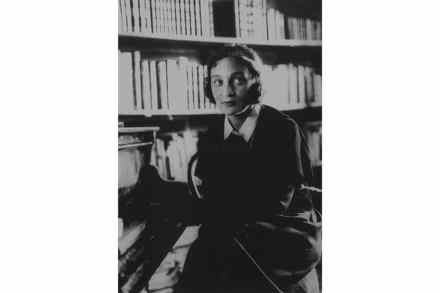
The 20th century was an amazing time for Russian pianists, and the worse things got, politically and militarily, the more great pianists thrived, despite the extreme danger and discomfort in which they lived and in which some of them died. If we think immediately of Richter, the greatest of them all, and Gilels, there are at least 20 more that we could add without exaggeration. One of the most important was without question Maria Yudina, born in 1899, who astonishingly survived until 1970. She was not just a sovereign artist but an eccentric of the kind and degree that only Russia seems able and willing to supply.
A new recording throws fresh light on Mahler’s puzzling Tenth Symphony

From our UK edition

There are many Symphonies No. 10 by Gustav Mahler, or none. The situation is rare, if not unique, in the history of music. Basic facts: Mahler finished the Ninth Symphony and Das Lied von der Erde in the summer of 1910. At the same time he discovered that his wife Alma was having an affair with Gropius, and that he had an incurable heart complaint and hadn’t long to live. One might have thought that these last two completed works are as movingly valedictory as anything ever written, but Mahler’s view was more complicated than that, and he immediately set about writing a Tenth Symphony. Over and among the notes, he scrawled messages to Alma, God and even the Devil, anguished pleas and expressions of despair.

Slanging match: rein GOLD, by Elfriede Jelinek, reviewed

From our UK edition

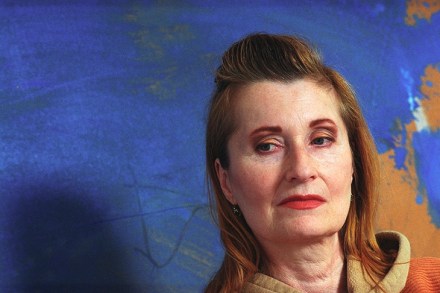
I’ve tried hard to think of someone I dislike enough to recommend this novel* to, but have failed. Elfriede Jelinek is Austria’s leading contemporary literary figure, and to open rein GOLD at random is to get the impression that she is the successor to Thomas Bernhard — page after page without a single paragraph indentation, a general ranting tone, maddening repetitiveness, and cult status. Just in case Jelinek’s is an unfamiliar name: she is an extremely neurotic person, a sufferer from many phobias — unable to travel to collect her Nobel Prize; a copious writer, many of her books having been translated into English among other languages; and, most significantly, one of those authors whose favourite idiom is humourless parody.

The grotesque unevenness of Mozart’s Requiem

From our UK edition

It is amazing what fine performances you can get beamed to your computer these days. Slightly less amazing is the packaging these events come in, when they do. ENO relayed free a concert of Mozart’s Requiem, but it was preceded by a snatch of Strictly, with a row of muscular young guys ripping off their shirts, before we entered the Coliseum for a heavily pregnant Danielle de Niese hyping the event we were about to see and hear. She is delightful, but I wish she hadn’t been compelled to tell us that, despite his hard life, Mozart was sending us a message of hope that everyone, however ignorant of classical music, can be moved by. It’s just not true.

Why imperfect operas like Don Carlo are more interesting than perfect ones

From our UK edition

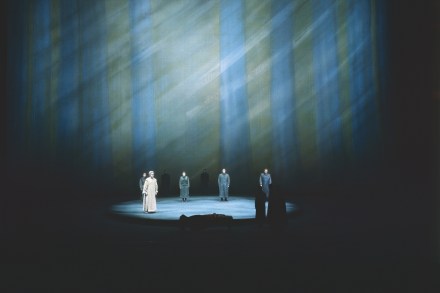
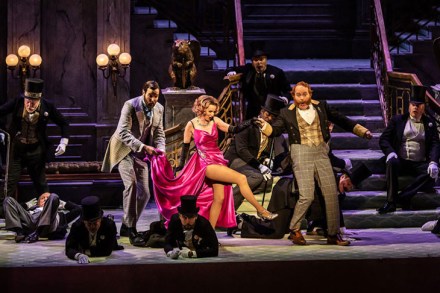
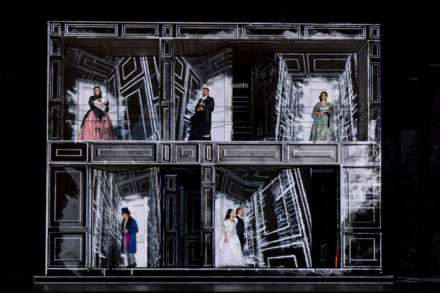
In the 62 years since I first heard and saw Don Carlo, in the famous and long-lasting production by Visconti at the Royal Opera, my feelings about it have grown ever stronger, both in passionate attachment and in critique. Imperfect operas, like other imperfect phenomena, can be more interesting than perfect ones, because they’re more thought-provoking, more enticing. The libretto, very freely based on Schiller’s play, was by two Frenchmen, and Verdi, eager to make a bigger splash than he had so far in Paris, made too much of one. The first performance, in 1867, ran so late that the members who lived outside central Paris missed their last trains, which were at 12.35 a.m. (Royal Opera and ENO: please take note).

The best recordings of the greatest symphony

From our UK edition

I am daunted. Bruckner’s Eighth Symphony is a work that I regard with love, awe and even anxiety. I always wonder whether I’ll be able to cope with such large and deep demands on me and, if I hear a performance or recording that doesn’t disappoint me, be able to articulate why I find it so powerful, one of the supreme masterpieces of Western music, the greatest of symphonies. With musical works that one has the strongest kinship with, there is, as everyone finds, an urgent need to locate the qualities that make it so penetrating an experience, combined with misery at the gap between how one responds and what one feels able to say.

Michael Tanner remembers the greatest musical experience of his life

From our UK edition

No surprise: the greatest musical experience of my life was Parsifal at Bayreuth in 1962. I thought at the time that I would never again be so moved by a performance of anything. I have kept an open mind ever since, and still it takes me no time or effort to answer the question. Obviously I can’t discuss here why I regard Parsifal as a supreme work, but even if I thought that Wagner had written greater ones, or that some other master composer had — in fact, I do think there are several works by four composers that are as great as Parsifal, though at that altitude rankings and comparisons become absurd — what I experienced in Bayreuth that year was unique and unpredictable.

Why do Radio 3 presenters adopt the tone stupid adults use when addressing children?

From our UK edition

Anyone who has listened regularly to Radio 3 over the decades — not to mention the Third Programme, which Radio 3 replaced in 1967, and which provided an incomparable musical education for many of us — can’t have failed to notice the change in style and standard of presentation. Listening to any radio announcer from 50 years ago is bound to cause hilarity: carefully read scripts, un-emotional delivery; all told, quite like the Queen’s Christmas broadcast. It would be ridiculous to expect no change in the way that the music, and the occasional talks, not to mention the regular poetry programme — a northern camp Thursday-night regular — are presented.

Shock tactics | 30 May 2019

From our UK edition

Igor Levit has rapidly achieved cult status, as he certainly deserves. He has already reached the stage where he can programme enormous and pretty obscure works, such as Ronald Stevenson’s Passacaglia. Clearly, Levit’s taste runs to large-scale works, but his recently released disc, Life, shows his command of shorter pieces too. His first concert in this run of three was Bach’s Goldberg Variations, a performance that commanded an instant hush and was greeted with almost unseemly cheering and stamping from the Wigmore audience. Levit began this masterpiece in a remarkably quiet way, almost casually, but with an amazing singing tone.

A moral hypochondriac

From our UK edition

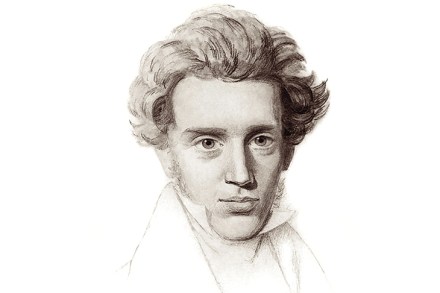
Surely God, if He existed, would find a major source of entertainment down the ages in the activities of theologians, reaching their climax perhaps in the 19th century, when they involved Him with German idealism, and then the descent from that to the present day, when the sheer naivete of anyone who thinks that God is ‘out there’ or actually exists, in some sense we can understand, provokes genial and condescending ridicule from the professionals. Central to the development of thought about Christianity is the work of the melancholy Dane Søren Kierkegaard, who in the course of his short life — he died, aged 42, in 1855 — wrote more books and notebooks than many of us succeed in reading in a longer lifetime.

Sister act | 17 April 2019

From our UK edition

Total immersion weekends can prove tricky. The established masters don’t need them, while lesser-known figures often turn out to be relatively obscure for sound reasons. Nonetheless, there are plenty of composers whose works are too rarely performed, not so much through neglect as because of the awkwardness of their demands — huge orchestras and choruses, or unlikely combinations of forces. The Boulangers present in all respects a special case.

Sinking the unsinkable

From our UK edition

Garrick Ohlsson is one of the finest pianists of his generation. Why, then, was the Wigmore Hall not much more than half full for his recital last week? Brahms. Ohlsson is at present touring with four programmes, all Brahms’s solo piano music. He treated us mainly to solid chunks, though he ended with the enchanting and almost light-hearted Paganini Variations, fiendish for Ohlsson but enlivening for us. Actually, he played an encore by Chopin, the solitary Op. 45 Prelude, preceding it with a charming lecturette about how Brahmsian, avant la lettre, Chopin could be. Ohlsson was a student of the great Claudio Arrau, whose attitude to Brahms verged on the frosty.

Licensed to trill

From our UK edition

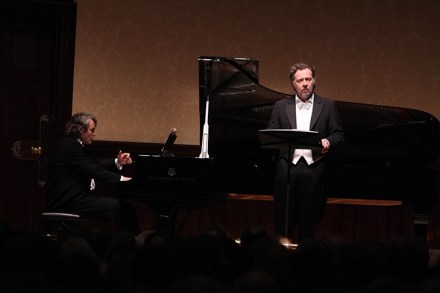
Broadly speaking, there are two kinds of approach to performing Schubert’s Winterreise, though sometimes there’s doubt or dispute about which one a given performer has taken. According to Jonas Kaufmann, Hans Hotter, for me the greatest of all performers of the cycle, as of so much else, insisted that the performer should be a narrator, not the Wanderer himself. But Kaufmann rightly insisted that Hotter’s various recordings are dramatic, with Hotter enacting, not narrating the monodrama. So it’s not always easy to tell. There was no doubt, though, in Christian Gerhaher’s recent performance of the cycle at the Wigmore Hall, with his long-time accompanist Gerold Huber, that we were witnessing the journey and sufferings presented directly.

Janacek’s rare gem

From our UK edition

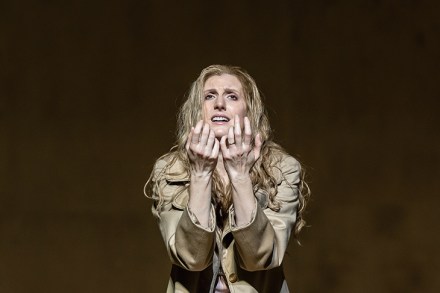
Janacek’s upsetting opera Katya Kabanova, which hasn’t been seen in the UK for some time, turned up in two different productions over the weekend, with a third to follow in Scotland. The Opera North production by Tim Albery dates from 2007, when it was conducted by Richard Farnes with the clarity and passion which characterises all his work. This revival had Sian Edwards making her Opera North debut, and all told it had a slightly muted quality. The paradoxical jagged lyricism of Janacek’s orchestral writing only struck home intermittently, and there were stretches which could almost have been by Smetana, against whom Janacek partly defined himself.

A true labour of love

From our UK edition

This is a fascinating example of a small genre, in which the author decides at an early stage in his adult life that he would like to devote himself to a great figure whom he idolises, but who needs help of one kind or another to continue with his work, or at least for what he has done to be more widely appreciated.  The classic case in the recent past is that of Robert Craft, who in his early twenties offered his unlimited services to Igor Stravinsky, and can plausibly be claimed to have enabled the Master to create the works of his last decade, but who also fought against being seen as no more than a vassal, and whose copious writings, in all their brilliance, both celebrate Stravinsky and reduce him, at least as a person, to size.

The write stuff | 20 September 2018

From our UK edition

No one any longer denies the immense significance of Wagner’s musical-dramatic achievement, even if they find it repellent. But his reputation as a writer — of operatic texts, autobiographical and biographical memoirs, practical essays on how to conduct particular pieces, vast and less vast theoretical works, ranging from speculations on opera and climate to theologico-political musings — is not high. Nor should it be, except for the more ‘occasional’ pieces. He was in fact a major contributor to mauvaises lettres, and no kind of systematic thinker, however much he might have liked to be. His only prose that is consistently readable comes in his letters, some of them enormous, all of them full of life and colour.

Too much information | 12 July 2018

From our UK edition

When Kasper Holten’s production of Don Giovanni was first staged at the Royal Opera in 2014, I disliked it intensely, even more than I have disliked most of his other productions, or for that matter most productions of Don Giovanni. I missed the first revival, but when I saw it this time round my reactions were more complex, though I still think there is a lot wrong with it. In the meantime, I have watched the 2014 production on Blu-ray. Holten and Es Devlin the set designer give a commentary throughout, which at least helped me to understand what was intended, even if it didn’t convince me that most of the producer’s ideas are helpful or even realisable.

A labour of loathing

From our UK edition

The titans of the podium, a late 19th- and 20th-century phenomenon, a species now extinct, have on the whole been well served by their biographers, with Peter Heyworth’s Otto Klemperer: His Life and Times as the ideal. Wilhelm Furtwängler, by far the greatest of them all in my and many other people’s opinion, has not been nearly so fortunate. Partly that may be due to the nature of his genius, in that in most of his performances, as can still be heard on innumerable recordings, he seems to have a larger part in the creative process than almost any other performer (only Callas and Sviatoslav Richter, both passionate admirers of his, share that feature), and that is considered at least a dubious quality in this time of textual fidelity.

Slippery slope

From our UK edition

Longborough Festival Opera, refuge for British Wagnerians fleeing unidiomatic musical performances and idiotically irrelevant and insulting productions, has rounded off its Wagner canon with its first Der fliegende Holländer. Next year a new production of the Ring begins, so presumably the small stage is considered inappropriate for the three Wagner dramas with indispensably large choruses. Not that Holländer can do without a chorus in Act Three, and very impressive it is in this production by Thomas Guthrie, but we only saw the townsfolk, and I think the Dutchman’s crew was pre-recorded, though perfectly synchronised. The conducting was, as always, in the sure and inspired hands of Anthony Negus, and the orchestra, after some blips in the Overture, was superb.

Trivial pursuits | 7 June 2018

From our UK edition

‘Is there an end [to this opera] that is not trivial?’ asks the Countess in her final bars of Richard Strauss’s last opera Capriccio. Given the previous two and a half hours, the answer would seem to be a decided no. It is a frothy confection even by the standards of his later operas, the better parts reminiscent of the Prologue to Ariadne auf Naxos and some of Arabella. One thing to be said in its defence is that Strauss’s writing it in 1941–2 is no criticism of him or of the work. People make a fuss about that, but do they think he should have produced an heroic piece — something he had already done, unfortunately — or another work in favour of peace, like the disastrous Friedenstag of 1938?