A Mixed Ability Room
Poemsthe english foxhound likes to bay his enemy is the wind instead of grief he feels relief at every innovative gust.
The good, the bad and the ugly in books, exhibitions, cinema, TV, dance, music, podcasts and theatre.
the english foxhound likes to bay his enemy is the wind instead of grief he feels relief at every innovative gust.
Two poems in memory of Mick Imlah 1. ‘Hardy and Housman lived round here,’ I said, slumped in an armchair in your flat. ‘Compared to those two, we’re small beer — Hardy and Housman, geniuses crowned here! No blue plaques for us, who’ve gone to ground here... We’re pygmies, compared to giants like that, Hardy and Housman, who lived round here,’ I said; slumped. In an armchair. In your flat. 2. I don’t remember, Mick, if ‘Ca the yowes’ Was one we listened to together, Long after closing time, in your small flat With the almost-derelict sofa, the bows Of our boat heading into heavy weather (How so?
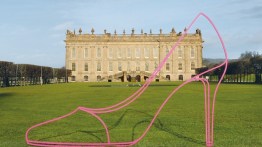
Visitors to Chatsworth House this spring might wonder if they have stumbled through the looking-glass. The estate’s rolling parkland has been invaded by an army of vibrantly coloured, outsized garden tools, whose outlines seem to hover, mirage-like, over the landscape. These painted-steel 2D ‘sculptures of drawings’ are the brainchildren of the conceptual artist Michael Craig-Martin. Craig-Martin finds poetry in the everyday and here he has taken 12 commonplace objects — a wheelbarrow; a spade; a lightbulb — and transformed them into something extraordinary. He also believes that context is everything when it comes to art and the works have been carefully positioned.
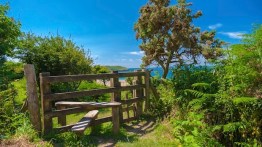
After a walk in Richmond Park beset by rush-hour traffic, the Heathrow flight path and a strange swarm of flying ants (strange because so early in the year), it was unsettling to come back in and switch on and listen to Kirsty Gunn’s spring walk for this week’s The Essay on Radio 3 (which I heard as a preview but you can now catch on iPlayer). Gunn lives in Sutherland in the far north of Scotland close to the River Brora, and has a view from her back windows that stretches for 500 square miles with no other house or sign of human life in sight. ‘There’s nothing out there,’ Gunn told us, ‘except space and emptiness, light and land — and the weather.
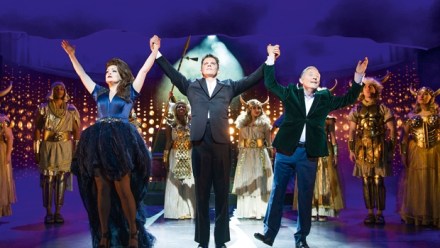
I Can’t Sing! is a parody of The X Factor, which already parodies itself at every turn. Quite a tough call. The heroine is an oppressed no-hoper stuck in a tiny caravan under the Westway with her crippled dad who lives in an iron lung. She longs for a chance to win stardom and wealth on a TV talent show. So this is the Cinderella story with a lot of grotesque and absurd modern detailing. Is it good? No. It’s spectacularly brilliant. A hit musical needs to get everything right and this one does just that. The sets are lavish and sumptuous. The costumes are razor-sharp parodies of underclass loser-wear. The title song has a soaring climax that tugs at the heart-strings and fills the spirit with strange and unexpected yearnings. Some reviewers have found the show cruel.
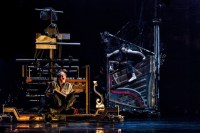
What’s in a definition? As far as theatre dance is concerned, quite a lot. Labelling — and often labelling for the mere sake of it — is integral to our dance culture. Take, for instance, the various A-level dance syllabuses, the curricula of most dance-studies departments and, most of all, those dance-history manuals that slavishly perpetuate simplistically formulated principles and equations. Any of those will provide you with a neat definition of postmodern dance, stating that it started in the early Sixties, when some US-based artists decided to fight convention by stripping dance of its most traditional characteristics. What most of these sources don’t tell you, though, is that there’s also European postmodern dance.
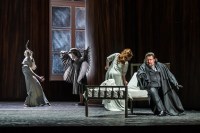
I remain puzzled that, so far as I know, no daily or weekly paper carries reviews of the New York Met opera relays (I’m not a denizen of the blogosphere, where they may well swarm). To judge from the number of cinemas that show these live relays, and from how crowded most of them are, clearly more people see opera in this form than in any other. And many of those people will be experiencing opera live for the first time in cinemas, and may well never go to an opera house. I suspect there is a strong element of snobbery involved on the part of non-reviewers, as if one hasn’t really been to a performance unless one was actually in the theatre where it was taking place.
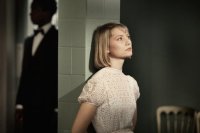
I should warn you that if you go see The Double it is one of those films that will trouble you long after the event. It will trouble you at breakfast and it will trouble you at lunch and it will trouble you as you go about your business, whatever that might be. Yes, a pain — haven’t I got enough troubles of my own? Haven’t I got enough to think about as it is? — but it is so singular and compelling, there is every chance it is worth it. It’s directed by Richard Ayoade, his second feature after the terrific Submarine, who is known to TV viewers as Moss from The IT Crowd as well as being a regular guest on those comedy panel games that have been told to include more women, like we don’t have better things to do.
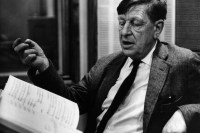
W.H.Auden once wrote: ‘Real artists are not nice people. All their best feelings go into their work and life has the residue’ — which puts those who aspire to be artists in a bit of a quandary. Is it a measure of one’s success as a ‘real artist’ that one is not a nice person? Is it in fact possible to be a real artist and a nice person? And, if it is not, is it better to be a real artist or a nice person? Auden, who was speaking from first-hand experience, implies that it must be one or the other. By the time he wrote this, Auden was sure of his standing both as an artist and as a person. His friends might say that he was a nicer person than he thought he was, but no one was going to say he was not a great artist.
Spring again But from where no telling Sweet as the spring That went before Same old story But still compelling Blossom reminding What blossom is for Question the trees But they’re not telling How they obey An impossible law Question the mind But it’s not telling How it gives back What was gone for sure Something stirs In a blacked-out dwelling Forces the lock Of a double-locked door That face again!
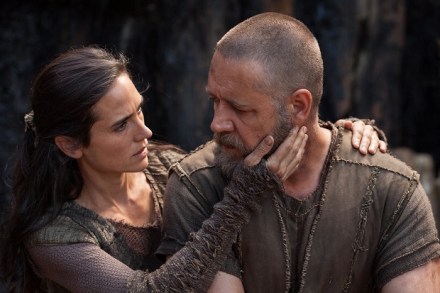
The Archbishop of Canterbury has had himself photographed with Russell Crowe, after attending the screening of Noah in which Russell C has the title role. ‘A great visit…impressive,’ he tweeted of Crowe. Which was one way round saying that the film itself was tripe, though his spokesman said that he found it ‘interesting and thought-provoking’, which is presumably an Anglican way of saying ‘rubbish’. The Archbish may have been completely thrown, in fact, by Darren Aronofsky’s entirely personal take on the flood story in Genesis.
So Lebedev’s London Live has launched. And I don't know about you but I’m hooked. I’d totally forgotten what really bad TV looked like. It's as if the chief execs at Channel 5 got together with Alan Partridge for a 21st-century rebrand. London's new TV channel did get one nice review from the, oh, Lebedev-owned Independent - moving swiftly on. From what I’ve seen of London Live's first full day, it’s as if a posh, ethnically very chic primary school won a Blue Peter competition where they got to dress up as adults for the day and run their very own TV channel - all by themselves! The top news story was the announcement that Emma Watson’s dress was white and pretty.

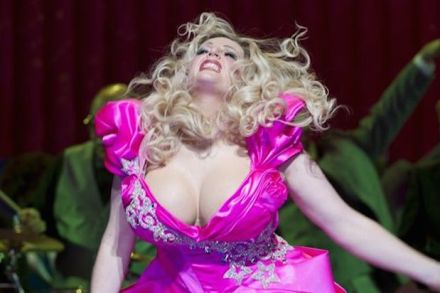
A revival of Anna Nicole will open the Royal Opera House new season, it was announced today. And students will be able to get in for £1, tweeted Kasper Holten proudly. A quid! So that’s an orchestra, an excellent cast of 17, a chorus, a production team of two or three dozen, two hours of words and music and a very good conductor all for less than one pot noodle. The news might baffle. The received wisdom is that opera tickets are too high. Far too high. So high that they are the principal (if not sole) reason why the art form has fallen behind the others in the popularity stakes. But the reality has always been quite different. Even for adults, a portion of Royal Opera House tickets has always been dirt cheap.
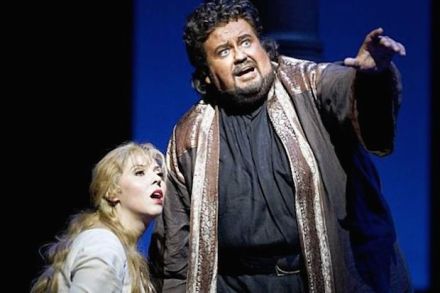
Always try to get the worst seats for the opera. Upper circle. Foyer. Toilet. The nearest bus stop. The further back the better. You’ll regret it if you don’t. There really is nothing more off-putting than being able to see the singers. Opera up close, as Princess Margaret once said, is just two fat people shouting at each other in a large room. And then there’s the clown make-up and trannie costumes to deal with. It all makes much more sense from afar, where it assumes a lovely dreamy abstract fuzz. Was that a smile? Or a stroke? Who knows. The words and music will carry you along. But even 'good’ theatrical acting looks absurd close up. Gemma Arteton knows this. She let the truth slip out during the new arts visiony thing at the Beeb the other day.
There’s a problem, as we all know, with female roles in the theatrical canon, and it reaches all the way back to the Bard. Shakespeare’s women lack the richness and variety of his male characters. Modern theatre practitioners have tried all kinds of ploys to correct this imbalance. Next month the RSC launches a season of dramas, Roaring Girls, written during Shakespeare’s lifetime and featuring women in pivotal roles. This is bound to reopen the question of Shakespeare’s approach to women and their subordinate position in his work. It’s easy to argue that Shakespeare’s art simply reflects his habitat. Wealth, freedom and influence were the preserve of men, so he tended to leave women on the sidelines.

Last week, three exhibitions celebrating the art of Germany; this week, a show commemorating the first world war fought against that great nation. In this centenary year of the beginning of WW1, there will be numerous events marking the start of hostilities. (Will there be as many celebrating the anniversary of their cessation, I wonder?) Although there is some film footage of the war, and detailed photographic documentation of its horrors, the best record we have of the human reality of those five years of conflict resides in the art made about it. When the contagion of battle has passed from the blood, the conscious mind may turn to better things, and culture reassert its high priority.
Like most ambitious artists, Julian Cooper has been pulled this way and that by seemingly conflicting influences. The son and grandson of Lake District landscape painters — his mother was a sculptor — he fell among abstractionists at his London art college, Goldsmith’s, in the late 1960s. But when I first saw his work in the early 1980s, he had emerged as a flagrant figurative painter, with a series of large canvases depicting scenes from Malcolm Lowry’s novel Under the Volcano. There was no subterfuge about these works; they went straight back to Manet and Degas, not as imitations but developments.
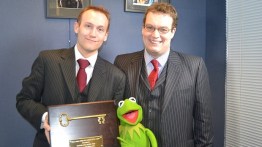
Move over Dick Whittington and his cat, the City of London has a new folklore hero. Yesterday Kermit the Frog was made Honorary Bridge Master of Tower Bridge. Mr S suspects this might be something to do with the fact that the latest Muppets film was shot extensively in the Square Mile. Sadly, rain stopped play so Kermit was unable to open the Bridge as planned, though that could well have been an excuse for the fact that he lacks the opposable thumbs needed to turn the key.
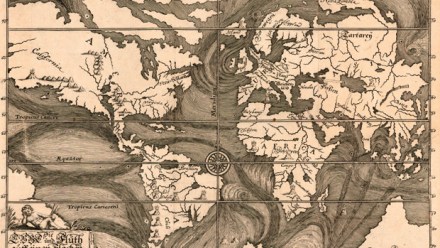
When you’re next waiting for a train at King’s Cross, don’t waste time window shopping on the concourse. Instead, pop round the corner to the British Library to see Beautiful Science: Picturing Data, Inspiring Insight (until 26 May). It’s not an enticing name for an exhibition, I grant you. But the show is beguiling: small, thoughtful and free. As ever with the British Library, the viewer is treated to rare historic publications. Robert Fludd’s The Great Chain of Being (1617) is particularly memorable for its depictions of the ‘tree of life’, a diagram that encapsulates what this show is about: data representation as a means of storytelling, as artful and beautiful as the finest novels and poetry in the library’s collection.
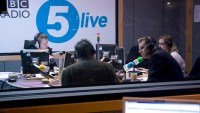
It’s amazing to think that it’s 20 years since the launch of Radio 5 Live. But it was bright and early on the morning of 28 March 1994 (long before Princess Diana’s death, 9/11, the Iraq war, the London bombs, the Asian tsunami, the ‘Arab spring’) that Jane Garvey announced, ‘Welcome to a new network.’ Not an impersonal statement, ‘This is Radio 5 Live’, as you might have expected from the BBC. But an inviting ‘Welcome’. Come in. Join us. We want to hear from you, just as much as you are going to hear from us. Interaction was what gave the station its USP, its distinctive character. Yet this was more than a decade before Twitter, Tumblr, Buzzfeed really took off.
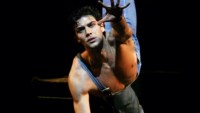
Louis XIV might have been a narcissistic and whimsical tyrant, but he did a lot for dance. An accomplished practitioner, he made ballet a noble art and turned it into a profession with the creation of the Académie Royale de Danse, the first institution of its kind, though not the first ballet school as some badly scripted television programmes would lead us to believe. More significantly, he showed the world that ballet can be a male art, something that 2014’s Kings of the Dance proves too. Ever since French Romantic choreography relegated male dancing to a lesser status, ridicule of and prejudice against guys in tights are still rife.
Opera seems almost always to have been acutely concerned with its own future. These days this is most often manifested in occasionally desperate, sometimes patronising attempts to entice new audiences to the art form. A new three-way initiative between Aldeburgh Music, the Royal Opera and Opera North takes a different tack by enabling a new generation of composers and librettists to try its hand in this most exacting art form. The initiative’s first fruit was a double bill premièred in Aldeburgh before being shown at Covent Garden’s Linbury Studio Theatre and Leeds’s Howard Assembly Room.
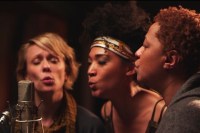
Have you ever looked at backing singers and thought: what is their story? Do they or have they ever prayed for their time to come? As they are going ‘ooh ooh, ooh ooh’ behind Kylie are they thinking, ‘I want to kill Kylie’? Do they mind that no one knows their name? Do they ever ponder why it’s so often white artists with black backing singers and never the other way round? I have often wondered about all this, and now realise if I’d stopped idling over such questions, got off the sofa and done some digging, I could now be in possession of an Oscar. I’m a fool to myself; I truly am.
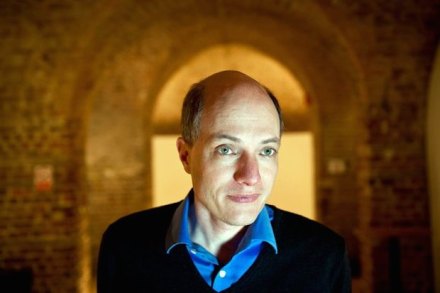
The world's big national museums are deeply glamorous places. We keep quiet in their hallowed halls, we wander the galleries in reverence, we look at a caption here and there, but, sometimes, if we're honest, deep in our hearts, we may be asking ourselves what we're doing there. Art enjoys unparalleled prestige in the modern world, but the reasons for this are rarely explained in plain terms. Just why does art matter? When people want to praise art museums, they sometimes remark that they are our 'new cathedrals'. This seems an extremely accurate analogy, because for hundreds of years, cathedrals were, just like museums, by far the most significant places in society; they were the buildings people lavished money on and felt proudest of. They were the spiritual hearts of the community.
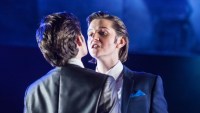
Today’s top public schools are plush country clubs with superb facilities, lovely food, first-class teaching, no fagging, no beating and, one imagines, minimal sexual interference from the staff. Most even have things called girls. While excellent at turning out world-class actors, the public schools these days are far too nice and unbrutal to be of any use as dramatic material for a play. Julian Mitchell’s play Another Country (1981) belongs to another era. It is a tale of sadistic, crumpet-munching prefects lording it over traumatised fags; homosexuality is rife and there’s brutal jockeying for position among the prefects — all good training for the cabinet jobs these teenagers one day expect to enjoy.
It’s German Season in London, and revealingly the best of three new shows is the one dealing with the most modern period: the post-second world war era of East and West Germany and the potent art that came out of that split nation. In Room 90 is another immaculately presented British Museum show of prints and drawings, focused this time around Georg Baselitz (born 1938). Of the 90 works on display, more than a third has been donated to the BM by Count Christian Duerckheim, the remainder lent by this assiduous collector. The show begins with Baselitz’s contemporaries and I was surprised to find myself quite liking some things by Gerhard Richter, currently the most overrated artist in the world.
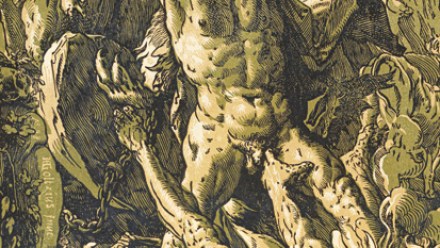
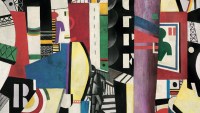
In 1914 Fernand Léger gave a lecture about modern art. By then recognised as a leading Cubist artist, he had the year before signed up with the dealer Daniel-Henry Kahnweiler, who already represented Picasso and Braque. ‘If pictorial expression has changed, it is because modern life has necessitated it,’ Léger argued. ‘The existence of modern creative people is much more intense and more complex than that of people in earlier centuries...The view through the window of the railway carriage or the motorcar windshield, combined with the speed, has altered the customary look of things. A modern man registers a hundred times more sensory impressions than an 18th-century artist.
I was in love for a whole week after Episode One: Your voice so tender, so knowledgeable, your slender hands and feet. In Episode Two, doubts crept in. Were you hogging the camera or was it just that the camera loved your profile, your man-of-the-people T shirts, your breeze-ruffled hair? Episode Three opens with you on a hill top, gesturing. Sighing with relief, I know it’s over, because you now remind me of that Irishman I met in Soho, and we know how that turned out.
It’s such a simple idea. Take a tape recorder. Hang around at the entrance to a railway station or in the departure lounge of an airport. Look for an intriguing face, an unusual couple, a dashing outfit. Rush up to them (having remembered to switch on the recorder) and ask, ‘Where are you going?’ As Catherine Carr said at the beginning of her programme for the Freedom 2014 series on the BBC World Service at the weekend, ‘Every interrupted journey is a portal into somebody’s life.’ Of course, in Where are you going? (produced by Jo Coombs) we only got to hear from the travellers who had something interesting to tell us, but even so this was an hour of pure radio, with so many vivid snapshots, such compelling stories.