Giannandrea Poesio

Ballet’s super couple should stick to the classical repertoire

From our UK edition

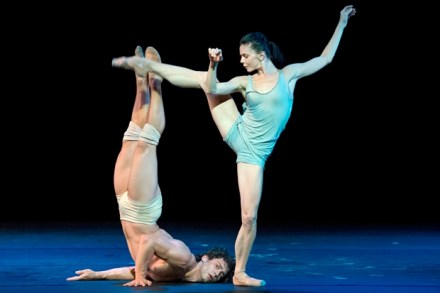
Last week, the feast of long-awaited dance events on offer echoed bygone days when London life was dominated by the strategically engineered appearances of rival ballet stars at the same time in different venues. At the London Coliseum, Solo for Two featured one of ballet’s super-duper couples, Natalia Osipova and Ivan Vasiliev. As Osipova told me in a recent interview, their aim was to tackle choreographic modes outside their standard repertoire. Alas, bravery and bravura do not always go together. The classically trained Mikhail Baryshnikov and, more recently, Sylvie Guillem have made successful forays into modern and postmodern dance, but they were very much the exception. Let’s not forget what happened when Nureyev tried to dance Graham.
Romeo and Juliet: a Mariinsky masterclass

From our UK edition

According to some textbooks, one thing the fathers of Soviet choreography hastened to remove from ballet was that awkward-looking language of gestures generally referred to as ‘ballet mime’. Which explains why most Russian versions of Swan Lake lack familiar mime dialogues. And when it came to creating new ballets that required silent acting, such as Lavrosky’s 1940 Romeo and Juliet, the early Soviet dance-makers opted for a more naturalistic form of expressive gestural solutions. Yet, as is often the case with theatre practices, what was once innovative and naturalistic now looks as trite as 19th-century pantomime.

Natalia Osipova interview: ‘I’m not interested in diamond tiaras on stage’

From our UK edition

‘I am not interested in sporting diamond tiaras on stage, or having my point shoes cooked and eaten by my fans,’ muses Natalia Osipova, referring to two old ballet anecdotes. ‘Ballet has evolved and the ballerina figure with it. The world around us offers new challenges, new stimuli and new opportunities, and I believe that it is the responsibility of every artist to be constantly ready to respond to these. There is simply no reason, nor time, to perpetuate century-old clichés, such as the remote, semi-divine figure of the 19th-century ballet star.’ Osipova, now a Royal Ballet principal, is still remembered by many as the Bolshoi Ballet’s soloist, who, only a few years ago,  dazzled dance-goers all over the world.

Perfect dancing but boringly beautiful

From our UK edition

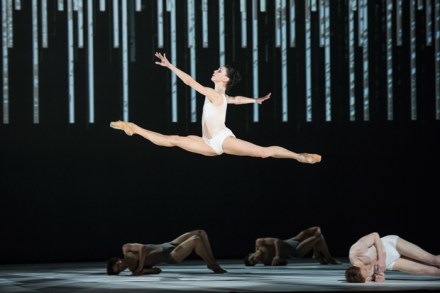
Aesthetically speaking, last week’s performance by the Nederlands Dans Theater 1 was one by the slickest of the season. Fashionably engineered juxtapositions of black and white, sets that stun on account of their elegant simplicity and mechanical complexity, chic costumes that de-gender dancers, scores decadently à la mode and clockwork dancing came together seamlessly to make a powerful visual impact. Beauty can be boring, though. Created by Paul Lightfoot and Sol León, who are the driving force behind Nederlands Dans Theater 1, Sehnsucht (‘longing’) and Schmetterling (‘butterfly’) came across as perfectly structured concoctions of derivative formulae, though they lacked any spark.

A swan to die for at Sadler’s Wells

From our UK edition

Swans, swans, more swans. If the lifespan of a dance critic were calculated by the number of performances of Swan Lake attended, I’d be a few centuries old. Obviously, the list includes many revisions and re-creations of this quintessential ballet, which is the second most revisited in history after The Rite of Spring. In her 2010 take on the 1890 classic, Johannesburg-born Dada Masilo uses a striking combination of choreographic genres and a politically dense storyline. Those who have seen scores of Swan Lake know that the ‘gay’ slant is not new.

Dance games from Anne Teresa de Keersmaeker at Sadler’s Wells

From our UK edition

Forget the pedantic classifications of genres, styles and schools. When it comes to dance performances, it all boils down to two kinds: those that make one think and those that entertain. Anne Teresa de Keersmaeker is a veteran of the first category. Since 1983, the year she founded her company Rosas, she has used the choreographic idiom to explore and question other areas of culture and performance-making. Music and its multiple uses have always been her main sources of inspiration, and her thought-provoking, if not puzzling or purely irritating, challenges to music remain at the core of her creative process. Over the years, she has also fine-tuned her signature movement vocabulary: carefully thought out, austere, never gratuitously ornamental.

Romeo, Juliet and Mussolini

From our UK edition

George Balanchine’s Serenade, the manifesto of 20th-century neoclassical choreography, requires a deep understanding of both its complex stylistic nuances and its fascinatingly elusive visual metaphors. Many recent stagings have failed to meet such criteria,  but not the performance I saw last week. Things did not exactly start especially well, as the opening group of ladies with raised arms lacked ‘magic’ evenness. But as soon as both Marianela Nuñez and Lauren Cuthbertson darted on stage, the whole performance became incandescent. The two artists, perfect modern-day incarnations of Balanchine’s female ideal, were soon joined by the equally superb Melissa Hamilton and the neoclassical perfection of Matthew Golding.

Modern dance vs Shakespeare

From our UK edition

In a dance world that has chosen to dispense with stylistic and semantic subtleties, ‘narrative ballet’ and ‘story ballet’ are often used as synonymous. Yet there are differences — and major ones at that. In a ‘narrative ballet’ it is the choreography that carries the story. Each movement idea is thus conceived in relation to the dramatic demands of the thread and charged with meaning. This is, at least, what the genre’s forefathers recommended back in the 18th century, and what most major dance-makers through history strive to do. A story ballet, on the other hand, mirrors and tackles the basic needs of an immediate, directly accessible and even naive story-telling that is at the core of today’s culture.

European postmodern dance can be just as boring as American postmodern dance

From our UK edition

What’s in a definition? As far as theatre dance is concerned, quite a lot. Labelling — and often labelling for the mere sake of it — is integral to our dance culture. Take, for instance, the various A-level dance syllabuses, the curricula of most dance-studies departments and, most of all, those dance-history manuals that slavishly perpetuate simplistically formulated principles and equations. Any of those will provide you with a neat definition of postmodern dance, stating that it started in the early Sixties, when some US-based artists decided to fight convention by stripping dance of its most traditional characteristics. What most of these sources don’t tell you, though, is that there’s also European postmodern dance.

Kings of Dance: a show to keep the Sun King happy

From our UK edition

Louis XIV might have been a narcissistic and whimsical tyrant, but he did a lot for dance. An accomplished practitioner, he made ballet a noble art and turned it into a profession with the creation of the Académie Royale de Danse, the first institution of its kind, though not the first ballet school as some badly scripted television programmes would lead us to believe. More significantly, he showed the world that ballet can be a male art, something that 2014’s Kings of the Dance proves too. Ever since French Romantic choreography relegated male dancing to a lesser status, ridicule of and prejudice against guys in tights are still rife.

The dancers who said ‘no’ to postmodernism

From our UK edition

It all started in 1971, when a group of physically and artistically talented youngsters decided to create a dance company and call it Pilobolus, after a fungus. Not unlike this barnyard micro-organism, which ‘propels its spores with extraordinary speed and accuracy’, the company was soon propelled to international success. But it was not an easy time to make ‘new dance’ in the US. On the one hand, living monuments such as Martha Graham, Merce Cunningham and Paul Taylor were still in full creative mode and dominated modern dance. On the other hand, the innovators of postmodern dance had given new meanings and directions to the art. Pilobolus took something from both.

Ivan Vasiliev and Roberto Bolle: interview with ballet royalty

From our UK edition

In 1845, the theatre impresario Benjamin Lumley made history by inviting the four greatest ballerinas of the day to appeartogether on the stage of Her Majesty’s Theatre in London. It is fitting, therefore, that next week, 169 years later, Sergei Danilian’s internationally acclaimed project Kings of the Dance should reach the London Coliseum. After all, the project, which had its world première in 2006, is a modern adaptation of an old idea, even though it is an all-male event this time round, and more than just an exploitation of trite balletomania, which is probably what Lumley went for.

Bach is made for dancing

From our UK edition

It appears that J.S. Bach’s music is to theatre-dance what whipped cream is to chocolate. Masterworks such as Trisha Brown’s MO, George Balanchine’s Concerto Barocco and a plethora of less-known, though equally acclaimed compositions owe a great deal to the giant of baroque music. Wayne McGregor is the most recent addition to this illustrious roster of successful Bach-inspired dance-makers with Tetractys —The Art of Fugue, which world-premièred last Friday. Set, as the title implies, to Michael Berkeley’s orchestration of The Art of Fugue, played on the piano by Kate Shipway, the new work stands out for the intensity of the dialogue between music and dance.

Stuttgart Ballet – still John Cranko’s company

From our UK edition

Stuttgart Ballet’s rapid ascent to fame is at the core of one of the most interesting chapters of ballet history. Between 1961 and 1973, the year of his untimely death, the South African Royal Ballet-trained choreographer John Cranko turned what had been a fairly standard ballet ensemble into a unique dance phenomenon. Although Stuttgart is still known as a ‘choreographer’s company’, his legacy was never artistically constraining. His successors took his powerful vision on board and broadened the repertoire in line with it. It was thus a pleasure to see the history of the company celebrated through the composite programme Made in Germany, in which past and present were seamlessly combined.

The Royal Ballet’s triple bill was danced to perfection

From our UK edition

There was a time when the term ‘world première’ was not as fashionable as it is these days. Great works simply ‘premièred’, and their artistic status was not diminished by the fact that the opening had not been advertised as a globally significant event. Which is what ‘world première’ implies, even though it is seldom the case. The term has a sensationalistic ring to it, and should therefore be used carefully and sparingly. According to a recent press release, David Dawson’s The Human Seasons is the second of the five ‘world premières’ that the Royal Ballet will perform this season.

Is there or isn’t there a hanged man in ‘Sun’?

From our UK edition

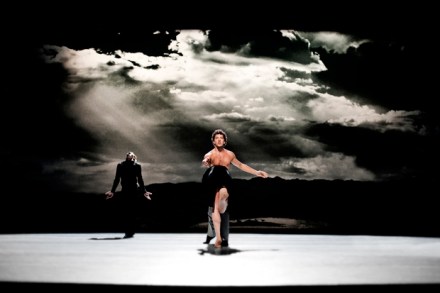
Sun is one of those performances that confront reviewers with the eternal dilemma of whether or not it is appropriate to give things away. Yet a reference to what is a powerful coup de théâtre — namely a life-sized hanged hooded man falling from the rigs at the end — has to be made to appreciate what it is all about. The problem is that, according to some reports, that same coup de théâtre disappeared the night after Sun opened, thus turning the dance into something completely different from what had been previously seen. Hofesh Shechter, one of today’s most provocative and innovative dance- and performance-makers, likes to surprise, often in an unsettling way.

A rich, colourful romp

From our UK edition

Bold decisions are at the core of great artistic directorship. And Tamara Rojo, the ballet star leading English National Ballet, knows that well. Le Corsaire is not the usual ballet classic one craves to see. Yet it makes a splendid addition to the already vast and multifaceted repertoire of ENB. Created in 1856, this work has stood the test of time. Thanks to endless revivals, it has become one of the most manipulated and interpolated choreographic texts. Its current popularity, however, stems from the now legendary revival that the Kirov ballet presented in the West in 1989. Glitzy and star-studded, that staging paved the way for many others, which led to more interpolations and revisitations, often in the name of the much dreaded choreographic philology.

Carlos Acosta’s Don Quixote lacks the wow factor

From our UK edition

Superstar Carlos Acosta makes little or no reference to Don Quixote’s established history in his programme note about the genesis of his new ballet. As a dancer hailing from Cuba, he is certainly familiar with the work’s performance tradition, but a greater historical awareness would probably have helped Acosta rethink his realistic approach to the 1869 work. However, history is frequently frowned upon in today’s culture. Don Q, as it is affectionately known, is regarded by dance highbrows as the compendium of all those theatrical and choreographic conventions that give ballet a bad name.

A masterclass in stage presence from the Bolshoi

From our UK edition

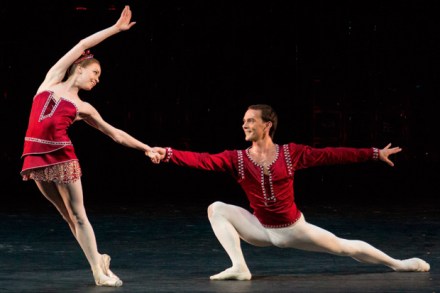
Jewels is everything a George Balanchine admirer could ask for. The sumptuous triptych, set to scores by Fauré, Stravinsky and Tchaikovsky, is a compendium of what Balanchine’s style is about; each part — Emeralds, Rubies and Diamonds — provides unique insights into the subtleties, signature features and inventiveness that inform the art of the Russian master who fathered American ballet. Yet on these shores Jewels is seldom a sell-out production. Unless, of course, it is danced by the Bolshoi Ballet. Comparisons are odious, but seasoned dance-goers could not help noticing that, on Monday, the Royal Opera House was packed to the brim.

The Bolshoi remains faithful to the classics

From our UK edition

Tradition is often frowned on. Yet, if properly handled, it can be sheer fun and pure bliss, as demonstrated by the Bolshoi Ballet’s current season in London. Far from being museum pieces, the classics so far presented stand out for their vibrant and captivating theatricality. According to an enlightening note by Yuri Grigorovich, the father of Russian contemporary ballet, much of it depends on an approach that favours performance tradition over sterile philology. In other words, care is taken to note the cuts, the interpolations, the revisions and the additions that have helped each ballet stand the test of time, instead of going for a much idealised ‘original’.