Clarissa Tan

Good luck having a proper holiday if you own a smartphone

From our UK edition

This time last year, the Spectator's Clarissa Tan discussed how you can never really have a proper holiday if you own a smartphone. A year on, and Clarissa is no longer with us, but her wonderful writing still is: I was sitting on some rocks by the Cornish coast when a teenager swanned by on the sun-warmed boardwalk in front of me. The boy stood on the burning deck, preparing to dash across the sand, dive. Then his phone rang. ‘Luce! Yes, I’m at the sea… Was just going to plunge… Ran back to my mobile… Ha ha!… No, didn’t forget, will share that file on Google Docs… How’s France?… Awesome… Ha ha!’ Rage washed over me.
The Visit

From our UK edition

Clarissa Tan, who wrote articles and TV reviews for The Spectator, has died of cancer aged 42. She came to London from Singapore after winning this magazine’s Shiva Naipaul prize for travel writing and over the next seven years wrote about a great many things: Asia, race and the East; also smartphones, Sienna and socks. Clarissa paid attention to prose and all her pieces were beautiful and funny but, perhaps most unusually, they rang true. She was much loved by all at The Spectator and we miss her. Here is her prize-winning piece.    I wish to write about a place of which I know everything yet nothing, where everything is familiar yet strange, a place where I feel I go too often, but never quite enough. This place is the same for everyone, only different.

If BBC3 was allowed to keep its hits, perhaps it wouldn’t be getting booted online

From our UK edition

So BBC3 will be online-only from next autumn. If the Beeb had presented this news as the channel being the first one to take the daring step of migrating to the internet, instead of it being booted out to save the likes of BBC4, perhaps BBC3 fans would be feeling less aggrieved. After all, as companies like Netflix demonstrate, the future of TV is probably on the web. Linear channels are just so, well, linear and old-fashioned. The Beeb says the move is part of its cost-cutting, and will result in £30 million more for BBC1 (presumably enough to replenish Sherlock’s coat supply). I had hoped that, as a consequence, our licence fees would also be cut, but apparently not. Instead, the BBC is now proposing that its fee be pegged to inflation.

A quietly stunning quest for Bonnie Prince Charlie

From our UK edition

What if Bonnie Prince Charlie, as he swept down from Scotland towards London to lay claim to the throne, hadn’t lost his nerve at Derbyshire but had instead pressed on — and won? What would Britain be like today? In the year that the Scots vote on whether to stay in the UK, the art world has discovered a painting from that other time when the union was in jeopardy. It’s a marvellous portrait of Charles, painted in Holyrood Palace by the famous Scottish artist Allan Ramsay, when both men were at the peak of their ambition. The only known portrait of Bonnie Prince Charlie from this heroic phase of his life, it dates from around 1745, when he led the Jacobite rebellion. The discovery was made by the art detective Bendor Grosvenor, of Fake or Fortune fame.

So long, Scandinavia. Bonjour, Benelux! 

From our UK edition

So long, Scandinavia. Bonjour, Benelux! BBC4, your subtitle-friendly channel, has filled the hole left by Nordic-noir The Bridge with Belgian crime drama Salamander (Saturday). At first, I thought this might involve a series of murder mysteries set in Flemish country houses, all solved by a dapper English detective called Horace Parrot. Not to be. Salamander is a 12-parter that kicks off with a break-in at the very heart of evil, a private bank in Brussels. The robbery eventually lands incorruptible police investigator Paul Gerardi (Filip Peeters) in the midst of a dangerous conspiracy, as he is chased by all manner of crooks keen to protect secrets they’d kept in their safe-deposit boxes. Salamander, like its amphibian namesake, is a creation at once sleek and slow-moving.

Britain has many major problems – racism isn’t one of them

From our UK edition

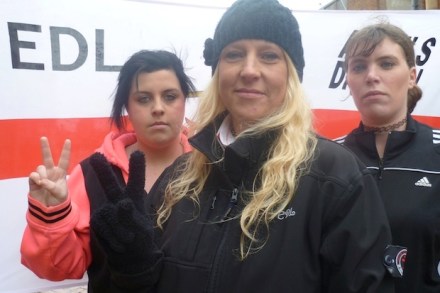
I am a banana. In Singapore, where I used to live, this needs no explanation — it means I’m yellow on the outside but white on the inside, someone who looks ethnically Chinese but whose way of thinking is ‘western’. There are bananas all over Asia, and I daresay the world. We are better versed in Shakespeare than Confucius, our Mandarin is appalling, and we often have pretentious Anglo or American accents. Then there are people who are ‘ching-chong’, a reference to anyone who enjoys the kitschy bling of stereotypically Chinese things, sans irony — they like paving their entire garden with cement, for example, or driving a huge Mercedes, or placing two garish stone lions on either side of a wrought-iron gate.

Jeremy Paxman’s Great War is great. But is 2,500 hours of WW1 programming too much?

From our UK edition

Why are we so fascinated by the first world war? As its 100th anniversary approaches, we’re already mired in arguments about whether for Britain it was a ‘just war’ or a ‘pointless sacrifice’ of millions of lives. I don’t see why it has to be one or the other. Surely this huge and horrific event held elements of both, and more. If ever there was a time when glory ran alongside absurdity, when courage marched lockstep with catastrophe, this was it. We’re looking back at the Great War as if it were a mental exercise — should it or shouldn’t it have happened? But maybe our fascination is emotional as well as intellectual.

China’s banking problems are snowballing — fast

From our UK edition

The world's largest bank by assets, Beijing-based ICBC, has announced it won't take full responsibility for a trust investment worth 3-billion yuan (£300 million) that may go bust. In other words, one of China's 'big four' banks may be linked to a default on a loan pretty similar to the sort that started the Lehman crisis in 2007. In fact, it may be worse, due to the lack of transparency. The troubled Chinese loan was sold through a trust company that belongs to the nation's vast and opaque shadow-banking system, which offers credit to companies that might find it hard to raise money otherwise. Many of these trust loans are of the convoluted, 'structured' kind that sparked Lehman's downfall and rocked the world. China's total shadow-banking debt now equals $4.

Clarissa Tan’s Notebook: Why I stopped drinking petrol

From our UK edition

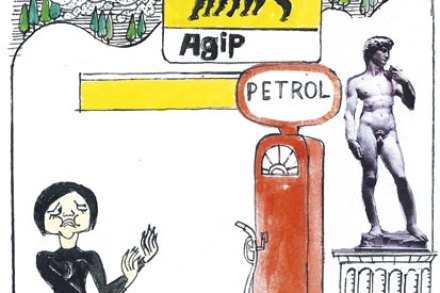
Florence was in fog the day I arrived. Its buildings were bathed in white cloud, its people moved as though through steam. The Arno river was a dense strip of dew. At the Piazzale Michelangelo, the statue of David was etched by the surrounding murkiness to a stark silhouette, the renaissance defined by gothic cloud. I peered through a telescope that overlooked the city and saw nothing for miles. My friend Alessandro told me this was unusual for sunny Tuscany, which made me feel quite pleased. Perhaps with each day that passed I would see less of Florence — the ultimate tourist experience. At a nearby cemetery, the milky arms of stone angels reached out through the brume, while creaking old Fiats disappeared into the ether.

After Sherlock, TV will never be the same again

From our UK edition

You know the holiday season is over when, instead of being torn between The X Factor and Strictly Come Dancing on a Saturday night, you have to choose between The Voice and Splash!. The good news for The Voice is that pint-sized superstar Kylie Minogue has joined its judging panel. In the season opener, competition hopeful Leo Ihenacho (formerly of the band The Streets) picked Kylie to be his mentor, as he used to fantasise about her when he was a boy. The premise of The Voice is that the judges, who have their backs turned to the stage, aren’t influenced by the aspirants’ looks, age or dress. In return, contestants seem to choose as their coach the judge they think is most, well, hot. Anyway, I’m afraid the amateur-diving platform Splash!

Is Sherlock starting to suffer from ADD?

From our UK edition

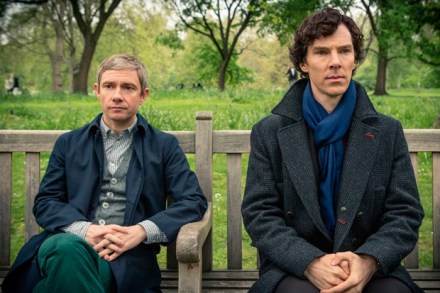
Sherlock’s not dead. A good thing, since on New Year’s Day BBC1 launched its third series of Sherlock, and it’d be inconvenient if the three episodes didn’t have Sherlock. Last season, Benedict Cumberbatch’s Holmes stood on a building rooftop, dramatic coat flapping, a tweedy caped crusader. Then he jumped to his death. Only he didn’t. He’s still alive. The Cumberbatch comeback! Hooray. Of course, the detective had some explaining to do. Not only to sidekick John Watson (Martin Freeman) — who grew a moustache as part of the grieving process — but also to the many Sherlock fans who’d taken to the internet in the past two years to post their survival theories.

Shinzo Abe’s shrine visit is a sign of a new, hawkish Japan

From our UK edition

Peace and goodwill seem to be in rather short supply in the Far East, with Japanese prime minister Shinzo Abe paying homage at Tokyo's controversial Yasukuni wartime shrine, provoking a sharp rebuke from China within an hour of his visit. Abe's appearance at the shrine - dedicated to those who died for the Empire of Japan, including the general responsible for Pear Harbour - also coincided with the 120th (hypothetical) birthday of Mao. It could all be almost comic, if Sino-Japanese relations weren't already so fraught, and the stakes now extraordinarily high. China last month declared an air defense zone covering the territory of the disputed Senkaku-Diaoyu islands, causing the US to fly B-52 bombers over the area.

Are events in Last Tango in Halifax too bad to be true? 

From our UK edition

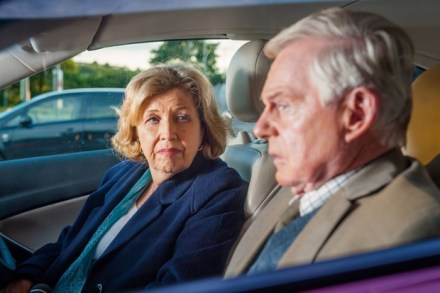
Does love run out when life runs out? Or does it intensify, touching and changing all around it? Two series now on our screens make a strong case for the latter —  one is about love striking in old age, the other about young lovers struck by Aids. Both pack a wallop. Since its Bafta-winning first series last year, Last Tango in Halifax (BBC1, Tuesdays) — about a widower and widow, Alan and Celia (wonderfully played by Derek Jacobi and Anne Reid), who reignite their teenage romance by getting engaged in their seventies — has been lauded for its celebration of love among the over-35s. But pensioner passion is not the only surprise this show offers — indeed, as the weeks go by, you realise that’s the least surprising thing about it.

Why doesn’t Doctor Who travel far from Britain? 

From our UK edition

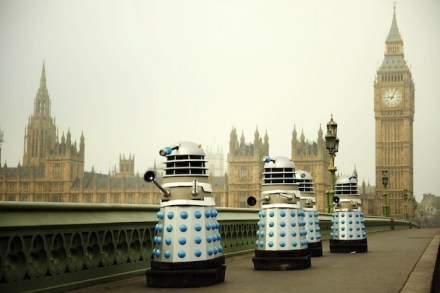
If I could go back in time, I’d watch Doctor Who from the very first episode. I wasn’t born in Britain, and with the 50th anniversary of the series hurtling towards us like an Earth-bound Tardis, I’m wondering if I might understand this cultural touchstone better if I’d grown up in the country, along with the show. But Doctor Who neophytes are in luck, because there’s a tiny loop in the time-space continuum whereby we can quickly catch up on Time Lord lore. To celebrate the 50th, the BBC has commissioned a host of programmes, many setting out to explain Doctor Who’s place as a British icon. This week there’s An Adventure in Space and Time (BBC2, Thursday) and The Ultimate Guide to Doctor Who (BBC3, Monday). Whoosh! Off we go then.

Come to the Spectator office, Gareth Malone, and hear our ‘Carmina Burana’

From our UK edition

They’re now televising proceedings from the Court of Appeal. Great. As if I didn’t have enough to do already, keeping tabs on Strictly Come Dancing and EastEnders, I now have to monitor what’s happening within the hallowed judicial temples of the land. The broadcasting of court cases has been much debated, with people fussing about whether it will influence the meting out of Justice, and the implications for Law and Order once these are exercised in front of the cameras, and other high-minded issues. My own worry is about my job scope. Everything is televised these days, which means everything can be reviewed.

Will the women of The X Factor stop perving?

From our UK edition

Will the women on ITV’s The X Factor (Saturday) stop perving? I suppose there are two ways to tackle the issue of gender equality — one is to dictate that nobody mention sexuality at all; the other is to make females slobber over the males the way men purportedly slobber over women all the time. The women judges of The X Factor are lurching towards the latter. ‘I’ve got my eye on you,’ Sharon Osbourne winked at a contestant, Nicholas McDonald. He is 15. She made him repeat the words ‘nearly sixteen’, because he pronounced it ‘sex-teen’. Young Nicholas is being sexualised before our eyes.

View From 22 podcast special: Is Twitter killing travel writing?

From our UK edition

Do you tweet when you travel? We bet you do, that you post your photos and observations as you visit new places — if not on Twitter, then on Facebook, Instagram, tumblr, etc. That's great, but what's to become of more conventional forms or writing, especially travel writing? And even if there are some wonderful authors out there, will they find readers with attention spans stretching longer than 140 characters? Our View From 22 special is about how social media is changing the nature of travel and travel writing. We caught up with Gary Arndt, who's amassed 125,000 Twitter followers on @EverywhereTrip, as he travels around the world. It was hard to get hold of globe-trotting Gary, but we finally found him in an exotic high-rise location.

Introducing the celebs of Victorian reality TV

From our UK edition

Did Dr Jekyll turn into Jack the Ripper? Besides becoming evil Mr Hyde, did Robert L. Stevenson’s fictional creation morph into the serial killer who terrified Whitechapel? In a way, he did. A stage version of Stevenson’s novel was playing in the West End at the time of the East End murders. On stage, the actor who played both Jekyll and Hyde performed the switcheroo to such effect that women in the audience fainted. At the same time, the bodies of dead prostitutes — their internal organs expertly removed — caused many to surmise: a doctor did it. That good/bad doctor who was scaring everybody! A newspaper declared: ‘Mr Hyde is at large in Whitechapel.’ Some even pointed fingers at the actor, Richard Mansfield.

Give us your views! Here is Fraser Nelson’s

From our UK edition

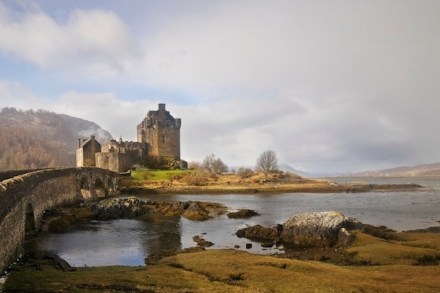
Spectator readers are known for their views — fierce, funny, original. Now we want not only your opinions, but your visual views as well. This week's magazine features Sam Leith's lovely review of Simon Jenkins' wonderful book, 'England's 100 Best Views'. What are your favourite views, from these shores and beyond? Send them to us. Also, don't forget we're canvassing your viewpoint with our Shiva Naipaul Memorial Prize — the £2,000 award for unconventional travel writing. Only three more weeks till that competition closes. To kick off our reader photo spree, we thought we'd give you some views of our own. The photo above shows editor Fraser Nelson's favourite view, Eilean Donan Castle on Loch Duich.

Downton Abbey is now a weird parallel universe of the royal family. Except with less action

From our UK edition

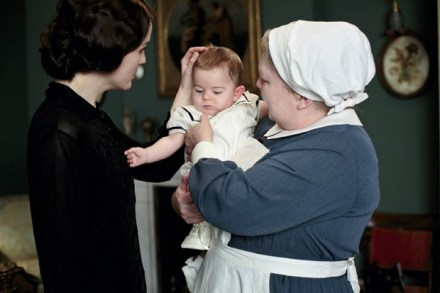
Are you following the world’s most watched aristocratic family? If you recall, they recently took into their ranks a member of the middle classes. The family, headed by a matriarch, is as dysfunctional as any other. But they do live in a palatial home and have a coterie of servants. Their sense of fashion is unerring. There are worries about the future and about inheritance. A boy, George, has been born. Downton Abbey — now a global phenomenon — caters to our insatiable curiosity about the royal family. The more we see of Queen Elizabeth, Charles, William and Kate at processions, and so forth, the more it leaves us wanting. How do these blue bloods actually live? Downton takes us there.