Liz Anderson

What’s the greatest artwork of the century so far?

From our UK edition

15 min listen

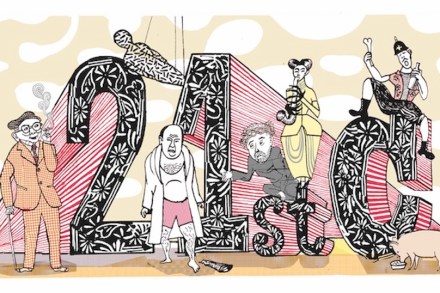
For this week's Spectator Out Loud, we include a compilation of submissions by our writers for their greatest artwork of the 21st century so far. Following our arts editor Igor Toronyi-Lalic, you can hear from: Graeme Thomson, Lloyd Evans, Slavoj Zizek, Damian Thompson, Richard Bratby, Liz Anderson, Deborah Ross, Calvin Po, Tanjil Rashid, James Walton, Rupert Christiansen and Christopher Howse. Produced and presented by Patrick Gibbons.
Farewell, Speccie

From our UK edition

So we are all going to have to pay for fatties to have stomach bands and bypasses, are we? It may be ‘cost-effective’ to treat the obese before they go on to develop diabetes and other medical problems, but I’m not sure how much sympathy they will get when we already hear about cancer patients having operations delayed and drugs withheld because of stretched NHS budgets. According to the OECD, Hungarians are the most obese people in the EU, followed by Brits. Rather surprisingly, Romanians are the least fat. Surprising, because on a recent holiday to the island of Lefkada, there were a huge number of Bulgarians, Serbs and Romanians. And, yes, most of them were huge.

How to beat Alzheimer’s

From our UK edition

British scientists have identified a set of proteins in the blood which can predict, with 87 per cent accuracy, the start of dementia. Symptoms, apparently, take about ten years to appear after the actual start of Alzheimer’s. Having lived with someone with this horrendous condition, I am certain that I wouldn’t want to take a blood test that would show that in a decade I would develop dementia unless, obviously, I could have it reversed. Ignorance is bliss… But research can’t move forward without volunteers. Between 2002 and 2012, 99.

Shot at Dawn: an emotionally charged WWI musical

From our UK edition

A court-martial — followed by an execution: not exactly promising ingredients for a musical. But Ross Clark’s new music drama Shot at Dawn turns out to be unexpectedly moving. On the outbreak of the first world war, Adam, a farm labourer, enlists in the army, despite being underage, and is later shot for cowardice; his sister Georgina fights to clear his name.  That’s the plot in short. With a minimum of props and a piano, nine actors manage to captivate and draw in the audience. How? Through the emotional charge generated by the words and music. It’s an evening that leaves you surreptitiously reaching for a handkerchief. Highly recommended....

From egg, to caterpillar, to chrysalis, to butterfly

From our UK edition

South Kensington is teeming with butterflies at the moment, or at least the specially constructed tropical enclosure at the Natural History Museum is. Sensational Butterflies (until 14 September) takes you on a journey through the life cycle of, you guessed it, the butterfly: from egg, to caterpillar, to chrysalis, to butterfly. Butterflies had a good time of it last year, because of the warm sunny weather — the best for seven years — but the year before had been one of the worst ever for these insects (and for us), with their numbers crashing. The outlook is good for this summer. Fingers crossed.

The Picasso muse who became an artist

From our UK edition

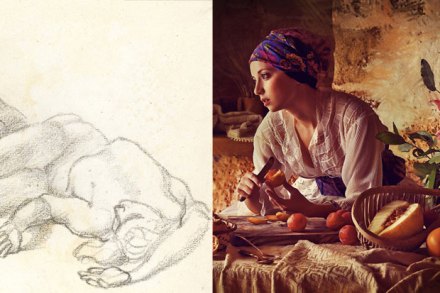
With her long blonde hair tied in a ponytail, Sylvette David is familiar from many of Picasso’s paintings. She met the artist in the South of France as a teenager and became one of his models – his muse but never his mistress — during the spring of 1954 (Picasso’s relationship with Françoise Gilot had ended and he hadn’t yet met Jacqueline Roque). A collection of drawings, paintings, metal sculptures and ceramics documenting their relationship can now be seen in the Kunsthalle Bremen’s exhibition Sylvette, Sylvette, Sylvette: Picasso and the Model (until 22 June).

All the fun of the fair | 30 January 2014

From our UK edition

The Works on Paper annual fair runs from 6 to 9 February at the Science Museum. Its name is a bit of a giveaway: all art must be on paper. There is a huge range of work on display: early, modern and contemporary watercolours, prints, posters and photographs — from the late-15th century to the present day, with prices ranging from £250 to £75,000. So whether you want to buy a Japanese woodblock print, a series of studies by Edward Burne-Jones or one by Stanley Spencer, a drawing by Picasso, Cézanne or Ben Nicholson, South Kensington is the place to go.

The man who transformed houses

From our UK edition

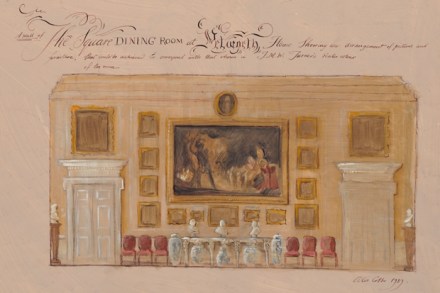
Alec Cobbe is a designer, painter, musician, picture restorer and collector, and has recently donated drawings, photographs and other archives to the V&A, where some of this collection is now on display. Cobbe was born in Dublin and aged four moved to the family house Newbridge, an 18th-century, 50-room country villa designed by James Gibbs, which, he says, was the ‘single greatest influence on my life’. He had an ‘idyllic lamp-lit childhood’ — there was no electricity — where the ‘running water was rainwater, which had to be pumped daily to a tank at the top of the house’.

The Discerning Eye show is full of great art pieces. I know because I chose them

From our UK edition

If you want to buy a picture or a piece of sculpture and have lots of money or not very much, or if you just want to look at more than 450 contemporary works, then the Mall Galleries is the place to go. For some 20 years the Discerning Eye charity has held an annual exhibition of work by invited artists, plus contributions from an open submission, selected by a panel of six — two artists, two collectors and two critics. The charity’s aim is to encourage a wider understanding of the visual arts — an aim that surely no one can disagree with — and the commission it charges on sales helps to fund study bursaries.

Pearls: if you’ve got ’em, wear ’em

From our UK edition

‘Women spend more money on their ears in pearl earrings than on any other part of their person.’ So said Pliny the Elder, who disapproved of the increasing fashion for pearls in the 1st century. It’s lucky he’s not around now to see the V&A’s new exhibition Pearls (until 19 January), where there are natural, cultured and freshwater ones in abundance (including, at the end of the show, eight buckets stuffed with cheap freshwater ones from China, which produces  — overproduces — more than 2,000 tons of pearls a year).

Nicholas Hytner quits as head of National Theatre…in the wake of a Spectator profile

From our UK edition

So, Nicholas Hytner is to step down as director of the National Theatre at the end of March 2015. How canny of Lloyd Evans to review his ten-year reign on the South Bank in The Spectator arts pages on 6 April, the week before his official announcement. Lloyd wrote: ‘Artistic freedom has been the hallmark of his ten-year stewardship….No one guessed how bold Hytner would be. He took the presiding spirit of the theatre, as embodied in its ponderous title, and chucked it in the Thames. Instead of running a museum of official art he created a showcase for his personal inclinations. The National Theatre of Hytner. An astonishing risk. 'And no one noticed how hazardous it was simply because he pulled it off with such aplomb…..

Sculpture trail

From our UK edition

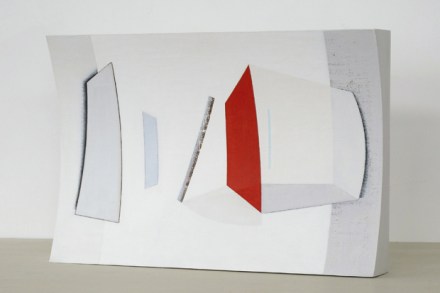
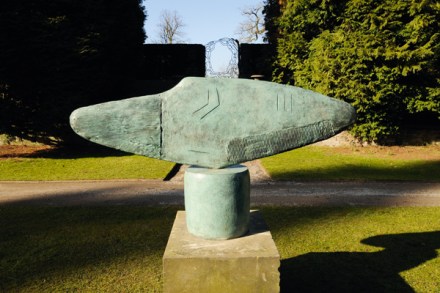
William Turnbull died last year. And if his name is not as familiar as those of his friends Giacometti and Paolozzi, it should be: an exhibition at Chatsworth in Derbyshire may help put this right. Turnbull was born in Dundee in 1922; he left school at 15, and went to work as an illustrator for the comic-book publishers D.C. Thomson, before enlisting in the RAF in 1941. It was his experience when serving in the Far East that gave him a lifelong interest not only in Asian artefacts but also in space and spatial perspective: a pilot’s view of the landscape beneath. Turnbull was both a painter and a sculptor, but it is for his sculptures that he is best known.

Millionaires’ playground

From our UK edition

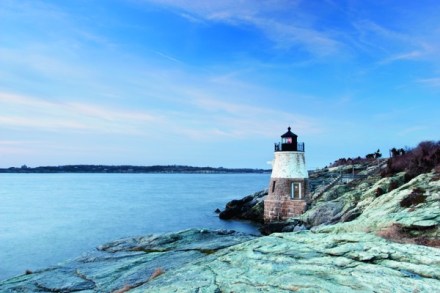
‘If you don’t like the weather in New England, just wait a few minutes.’ Well, Mark Twain, I waited a couple of days and I liked the weather a lot: bright blue skies, warm sun and a cooling breeze off the Atlantic during a September weekend in Newport, Rhode Island. Two days is not long to explore the delights of the town, so here’s my advice for a -whistle-stop tour. Walk up and down the streets, past the variously coloured clapboard houses (some old — dating from the 17th century — some new) that would make Farrow & Ball devotees swoon in admiration. Pause for a while at Trinity Church, built in 1726 by Richard Munday, who based his design on Christopher Wren’s London churches.

Royal rocks

From our UK edition

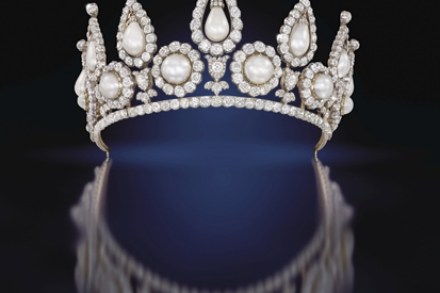
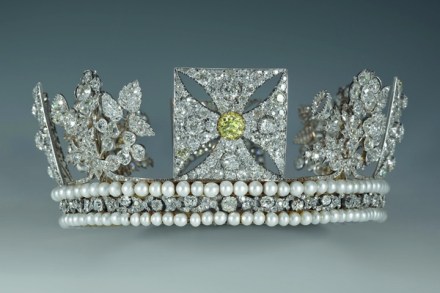
It’s a smallish dark room but, wow, what a lot of sparklers. There are more than 10,000 diamonds set in tiaras, crowns (Diamond Diadem, above), brooches, swords, earrings and necklaces, on display at Buckingham Palace in a special exhibition Diamonds: A Jubilee Celebration (until 7 October). These stunning pieces were acquired by six monarchs over three centuries. Many of the stones have been recut or made into new settings, such as the Fringe Brooch, belonging to Queen Victoria. The larger stones in this brooch are believed to have come from one of the two jewels given to her by the Sultan of Turkey. She wrote in her journal of 8 May 1856 that she decided she could not wear one of the jewels and wished to have it reset.

Road to Mecca

From our UK edition

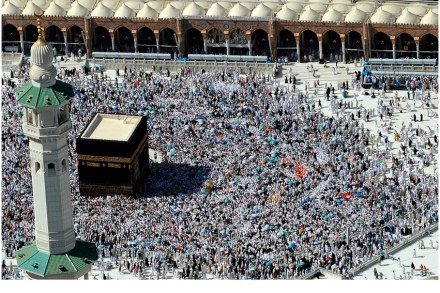
The British Museum’s latest exhibition Hajj: journey to the heart of Islam (until 15 April) sets out to explain the mysteries of this annual pilgrimage. Last year, a total of 2,927,719 pilgrims went to Mecca, Saudi Arabia, something that all Muslims should try to do at least once in their lifetime. Such huge numbers are hard to visualise, so a film, projected on to a wall, is a great help: one sees, I suppose, hundreds of thousands of pilgrims arriving in the city, and walking round Islam’s most sacred site, the Ka’ba, confined as they are to the courtyard of the Grand Mosque and surrounding areas. And because of its rather claustrophobic atmosphere, the BM’s old reading room is — for once — just the right place to hold an exhibition.

The art of collecting

From our UK edition

Passion was in the air in the rooms of the Wallace Collection last week — or at least the word was at the inaugural Apollo seminar sponsored by specialist art broker Stackhouse Poland with AXA Art Insurance. ‘How do you collect art and antiques in today’s market?’ was the question and the panel, chaired by Apollo’s editor Oscar Humphries, was unanimous that passion played an essential part when starting a collection. James Stourton, chairman of Sotheby’s, believed that to start a collection one had to be energetic, assiduous, knowledgeable and to be at the right place at the right time because supply was always short. And he advised always to buy the best one can afford. Ah, money.

Me and my spoon

From our UK edition

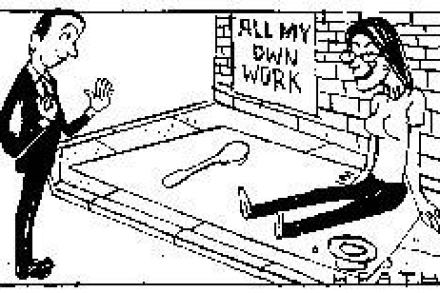
‘We have a spare place at a silver spoon-making workshop. Would you be interested?’ asked the Goldsmiths’ Company. I most certainly was, which was why I turned up (with my pinnie) at the Camberwell workshop of silversmiths Howard Fenn and Steve Wager. ‘We have a spare place at a silver spoon-making workshop. Would you be interested?’ asked the Goldsmiths’ Company. I most certainly was, which was why I turned up (with my pinnie) at the Camberwell workshop of silversmiths Howard Fenn and Steve Wager. Howard and Steve are both Freemen of the Worshipful Company of Goldsmiths with work in private, public and royal collections, yet these master craftsmen were prepared to spend an evening teaching a ragbag of absolute beginners (inc. me) to make a spoon.

Rock on

From our UK edition

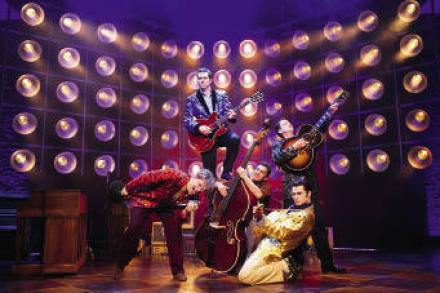
In December 1956, Johnny Cash, Jerry Lee Lewis, Elvis Presley and Carl Perkins met at the recording studios of Sun Records in Memphis, Tennessee. And Million Dollar Quartet, at the Noël Coward Theatre (booking until 1 October), charts this memorable get-together with 90 minutes of rock’n’roll played and sung by a not-exactly lookalike group of four — plus a few extras. In December 1956, Johnny Cash, Jerry Lee Lewis, Elvis Presley and Carl Perkins met at the recording studios of Sun Records in Memphis, Tennessee. And Million Dollar Quartet, at the Noël Coward Theatre (booking until 1 October), charts this memorable get-together with 90 minutes of rock’n’roll played and sung by a not-exactly lookalike group of four — plus a few extras.

All in the mind | 6 November 2010

From our UK edition

‘All of us have had the experience of confusion or bafflement when we repetitively forget something, do something that (consciously) we absolutely did not want to do or lose something important to us.’ Indeed. ‘Freud took these episodes seriously and showed how these apparently innocent events provide windows into our unconscious minds.’ Ah. ‘All of us have had the experience of confusion or bafflement when we repetitively forget something, do something that (consciously) we absolutely did not want to do or lose something important to us.’ Indeed. ‘Freud took these episodes seriously and showed how these apparently innocent events provide windows into our unconscious minds.’ Ah.

Mixing with prostitutes

From our UK edition

Kienholz: The Hoerengracht Sunley Room, National Gallery, until 21 February 2010 The first time I saw Ed Kienholz’s work was at his 1996 retrospective at the Whitney Museum in New York. I was completely overwhelmed — there was something so powerful and so disturbing about his huge stage-set-size installations which covered subjects such as brothels, mental hospitals and abortion. Kienholz was a pioneer of assemblage art in the Fifties and Sixties, using objects he found in flea markets and elsewhere to make up his ‘tableaux’. He died in 1994; but from the early Seventies he and Nancy Reddin, the photographer whom he married in 1972, worked together as a team, travelling between their studios in Idaho and Berlin.