Peter Hoskin

The vanished glamour of New York nightlife

From our UK edition

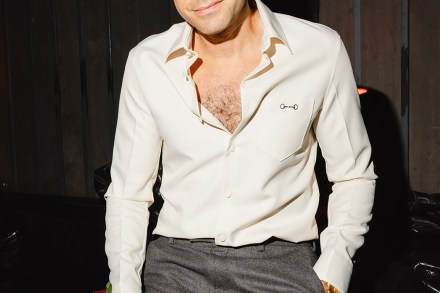
Mark Ronson has one of the finest heads of hair in all showbusiness. The music producer’s coiffure is a dark, whipped and quiffed thing that makes it look as though he naturally belongs on a Vespa in Capri, being ogled by the belle ragazze as he scoots on by. As a cultural object, it certainly surpasses the Oscar he won for the songs in that Lady Gaga remake of A Star is Born; it probably equals his Barbie soundtrack; and maybe even approaches the hits he made with and for Amy Winehouse. But it wasn’t always like that. Back in the 1990s, Ronson’s hair was a standard-issue crop, while he was a gawky young club DJ looking to make it in New York. It’s this scene that he writes about in his memoir Night People, not the fame and accolades that would follow.

Leaping dragon

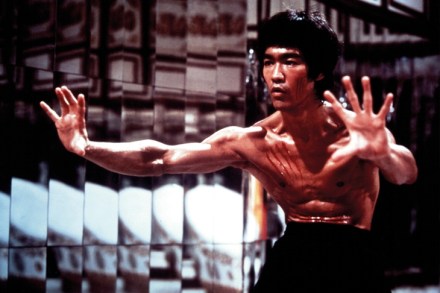
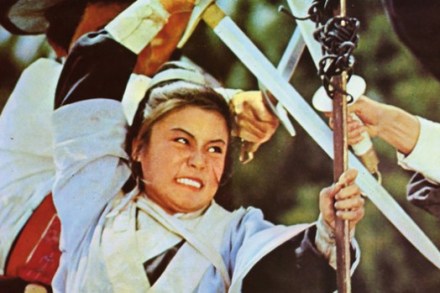
Every cinema-loving person has a favourite Bruce Lee moment. My own comes towards the end of Enter the Dragon, the film which Lee made just before his death in 1973 at the age of 32, and that would in turn seal his worldwide stardom. There, on one side, stands Lee himself. There, on the other, is the villainous Han, who has a set of metal talons where one of his hands ought to be. The two men leap across each other, leaving Lee with an unpleasant gash on his shirtless torso. He pauses, dabs a finger in the blood, raises it to his mouth — and licks. It is weird, gruesome and oh-so-cool, all at once. Why did Lee do this? The answer is in Matthew Polly’s biography.

Don’t believe the doom-mongers – DVDs are thriving, not dying

From our UK edition

According to the accountants’ ledgers, DVDs are dying. Sales of those shiny discs, along with their shinier sibling the Blu-ray, amounted to £894 million last year, which is almost a fifth lower than in 2015 and less than half of what was achieved a decade ago. And last week we finally said goodbye to the postal DVD service Lovefilm, too. The explanation for this decline is the explanation for many modern declines: digital is taking over. Nowadays, downloads and streaming services make more money than the old physical formats. But accountants don’t know everything. From a different perspective, through the bloodshot eyes of a cinephile, DVDs are thriving — and they’re doing better in Britain than in most other countries.

Life after death | 2 November 2017

From our UK edition

According to the accountants’ ledgers, DVDs are dying. Sales of those shiny discs, along with their shinier sibling the Blu-ray, amounted to £894 million last year, which is almost a fifth lower than in 2015 and less than half of what was achieved a decade ago. And last week we finally said goodbye to the postal DVD service Lovefilm, too. The explanation for this decline is the explanation for many modern declines: digital is taking over. Nowadays, downloads and streaming services make more money than the old physical formats. But accountants don’t know everything. From a different perspective, through the bloodshot eyes of a cinephile, DVDs are thriving — and they’re doing better in Britain than in most other countries.

In preserving its heritage gaming is maturing as an art form

From our UK edition

Want to feel like a kid again? Now, if you’re of a certain age, inclination and fortune, you can. Last week, Nintendo launched its SNES Classic Mini, a modernised and miniaturised version of a console that it first released over 25 years ago. It comes loaded with 20 games from back then, including Super Mario World and The Legend of Zelda: A Link to the Past, and it has gamers palpitating. The SNES Classic Mini sold out a few frantic minutes after it was first made available to order. Anyone who missed out will have to face the merciless price inflation of eBay. This sort of harkening-back is nothing new – last year, for example, Nintendo released a Classic Mini version of an even earlier console – but it is becoming far more prevalent.

Coffee, mist and brilliance: Sky Atlantic’s new series of Twin Peaks reviewed

From our UK edition

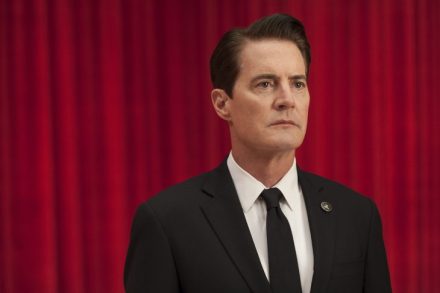
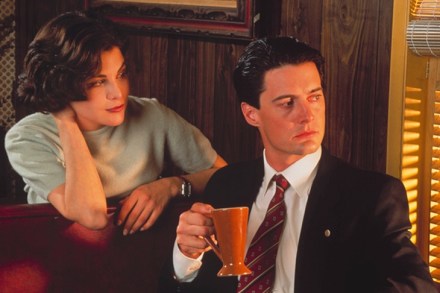
So much coffee. Just like in the original, the characters in the new series of Twin Peaks get through so much coffee. Major characters huddle around it in diners. Background characters raise mugs to their lips. Entire scenes revolve around the stuff. There’s just so much coffee. And, I’m proud to say, I played my part too. I knocked off an entire cafetière so that I’d be awake for the two-part opening to the series, which aired at 2am this morning on Sky Atlantic. And I finished another cafetière to write this post. This is not an occasion I was going to miss. Not only is the return of Twin Peaks, after an absence of 26 years, a big deal in itself; it’s also happening at just the right time.

Remembrance of things past | 11 May 2017

From our UK edition

If you want to appreciate why the return of Twin Peaks is so significant, then you need to know something of the background. And, no, not the background of the show itself, which rose and fell through two series before coming to a stop on 10 June 1991. Nor the background of its story, which began with the sodden corpse of Laura Palmer and concluded with the FBI agent Dale Cooper — or was it? — smashing his head into a mirror. But the background of the world into which Twin Peaks is returning. The terrible here and now. This is a time when pop culture is being overrun by nostalgia for the 1990s.

How Shanghai is becoming the new Hollywood

From our UK edition

I was sweating on a treadmill in my local gym last week, when Scott Eastwood, son of Clint, appeared on the telly. He mentioned how he’d just wrapped up the sequel to Pacific Rim (2013), a film production that rocketed him most of the way around the world. ‘We shot four months in Australia, and then we shot for about a month in China,’ he explained to Lorraine. ‘I’ve never been to China before.’ He might not realise it yet, but Eastwood will go to China again. You don’t even need to read my article in the current issue of the magazine to find out why – although, naturally, you should. You can go to the cinema instead.

Hollywood goes East

From our UK edition

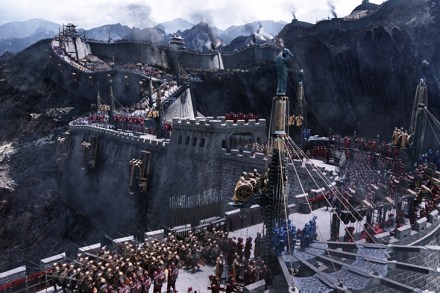
It’s kind of surreal being here.’ The general sentiment, no doubt, of most people on planet Earth right now, but the specific words of Matt Damon at the world première of his latest film earlier this year. The reason for his befuddlement? The film was The Great Wall, for which he had moved to China for half a year with his family. But the première was taking place beneath the extravagant pagoda of Grauman’s Chinese Theatre on Hollywood Boulevard. From actual China to Los Angeles’ idea of China — no wonder Damon found it weird. Yet, as so often happens in Hollywood, the weird could well become the way of things.

Comic effect | 23 February 2017

From our UK edition

Borag Thungg, Earthlets! If those words mean something to you, then congratulations — you are leading a good life. If not, then you owe it to yourself to pay attention. They are the words of greeting that Tharg the Mighty, the extraterrestrial editor of 2000AD, has spoken to the British sci-fi comic’s readers for the past 40 years. And 40 years is right. 2000AD enters its fifth decade this year, and various celebrations have been planned to mark the occasion. Among them is an exhibition at the fantastic Cartoon Museum in central London, where 85 pieces of original artwork are on show for our delectation. It’s an exhibition that does exactly what it should: show off the great variety of 2000AD.

Why we need to cancel the Oscars to save the Oscars

From our UK edition

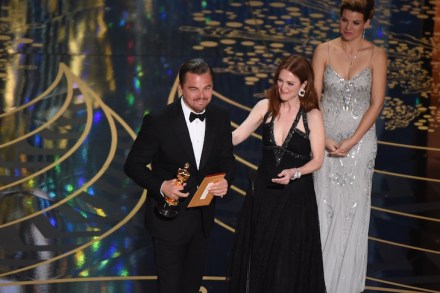
Oscar has a problem, and I say that as a fan. If I could, I’d take one of those famous statuettes by its tiny golden hand, and show it a happy life in the bars, restaurants and movie theatres of its native Hollywood. But, clearly, others don’t feel the same way. The number of people who tuned into the Academy Awards last year was the lowest it has been for eight years. Even the traditional box office boost for victorious movies isn’t necessarily worth as much as it used to be. Viewing figures and box office receipts are, however, only the visible tip of what is a deeper problem: the Oscars aren’t keeping pace with cinema itself.

All I want for Christmas

From our UK edition

Comfort and joy. That’s what the song talks about, and that’s what the classic Christmas movies deliver. Whether it’s Die Hard (1988) or It’s a Wonderful Life (1946), Home Alone (1990) or White Christmas (1954), we enjoy these films, in part, because they are so comfortable. Time and tradition have made them as familiar as carols, mince pies, woolly jumpers, and avoiding the lancinating gaze of your least favourite aunt over the sprouts. But, at the end of 2016, perhaps we can upset the usual way of things. The Christmas holiday should also be a time for Christmas Holiday, Robert Siodmak’s chilly noir from 1944.

The future is here

From our UK edition

Oculus Rift. It sounds like something from a science fiction novel, and in many ways it is. Its release this week is the first stirring of a future stuffed with virtual reality headsets. The hope of its Californian engineers and their bitcoin backers is that we, the consumers, will soon use them to spend a whole lot of time outside of our lives. Strap the goggles to your face, position the headphones over your ears, press the on button, and — bzzzztp — you’re in a different world. The question is, who will create these worlds? The first prototype of the Oculus Rift was built five years ago by an 18-year-old called Palmer Luckey, and he had an 18-year-old’s use for it: video games.

The ten best home video releases of 2015

From our UK edition

‘Tis the season for end-of-year lists. Here is mine. It’s for the ten best home video releases of 2015; which is to say, the ten best DVDs or Blu-rays released in Britain this year. I’m leaving out releases from abroad, even though that means leaving out some of my favourites, so as to spare your wallets. All of these can be bought without import fees or much delay. There are other caveats and restrictions. The biggest is that, despite trying my best, I cannot watch everything. There are some major releases that I haven’t got around to yet (including this Yoshida set, which I’m saving for the Christmas break). There are some that will be released between now and the actual end of the year (including this hi-def Chaplin collection).

The history of Technicolor in ten films

From our UK edition

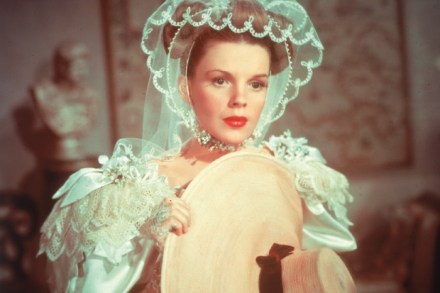
Does the Queen only send telegrams to British subjects? If so, I guess the rest of us will have to celebrate Technicolor’s centenary without Her Maj’s involvement. I’ve already written about the occasion for last week’s issue of The Spectator; but I thought I’d return to it having spent most of yesterday gorging on films and cake. For yesterday was the anniversary day itself. The Technicolor Motion Picture Corporation filed its start-up papers on 18 November 1915. One thing that I tried to communicate with my article is the great variousness of Technicolor. The word tends to conjure up a particular era and mood: the colourful Hollywood musicals and romances of the 30s, 40s and 50s. But the actual process and its history are far broader than that.

How Technicolor came to dominate cinema

From our UK edition

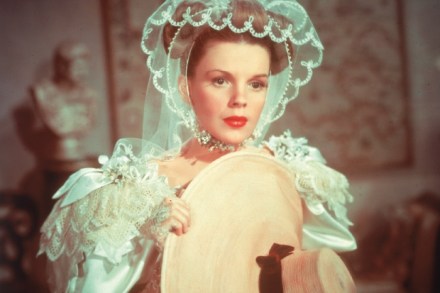
They’ve already found a cure for the common cold. It’s called Technicolor. My first dose of it came during the Christmas holidays when I was about 12. There I was, ailing and miserable, when The Adventures of Robin Hood (1938) came on the television at the end of my bed. Nothing had prepared me for this. A Sherwood Forest that was aflame with green. Clothes that shimmered purple and blue. Olivia de Havilland’s oh-so-cherry lips. Under two hours later I cast off the duvet and leapt from the fug. The sickness had gone. I now know that this medicine, Three-strip Technicolor, was a revolutionary process, the first to properly mix the three primary colours of light — red, green and blue — so that film could capture all of the colours in nature.

Kultural icon

From our UK edition

The almond eyes that rise towards their outer edges. The cheekbones that curve down to the corners of those upholstered lips. The dark strands of hair that fall wisplike on to her chest. The hourglass extremities that will exercise your ciliary muscles until they snap. Dear me! After looking at this book, you’ll be more familiar with the particulars of Kim Kardashian’s body than with your own lover’s. For this is her hardback collection of selfies. It contains almost 500 photographs of Kim, by Kim. Six of them include her daughter; 60 of them feature at least one of her siblings; 100 have Kim in a bikini, in her underwear or completely naked. The book’s title, Selfish, might be the most knowing of all time. But who is Kim Kardashian?

How gaming grew up

From our UK edition

Sometimes a guy feels abstracted from the world. He visits Europe’s finest galleries, but the paintings seem to hang like corpses from the walls. The great symphonies fail to stir his interest, let alone his soul. So he goes home, pours a large whisky and does the only thing that’s left for him — he buys a PlayStation. That’s what I did last year, and I’ve been wired to my screen ever since. Parachuting from skies to impale some oblivious mercenary. Driving off buildings to escape the cops. Shooting and shooting — and shooting. Why haven’t I done this all my life? It was blockbuster games such as Grand Theft Auto that drew me in, but something else held my attention.

How Japan became a pop culture superpower

From our UK edition

There is an island nation, just off the main body of a continent. It gained an empire from the force of its military and the finesse of its trading contracts. The empire withered, as they all do, under the gaze of history. But that didn’t finish the island nation off. It simply took over the world in a different way, with something greater than arms and economics: popular culture. Its territory is now the television in your lounge, and the headphones in your ears. Sounds like Britain, doesn’t it? We often boast of how, from the Beatles to this year’s Oscar nominations, our country punches above its weight culturally. But I had another island nation in mind. One with twice as much weight, in terms of population, and a hell of a lot more punch: Japan.

Without sci-fi, there would be no cinema

From our UK edition

Do you know what’s hateful? The snobbery that film fans have to contend with. There’s the ‘it’s only a movie’ snobbery, by which cinema is suitable only for wastrels and dogs. And there’s the ‘if it ain’t Danish and silent, then it ain’t no good’ snobbery. Proponents of both should spend less time blowing conjecture through their Sobranie smoke, and more time watching the Hollywood films of John Ford, Nicholas Ray and William A. Wellman. Now that’s off my chest, here’s one way in which cinema is relatively free from snobbery. For decades, novelists and literary types have wrangled over whether science fiction books are anything more than — to use Margaret Atwood’s snooty description — ‘talking squids in outer space’.