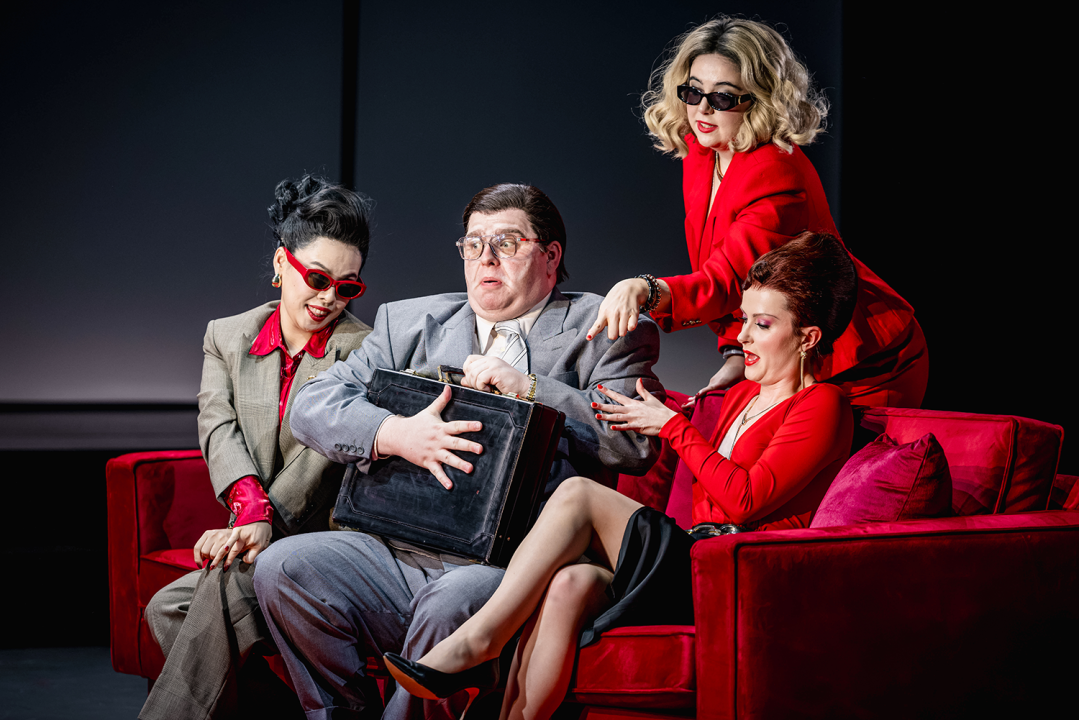
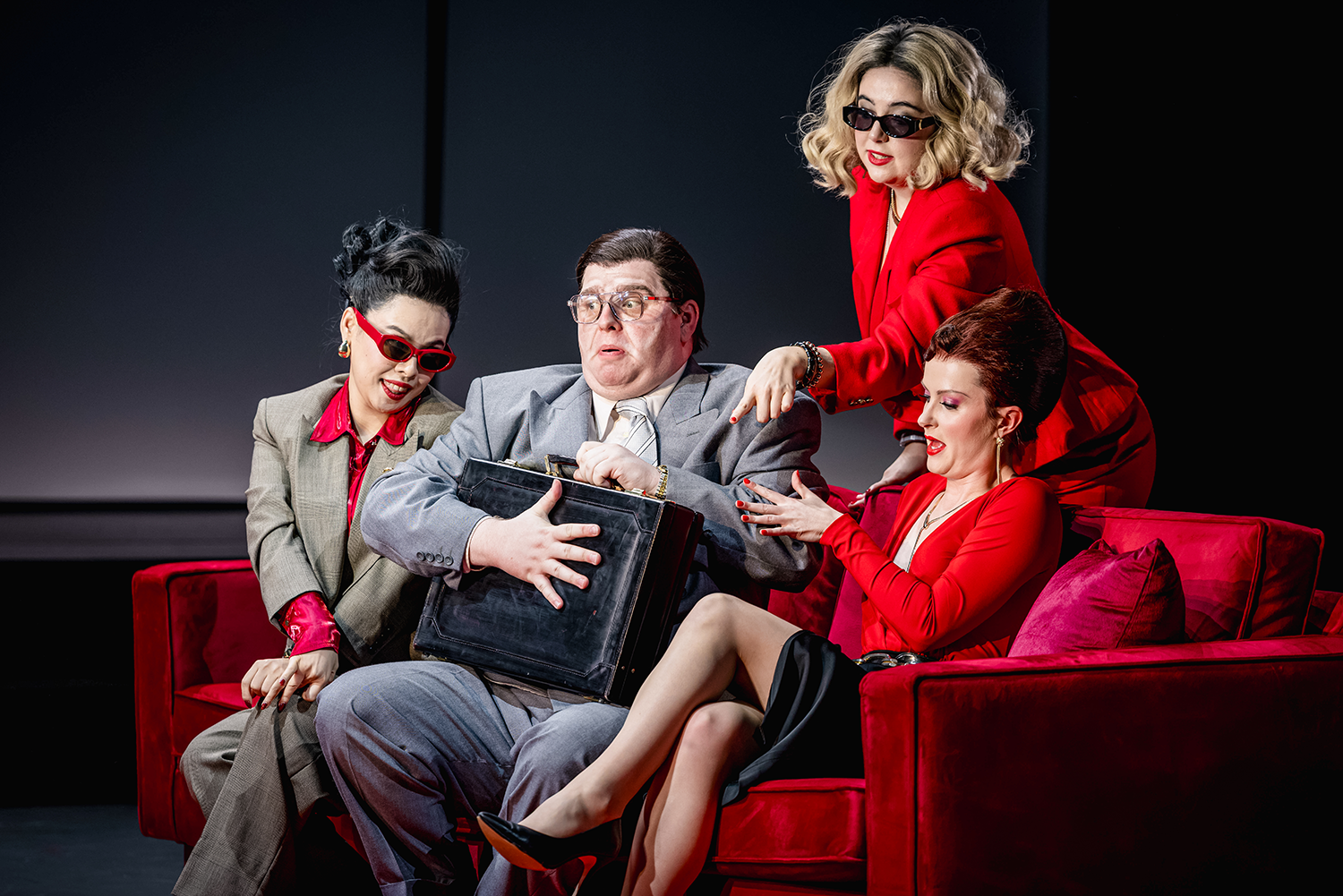
This year’s Jette Parker Artists showcase is a triple bill of modern-ish operas; a cleverly assembled trittico of one-acters, linked by a theme of bereavement. That sounds bleak until you consider that Puccini’s Trittico was originally inspired by The Divine Comedy, and who bothers about that today? Anyway, the three operas that make up Tales of Love and Loss are far from dispiriting in their overall effect. Like Puccini, Talia Stern – who directs all three – has gone for two tragedies plus a raucous, palate-cleansing comedy. And like Gianni Schicchi, the final laugh-fest (Elena Langer’s Four Sisters) plays out around a barely cold corpse and sends you into the night feeling uneasy, but undeniably entertained.
On a fine night, few concert venues can be more inspiring
The Puccini parallels stop there. For all their shared themes, these three operas create their own worlds and speak with highly distinctive voices. First up is The Departure, written in 1961 by Elizabeth Maconchy to a libretto by Anne Ridler, and drenched – with its offstage chorus and aching horns – in the eerie, overcast atmosphere of mid-century British noir. Julia (Ellen Pearson) is in her bedroom, preparing for a reunion with her estranged husband Mark (Sam Hird). She’s excited and fretful as she paces her room. Barefoot and increasingly confused, she seems vulnerable. You realize what has happened – what is happening – to her long before she does, to wrenching effect.
Pearson is a wonderfully expressive performer, painting over Maconchy’s grey-and-bronze score (it’s marvelous how her orchestral writing even sounds like the 1950s) with great swashes of impassioned, red-blooded singing. The Departure is basically a one-hander, but Hird gets his turn in the second opera, Charlotte Bray’s Making Arrangements of 2012. It’s an adaptation (by Kate Kennedy) of a story by Elizabeth Bowen, so it sits elegantly with the du Maurier-ish The Departure, though this time, it’s the husband who has been deserted – a decent, plodding chap of the kind who always gets dumped in romantic comedies. He’s had a letter from his errant wife Margery (Hannah Edmunds), who expects him to send on her clothes and generally be a brick about the whole thing.
Hird, as directed by Stern, gets it down perfectly – the defeated expression as he picks through the abandoned cocktail dresses, and the ugly way his face hardens as he discovers that they can be torn. Hird has a smoky, crosshatched baritone and an understated way of conveying emotion; an excellent foil to Edmunds’s peacock-like brightness as Margery. Bray interweaves and overlays their voices; two inner monologues unfolding as one. Meanwhile the chamber orchestra picks at skeletal waltzes, or shrills with Psycho-like ferocity. A cor anglais trails behind the big gestures like the aftertaste of regret, and at the end it’s all that remains. As with The Departure, it’s amazing how much drama you can fit into a bare half-hour of opera.
And then, in a raucous blast of catty, trashy screwball comes Four Sisters – brass blaring, whistles shrieking, plus the zany wobble of the flexatone to reassure us that this is not very serious, at all. In a New York penthouse, a billionaire oligarch lies in his coffin and all references to Chekhov in John Lloyd Davies’s libretto (“Moscow!” – did you know there was one in Idaho?) are wholly intentional. Pearson returns as one of the three socialite daughters awaiting the reading of the will, with Hird as the lawyer Krumpelblatt and Edmunds as the slightly-too-knowing maid with a secret of her own (spoiler alert: it’s in the title). It’s great knockabout, zestily sung and directed, and this new chamber version of Langer’s 2012 original packs in a lot of musical gags. The Britten Sinfonia under Peggy Wu played all three scores with brio.
For another mood lifter, now that spring is here, treat yourself to an evening with the Royal Northern Sinfonia at the Glasshouse. On a fine night, few concert venues can be more inspiring: the huge windows, those thrilling bridges and the tumbling, golden townscape of Newcastle just across the river. On this occasion the RNS’s former music director Thomas Zehetmair played and directed Mendelssohn’s youthful D minor violin concerto – trim and bracing – and conducted Sibelius’s Second Symphony.
I liked the warmth and unanimity of the current RNS strings and the unpushy sweetness of their woodwinds – in particular, the ballad-like expression that the oboe player brought to his third-movement solo. It’s no reflection on the quality of the playing to suggest that Zehetmair is not, perhaps, one of nature’s Sibelians. There were too many short paragraphs, and too many stops and starts, though the pianissimo of the cellos and basses in the opening of the slow movement was properly spectral. Still, there was no arguing with the finish, with trumpets roaring and all of Tyneside lit up before us as we left the hall. Reasons to be cheerful.




Comments