Art

Seeing the light | 11 June 2015

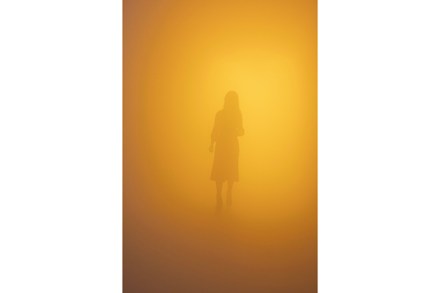
James Turrell gave me extremely precise instructions. After dinner, I was to walk out through the grounds at Houghton Hall to the skyspace he has built. Here I should observe the gradual darkening above as brightness fell from the Norfolk air. At 9.40 p.m., I was to join him and the Marquess of Cholmondeley to witness the illumination Turrell has devised for the west front of the house. So we stood in the chill air of an English summer evening and watched as a slowly changing sequence of pinks, mauves, blues and reds lit up the colonnades and Palladian windows designed in the 1720s by Colen Campbell and the domes

Dizzying swirls of impasto

With a career of more than 60 years so far, Frank Auerbach is undoubtedly one of the big beasts of the British art world. His personal reticence, however, and the condensed, impacted idiom of his painting have contributed to his enigmatic, somewhat opaque reputation. Catherine Lampert, who has sat regularly and patiently for him since 1978, is uniquely qualified to throw light both on the man and his art, but the tactics she employs here are very different from those of Martin Gayford in Man with a Blue Scarf, his intimate, engrossing account of sitting for Lucian Freud. Matching Auerbach’s reticence with her own, she keeps herself largely out of

Museum relic

On 1 July, at a swanky party at Tate Modern, one of Britain’s museums will bank a cheque for £100,000, as the Art Fund announces this year’s Museum of the Year. Sure, the money will come in handy. Sure, the publicity will be useful. But this posh bunfight can’t disguise a growing sense that museums face an existential crisis. Cuts are one problem — some say the present round will take museums ‘back to the 1960s’. But they also face a more profound dilemma. In the age of Wikipedia and Google Images, what are modern museums actually for? When I was a child museums were my adventure playgrounds, but was

Chris Burden created some of the most exciting and utterly deranged art I’ve ever seen

I once went out with a girl who jabbed me in the ribs every time I mouthed the phrase ‘conceptual art’. It hurt, but I got her point. The C-word, you see, is a tricky one. All too often, it conjures up terrifying images of ‘explanatory’ texts that take 5,000 words to communicate precisely zilch. It implies student politics, gnomic utterances and an unhealthy dependence on the word ‘dialectic’. Too much critical dogma dictates that art must be oblique for its own sake, and utterly devoid of humour. But it wasn’t always thus. In the 60s and 70s, a lot of the best artists took Marcel Duchamp’s prickly sense of

My part in a masterpiece of political correctness

Damien Hirst, Grayson Perry, James Delingpole: all winners of major art prizes. I was awarded mine last week by Anglia Ruskin University (formerly Anglia Polytechnic) which I think is a bit like Cambridge (it’s in the same town), though bizarrely its excellence has yet to filter through to the official UK uni rankings, where it’s rated 115th out of a list of 123. Anyway, the point is, I won. Sort of. I ‘won’ this extremely important prize in the way that Michael Mann, the shifty climate scientist, has been known to claim he ‘won’ the Nobel prize when it was awarded to the IPCC. That is, the prize wasn’t handed

Møn

The sky over the island of Møn, which is at the bottom right of Denmark, was cobalt and the whitewashed walls of the Elmelunde church dazzled in the bright sunshine and hurt our eyes. Our arrival had been preceded by an argument about visiting the church at all, some of the party being of the opinion that they had seen enough medieval churches already during the four-week trek across northern Europe. Nevertheless, culture won the day and in we filed to glory in the frescoes of the Elmelunde Master, who some time during the 15th century devoted himself to the decoration of this church. The frescoes are spare and sinuous,

‘Paint goes on living’

Maggi Hambling is 70 later this year, and a career that took off when she was appointed the first artist in residence at the National Gallery, in 1980, shows no signs of slackening in momentum. Hambling is still as uncompromising as ever, and as difficult to categorise. An artist of sustained originality and inventiveness who fits no pigeonhole and is part of no group, she is a resolutely independent figure (she enjoys the description ‘maverick’) who considers it her duty to keep questioning assumptions (her own as much as other people’s) and looking afresh at the world. Occasionally she succumbs to an idée fixe — for a long while she

Diary – 9 April 2015

So far, what an infuriating election campaign. We have the most extraordinary array of digital, paper and broadcasting media at our fingertips — excellent political columnists, shrewd and experienced number-crunchers, vivid bloggers and dedicated fact-checkers. There has never been a general election in which the interested voter has had access to so much carefully assembled and up-to-the-minute data. And it’s unpredictable, and it matters: the recovery on a knife edge, the future of the UK, our future in Europe — all that. It ought to be thrilling. So why is the campaign proving so tooth-grindingly awful? Simply because the parties have chosen to refuse to tell us what we need

What’s to become of Pedro Friedeberg’s letters?

The year 2015 has been designated one of Anglo-Mexican amity, with celebrations planned in both countries by both governments. But it looks as though one name will be missing from the list: Pedro Friedeberg’s. ‘Who?’ you may ask. Well, in 1982 I was in Mexico City to interview Gabriel García Márquez after he’d won the Nobel Prize for Literature. At a party given by a Mexican art-collector, I noticed several zany pictures on the wall. ‘They’re all by Pedro Friedeberg, my favourite Mexican artist,’ said the collector. I stared at one large framed square after another, at pictures in which the Old World and the New seemed conjoined in a

Rise early to see the Vatican at its best

The sun has only just risen in Rome and we are standing bleary-eyed in a short queue outside the Vatican. Our guide, Tonia, takes us through security, and within minutes we are in a nearly empty Sistine Chapel. In an hour it will be crammed with tourists — sweating, gawping, getting in each other’s way. Vatican officials will be shushing and clapping to quieten the chatter. Now, though, we are free to contemplate Michelangelo’s swirl of naked bodies in peace. Michelangelo claimed that he painted the ceiling entirely on his own. In fact, Tonia explains, he started off with 15 helpers, though he got rid of them all along the

Seeing Paris through Impressionist eyes

The spectre of the Charlie Hebdo killings still hangs over Paris. Outside the École Nationale Supérieure des Beaux-Arts, opposite the Louvre, there’s a big poster of Cabu, one of the murdered cartoonists. The poster is peppered with fake bullet holes; underneath, the caption reads, ‘It doesn’t hurt at all.’ I didn’t realise, until I talked to the curator of the new Impressionist show at the National Gallery in London, that Cabu was a popular figure on French children’s TV in the 1970s. His death particularly haunts the middle-aged, who grew up on his cartoons. The Charlie Hebdo posters across Paris still bring you up short. I hope it isn’t sacrilege

MoMA’s new Björk exhibition cramps the singer’s style

Was intimacy the goal of Björk at MoMA? Co-curated by the Icelandic musician herself and Klaus Biesenbach, MoMA chief curator at large, the exhibition allows for a closer look at the objects that go into her productions, from custom-made instruments to haute-couture costumes and personal notebooks. The centrepiece, however, is the new commission Black Lake. At a press conference on Tuesday, Biesenbach made much of the live experience of museums in contrast to the detachment of seeing art through phones. The problem is, Björk’s exhibition isn’t live. It’s quite the opposite. The culprit is the narrative installation called Songlines. An audio component entreats you to take it slow and to consider the device hanging around

Inventing Impressionism at the National Gallery reviewed: a mixed bag of sometimes magnificent paintings

When it was suggested that a huge exhibition of Impressionist paintings should be held in London, Claude Monet had his doubts. Staging such an exhibition, he wrote to his dealer Paul Durand-Ruel, would be ‘unwise’ and only likely to baffle a London public that ‘knows very little about us’. That was in 1904. What, one wonders, would Monet make of Inventing Impressionism, which has just opened at the National Gallery 111 years later? It can hardly be said now that the British know little of the Impressionists. On the contrary, you could argue we’ve seen quite enough of them in recent decades. The challenge for a gallery planning to put

The Heckler: Tate Britain is a mess. Its director Penelope Curtis must go

Things have not been happy at Tate Britain for some time. Last year Waldemar Januszczak wrote an article culminating with this cri de coeur: ‘Curtis has to go. She really does.’ The meat of the argument against Tate Britain’s director was that she had presided over a run of misconceived exhibitions disliked as much by critics and scholars as by the public. In her defence, these were not the blockbuster shows but the low-cost fillers that UK museums must put on when the coffers are low. As such they tend to be long on ideas and short on jaw-dropping loans. It is not much of a defence. The massive unseen

Why we should say farewell to the ENO

It’s easy to forget what a mess of an art form opera once was. For its first 100 years it had no name, it had no fixed address, it didn’t really know who it was or what it was doing. You’d find it at schools, at weddings, at political functions. It was an artistic whore for hire. Embroiled in an epic tug-of-war as to which of the three art forms — word, music or dance — should be primary, it was also lithe and experimental. In fact, it was more like performance art than anything you’ll witness in a modern opera house. Why this historical detour? To remind us not

Patrick George: painting some of his best work at 91

‘If I see something I like I wish to tell someone else; this… is why I paint.’ Patrick George is 91, still painting ‘some of the best work he’s ever done’, in Andrew Lambirth’s view. ‘His principal aim is to point out, to those of us less well-trained to observe, how marvellous the appearance of things is, and he does this through exquisite landscapes, figure and still-life paintings, of unassuming but stringent beauty.’ After four years in the Navy (he commanded a landing craft in the D-Day landings) George went to Camberwell art school where he imbibed the strict measuring technique associated with William Coldstream, which he has continued to

Dallas, city of culture

When George W. Bush was outed as an artist, after a computer hacker uncovered his nude self-portraits, jaws dropped around the world. Could Cowboy George, a man whom even Kim Jong-il’s cronies dubbed a philistine, actually be a closet aesthete? This spring, at the first exhibition of his works in Dallas, he confessed: ‘There’s a Rembrandt trapped in this body.’ It shouldn’t come as such a surprise. Bush’s hometown of Dallas may be stereotyped as a cultural wasteland, synonymous with big oil, big hair and Wild West machismo, but it, too, has an artistic side the world is only now discovering. Take the 50th anniversary of the JFK assassination. Rather

How the smile came to Paris (briefly)

In 1787 critics of the Paris Salon were scandalised by a painting exhibited by Mme Vigée Le Brun. The subject was conventional enough: a self-portrait of the artist cradling her small daughter. The problem was that Vigée Le Brun was depicted smiling. You could even see her teeth. This was, as one critic put it, ‘an affectation which artists, connoisseurs and people of good taste are unanimous in condemning’. These outraged art lovers must have been rather out of touch with current trends. For, as Colin Jones shows in The Smile Revolution — his revealing history of 18th-century French smiling — the full-on, lips-parted sourire had been increasingly visible in

Hiding in Moominland: the conflicted life of Tove Jansson

Tove Jansson’s father was a sculptor specialising in war memorials to the heroes of the White Guard of the Finnish civil war. He did not like women. They were too noisy, wore large hats at the cinema and would not obey orders in wartime. Tove used to hide to spy on his all-male parties, where everybody got astoundingly drunk and attacked chairs with bayonets. ‘All men are chums who will never leave each other in the lurch,’ she concluded. ‘A chum doesn’t forgive, he just forgets — women forgive everything but never forget. Being forgiven is very unpleasant.’ Father and daughter had such a strained relationship that she sometimes had

Apollo Awards 2014: Museum Opening of the Year

This article first appeared in Apollo magazine Apollo magazine are pleased to announce the Apollo Awards 2014 shortlist for the Museum Opening of the Year, which recognises some of the most important new museum or renovation projects to be completed between October 2013 and September 2014. The winner will be announced in the December issue of Apollo. Find out more about the Apollo Awards. Aga Khan Museum, Toronto Highlights from the Aga Khan Museum’s collection have been touring the world for several years. Now for the first time, more than 1,000 artefacts spanning as many years of Islamic history and three continents have a permanent home designed by the Pritzker Prize-winning architect Fumihiko Maki. The collection includes