Jack Wakefield

Nationalise the royal collection!

From our UK edition

The royal collection consists of millions of objects whose purpose and ownership are sometimes obscure. Does the collection serve the monarchy, and if so how? Or is the care of the collection, and of the palaces that contain it, the sacred duty of the Queen? Housed throughout the royal palaces, it includes works held by the Queen in trust for the public as well as those owned personally by Elizabeth Windsor, such as valuable paintings by Monet and Paul Nash that were bought by the late Queen Mother and not taxed as part of her estate. This is the sort of confusion that needs to be cleared up to prevent the perception that the royals act in their own narrow interest when it suits them, a necessary step in the post-Prince Andrew era.
Why Christie’s is wrong to cancel Eric Gill

From our UK edition

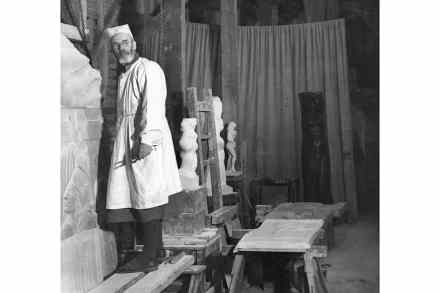
Eric Gill was an incestuous paedophile and his own letters prove it, but the value of his work can run into millions of pounds. So it was a surprise to hear rumours that auction house Christie’s will no longer be accepting his art. Will they really be turning away all Gills, even the masterpieces? I asked one Christie’s employee for confirmation. ‘Yes,’ they said. ‘It would not be consistent to refuse to sell the Gill trifles but continue to sell his masterpieces.’ The Christie’s press office said they wouldn’t comment, which is a shame because the decision raises interesting questions. Why single Gill out?

Conning the connoisseurs

From our UK edition

Rogues’ Gallery describes itself as a history of art and its dealers, and Philip Hook, who has worked at the top of Sotheby’s for decades, is well versed in his subject. Sadly for the prurient, this is not an exposé of the excesses of the market from one of its high priests; and Hook says that where possible he has avoided writing about the living. It is hard not to feel a bit disappointed. For an alarming moment in the introduction, it seemed as if he was preparing to write an academic treatise about how dealers influence art and taste.

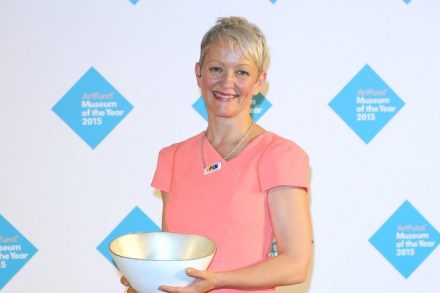
Is Maria Balshaw such a good choice for Tate? I tremble for the art I love

From our UK edition

The last couple of years have seen changes at the top of all of London's major art musuems. In 2015 we saw new leadership at the British Museum and the National Gallery. This year it's the turn of the Victoria and Albert Museum and the Tate. The change at the top of the Tate is particularly momentous. When the last director Nick Serota was appointed Mrs Thatcher was Prime Minister and there was no Tate Modern. Furthermore the directors of Tate Modern and Tate Britain who report to the overall boss are themselves new appointments and almost all senior curators have been appointed since 2012. If there is an institution in flux, it's the Tate.

Thomas Heatherwick

From our UK edition

Thomas Heatherwick is the most famous designer in the United Kingdom today and has an unquestionable flair for attention-grabbing creations. Before 2010 he was mostly known for a splashy public sculpture in Manchester, ‘B of the Bang’ (2005). Within weeks bits started to fall off. In 2009 it was dismantled. This was his most celebrated failure. But he has had others. An even earlier commission, ‘Blue Carpet’ (2002), a showy repaving of a miserable part of Newcastle city centre, lost its colouring completely within a decade (despite assurances from Heatherwick that its colour would last for a 100 years). He was propelled to global celebrity in 2012 when an audience of a billion watched his Olympic cauldron light up.

Boris’s London legacy

From our UK edition

Overseeing Boris Johnson’s futuristic office, with its spectacular view of the increasingly culinary skyscape of the City of London with its Gherkins and Cheesegraters, is a bust of Pericles, distinctive in his helmet. It is no surprise that the Mayor should hold himself up to the gaze of the Athenian general and politician because he instituted the greatest programme of public works in the ancient world in Athens in the middle of the 5th century bc. Since Boris was elected Mayor in 2008 there has been an enormous amount of development in London. The demand that fuels growth is ever present. The south bank of the Thames is bristling with cranes and after years of stalemate Battersea Power Station is in development.

Who will be the next head of the British Museum? Here are the runners and riders

From our UK edition

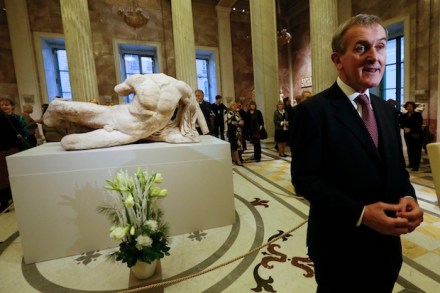
The hunt for the next head of the British Museum is not going to be easy. The director needs to have the confidence of his trustees, to inspire his curators and to convince the government to maintain the grant. In all of those areas MacGregor has been exceptional. The Standard reports that the internal candidate Joanna Mackle, deputy director, is unlikely to put her name forward. So who's name is in the ring? One of the most prestigious jobs in the museum world, it suffers a handicap when it comes to salary. As such it is extremely unlikely that the most obvious candidate Thomas Campbell, currently director of the Metropolitan Museum (salary over $1m) could be persuaded to apply for Neil MacGregor's job (salary under £200,000).

The Heckler: Tate Britain is a mess. Its director Penelope Curtis must go

From our UK edition

Things have not been happy at Tate Britain for some time. Last year Waldemar Januszczak wrote an article culminating with this cri de coeur: ‘Curtis has to go. She really does.’ The meat of the argument against Tate Britain’s director was that she had presided over a run of misconceived exhibitions disliked as much by critics and scholars as by the public. In her defence, these were not the blockbuster shows but the low-cost fillers that UK museums must put on when the coffers are low. As such they tend to be long on ideas and short on jaw-dropping loans. It is not much of a defence. The massive unseen collections of the Tate present plenty of opportunity to mount extraordinary exhibitions. Now, however, she has presided over a stinker of a blockbuster.

Why has TfL vandalised the Eduardo Paolozzi murals at Tottenham Court Road?

From our UK edition

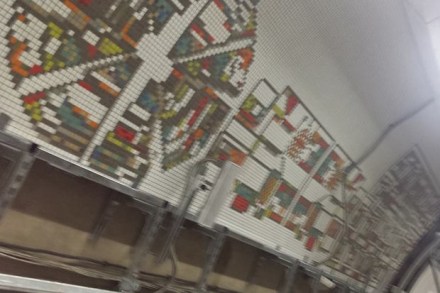
Last weekend I used the Northern Line at Tottenham Court Road station for the first time since it reopened. Oxford Street is not my favourite place in London but perversely for a tube station that was cramped, overcrowded and cavernously deep, Tottenham Court Road used to lift my spirits. That was wholly due to the wonderful effects of its Paolozzi mosaics; grubby and glittering schematic designs that plastered the walls and ceilings of the entrance hall and platforms. They were probably the only piece of art on the Tube that I have ever thought worked well.

The next head of the National Gallery will be…

From our UK edition

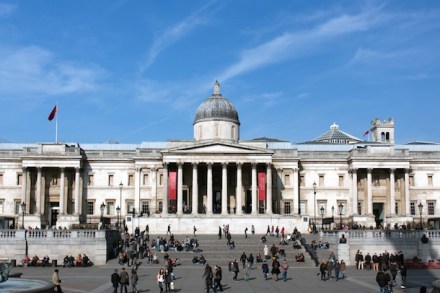
Nick Penny announced that he is stepping down as head of the National Gallery. Next door, at the National Portrait Gallery, Sandy Nairne also announced that he is leaving. Could he be after the job at the NG? Nick Penny’s predecessor, Charles Saumarez Smith, came from the NPG but his lack of knowledge about the NG collection is said to have led to an internal curatorial mutiny. Sandy Nairne could also be said to lack the knowledge of the collection necessary to do the job well.

John Deakin is no genius – and he has not been forgotten

From our UK edition

Every so often, John Deakin, jug-eared chronicler of Soho and hanger-on at the Colony Rooms, is breathlessly rediscovered as the unknown giant behind Bacon and the forgotten man from Soho’s  generation of genius. All that is so much tosh: Deakin is no genius and he has not been forgotten. In fact, he can never be forgotten, most importantly because Bacon commissioned photographs from Deakin that he used to make his paintings but also because Deakin himself was the subject of one of Freud’s greatest portraits (above) and because Deakin’s photographs capture Bohemian Soho in aspic for the mental tourist of the future.

The curator brain drain

From our UK edition

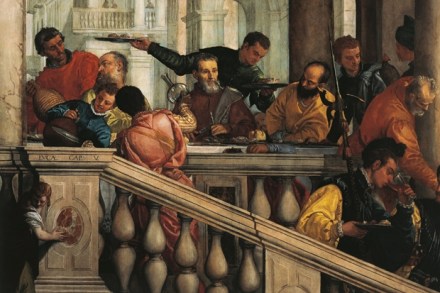
In 1857, the National Gallery’s pioneering director Sir Charles Eastlake bought one of Veronese’s most sumptuous paintings, ‘The Family of Darius before Alexander’. The purchase was met with strident and very personal opposition from a Tory, Lord Elcho, in the House of Commons, but his objections were swatted aside by Lord Palmerston and we were spared the irony of fighting to defend the Indian empire while rejecting the opportunity to buy the finest painted celebration of imperial conquest. ‘The Family of Darius before Alexander’ is the centrepiece of the first monographic show in this country dedicated to Veronese (until 15 June). This is the sort of triumphant exhibition that the National Gallery does so well.

Venice: A feast of great art

From our UK edition

Venice is a 10,000-carat jewel set by the greatest ever goldsmith pinned to the breast of the most beautiful woman to have lived. Built out of a need for security in the turbulent world of late antiquity, it was protected by the lagoon, which also gave it political stability, and with political stability came riches, conservatism and trade. The great longevity of the serene republic and the restricted space of the island made it a mishmash of styles and architectures. The exuberant frontage plastered along the canals gives the sensation of being immersed in a grandiose opera set. It is a fabulous and wonderful and totally pleasurable explosion of culture.

Eastern promise | 11 August 2012

From our UK edition

The Olympic Legacy List has less to do with the Olympics than its name suggests. True, it is responsible for the long-term cultural programme in the 618-acre Olympic Park but, as one insider put it, the real work begins when the circus leaves town. The word on every Olympic panjandrum’s or British politician’s lips is legacy. There’s a lot that’s disingenuous about this. If regenerating the East End were all that mattered, a direct investment of £9 billion into infrastructure would have done very nicely, thank you. Still, just because the money could have gone further if it had been invested differently doesn’t mean that we have to gnash our teeth too much.