Mark Greaves

Can Britain’s life sciences sector thrive after Brexit?

From our UK edition

The Spectator, in association with MSD, brought together MPs and representatives from Life Sciences on 20th March, to discuss the future of Life Sciences after Brexit. Can the UK life sciences sector thrive after Brexit and what needs to be done in order to ensure that it does? This is a report of the discussion which followed: Of all the industries that the Government has been keen to reassure since the Brexit vote, the life sciences sector comes out near the top. It’s no wonder: Britain is one of the best places in the world for life sciences, thanks in part to the five world-leading universities clustered around Oxford, Cambridge and London. It leads the way in emerging fields such as genomics.

Can technology make the NHS more efficient?

From our UK edition

As the Spectator held its inaugural health summit last week, the fraught issue of NHS funding was once again on the front pages. Jeremy Hunt, the Health Secretary, proposed a 10-year funding deal for the NHS. Two days later Theresa May announced there would be a 'long-term funding plan'. However, while a multibillion pound cash injection may help, this isn’t going to fix the bigger problem: that is, a rapid rise in demand for healthcare, in part because of an ageing population. So what else can be done? Can technology make the NHS more efficient? The summit’s keynote speech, by health minister Lord O’Shaughnessy, made the case for data as the potential saviour of the NHS. Its patient dataset is unique, he said, as it encompasses all citizens across their lifetime.

Is the NHS ready for artificial intelligence?

From our UK edition

Artificial intelligence is about to transform healthcare. The claim is not being made by excitable tech gurus from Silicon Valley but by medics. Machines, having been fed enormous amounts of data, are developing algorithms that detect disease from X-rays and tissue samples. This is, potentially at least, a much cheaper and more efficient way to diagnose patients. It has been predicted that it could ‘save the NHS’. In the field of genomics, too, AI is likely to have an enormous impact. The prospect is that, in the future, we could each have our genetic code on a chip that we scan in during a trip to the doctor, like a loyalty card at the supermarket. Its data would then inform our diagnosis or help determine our treatment. But then there’s the NHS.

Could cancer break the NHS?

From our UK edition

Could cancer break the NHS? This was the provocative title of a debate at the British Museum hosted by The Spectator and sponsored by Philips. Two of the expert panellists suggested that it just might. Others were more optimistic. But all seemed to agree that, for the NHS to survive, bold action was required. First, Neil Mesher, CEO of Philips UK and Ireland (UKI), presented some frightening statistics. One in two people will be diagnosed with cancer – a proportion that is rising because we are living longer. Greater awareness of cancer, too, means that more people are being referred for tests – so much so that the demand on diagnostic services is doubling every seven to 10 years. Investment in equipment and staff is in no way keeping up. Costs have risen too.

Is the NHS open to new technology?

From our UK edition

At a dinner on Tuesday 26th September at the Spectator’s offices, sponsored by Philips, entrepreneurs, doctors and healthcare experts discussed how new technology could ease pressure on the NHS – and whether the health service was equipped to take advantage of it. Guests included: Naushard Jabir, founder and CEO of Vida, Paul Bate, Director of NHS Services at Babylon, Professor Simon Wessely, President of the Royal Society of Medicine, Helen Whately MP, Dr Claire Novorol, chief medical officer at Ada, Neil Mesher, CEO of Philips UK and Ireland, Sola Adeleke of Aurora Medical Innovation, Nicholas Timmins, senior fellow at the King’s Fund and Dr Jakobsen, chief scientific officer of Immunocore and Adaptimmune. Fraser Nelson chaired the discussion.

Spectator debate: Can we trust health advice?

From our UK edition

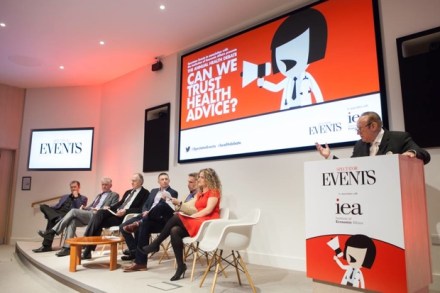
It was a close fight. Both sides at Tuesday night’s debate at IET London seemed to accept that trust in official health guidelines was running low. And, among the 200 or so members of the audience, that was certainly the case: a show of hands requested by the evening’s chair Andrew Neil at the start suggested most were ‘wary or distrustful’ about advice. The sceptics not only had the audience already on their side, but were offered a gift earlier in the day, when NICE showed how badly judged official advice can be — by choosing sun-starved February to stipulate that we should apply six to eight teaspoons of cream for every 30 minutes in the sunshine.

God’s new business plan

From our UK edition

[audioplayer src="http://rss.acast.com/viewfrom22/workingwithal-qa-eda/media.mp3" title="Mark Greaves discusses the Church of England's plans for growth" startat=1513] Listen [/audioplayer]A new mood has taken hold of Lambeth Palace. Officials call it urgency; critics say it is panic. The Church of England, the thinking goes, is about to shrink rapidly, even vanish in some areas, unless urgent action is taken. This action, laid out in a flurry of high-level reports, amounts to the biggest institutional shake-up since the 1990s. Red tape is to be cut, processes streamlined, resources optimised. Targets have been set. The Church is ill — and business management is going to cure it. Reformers say they are only removing obstacles that hinder the Church from growing.

Rise early to see the Vatican at its best

From our UK edition

The sun has only just risen in Rome and we are standing bleary-eyed in a short queue outside the Vatican. Our guide, Tonia, takes us through security, and within minutes we are in a nearly empty Sistine Chapel. In an hour it will be crammed with tourists — sweating, gawping, getting in each other’s way. Vatican officials will be shushing and clapping to quieten the chatter. Now, though, we are free to contemplate Michelangelo’s swirl of naked bodies in peace. Michelangelo claimed that he painted the ceiling entirely on his own. In fact, Tonia explains, he started off with 15 helpers, though he got rid of them all along the way. He ‘fought everyone’, she says. ‘On the one hand he was amazing but in human relationships, no.

The charity that could make you love social workers

From our UK edition

Is any public service more reviled than social work? Policemen, when not drinking with journalists, chase down baddies; firefighters save babies, and doctors cure diseases. Social workers, on the other hand, take away people’s children. They miss catastrophic abuse. In no news story are they ever -heroic. The perception of social work is unremittingly grim. It’s badly paid, box-ticking, mired in bureaucracy. Only go into it if you like being a martyr. Josh MacAlister, the chief executive of Frontline, wants people to imagine things differently. In a decade he thinks social work will be one of the main options for top graduates. At an Oxford careers fair, he suggests, students will be queueing up at the social work stand. Entry will be fiercely competitive.

Recycled graves – coming soon to a cemetery near you

From our UK edition

Two marble graves are side by side. One is grey and encrusted, with moss growing over the top. The other is smooth and shiny white. It looks new but, in fact, like the grave next to it, it’s more than 100 years old. It’s not just been cleaned — its top layer has been shaved off completely. On its front are potted plants, hydrangeas and a can of Guinness. These are tributes to its new resident. Its old resident, Robert John, died in 1894. His inscription is still there, on the back of the headstone. His remains are there, too, if they haven’t disappeared into the soil. John’s grave is among 700 or so that have been re-used, or ‘shared’, in the City of London Cemetery and Crematorium in east London. They are all at least 75 years old.

Seriously eccentric – Chaplin & Company by Mave Fellowes

From our UK edition

Chaplin & Company is an alarming proposition for anyone with a low threshold for the cute and quirky. Its main character, Odeline Milk, is a mime artist. She is serious and eccentric. In bed she lies on her back ‘as if she has been arranged this way and told not to move’. She wears brogues several sizes too big for her feet. When we meet her, she is moving into a canal boat in London. Her mother, with whom she lived in Arundel, West Sussex, has just died. Odeline does not dwell on this. Instead she is thinking about her new life. In London, she thinks, her artistic endeavours will be appreciated at last. Two things work to counteract any offensive cuteness. One is the sureness of the writing; the other is the comedy of Odeline herself. She is brilliantly snooty.

Two months as a monk

From our UK edition

Kieran Viljoen’s life sounds like a parable. Not long ago, back in South Africa, he spent his days in the depths of the ocean searching for diamonds. But for the past two months he has been living the life of a Benedictine monk. He is one of two interns at Quarr Abbey, a monastery on the Isle of Wight. The internship scheme, the first of its kind, is billed as an abridged gap-year experience: two months of living, praying and working alongside the monks. When I arrive, the scheme has just finished. Kieran, 23, and Michael Edwards, 26, from Liverpool, are leaving the next day. That evening the monks are treating them to a farewell dinner. ‘It could range from fancy dress to a hardcore dance party,’ jokes Kieran.

Interview with a writer: David Mitchell

From our UK edition

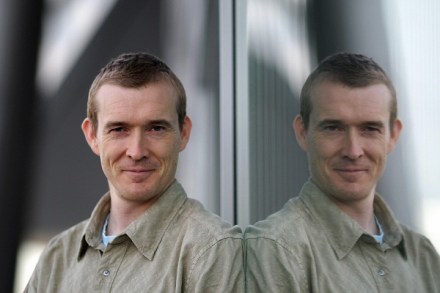
David Mitchell slaps a big hand on his head. ‘I look back at that kid and think, what were you thinking! How dare you, idiot!’ He is talking about his recklessness as a young writer. ‘Yeah I’ll stop it halfway, five times, and start it again. I’ll pretend I’m a Chinese woman living up a mountain.’ He compares it to being a teenager ‘leaping off a 12-foot wall’ without fear. As writers get older, he says, the recklessness subsides, and ‘it needs to be replaced by technique. If you can do that, you’re still in business.’ One of his most madly structured books, Cloud Atlas, has just been made into a film. That’s why we are meeting.

‘We rot. Don’t we?’

From our UK edition

Joanna Lumley and Sister Elizabeth Obbard are seated at the front of the church. Lumley is perched elegantly on the edge of her chair; Sister Elizabeth settles deep into hers, submerged under folds of habit. They are talking in front of an audience at the Carmelite church in Kensington, west London, about life as a nun. And Sister Elizabeth is being wonderfully honest. ‘The first six months were dreadful,’ she says. This was in the 1960s, when religious sisters did hard, physical work that was ‘supposed to make you humble’. Did it make her humble, asks Lumley. ‘No,’ says Sister Elizabeth, who is meek but steely. ‘It made me angry.

Spiritual athletics

From our UK edition

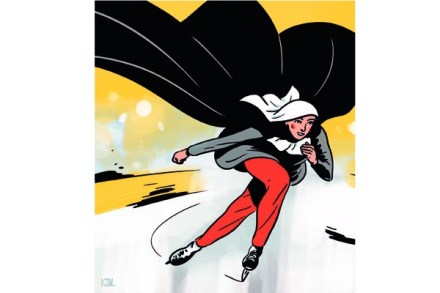
Sister Catherine Holum remembers her first Olympic speed-skating race very clearly. The crowd, she says, was very loud. Three men with television cameras knelt in front of her as she tied her skates up. She felt the whole world was watching. And when she had finished the race, she burst into tears. At the time — it was the 1998 Games in Nagano, Japan — she was only 17. She had come from an Olympic family: her mother was a gold medallist and a US star coach. Sister Catherine — or Kirstin, as she was then — was hyped up as a prodigy, destined for greatness. Then she retired. I meet her at a care home in north London, where she is staying briefly. She is a diminutive figure in a thick Franciscan habit. Her oval spectacles protrude under a smart black veil.

Read more, speak less

From our UK edition

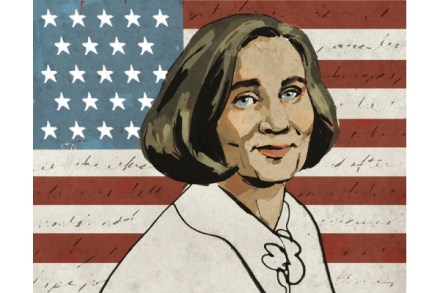
Marilynne Robinson, Obama’s favourite contemporary novelist, says we all have a duty to raise our intellectual game As a child Marilynne Robinson was enthralled by writing poetry. As an adult, she says, it has never been quite the same. ‘During a thunderstorm or something like that I would write some crazy poem and then hide it. It was wonderful.’ She hid the poetry under her mattress. ‘My mother would come in to change the sheets and all this poetry would fly out,’ she recalls. ‘She would say: “Why are you hiding your poetry?” I’ve never known why. But I’m still like that. I’m pretty secretive about anything I write.’ She says she’s two-thirds of the way through her fourth novel.

Let there be light | 20 August 2011

From our UK edition

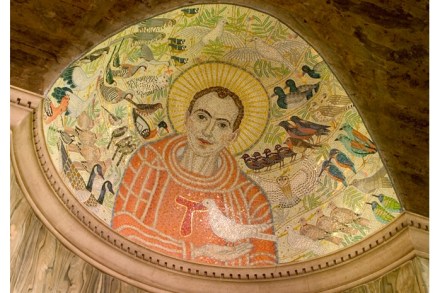
The bare brickwork of Westminster Cathedral’s ceiling was always meant to be covered in mosaic. Mark Greaves meets Tessa Hunkin, who will bring the project to life Three years ago, Tessa Hunkin was asked if she would like to undertake the biggest mosaic project since the Hagia Sophia. The project, which would probably take decades and cost tens of millions of pounds, was to decorate the ceiling of Westminster Cathedral. Monsignor Mark Langham, then cathedral administrator, told her, ‘We will have work for you for the rest of your life.’ The cathedral, built in 1903, was always meant to be covered in mosaic. The bare brickwork of its vast domes and vaults is not part of the design — it was just never finished. But momentum is building to change that.

Hand of destruction

From our UK edition

Mark Greaves talks to the artist Peter Howson about his latest commission and his demons Peter Howson started hallucinating last summer. Lying awake at night, he saw what he describes as ‘devils, demons and goblins’. They told him there was no point in living; that he might as well do away with himself. It was, he says, probably the worst year of his life. He felt as if he had been abandoned by God. At times he says he couldn’t really walk or see. He made himself feel better by reading the Book of Job — in which Job’s children die, his possessions are destroyed and his skin covered in boils as part of a test by God. I am anxious about meeting him in such a delicate state.