Digby Warde-Aldam

The Venice Biennale was just that bit worse than usual

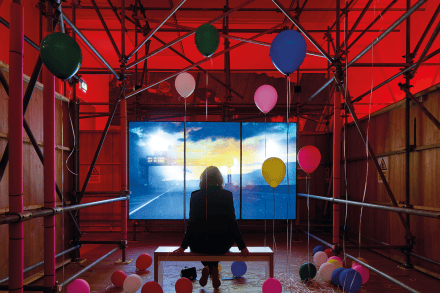
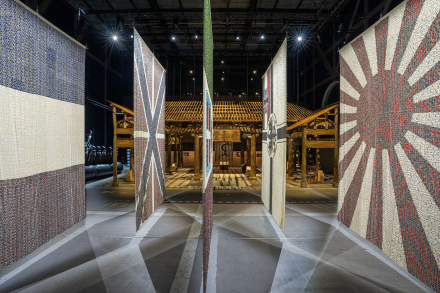
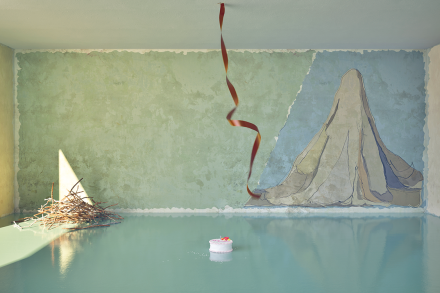
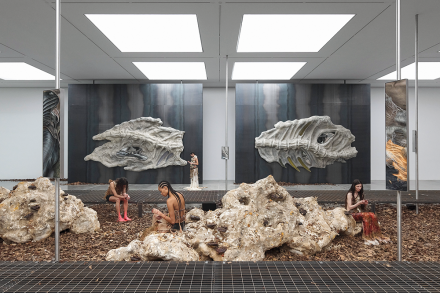
The 61st Venice Biennale arrived freighted with portent. To cut a long story short: Russia and Israel were invited to exhibit, and the prize jurors resigned in protest. Then, on preview day, the city was hit by a storm of biblical force. I sat in the Stansted Wetherspoons for hours, oblivious to the fact that the Ryanair ahead of mine was taking a pummelling that ultimately landed it on the wrong side of the Adriatic. ‘It was terrifying,’ a journalist colleague recounted. ‘And apparently, Bjork was on board, too.’ You’ll leave feeling that you’ve spent five hours trapped in the basement of Italy’s most patronising headshop The bad juju had set in last May when Koyo Kouoh, the programme’s curator, dropped dead aged 57.

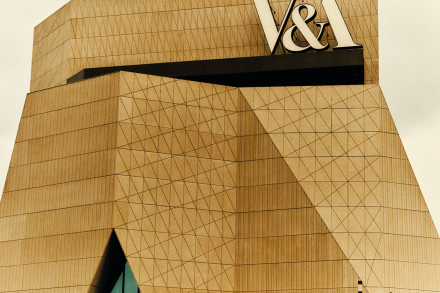
The weakness of the V&A East Museum

I’d just emerged from Stratford station when I realised it had been almost a decade to the day since I’d last been here. I thought back to a dismal morning press call in early 2016 to the mangy park landscaped as a visible legacy of the London Olympics. The collected hacks shivered as Mayor Johnson unveiled the latest of the development’s showpiece public sculptures, devoting much of his speech to boosterish predictions of the area’s imminent renaissance. ‘Really?’ I thought as I surveyed the spectral, vaguely Soviet townscape emerging from the mist. ‘In this shithole?’ Years hence, it appears that Boris, for once, wasn’t bluffing. The new-look Stratford resembles an idiot’s doodle of the Chicago skyline, novelty towers sprouting far into the distance.

Brooklyn’s answer to Nathan Barley has struck gold

I was on the way to Cecily Brown’s exhibition at the Serpentine last week when I heard that Kensington Gardens had been locked down. Word was that terrorist drones armed with ‘radioactive material’ were on course to blitz the Israeli embassy, presumably taking out a large part of west London with it. Scary though this was, it was also –  as far as I’m aware – a wholesale fiction: an elaborate psy-op some would-be jihadist had staged to convince us that, yes, it could happen here. That it didn’t, and probably couldn’t, was irrelevant; what struck me was the fact that the security services didn’t consider it wholly improbable.

In defence of museum charges

It occurs to me only now that I might have spent far too much time in France. Indeed, so familiar with Paris did I claim to be that, in 2023, I was contacted by an agency in need of someone who could conduct specialised ‘art tours’ for small groups of foreigners. Most of these clients were Americans, largely from the Midwest, but there was also a number of well-to-do Chinese and the odd Indian. They wanted much the same thing: they’d seen the Eiffel Tower and been ripped off on the Left Bank; they’d eaten at Lipp and some had even bussed out to grottier banlieues to get a real-life taste of La Haine. What they really wanted, however, was someone to hold their hand around the museums.

I miss post-internet art

I got my first paid writing gig back in the early 2010s, for an online magazine fixated on the then-current phenomenon we were already calling ‘post-internet art’. The journal was all but unreadable, its house style both po-mo and po-faced to the extent that contributors were obliged to adopt pseudonymous bylines. I went with ‘Screamin’ Jay Jopling’, which counted for a rare laugh. Yet the tone was very much in tune with the art we covered. Whether it was video, sculpture, photography or pretty much any other medium, it was chiefly concerned with the intrusion of digital technology into – the style guide’s punctuation, not mine – ‘real’ life.

Warhol meets Rauschenberg: John Giorno retrospective reviewed

At the end of last week, I caught a budget flight to Milan to see a woman. As soon as I arrived I was bundled into a Fiat Panda and sped southwards for Bologna’s annual art weekend, its events ranging from the reverential to the ridiculous. In the latter camp was MAMbo’s John Giorno retrospective, which – for Giorno is a bona fide hero – promised to be superb. It wasn’t, but a bad homage to Giorno is a homage to Giorno all the same. Born in Brooklyn in 1936, he joined the merchant navy as a young man and, on returning to New York, became both a highwire avant-garde poet and an acolyte of Andy Warhol, who filmed him sleeping for five hours straight and presented the result as mode-shifting cinema.

Does Tate’s director care about art?

I met the Tate’s outgoing director Maria Balshaw only once, back when she was in Manchester running both the Whitworth gallery and the city’s municipal art museum. She was given to management-speak and annoying soundbites – she more than once described herself as ‘feisty ’ – but she’d done a superlative job. She was charismatic and supremely competent – in theory, the perfect candidate for the soon-to-be-vacant Tate leadership. She got the job two years later, but the confrontational demeanour that had worked so well up north didn’t wash in London, where the phrase ‘can do’ routinely elicits the same retort: no, you can’t.

Why is divorce so seldom addressed in art?

Two years ago I was flown to Reykjavik to interview the Icelandic performance artist Ragnar Kjartansson. It was a weird old trip, booked in at 48 hours’ notice, but Ragnar was consistently charming and generous. Indeed, the only slightly touchy moment came when I asked him about his 2012 video installation The Visitors, a berserk undertaking split across nine screens, in which the artist and an entourage of musician friends spend 52 minutes chanting the baleful refrain from a song written by his then recent ex-wife. The artist tensed up as he considered the question. ‘Shit, I gotta go,’ he said. He probably did, but his reticence might also have had something to do with the fact that the work was possibly conceived as a cathartic means of putting his first marriage behind him.

London’s stupidest gallery

Everyone loves a private view, and I am no exception. I don’t know how many hours I must have spent trudging around central London’s art galleries in search of warm white wine – my social life doesn’t extend much beyond the confines of that circuit to be honest. Lately, however, I’ve been to some dreadful things; shows that seem to exist purely in order to enable their ritzy opening galas. I suppose I have only myself to blame for turning up to an evening at London’s stupidest gallery last week, but it was truly horrible: a party thrown for a scenester artist who turned DJ for the night, spinning butchered mash-ups of 1980s club hits to a scrum of pouting influencers. As for the art: suffice to say I’m not giving anyone the dignity of a namecheck.

The best artist alive? Probably

Taking place every October in Regent’s Park, the Frieze fair is probably the biggest event in London’s art calendar. It is also, as a spectacle, by far the least enjoyable. With works crammed into cubicle-sized booths, and punters battling a crossfire of air kisses and the palpable stress ricocheting around the flimsy partitions, I struggle to think of a worse context in which to look at art of any stripe. Still, it always used to be an occasion to take the pulse of the contemporary art world, to pick out the visual signatures of the reigning avant-garde tendency and clock what Jeremy Deller was doing with his facial hair at any given moment. This year’s iteration proposed no such insights.

The best Turner Prize in years

So, the Turner Prize: where do we start? It’s Britain’s most prestigious art award, one that used to mean something and now attracts little more than indifference. Taking place every year, it grants £25,000 to a winner chosen from four shortlisted artists, all of whom are obliged to display work together either at Tate Britain, or at a regional gallery. The latest iteration, at Bradford’s Cartwright Hall, is the best in a while – but before we get to that, some context. The Turner was established in 1984, but only really grabbed anyone’s attention when Channel 4 began televising the prize-giving ceremony in the 1990s.

I’ve had it with Anselm Kiefer

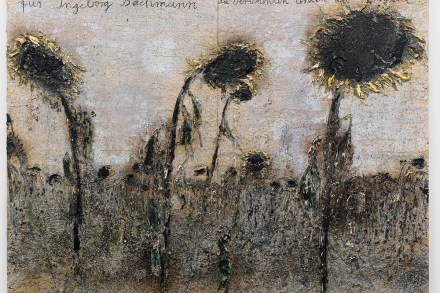
August is always a crap month for exhibitions in London. The collectors are elsewhere, the dealers are presumably hot on their heels, and the galleries are filled with makeweight group shows staged to hold the fort until the end of the holidays. This year, however, even events of that kind are thin on the ground: many establishments have simply shuttered for the month – and given the dire state of the art market, I’m inclined to wonder how many will reopen come September. The doom-auguring sunflower paintings here would look great on the cover of a Metallica record Still, I caught the two Anselm Kiefer shows running concurrently.

Beguiling grot, TfL surrealism and Insta-art: contemporary art roundup

Last month, I got the train down to Margate to interview the Egyptian-Armenian artist Anna Boghiguian (b. 1946), whose exhibition The Sunken Boat: A glimpse into past histories was about to open at the Turner Contemporary. Long story short, the conversation did not go well: Anna reacted to my questions with some irritation, swatting them away like low-flying bluebottles. I got flustered, she got bored, and eventually so did I. We wrapped things up around the 20-minute mark and I ran away to stare into the abyss. It was a shame, because the show was, for the most part, really good.

London’s best contemporary art show is in Penge

If you’ve been reading the more excitable pages of the arts press lately, you might be aware that the London gallery scene is having one of its periodic ‘moments’. A fair few spaces, mostly concentrated around Fitzrovia, have sprouted up since the pandemic, notable for their bacchanalian openings and tantalisingly gnomic Instagram posts. Their online presence is at best spectral: the most hyped of the bunch, a Smithfield gallery called Ginny on Frederick, has a holding page in place of a website. Still, I like a scene, and London Gallery Weekend, an annual June event, presented a good opportunity to investigate. Niso gallery, on New Cavendish Street, has put on a seductive showing of the Argentinian conceptualist Martina Quesada (open until 28 June).

Decent redesign, ravishing rehang: the new-look National Gallery reviewed

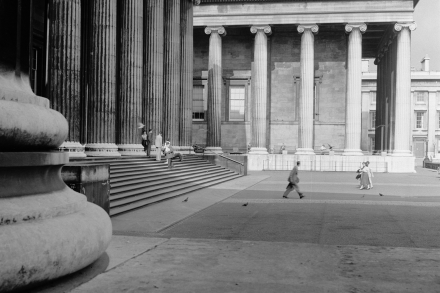
A little under a year ago, it emerged that builders working on the redevelopment of the National Gallery’s Sainsbury Wing had discovered an unusual time capsule embedded in a pillar they had been instructed to knock down. It contained a letter signed by Sir John Sainsbury, who, along with his brothers, had thrown the museum a £50 million lifeline to realise the extension in 1990; and clearly, he wasn’t happy with the way his money was being spent. He expressed this with no small amount of elegance: ‘If you have found this note,’ his missive read, ‘you must be engaged in demolishing one of the false columns that have been placed in the foyer of the Sainsbury Wing of the National Gallery.

The polarising poet, sculptor and ‘avant-gardener’ who maintained a private militia

Not many artists engage in the maintenance of a private militia, and it seems fair to assume that those who do may be bound to polarise. The Scottish poet, sculptor, ‘avant-gardener’ and would-be revolutionary Ian Hamilton Finlay was just such a figure: and boy, did he polarise. To his fans, he is a cult figure in the true sense, a limitlessly inventive visionary whose Lanarkshire home and garden remain a site of pilgrimage. To his detractors – notably, a number of vocal Finlay-bashers in the English press – he was a crank, a provincial megalomaniac possessed of artistic, literary and dictatorial pretensions quite out of proportion to his ability.

A blast: Leigh Bowery!, at Tate Modern, reviewed

Tate Modern’s latest exhibition is a bizarre proposition on so many levels. Its subject, the Australian designer, performer, provocateur and club scenester Leigh Bowery, was by all accounts inescapable in London for much of the 1980s and early 1990s. Standing at well over 6ft and weighing 17st, he would have been a conspicuous presence on the capital’s streets even had he not adopted the berserk sci-fi drag attire that became his signature aesthetic. He appeared on TV, at Sadler’s Wells and in a ponderous suite of portraits by Lucian Freud. His life could be read as a kind of Gesamtkunstwerk, but he was not an artist in any conventional sense and there’s no explicit evidence here to suggest he ever identified as such.

We’ve got Francis Bacon all wrong

You have to hand it to the curators of this excellent survey of Francis Bacon’s portraits. Not only have they alighted at an obvious but under-explored vantage point from which to reconsider this most mythologised of postwar painters, securing some serious loans to make their point, they have also dared to open their show with what might be the single worst picture it contains. ‘Self Portrait’ (1987) speaks of everything that Bacon got wrong in his final decades: it’s recognisably the 78-year-old artist, dressing up as a younger version of himself.

The mesmerising Olympic posters designed by the likes of Warhol and Whiteread

You could be forgiven for assuming that the citizens of Paris weren’t exactly bursting with joy at the prospect of this summer’s Olympic Games. They’re annoyed at everything: road closures, public transport price hikes and – would you believe it? – the prospect of their country being taken over by extremist cranks before the month is out.  Bref, or indifference towards the Games is the prevailing attitude – and should you need (flimsy, anecdotal) evidence, I offer you the fact that when I visited an exhibition devoted to the Olympics the day before the first round of voting in the election last week, I had the space entirely to myself. Beyond a single wall down by the Seine, you won’t see the artist posters displayed much around Paris It was a shame.

Meet the musicians trying to revive French-language pop 

The other day, I went to see a nouveau riot-girl band called Claire Dance play in a disused factory in Bagnolet on the edge of Paris. They were great: the kind of sonic kick in the nuts I’d been waiting more than a decade for an all-female band to deliver. I half-wondered whether it was just my own imperfect command of French that left me clueless as to their message. ‘C’était tout een eenglish,’ came the response from the guitarist afterwards. How come they never considered accompanying such emotionally charged music with lyrics in their mother tongue? ‘It’s considered cringe,’ she replied. ‘We only like English music.