Jane Rye

Ceramic art has been undervalued for too long

From our UK edition

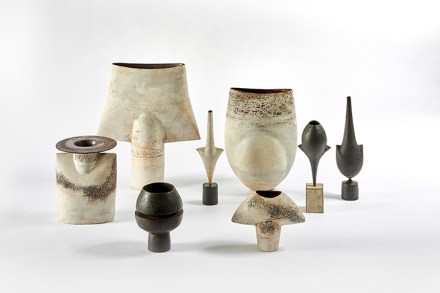
The use of ‘Ceramic’ rather than ‘Ceramics’ in the title of this book indicates Paul Greenhalgh’s passionate belief that ‘ceramic is a thing in itself: a many-headed but nevertheless singular entity, with an on-going intellectual discourse’ which he christens ‘the ceramic continuum’. He believes that this has been ‘actively denied its place as an artistic practice’ and that ‘its exclusion from the canon of art history is squarely to do with money, class and race’. The book is a prodigious attempt to right that wrong.
A true original

From our UK edition

Leonora Carrington was strikingly beautiful with ‘the personality of a headstrong and hypersensitive horse’ (according to her friend and patron Edward James); and she fled from her family, renouncing a life of privilege and ease to pursue her calling as an artist. Joanna Moorhead deplores the fact that she is ‘not much more than a footnote in art history’. But she has long been a legendary figure (among recent devotees, apparently, Madonna and Björk); in Mexico, where she lived and worked for most of her life, she is a national treasure; and for the feminist she is a heroine and her art ‘a modern woman’s codex’.

Patrick George: painting some of his best work at 91

From our UK edition

‘If I see something I like I wish to tell someone else; this… is why I paint.’ Patrick George is 91, still painting ‘some of the best work he’s ever done’, in Andrew Lambirth’s view. ‘His principal aim is to point out, to those of us less well-trained to observe, how marvellous the appearance of things is, and he does this through exquisite landscapes, figure and still-life paintings, of unassuming but stringent beauty.’ After four years in the Navy (he commanded a landing craft in the D-Day landings) George went to Camberwell art school where he imbibed the strict measuring technique associated with William Coldstream, which he has continued to use — though not exclusively — throughout his career.

The mad, mum-fixated maiden aunt of modernism

From our UK edition

Marianne Moore’s poems are notoriously ‘difficult’ but her personality and the circumstances of her life are as fascinating today as they were to the avant-garde writers and artists of 1920s New York. Much of the fascination lies in the contrast between what Linda Leavell calls Moore’s ‘maiden-aunt persona’ and her position as a ground-breaking modernist, whose highly idiosyncratic verse and technical experimentation dazzled and baffled her contemporaries.

Paul Nash, by Andrew Causey – review

From our UK edition

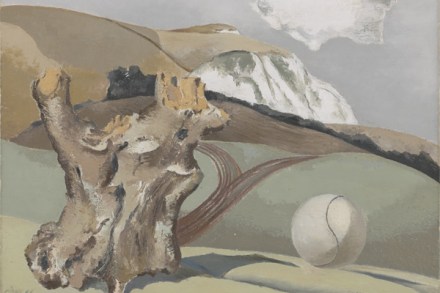
Andrew Causey opens his book on a slightly defensive note: Paul Nash, he says is often identified as Britain’s outstanding 20th-century landscape painter, as if painting the natural scene was the only thing he did, or landscape art as a genre is entirely separable from others, such as portraiture or history painting. It is unexpected to find that at least among art historians the idea of landscape painting as a lesser genre still lingers.

The Undelivered Mardle: A Memoir of Belief, Doubt and Delight, by John Rogers — review

From our UK edition

This ‘wry soliloquy’, as Ronald Blythe calls The Undelivered Mardle in his introduction, is quite unlike anything else, although its ostensible subject, the history of a small Suffolk farmyard church and its parish (accompanied by three excellent maps) might suggest otherwise. Asked to give a talk or ‘mardle’ to raise money for the priory church at Letheringham, and having established that he might ‘question the sense of preserving such relics’, John Rogers paid a series of meditative visits over several months. On the day he was to deliver the mardle he had a heart attack; afterwards, ‘feeling rather feeble’ and aware that as a public speaker he was ‘unpredictable’, he decided to write it down instead.

Tormented talent

From our UK edition

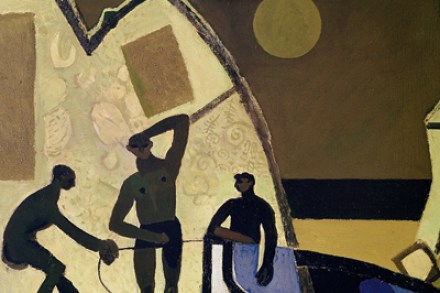
We know a great deal about Keith Vaughan both as a painter and as a man, from the journals he kept between 1939 until his death in 1977. They have been described as ‘one of the greatest pieces of confessional writing of the 20th century’, and provide a fascinating record of an artist’s thoughts and working habits, and of the technical and philosophical problems facing a painter (particularly a figurative painter, and more particularly a homosexual figurative painter whose primary subject was the male nude, individually and in groups) in the 1950s and ’60s.

Lust for life | 3 December 2011

From our UK edition

Seduced by the hayseed hair and the Yorkshire accent it’s tempting to see the young David Hockney as the Freddie Flintoff of the painting world: lovable, simple, brilliant, undoubtedly a hero, and delightfully free of angst. In this enjoyable book, which sets out to to ‘conjure up the man he is and in doing so to put his paintings and drawings in the context of his extraordinary life’, Christopher Simon Sykes provides us, naturally, with a more complex story. Hockney is a hero if course — not least to homosexuals, for blazing a stylish and courageous trail to emancipation in the 1960s, and more recently to beleaguered smokers in his stand against politically correct bullying.

Strategies for survival

From our UK edition

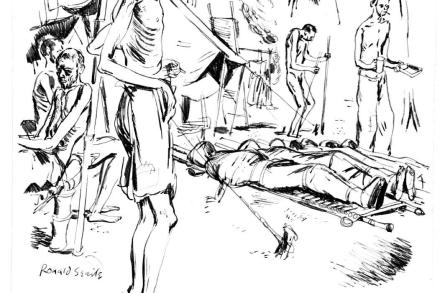
This is an account of the multiplicity of ways in which men ‘stole back time from their captors through creativity’ in the prisoner-of-war camps of Europe and the Far East. This is an account of the multiplicity of ways in which men ‘stole back time from their captors through creativity’ in the prisoner-of-war camps of Europe and the Far East.

Champagne on dirty floorboards

From our UK edition

Jane Rye on William Feaver's biography of Lucien Freud Lucian Freud describes his paintings as largely autobiographical, which seems to imply some sort of readiness to expose his private life to the public gaze; but he does so on his own terms and is notoriously reluctant to let anyone else poke about in it. At the end of Lawrence Gowing’s 1982 monograph the author quotes Freud as saying ‘there is another reason for not writing about my life. IT IS STILL GOING ON’. William Feaver, it appears, is his licensed Boswell: recording conversations, taking photograhs of the reluctant artist, staying on for lunch.

How others see us

From our UK edition

Exhibitions 2: British Vision: Observation and Imagination in British Art 1750–1950 This stunning, and constantly surprising, exhibition is the brainchild, or love child even, of the Flemish art historian Robert Hoozee, author of the first Constable catalogue raisonné and director of the Museum of Fine Art in Ghent. He regrets that ‘British art is still a well-kept secret on the European mainland’ — or as Timothy Hyman (with John Gage one of two specialist British advisers) puts it, ‘the least explored wing of the European treasure house’.

The measure of the man

From our UK edition

Euan Uglow: The Complete Paintings Catalogue raisonné by Catherine Lampert; Essays by Richard Kendall and Catherine Lampert Whether we know it or not ‘we crave the inexpressive in art’, Bernard Berenson wrote, as an antidote to the sensationalism of ‘the representational arts most alive, the cinema and the illustrated press’. He was writing about Euan Uglow’s great hero Piero della Francesca in an essay called The Ineloquent in Art, which came out in 1954, the year Uglow left the Slade, and made a deep impression on him: ‘There’s something about the title — the fact that there’s more force in controlled passion than in exuberant passion. That’s the idea I like. I like it slowly to creep out on you.

The Painters’ Painter

From our UK edition

‘Give me the cheque, you look like a decaying oyster’ — thus Roger Hilton accepting the John Moores First Prize in 1963, at the height of his career. At the dinner afterwards, very drunk, he was so rude to an alderman sitting next to him that the poor man had a heart attack and died at the table. It beats Tracey Emin’s ‘I want my mum’ by a country mile, and, although for British artists in recent years the reverse may have seemed to be the case, Andrew Lambirth believes that Hilton’s standing as a painter has been affected by such outrageous episodes, there being ‘a lingering belief in the art establishment in Britain that no artist who could behave so badly could actually be the real thing as a painter’.

Nevertheless, the real thing

From our UK edition

It’s difficult not to warm to Mad Tracey from Margate (‘I like Tracey ... I landed on my feet with that name’), the inventor of the Rothko Comfort Blanket for Private Views, however reluctant one may be to have one’s nose rubbed in other people’s bodily fluids and spiritual excretions. She famously staggered out of a solemn television debate saying, ‘I want my mum’, and loves her old Nan so much (as she memorably describes in one of the conversations recorded here) that when Nan dies she visits her in the funeral parlour to pluck her whiskers and do her nails as she used to when she was alive, and gets locked in, to inexplicable strains of ‘The Sun has Got his Hat On’.

The brilliant and the damned

From our UK edition

It would be a mistake to assume that this account of the work of one of the 20th century’s most celebrated designers (a familiar name to many for his London Underground and Shell posters of the Twenties and Thirties) is a book to be bought chiefly for its illustrations, splendid though they are. The text is certainly scholarly, and there is talk of printing processes and type-faces, but it’s not just for the specialist. It is free from jargon and wide-ranging in its references to contemporary art and literature as well as to what you might call the cultural aspirations of the time: the anticipation of social revolution after the Great War, and the idealistic expectations of the part to be played in it by both art and mass-communication. Kauffer was a close friend of T. S.

Going to the country

From our UK edition

One and a half million children were evacuated from London and housed in the country in two days. The evacuee child with its gas mask round its neck and the luggage label so particularly distressing to modern sensibilities, is a familiar image, but perhaps more credit is due to the organisation of Operation Pied Piper which went into action on 1 September 1939. In the light of recent events in New Orleans it begins to seem a miracle of planning and execution. According to Jessica Mann’s preface to this reissue of Barbara Noble’s 1946 novel about the emotional consequences of evacuation, an Evacuation Sub-Committee was established as early as 1931, in anticipation of chaos. Newsreels of bombing in Manchuria, Abyssinia and later Guernica, had prepared people for the worst.

Pleasure without angst

From our UK edition

David Hockney is a conjuror who likes to explain his tricks, or, as one commentator put it, conducts ‘his education in public with a charming and endearing innocence’. This chunky picture-book brings the story right up to date with watercolours and portrait drawings made only a few months ago. It contains work from throughout Hockney’s career, but is arranged thematically rather than chronologically, according to the themes and subjects that have occupied him for almost five decades.

A fastidious disdain of poetry

From our UK edition

If William Coldstream (1909-87) was a dull painter, as he is sometimes thought to be, he was most certainly not a dull man. An artist who spent much of his life in a three-piece suit, an administrator with ‘an irresistible urge to turn a serious story into farce’, he was captivating in conversation, a natural entertainer whose slightly shrivelled charm reminded more than one person of Fred Astaire. Described by his friend W. H. Auden as one ‘whose tongue is the most malicious I know’, Coldstream was also self-effacing as a teacher, modest, inhibited, given to depression and nervous breakdown, intimidating to some, fascinating, kindly.

From education to catastrophe

From our UK edition

‘I do feel the strongest urge to talk,’ confides the narrator when a chance meeting with the beautiful Olivia after more than 30 years brings back disturbing memories of what she tells us is ‘a terrible story’. The encounter takes place in Bordeaux where Kate, American, is sightseeing while her English husband attends a conference, and for reasons which we shall eventually learn it threatens to shatter her orderly life. What she wants is an impartial ‘stranger on a train’ to tell her story to, and we are it — sitting, in Kate’s imagination, in a warm carriage crossing the Russian steppes, waiting for the approach of the samovar and little sticky cakes.

A man who asked the right questions

From our UK edition

David Sylvester’s first ambition was to be a professional cricketer, and he possessed to the end that almost miraculous masculine capacity for total recall of notable prep-school innings ball by ball. Later he tried to be a painter, and then a jazz saxophonist. Later still, the cinema being another of his great passions, he worked with Stanley Kubrick on Lolita — but by this time he was well established as an art critic. He is perhaps most widely known for his invention of the term ‘Kitchen Sink School’ and for his interviews with Francis Bacon which became a source of inspiration for a whole generation of artists .