Spectator Life

Spectator Life

An intelligent mix of culture, style, travel, food and property, as well as where to go and what to see.

The independent schools crisis is only just beginning

Ever since the sudden and cruel imposition of VAT on independent school fees at the start of the year, much of the media focus has been on the number of school closures. The first to go have been prep schools and schools in rural areas far from London and the south-east. Trust me, this is really only the beginning. Savvy parents have always known a reduction in those shiny buildings won’t matter that much in the end Only a very small number of independent schools will be completely immune from the current financial pressures and – in the next couple of years – that will start to become increasingly obvious. While many might not close, there will be more mergers and acquisitions, and a scramble for schools to enjoy the benefits and protections of being part of a larger group.
The joy of school cricket

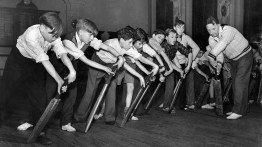
Few presidents can claim such an immediate success. At the end of June, I became president of my school’s alumni association and then, just five days later, the First XI won their first match at the annual Royal Grammar Schools’ Cricket Festival since 2017. A coincidence? Well, obviously. But I’d like to think that Colchester’s youth drew confidence from me having a net at the school field on Old Colcestrians’ Day and getting hit on the bonce by the first ball I faced from the sixty something head of Year 12. If this is how poorly the alumni play, they will have thought, we can’t be all that bad. I was never any good at cricket, much as I loved it. One presidential duty was to unveil a plaque on a new scoreboard.

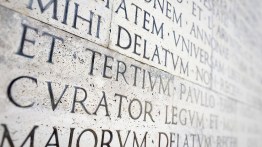
Vivat the Latin motto

In the strange, arcane world of school mottoes, it’s fitting that the most famous one of all belongs to a fictional school. Draco dormiens nunquam titillandus – ‘Never tickle a sleeping dragon’ – is the motto of the Hogwarts School of Witchcraft and Wizardry. J.K. Rowling brilliantly realised that children aren’t put off by boarding schools and the ancient rituals that go with them. They’re gripped by these peculiar places, their roots twisting back through the mists of time. And no school custom is as ancient or beguiling as the Latin motto. My motto, at Westminster School, was Dat deus incrementum – ‘God gives the increase’.

How boarding schools reinvented themselves

Early in his time at Eton College, 13-year-old William Waldegrave, the school’s future provost, was struggling to sleep. He told his dame, and she in turn told the housemaster, John ‘A.J.’ Marsden. The former commando in charge of the boys told Waldegrave that if it happened again, he should knock on his door. A few nights later, the boy did as he was told. Marsden had a solution – they would go for a run, to Bray, seven miles from Eton. Waldegrave slept better that night. Tales of public schools past are legion – some better than fiction, and plenty that have inspired it. Others are less appealing, more appalling. In recent years, memoirs depicting the misery of former boarders’ experiences at school have told tales of neglect and criminality.

School portraits: snapshots of four notable schools

Lancing College, West Sussex Lancing is a public boarding school for children aged 13 to 18 in West Sussex. Set within the South Downs National Park, it offers an open-air theatre, a state-of-the-art music school, an equestrian centre and even the tallest school chapel in the world. As impressive as its facilities, though, are its alumni: Evelyn Waugh, Sir David Hare and Lord (Stephen) Green to name but a few. Nowadays, many students at the college – where fees start from £12,602 – come from its sister preparatory schools in Hove and Worthing. Also arriving this month is a new headteacher, Dr Scott Crawford, who will replace Dominic Oliver after 11 years.

The school tie renaissance

In the street across the road from my third-year Christ Church room, sat a pub called The Bear. It marketed itself as Oxford’s oldest inn – as so many of the city’s hostelries do – but it is most famous for its tie collection. More than 4,500 are on display, enclosed in cases around the walls. The collection began in 1952, when the landlord offered half a pint to anyone who would let him snip off a tie end. To qualify, the ties had to indicate membership of some institution: a club, college, regiment, sports team or school. Over the decades, a cornucopia of colours, stripes and logos has been collected. Inspector Morse once enlisted the landlord’s help in identifying one. The collection is now listed and cannot be altered or added to. I’m rather glad.

Why do people feel sorry for me for going to boarding school aged nine?

Sometimes, when I’m chatting about childhood, at some point it will become clear I went to a boarding school from the age of nine. Reactions can be comical. ‘You poor thing!’ an interlocutor might gasp, gripping my forearm, no doubt picturing cold showers and cruelty. I’ve always responded with bemusement, since my experience largely featured comfort and crumpets. I loved my prep school – Dorset House in West Sussex. It was a world in itself, enclosed and beguiling. In some ways it was unchanging, such as the graffitied Latin primers which were the same our grandparents had used. Yet it could be surprisingly forward-looking, as when it made a satellite link-up to a school in America, many years before the internet.

Is God a Thatcherite?

Autumn: surely one of the most beautiful words in the language. All the other seasons are expressive, almost even onomatopoeic, worthy of being serenaded by Vivaldi, but autumn has a gentle resonance. Mists and mellow fruitfulness, not to mention the grouse season. School and university accustomed most of us to think of the year beginning at the Michaelmas term rather than in January. This is reinforced now that parliament is back – though with Sir Stumbler in charge, it is more a matter of fogs and sour fruitlessness. That brings up memories of a different era, one which was immensely fruitful though never mellow. The 100th anniversary of Margaret Thatcher’s birth is approaching. I was having dinner with my old friend John O’Sullivan and of course we talked of the Lady.

Whatever happened to chicken à la king?

As sure as eggs is eggs, what was once comfort food will be reinvented as fine dining. Lancashire hotpots will be turned fancy, served with teapots of lamb jus. Fish and chips will become canapés, spritzed with atomisers filled with malt vinegar. French onion soup will be served in teeny-tiny shots; Scotch eggs gussied beyond recognition. I once ate a (large and unwieldy) single bite of shepherd’s pie from a Chinese soup spoon at a posh party. Chefs just can’t resist the joke. Chicken à la king – chicken braised in a cream sauce with onions, mushroom and peppers – has gone in the opposite direction, from fine dining to comfort food.

Why is French hospital food so bad?

This summer has been the hottest on record where I live in Burgundy. It could have been disastrous for the grapes as temperatures reached nearly 40°C. Luckily, most of the vineyards in the Côte d’Or were able to move les vendanges to mid-August instead of early September, when they were expecting to harvest. Apparently, it will be a good year nevertheless. I moved to the little village of Meursault eight years ago in October, to help with grandchildren. My daughter Annabelle works for Domaine Roulot and her husband is winemaker for Domaine de Montille. They were busy harvesting the grapes that autumn. Not any more – most vignerons here, and probably elsewhere in France, think cooler summers will never return.

Why the young worship folk horror

Built in the 1840s, St Giles’s Church in Camberwell bills itself as south-east London’s ‘most stunning Neo-Gothic performance venue’. A niche category, admittedly, but when it comes to hosting events, it’s certainly a broad church. Downstairs, the crypt serves as one of south London’s best jazz clubs. Upstairs, in between services, weddings and funerals, the pews often double as cinema seats, with a film screen erected in the chancel. Jesus Christ Superstar, perhaps? Conclave maybe, with a trigger warning about papal scheming? Far from it. The latest offering was the 1973 horror classic The Wicker Man, all about the remote Scottish island that rejects God’s message.

The Stuarts were our worst monarchs

This year marked the 400th anniversary of the death of King James I of England (James VI in Scotland), the first monarch of the generally disastrous Stuart dynasty. By no means forgotten by historians, the anniversary was marked by no fewer than three heavyweight biographies, and headlines devoted to the King in the Times and the Telegraph. James’s son Charles I lost both a civil war and his head; his grandson Charles II presided over the plague, the Great Fire of London, and saw his fleet towed away by the Dutch; his second grandson James II lost the throne entirely and fled into exile. But in spite of this dismal record, of all the Stuart sovereigns, the first James was easily the worst and most disgusting monarch ever to have occupied the throne.

It’s impossible to escape the cult of Ikea

Visiting Ikea is one of life’s inevitabilities. There’s an Ikea on every inhabited continent, 487 across 63 countries. But Ikea is more than a furniture retailer. Ikea is an idea, an abstraction, a way of life. No other shop has captured the hearts and minds of the public in quite the same way, at least not in the UK. Argos is a fate worse than purgatory; Woolworths has gone to the great retailer in the sky; John Lewis is for the Chelsea tractor drivers among us; WH Smith is only bearable when you’re at an airport, and their drinks taste like they’ve been stored in lukewarm bathwater; and Curry’s is selling AI fridges (I don’t want an AI fridge, thank you – I’ve seen 2001: A Space Odyssey; I know how this ends.

The rise of the godless godparent

I realised that the whole thing had become absurd when I was squeezed in by a female vicar for photos around the font of an Anglican church. There we were, all six godparents grinning back at the camera as the baby was held aloft (screaming) by its proud parents. But out of the six godparents assembled, only two of us had been baptised and confirmed in the Christian faith, leaving four godparents out. Not really godparents at all, then. Witnesses or mentors perhaps, but not godparents. In our increasingly secular age, the distinction bears recognising. If you don’t believe in God, this isn’t going to work.

Why September feels like the true new year

Gardens are past their best, large spiders are appearing indoors, chill mornings herald coming mists, the days are not so long, and adverts have replaced barbecues with ‘back to school’ offers. Elderberries have turned a purple that fades into black, and soon will drop and stain the ground. The daily commute remains relatively quiet for another few days but summer, and the summer holidays, are coming to an end. For many of us, September feels more like a new year than January, long after our days of school and study. The cold days of January are much like each other; but at the end of August there is a palpable sense of change. Excitement and melancholy marry. Which one dominates probably depends on how happy you were at school or university.

No England flags, please – we’re Cornish

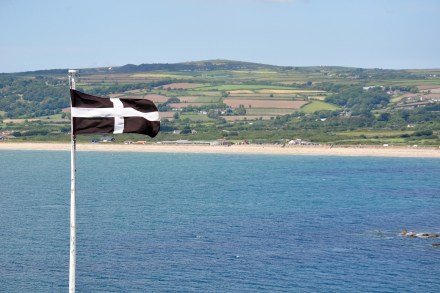
There’s been a lot of talk recently about flags, especially English ones. The start of the Women's Rugby World Cup – a good excuse to bring out the bunting – has coincided with a renewed interest in proclaiming national identity. Some might see it as an outpouring of patriotic pride, while others view it as a far-right provocation. But whether it's ‘Operation Raise the Colours’ or roundabouts painted red and white (although some bright spark in Birmingham managed to paint a Danish flag by mistake), if the sight of a cross of St George sends you into a panic, I have a suggestion: head to Cornwall. If my recent experience is anything to go by, you’ll be lucky to see a single English flag.

The Mediterranean summer holiday is broken

For more than 60 years it has been an annual fixture for thousands of us, a birthright enjoyed and embraced by the children of modern, pleasure-seeking, throw-away Britain. Precisely when it happened, I couldn’t say, but at some point in the 1950s or 1960s, the trains radiating from the metropolis to the coastal resorts of Clacton-on-Sea, Southend-on-Sea, Bournemouth, Frinton, Brighton and beyond stopped heaving with Londoners. In their place a whole series of new, hitherto unfamiliar resorts zoomed into the national consciousness, heralded by the tang of aviation fuel and the promise of neverending heat and chilled cerveza.

In defence of voice notes

From emails to ‘breaking news’ alerts to texts, our phones come under a bombardment of notifications these days. But there’s one kind that always brightens my day – the one that tells me that a friend has sent me a voice note. This, however, seems to make me unusual. ‘I don't want to hear your mini-podcast,’ complains Emma Brockes in the Guardian; voice notes are ‘self-indulgent’, sniffs Anniki Sommerville in the i Paper; and the Independent's Lucie Tobin denounces them as ‘rude’ and ‘invasive’. In the latest issue of The Spectator, Mary Killen advises a correspondent who’s had enough of them to update their WhatsApp profile ‘to clarify their tastes… “please do not leave voice notes”’.

The sorry state of France’s churches

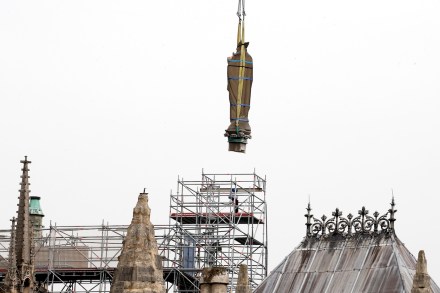
There’s something unsettling about a statue with its head lobbed off. Sure, it’s just a piece of stone. But it represents something. There are headless statues in churches all over France, statues of bishops, martyrs, saints. It’s not surprising those statues came out of the French revolution badly; the church and its clerics weren’t popular. But the revolution was nearly 250 years ago. How come the heads haven’t been put back on? It seems lax of the church authorities, to say the least. After all, the church in France is often referred to as fille aînée de l’Église, the ‘eldest daughter of the Church’. Its roots go back to the Apostolic Age when Jesus’s earliest disciples landed in Gaul.

What’s better than boozing on planes?

It is still the case on transatlantic flights that a drinks trolley comes to even the farthest reaches of Economy. If you’re lucky, the gay man or imposing Essex girl wheeling it will, with a wink and a smile, palmed you over an extra mini bottle of gin or a wine for the meal. They can tell who will be a good, and who a bad, plane drinker.  I like to think of myself as the former. I am not someone who drinks to get drunk. Yet that initial buzz from a lemony Bombay Sapphire and Fever Tree glugged through ice is hard to beat. It’s an empowering, controlled, merrymaking high. In the wrong person, this buzz causes unwanted chattiness, but in my case it makes me sit back in my cramped seat and think pulsing, magisterial thoughts about the wonders of modern life.

Four bets for the weekend

It’s always pleasing when the good guys do well in any aspect of life and in the racing world one man who is definitely falls into that category is Lambourn handler Jonny Portman. A friend of mine, who was a house guest at the trainer’s home for just one night a few years ago, observed Portman’s dedication to his horses. At dinner, the host’s chair was vacant for much of the evening as he made a last tour of his 45-strong string, presumably doing the equivalent of tucking his horses up in bed and reading them a bedtime story. Early the next morning, Portman took my friend on to the gallops and talked through the characteristics and quirks of all of his horses as if they were his children. Just to be clear though, Portman is a devoted family man as well as a talented trainer.

Taylor Swift is saving America

Elon Musk and Taylor Swift fans rejoice! America’s birthrate is saved! News of the engagement between America’s reigning sweetheart, Taylor Swift, and jock, Travis Kelce, can mean only one thing: a millennial marriage boom is upon us. And with it, natalists will hope, an impending baby boom. I’m no Swiftie. Nor am I one of those men who’s organised his entire political identity around hating the singer. Still, I can’t deny that I feel uplifted by the jubilation erupting across the US and beyond this week. Why? Because Taylor and Travis are taking a stand against pessimism. America’s permanently heartbroken oldest daughter has escaped her fate (for now). These are people taking the leap! Committing to something! How exciting is that?

My gastronomic tour de France

On holiday in the Dordogne, I face an annual dilemma. My weekly Any Other Business column ruminates on the financial world with occasional restaurant tips to lighten the tone – and many readers tell me they frankly prefer the menus du jour to the boardroom dramas. My difficulty is that in a single page of The Spectator there’s never space to do justice to both. Last week, I ended up cramming seven restaurants into one short paragraph, a paltry snack where I’d like to have offered a banquet. So here’s my 2025 tour de France, as I called it, at somewhat fuller length, perhaps one of these days to be super-sized into an entire guidebook. This set of recommendations, I should explain, come mostly from British readers and friends in other parts of France.

Man Utd vs Grimsby is what football should be about

Poor old Ruben Amorim. The sight of the hapless Manchester United manager cowering in the Blundell Park dugout seemingly praying that his billion-pound team could somehow scrape through on penalties against fourth-tier Grimsby in the Carabao Cup last night is now indelible. Perhaps only the tear drenched face of Rachel Reeves cowering in her own dugout in the House of Commons will compete this year for visual power. As you are probably aware, Amorim’s invocations were to no avail: after a marathon penalty shoot-out United lost. Though it wasn’t just Grimsby but football as a whole that was the winner.

A fictional Edwardian waif’s hungry fantasy: Fortnum & Mason’s food hall reviewed

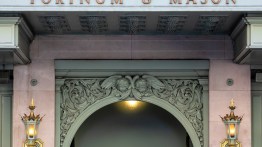
I like a picnic weighted with history and class terror, which means Fortnum & Mason on Piccadilly, which is historical re-enactment with dreaming. I have written about this for years or tried to: food is never just food, only fools say that. You can learn almost everything about people from the food they want. And here is St Narcissus in the form of a department store that works more powerfully as an idea than a mere shop, though it is a very effective shop. Fortnum’s sells a Great Britain that never was, designed for people who no longer exist, if they ever did. It has much to say to Brexiteers and worse, though in biscuit.

Being a jockey is a tough ride

It has been quite some year for jockey-churning, the latest example being the mid-season decision by owner-breeder Imad Al Sagar to drop Hollie Doyle as his retained rider. ‘A change of strategy,’ said racing manager Teddy Grimthorpe after Hollie’s 38 winners for the partnership including three Group 1s on Nashwa. It was nevertheless an eyebrow-raiser since the chosen replacement for Hollie, the rider of more than 1,000 winners including the first Classic success for a woman, is champion jockey Oisin Murphy. Oisin of course is one of the best riders in the world, as good at his post-race reporting and analysis as he is in the saddle, but his availability is the question. He already has retainers with Qatar Racing and Prince Faisal which will take priority.

Good riddance to the traditional sports bar

They used to be places that reeked of testosterone, sweat and male egos, their floors sticky with lager spilled by big boys with big biceps. Well, that’s all changing. As the Women’s Rugby World Cup powers through its early stages, the latest spin-off from the rise and rise of women’s sport is women’s sports bars. As such innovations tend to, this one started in America when, according to the Economist, a former chef called Jenny Nguyen opened the Sports Bra (ho ho!) in Portland, Oregon in 2022. She did so after having to watch a top women’s basketball match in a traditional sports bar with the sound on mute, presumably so as not to compete with the small talk of the male customers not interested in what was happening on TV.

Leave 4chan alone

The British government is going to war with 4chan, the controversial internet message board that has been around for more than 20 years. It’s surprising that it has taken them so long. 4chan users have committed murders, propagated hoaxes and shaped much of the online right. Since the Online Safety Act came into effect, no one at the site has responded to Ofcom’s statutory information requests or explained how 4chan will ‘comply with … safety duties about illegal content’. Officials want 4chan to get better at removing illegal content and to introduce an age-verification system. Under the new law, tech owners are legally responsible for protecting users from each other. 4chan will be fined £20,000 a day until the nastiest place on the internet can sort itself out.