Patrick Kidd

Patrick Kidd is former diary editor of the Times and author of The Weak are a Long Time in Politics, an anthology of his Times political sketches from 2014-19.

Don’t write off Wales just yet

From our UK edition

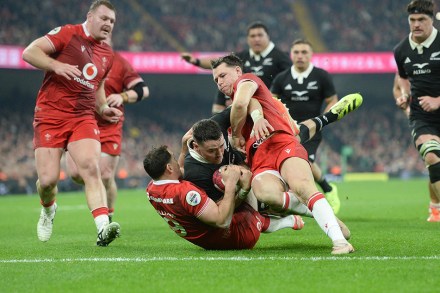
My friend Tim Andrew has admirable priorities. When I told him I had tickets for this week’s Six Nations opener at the Stade de France, he texted back: ‘Final whistle to a restorative glass in the 6ième arr: 40 minutes. Can’t even get to the station at Twickenham in that time.’ That’s the attitude you expect from a former chairman of the P.G. Wodehouse Society. I last saw Ireland play in Paris 14 years ago, as a reporter, when the first attempt at holding the match was called off at the last moment. I arrived at Gare du Nord at noon with the temperature already below zero. There is no undersoil heating at the Stade as it was built on a gasworks. It had dropped to -10°C by the scheduled 9 p.m. kick-off.

Sean Thomas, Mary Killen, Owen Matthews & Patrick Kidd

From our UK edition

28 min listen

On this week’s Spectator Out Loud: Sean Thomas explains how an AI-generated goth girl became a nationalist icon; Mary Killen argues we should all regret the loss of the landline; Owen Matthews says that banning Russian art only weakens Ukraine; and finally, Patrick Kidd makes the case for letting children experience alcohol. Produced and presented by Patrick Gibbons.

Sean Thomas, Mary Killen, Owen Matthews & Patrick Kidd

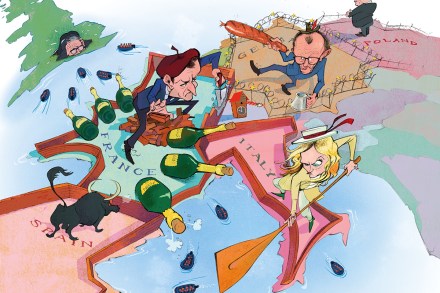
Why I took my eight-year-old son wine-tasting

From our UK edition

My eight-year-old son’s eyes widened when I unwrapped a Christmas present I got from my parents: a bottle of cherry brandy from the Lyme Bay winery in Axminster. ‘Can I have some?’ Humphrey asked, for he had been hitting the cherry brandy hard over the summer. Not the alcoholic kind, of course, but the cherry brandy-flavoured lollies sold by the ice-cream van that parks outside his school on a hot afternoon. How could I refuse? Ashley Dalton would be scandalised. The junior health minister said this month that the government is looking into banning the sale of non-alcoholic versions of booze to teenagers in case it ‘normalises drinking’ and becomes a ‘gateway’ to the real thing. Children will be allowed to vote at 16 under this government, but not drink a Lucky Saint.

The strange history of one-armed vs one-legged cricket

From our UK edition

A sheet metal worker from Shropshire who lost a leg below the knee in a tractor accident when he was a child has been told to pay back £36,000 in disability benefits after he was filmed playing cricket twice a week for a village team.  Shaun Rigby, 37, had received personal independence payments since 2016 and acquired a car under the Motability scheme three years ago but the Department for Work and Pensions has judged that his daily needs do not require such assistance.  Mr Rigby called the decision ‘unfair’, observing that people with less debilitating conditions get Motability cars. He remarked: ‘Just because I play cricket doesn’t mean my leg has grown back.’ He bats with a runner, while an umpire holds his crutch.

There is still hope for the Ashes

From our UK edition

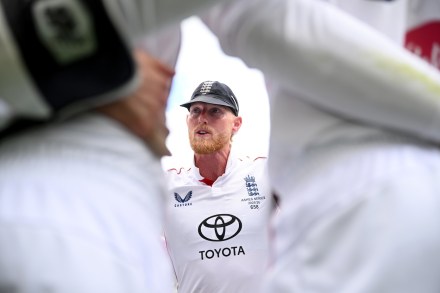
It is, England cricket fans must remember, only one match in a five-Test series. They began the Ashes needing to win three Tests and the requirement remains the same despite the humiliation in Perth. There is still a reason to get up at 4 a.m. tomorrow for the next game. Lightning need not strike twice, even if the foolhardy way that England bat reminds me of Terry Pratchett’s line about the man who stands on a hilltop in a thunderstorm wearing wet copper armour and shouting: ‘All gods are bastards!’ Even those who made an 18,000-mile round trip to see the Ashes begin two weeks ago and got three extra days of sightseeing along the Swan River should cling to the fact that England were competitive at halfway.

The joy of school cricket

From our UK edition

Few presidents can claim such an immediate success. At the end of June, I became president of my school’s alumni association and then, just five days later, the First XI won their first match at the annual Royal Grammar Schools’ Cricket Festival since 2017. A coincidence? Well, obviously. But I’d like to think that Colchester’s youth drew confidence from me having a net at the school field on Old Colcestrians’ Day and getting hit on the bonce by the first ball I faced from the sixty something head of Year 12. If this is how poorly the alumni play, they will have thought, we can’t be all that bad. I was never any good at cricket, much as I loved it. One presidential duty was to unveil a plaque on a new scoreboard.

Patrick Kidd, Madeline Grant, Simon Heffer, Lloyd Evans & Toby Young

From our UK edition

28 min listen

On this week’s Spectator Out Loud: Patrick Kidd asks why is sport so obsessed with Goats; Madeline Grant wonders why the government doesn’t show J.D. Vance the real Britain; Simon Heffer reviews Progress: A History of Humanity’s Worst Idea; Lloyd Evans provides a round-up of Edinburgh Fringe; and, Toby Young writes in praise of Wormwood Scrubs – the common, not the prison. Produced and presented by Patrick Gibbons.

Border lands, 200 years of British railways & who are the GOATs?

From our UK edition

38 min listen

First: how Merkel killed the European dream ‘Ten years ago,’ Lisa Haseldine says, ‘Angela Merkel told the German press what she was going to do about the swell of Syrian refugees heading to Europe’: ‘Wir schaffen das’ – we can handle it. With these words, ‘she ushered in a new era of uncontrolled mass migration’. ‘In retrospect,’ explains one senior British diplomat, ‘it was pretty much the most disastrous government policy of this century anywhere in Europe.’ The surge of immigrants helped swing Brexit, ‘emboldened’ people-traffickers and ‘destabilised politics’ across Europe. Ten years on, a third of the EU’s member states within the Schengen area have now imposed border controls. Can freedom of movement survive in its current form?

Why is sport so obsessed with Goats?

From our UK edition

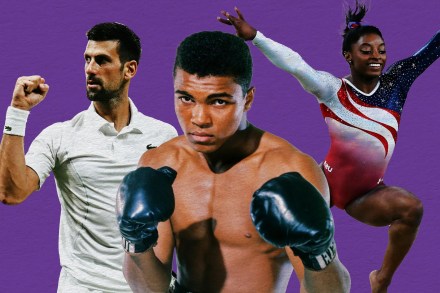
It was late at night in rural France and Martin wanted to discuss Goats. And he didn’t mean livestock. ‘You write about sport,’ he said. ‘Who is the Greatest of All Time?’ I asked if he was talking about my stunning victory in the village boules competition the previous night, but it turned out he was thinking of a certain Serbian tennis player. ‘Novak Djokovic is the Goat,’ he said, with the certainty that comes from a third bottle of Bourgueil. I conceded that Djokovic’s record was a smidgen better than Rafael Nadal’s, though some might prefer the artistry of Roger Federer – but didn’t Bjorn Borg have an even better winning percentage in the grand slams? This pleased Martin’s Swedish wife.

Ian Thomson, Patrick Kidd, Mike Cormack, Ursula Buchan and Richard Bratby

From our UK edition

36 min listen

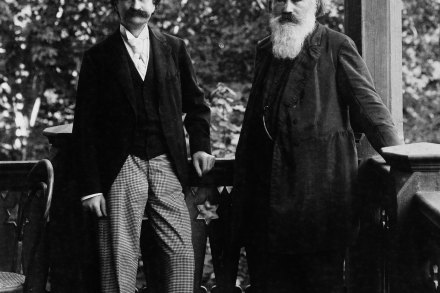
On this week’s Spectator Out Loud: Ian Thomson on what the destruction of the Hotel Oloffson means for Haiti (00:54); Patrick Kidd analyses Donald Trump and the art of golf diplomacy (06:43); Mike Cormack reviews Irvine Welsh’s Men In Love (16:49); Ursula Buchan provides her notes on the Palm House at Kew (20:38); and, Richard Bratby argues that Johann Strauss deserves better than to be the victim of snobbery – plus listen to the end for an extract from Strauss’s Emperor Waltz (24:24).  Produced and presented by Patrick Gibbons.

The Donald and the art of golf diplomacy

From our UK edition

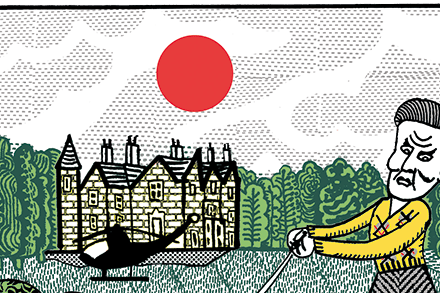
In 1969, one of the great acts of sportsmanship occurred at Royal Birkdale golf club in Southport, when the Ryder Cup came down to the last green. Britain’s Tony Jacklin had a three-foot putt to halve the final match with Jack Nicklaus and make the score 16-16, but the American picked up Jacklin’s marker and said he was happy to share the spoils. ‘I don’t think you would have missed,’ he said, ‘but I didn’t want to give you the chance.’ The gesture was immortalised in the naming of a Florida golf course, the Concession, which has just been awarded the next three senior PGA Championships, one of the majors. I suspect that Donald Trump, who owns three courses in that state, might regard Nicklaus as a loser.

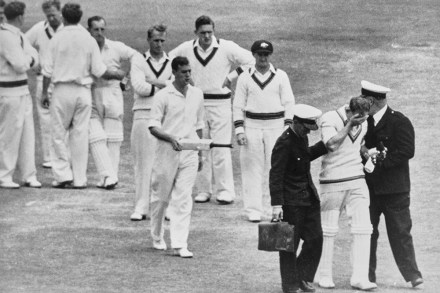
The force of Typhoon Tyson, Sydney, 1954

From our UK edition

Lord Hawke, the grand old man of Yorkshire cricket and stalwart of the MCC, was not one to mince words. A century ago, the administrator rejected calls for the national XI to be led by Jack Hobbs. ‘Pray God no professional shall ever captain England,’ Hawke said. ‘We have always had an amateur skipper and when the day comes when we shall have no more amateurs captaining England it will be a thousand pities.’ It took 27 years. Elizabeth II would be less picky about commoners. She knighted Hobbs in her Coronation honours in 1953, the same year that Len Hutton, England’s first professional captain, led the side to regain the Ashes after 20 years. To defend the urn Down Under, however, as he hoped to do in 1954-55, was a hard task.

Keir’s peer purge, how to pick an archbishop & is AI ruining sport?

From our UK edition

44 min listen

This week: Peerless – the purge of the hereditary peers For this week’s cover, Charles Moore declares that the hereditary principle in Parliament is dead. Even though he lacks ‘a New Model Army’ to enforce the chamber’s full abolition, Keir Starmer is removing the hereditary peers. In doing so, he creates more room, reduces the Conservatives’ numerical advantage, and improves ‘the sex and ethnic balance’. But 86 hard-working and dutiful peers ‘lacking worldly ambition or partisan passions’ will be lost. Also in the magazine, Sophia Falkner, researcher at The Spectator, sets out exactly what we stand to lose by profiling some of the most capable hereditary peers in the House. She warns that Labour’s purge is ripping the heart out of the Lords.

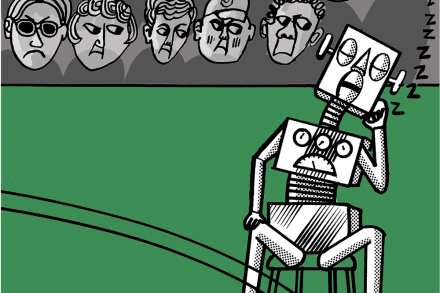
Does AI belong on the tennis court?

From our UK edition

The evidence was clear, the official had dropped a clanger. At 4-4 in the first set of the women’s match at Wimbledon last Sunday, the British player Sonay Kartal should have had her serve broken when she hit a backhand long. Anastasia Pavlyuchenkova saw the ball land well out of court, as did those watching the replay, but the line judge remained mute. ‘Replay the point,’ the umpire said, leading the Russian to complain that ‘they stole the game’. This nameless offender – let’s call him Hugh after Hugh Cannaby-Serious, the official who used to wind up John McEnroe – was napping. It turned out that Hugh had been switched off for a few points. Robots can be human too. Cameras have replaced line judges at Wimbledon after 148 years.

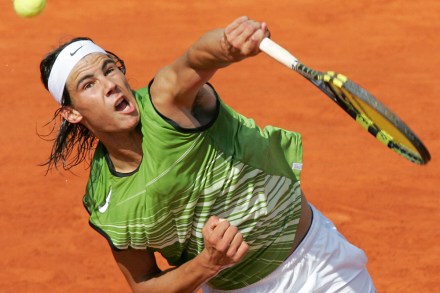
Rafael Nadal: king of the orange brick court

From our UK edition

Even the greatest have setbacks. It is how they respond that makes them great. Take your chances, forget the lapses. The triumvirate who ruled men’s tennis this century – Novak Djokovic, Rafael Nadal and Roger Federer – each won just 54 per cent of the points they played. It was about turning it on when it counted. No one could turn it on like Nadal on Parisian clay. The orange brick dust of Roland Garros on which he slid and scampered so well seemed to inspire the Spaniard with magical powers. From 19 visits to the French Open, he returned to Mallorca only five times without the Coupe des Mousquetaires – and once was due to injury. No performer was so suited to a stage.

The project to revive the oldest hymn in the world

From our UK edition

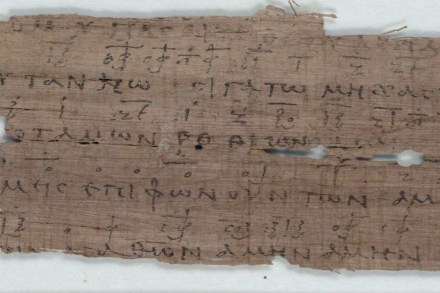
Passiontide is a good time for church music. From the triumphal Palm Sunday processionals of ‘All Glory, Laud and Honour’ and ‘Ride On! Ride On in Majesty!’ to the mournful but grateful reflections of ‘My Song is Love Unknown’. From the desperate sadness of ‘O Sacred Head, Sore Wounded’, the tune coming from Bach’s ‘St Matthew Passion’, to the Handel-set pomp of ‘Thine Be The Glory’ on Easter Day. This Holy Week a new song of praise has arrived. Or rather an ancient one has been revived. In 1918, archaeologists digging on a rubbish dump at Oxyrhynchus in Egypt discovered a tattered piece of papyrus on which was written the earliest surviving Christian Greek hymn that contains lyrics and musical notation.

How Rory McIlroy banished his Masters demons

From our UK edition

Eighteen years ago, half his lifetime away, Rory McIlroy made his debut as a professional golfer at the British Masters at The Belfry, Sutton Coldfield. The Northern Irish teenager began with a respectable round of 69 and finished 42nd to earn a shade over £10,000. He said he would spend his first pay cheque on taking his then girlfriend to the cinema and put the rest towards buying a house near his mum, ‘so she can still do my washing’. Late last night, McIlroy won £3.2 million at another Masters, the American major in Augusta, Georgia, taking his career winnings to about £120 million. But the money was the least of his concerns.  Of far greater value was the £200 green jacket slipped on to his shoulders after McIlroy sealed victory in a play-off.

Is Britain ready for a patriotic theme park?

From our UK edition

It is the early 9th century. Peace reigns in a small French village as they prepare for a wedding. Garlands are being hung, sheep are being shepherded, all is sunshine and smiles. Then, in a snap, this bucolic bliss bursts as Viking warriors invade the scene and unleash hell. The original Puy du Fou is unashamedly pro-God, pro-monarchy and Vive la France A longboat splashes down a chute into the river, another spectacularly emerges from beneath the lake; swords clash, fires erupt, women are carried off and treasures seized. The villagers need a miracle, and it comes with the sudden appearance of a bishop, the blessed St Philibert.

Max Jeffery, David Shipley, Patrick Kidd, Cindy Yu, and Hugh Thomson

From our UK edition

33 min listen

On this week’s Spectator Out Loud: Max Jeffery interviews Afghan resistance leader Ahmad Massoud (1:13); former prisoner David Shipley ponders the power of restorative justice (8:23); Patrick Kidd argues that the Church should do more to encourage volunteers (14:15); Cindy Yu asks if the tiger mother is an endangered species (21:06); and, Hugh Thomson reviews Mick Conefrey’s book Fallen, examining George Mallory’s tragic Everest expedition (26:20). Produced and presented by Patrick Gibbons.

Veep show: who will Trump pick for his running mate?

From our UK edition

47 min listen

This week: Veep show: who will Trump pick for his running mate? Freddy Gray goes through the contenders – and what they say about America (and its most likely next president). ‘Another thought might be buzzing around Trump’s head: he can pick pretty much whoever he wants because really it’s all about him. He might even choose one of his children: Ivanka or Donald Junior. What could sound better than Trump-Trump 2024?’ Freddy joins the podcast. (02:10) Next: Will and Lara take us through some of their favourite pieces from the magazine, including David Shipley’s piece on the issues in the criminal justice system and Patrick Kidd’s article on the C of E’s volunteering crisis.  Then: Everest.