William Atkinson

William Atkinson

William Atkinson is The Spectator's assistant content editor

A snap election need not be a disaster for Reform

From our UK edition

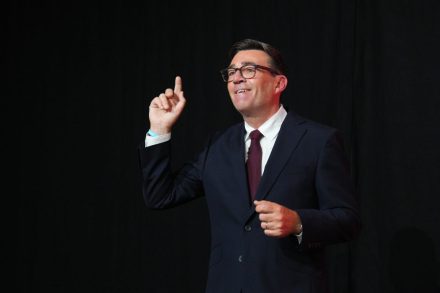
We live in a time of ifs and wills. If Reform and Restore split the right-wing vote in Makerfield, will Andy Burnham win this Thursday’s by-election? If he does re-enter the Commons, will he challenge Keir Starmer for Labour’s leadership? If he does so, will it be a contest or a coronation? If Burnham wins, will he then call an election? And if he does so, will Labour win it? I cannot go inside Burnham’s head; as Lara Brown has highlighted, there isn’t much in it, except the Happy Mondays. But I can read polls. The two hypotheticals that have been done with Burnham give Labour a slim lead. In our current era of multi-party politics, that could be enough to eke out a slim majority or at least to be the largest party in a hung parliament capable of cobbling together a government.

My love for black and white birds 

From our UK edition

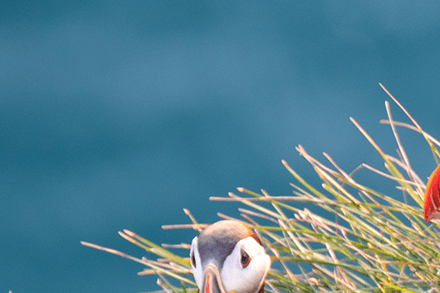
All my life I have been obsessed by black and white birds. Magpies are my tormentors, my morning omens of whether my day will be worthwhile or miserable. Penguins are my salvation. When I’m a little melancholy, I pop along to London Zoo to read them poetry. In my experience, they enjoy The Wasteland. There is another black and white bird that I have long found appealing: the puffin. My attempts to spot them, however, have been in vain. On a school geography field trip to the far north, I managed to see Iceland’s ugliest dog but no puffins. There seemed to be a family curse. My uncle was once booked a birthday trip to Puffin Island, off Anglesey, only to discover they’d all flown away. But then I blagged a trip to Shetland.

Will the Tories win the Aberdeen South by-election?

From our UK edition

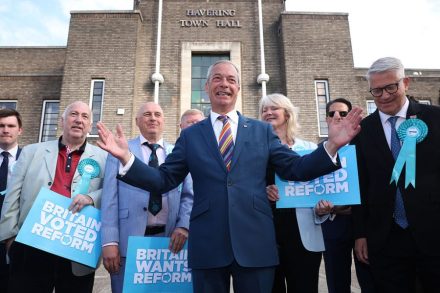
For all of the squabbling between Reform and Restore, the Right’s best chance at a by-election win on 18 June may not be in Makerfield, but 300-odd miles further north – in Aberdeen. The beneficiary wouldn’t be Nigel Farage or Rupert Lowe, but Kemi Badenoch’s Conservatives. The Tory candidate is now ‘quietly confident’ It’s unsurprising that this contest has been largely overlooked. My Westminster colleagues treat the suburbs of Manchester as being almost unfathomably distant, so the North Sea coast seems like an alien planet. But Aberdeen is also a city used to being ignored. According to the Centre for Cities, between 2010 and 2020, household incomes in the city fell by almost 7 per cent; between 2010 and 2023, it was one of only two cities in the UK to lose jobs.

William Atkinson, James Delingpole, Daisy Dunn & Margaret Mitchell

From our UK edition

30 min listen

On this week’s Spectator Out Loud: William Atkinson sends his dispatch from the Shetland Islands; James Delingpole remembers Malcolm, his ‘gloriously unfiltered’ father; Daisy Dunn reviews Mary Beard’s Talking Classics; and Margaret Mitchell explores corporate dread and the institutional gothic. Produced and presented by Patrick Gibbons.

William Atkinson, James Delingpole, Daisy Dunn & Margaret Mitchell

‘Do you know the local MP?’ ‘Aye, she runs the sauna’: my Shetland dispatch

From our UK edition

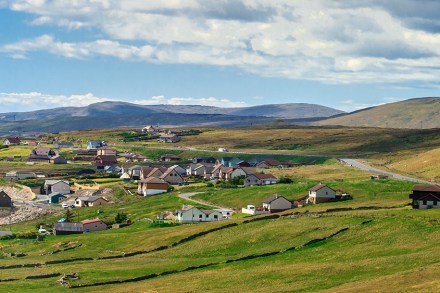
The Shetland Islands The SNP have had better weeks. It’s strange to think that it was only this month that the party won a staggering fifth term in office, despite independence being no closer, and a record of failure on everything from education to drug deaths. Perhaps the most remarkable result for the SNP leader John Swinney was the election of Hannah Mary Goodlad in the Shetland Islands. Since 1950, this was the first time these islands had voted for someone other than the Liberals or Lib Dems. Goodlad triumphed after a vigorous campaign featuring windswept social media videos and three visits from Swinney; before her election, she ran an outdoor sauna business.

Make the fez great again

From our UK edition

Ireturned from a recent holiday to Morocco with three mementos: a bright red pair of swimming trunks (teenager-sized; the largest the supermarket had), a bright red nose (thanks to my unscientific aversion to sun cream) and a bright red fez.  I’ve always wanted to own a fez and since purchasing it in a Marrakesh souk – ‘For you, sir, special price’ – I have been besotted with it. I’ve worn it on the Tube, to a pub quiz and around the Spectator offices, to variable enthusiasm from colleagues. As far as practicality goes, it is a useless hat. It  doesn’t keep the sun off. Its finest Moroccan cardboard will wilt in its first brush with the rain. But that won’t keep it off my head.

Badenoch is the perfect Tory leader

From our UK edition

Plenty of narratives can be pulled out of last Thursday’s elections. Labour’s shattered hold over its Northern and Welsh heartlands; the imperviousness of Scottish voters to the inadequacies of SNP rule; the onward march of Reform; the continuing irrelevance of the Lib Dems; the foaming of the River Tiber heralded by sectarian success. But one that cannot – if you still want to be able to look yourself in the eye in the morning mirror – is that they were good for the Conservatives. Trying to turn these results into a victory only leaves Badenoch looking like Comical Kemi Kemi Badenoch was out in front of the cameras early, surrounded by beaming activists, heralding her party’s success in taking back Westminster from Labour.

We can still save Prince Harry

‘It won’t last,’ my schoolfriend Albert told me, as we staggered down Embankment one summer evening in 2018, a few pints into his birthday pub crawl. I wasn’t sure as to what he was referring. The evening twilight? His youthful good looks? Our ability to walk in a straight line? He expanded: ‘Harry and Meghan. She’s not right for him. They’ll be divorced within five years. Just you wait.’ Then he burped. I was surprised by Albert’s comments. I, like tens of millions of other viewers, had been taken in by the royal wedding weeks before. Yes, the presence of Oprah Winfrey and an over-enthusiastic American preacher had been a little gauche.

Why Starmer must stay

From our UK edition

I have little interest in what Keir Starmer will say in the Commons later today. I’ve only been in political journalism for four years, and I’m already onto the fall of my fourth prime minister. The death drawls of a premiership have a familiar and tedious air; whatever Starmer says about l’affaire Mandelson, the original sin was appointing an old chum of the world’s most famous nonce as our man in Washington. The exact details of who knew what when are secondary to that mistake. The Prime Minister’s speech will allow for various itches to be scratched.

School dinners are glorious

From our UK edition

I don’t much miss being a teacher. A pathological dislike of teenage boys, a congenital inability to remember historical facts and an unwillingness to spend my spare moments lesson-planning rather than go to the pub meant that a brief career diversion to pay off my overdraft did not become a lifelong vocation. But there is one thing I do hanker for, that makes me briefly wish I was back in the classroom: the daily delight of school dinners. After four hours of trying to wrangle the Year 10s into memorising the membership of the League of Nations, sitting down for a steaming hot plate of fish, chips and jam roly-poly was a godsend. It was a little patch of civilisation between shepherding the droogs and staring at PowerPoints.

Is Britain losing its sense of fairness?

From our UK edition

49 min listen

Has Britain become a freeloader’s paradise, asks the Spectator’s economics editor Michael Simmons in our cover piece this week. Michael analyses ‘the benefits of benefits’, at a time when Britain’s welfare bill is burgeoning and most households are struggling with cost of living. For example, while a family of four can expect to pay £111 to visit the Tower of London, that is just £4 total on Universal Credit (UC), and for London Zoo it is £108 compared to £26. Michael is not arguing against the idea of helping those in need, but pointing out that – as the benefits bill continues to increase – this is another case of governments prioritising ‘welfare over work’ and ultimately squeezing the working poor.

Is Britain losing its sense of fairness?

Is time up for Viktor Orban?

From our UK edition

For a country of ten million people that spent most of the 20th century occupied and impoverished, Hungary today is thriving. This, in the eyes of his supporters, is down to the 16-year rule of Viktor Orban. Hungary’s Prime Minister has, to use his phrasing, aimed to create an ‘illiberal democracy’. He has reformed the country’s judiciary, given tax breaks to mothers to increase the birth rate and zealously resisted the EU’s refugee policies. The last is illustrated by the 140-mile fence along the Serbian border constructed during the 2015 migration crisis. Proud border guards tell you that 1.1 million migrants have been kept out in a decade. Nevertheless, Orban faces his toughest election yet when Hungarians go to the polls this Sunday.

Why the ‘school wars’ are overblown

From our UK edition

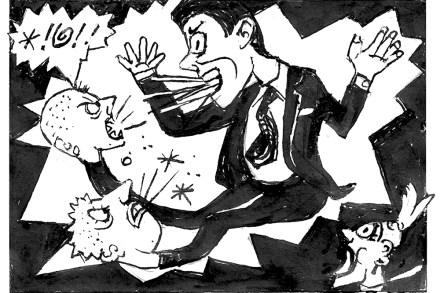
The recent ‘school wars’ farrago was an act of madness – or, more accurately, Madness. ‘All the kids have gone away/Gone to fight with next door’s school/Every term that is the rule’. So the Camden ska band sang on ‘Baggy Trousers’, their 1980 classic about their school days. Schoolchildren organising to duff up their contemporaries is not new; social media has made it easier for pupils to connect, parents to panic.   For the uninitiated, a TikTok trend thought to have begun in Hackney last month has seen posts pop up across the country – from Nottingham to Watford – encouraging children to meet for clashes between different schools organised into ‘red’ and ‘blue’ teams.

The strange cult of Shabana Mahmood

From our UK edition

Is Shabana Mahmood ‘one of the best Conservative Home Secretaries we have ever had’? Tory MP Edward Leigh thinks so. The Father of the House lavished praise on the Home Secretary in the Commons yesterday after Mahmood announced a ban on the annual al-Quds Day march. He isn’t the only right-winger to fall for Mahmood. Many have failed to clock how unpopular Mahmood has become with her own party Since her promotion to the Home Office, Mahmood has focused on restricting immigration, lengthening settlement periods and requirements for long-term migrants, limiting refugee status, offering money for voluntary departures and banning visas from certain countries.

What would Katie Lam’s defection to Reform mean for the Tories?

From our UK edition

Fresh from chastising Labour for not involving Britain more deeply in another American misadventure in the Middle East, Kemi Badenoch is reportedly planning a ‘root and branch’ shadow cabinet reshuffle. Those most at risk are said to be her top team of Shadow Chancellor Mel Stride, Shadow Foreign Secretary Priti Patel and Shadow Home Secretary Chris Philp. For Lam, there are plenty of reasons to defect to Nigel Farage’s party The intention, the Daily Mail suggests, is to promote younger MPs ‘to energise the battered Tory brand’. Stride is said to ‘lack energy’, Patel ‘reminds voters of record levels of migration’, and Philp is believed to ‘no longer [be] fully focused on the job at hand’. None of these is a surprise.

What Poilievre can (and can’t) teach the British Right

From our UK edition

Over the last week, I have been stalking Pierre Poilievre. The leader of the Canadian Conservative Party has been in Westminster to renew the bonds of Anglospheric amity; consequently, I had the pleasure of watching him speak on two successive evenings. The arc of history is long, but it bends towards Robert Jenrick Until a year or so ago, Poilievre was the Prince Across the Atlantic – a punchy and pugnacious Conservative would who had united his party around a popular and populist message of more housebuilding, tackling inflation and championing those working-class voters that Canada’s Liberals had taken for granted for too long. He built a hefty lead over Justin Trudeau and topped the polls among young voters.

Why I fell in love with Welsh nationalism

From our UK edition

Being a mildly Celtophobic Tory from Metro-Land, I’m an unlikely Welsh nationalist. Aside from once sharing a Christmas dinner with Cerys Matthews, I’ve few ties to the Principality. Nonetheless, last week I found myself at the conference of Plaid Cymru – the Party of Wales. If Wales did become independent, it would be a tragic loss, born from neglect My interest was piqued by last October’s Caerphilly Senedd by-election. Despite the confident assertions of Reform outriders that Nigel’s boy would walk it, Plaid won handily. Naturally, the London press rushed to interview the losing candidate, ignore the victor and forget the whole affair.

Badenoch’s integration speech is too little, too late

From our UK edition

If Kemi Badenoch makes a speech during a war with Iran, does anyone hear it? Following the Gorton and Denton by-election – but seemingly before President Trump had decided to set fire to the Middle East – the Conservative leader had intuited that it was time to outline her party’s new approach to our fraught multi-racial democracy. For now it is all buzzwords and no bite Emphasis on multi-racial, not multicultural. Badenoch said she had seen what a true multicultural society looked like while growing up in Nigeria: a country divided, despite a shared skin colour, by religion, culture and priorities. A country that she had left to come to a Britain defined by fairness, the rule of law and a tolerance for minorities, especially Jews.

‘It was making me think like a Latin American dictator’: why my moustache had to go

Iloved my moustache. Unfortunately, my fondness for it seemed inversely proportionate to its popularity among my peers. After much unsolicited feedback from friends (‘You look like a young Peter Mandelson’) and online strangers (‘You look like a 1970s porn star’), I put a poll on my Instagram asking my followers whether or not I should scrap it. Four-fifths said I should. After a brief consideration of my options (ignore the results? Rerun the vote? My moustache was making me think like a Latin American dictator), I reluctantly shaved. God how I miss it. There is something intoxicating about a moustache – a small hedgerow on his top lip can convince even the dowdiest man that he looks like a Battle of Britain pilot.

What Labour should have learnt from Dominic Cummings

From our UK edition

‘O Romeo, Romeo! wherefore art thou Romeo?’ Keir Starmer seems to have mirrored Juliet after deciding to move on Chris Wormald on as Cabinet Secretary. Yet the young Capulet was asking not where her lover was, but why he must be Romeo – a Montague. ‘Deny they father and refuse they name’, she implored, so that the pair could be together. With Antonia Romeo widely expected to be Wormald’s successor, a similar chorus of 'whys?' seems to be pricking up across Whitehall.

dominic cummings