Eleanor Doughty

How boarding schools reinvented themselves

From our UK edition

Early in his time at Eton College, 13-year-old William Waldegrave, the school’s future provost, was struggling to sleep. He told his dame, and she in turn told the housemaster, John ‘A.J.’ Marsden. The former commando in charge of the boys told Waldegrave that if it happened again, he should knock on his door. A few nights later, the boy did as he was told. Marsden had a solution – they would go for a run, to Bray, seven miles from Eton. Waldegrave slept better that night. Tales of public schools past are legion – some better than fiction, and plenty that have inspired it. Others are less appealing, more appalling. In recent years, memoirs depicting the misery of former boarders’ experiences at school have told tales of neglect and criminality.

What to look for in a post-prime ministerial property

From our UK edition

After the pomp of high office – the convoys of ministerial cars, police on the gates, the £840-a-roll wallpaper – what are a former prime minister and his spouse to do for a home? Boris and Carrie Johnson must be considering their next move. They might be hoping for the kind of arrangement that was put in place when Alec Douglas-Home lost the 1964 election. The new prime minister Harold Wilson ‘kindly put Chequers at our disposal for a day or two,’ Douglas-Home remembered. ‘Then [the hotelier] Sir Hugh Wontner, with great consideration, allowed us to stay in the penthouse at Claridges for a fortnight, so that a sense of perspective and pose was gradually regained.’ Sadly such generosity seems in short supply in the Conservative Party of 2022.

The misunderstood motto of Rishi Sunak’s old school

From our UK edition

The first thing that Dr Tim Hands, headmaster of Winchester College, would like to clear up is his school’s world-famous motto, ‘Manners maketh man’. Whenever a Wykehamist makes the papers, this ancient phrase is wheeled out, referring to his (in)decent manners. But this isn’t quite right, says Hands. Two pieces of stained glass — one formerly in Bradford Peverell church near Dorchester, and another in the Warden’s Lodgings at New College Oxford (founded by Winchester’s founder Bishop William of Wykeham) — read ‘Manner maketh man’. This, says Hands, is the origin for the school’s motto. ‘“Manner” means what you are and what you do — not how you fold your handkerchief.

Open access

From our UK edition

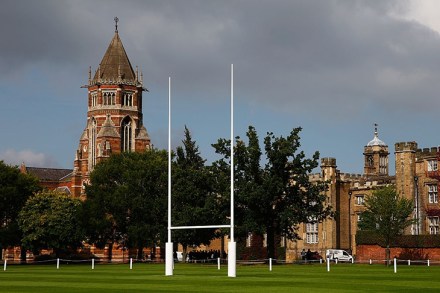
Rugby was immortalised in Tom Brown’s School Days, but its headmaster, Peter Green, is brandishing another book — a Christie’s catalogue with the school’s name on it. During an attic clear-out items were discovered in an archive room and were put up for sale. They had been given to the school in around 1880 by the Old Rugbeian Matthew Holbeche Bloxam, and included Chinese ceramics and British watercolours. The highlight was a rare drawing by Dutch Old Master Lucas van Leyden, which sold for £10 million. If the decision to sell that seems crass, it isn’t, says Green. ‘Why would we keep it? It has no intrinsic value to Rugby School. If we were able to build a massive museum, then perhaps.

School houses provide camaraderie, challenges – and a healthy dose of ruthless competition

From our UK edition

‘Come on Burghley! That’s it Porter, you can do it!’ It was sports day 2008, and we were winning. Of course we were winning — weeks of tactical diagrams had gone into making sure of it. The runners crossed over the line and a cheer went up from the blue side. ‘YESSSSSSSSSS!’ screamed a gaggle of teenagers, their faces painted blue. An hour later, the house cup was ours, paraded back to school by triumphant sixth formers. They say your school days are the best of your life, but I’d go one further: the days you spent competing for house points — those are the best of your life.

Talking heads: Roedean’s Oliver Blond on etiquette lessons and luxury boarding houses

From our UK edition

It’s hard to open a newspaper without spotting a headline about Roedean. One week it’s lessons in Brexit etiquette; the next, phone-free retreats. Days after I meet 51-year-old headmaster Oliver Blond, the Times trumpets: ‘Let homeless eat steak, says Roedean.’ It’s a blustery walk up the drive to the 134-year-old girls’ boarding school, perched on the South Downs overlooking Brighton Marina. Girls stream through the corridors excitedly. There’s a whoop here, a cheer there — not long to go until the end of term. In his office I find Blond in an armchair. He took up teaching following a degree in English and philosophy from the University of Essex, having been educated at a grammar school in the north-west.

The millennial poster campaign worked – but the army still has serious problems with recruitment

From our UK edition

They say there’s no recruiting sergeant like a war, but in the absence of any fresh conflict, last week the Army launched its new recruitment campaign. A batch of posters dressed up in the style of the Lord Kitchener first world war ads popped up with modern-day phrases such as ‘Snowflakes’, ‘Me me me millennials’, and ‘phone zombies’, in an attempt to lure young people. In a moment of extreme irony, one Scots Guardsman, whose face appeared on one of the posters with the slogan ‘Snowflakes - the Army needs you and your compassion’, has told friends that he would submit his resignation at the earliest possible opportunity, after being mocked about it. Snowflakes, indeed. Reactions elsewhere have been divisive.

Summertime blues

From our UK edition

Every year, like clockwork it comes, the traditional concern that the younger generation don’t do summer jobs like they used to. As the school holidays approach a politician is wheeled out to write a nostalgia piece about part-time jobs, and the ‘essential skills’ these offer. Holiday and Saturday jobs, you see, are the foundations of a successful career, with their promise of resilience-building and priority-juggling. Some statistics will be cited about businesses being desperate for applicants with ‘soft skills’, and on cue, media-friendly CEOs are trotted out to support whichever wayward minister has been handed the keys to the Workshy Teenagers wagon.

Why pay for the privilege?

From our UK edition

In downstairs loos of houses of a certain sort, the old school photograph is a constant. When you’ve seen a few of these slightly yellowing portraits, you’ve seen them all. But this trend might soon reach its end. If you listen carefully in particular enclaves, you’ll hear faint whisperings about a new way of doing things. Maybe, just maybe, public school isn’t quite for everyone any more. Say goodbye to the old school pictures; the toffs are going native. Last year, in a Viscount’s kitchen, I spotted an invitation to a school fair — at the local primary. A few weeks later, an Old Harrovian whose family has a 300-year history with the school remarked that he’d be preparing his children for the 11-plus, rather than common entrance.

Living the dream

From our UK edition

To enter Wellington College, in Crowthorne, Berkshire, is as if to arrive at a stately home that’s open to the public. There are the smart signposts, the security box, the manicured lawns (with the requisite ‘keep off the grass’ signs). When I visit, it is the summer holidays, so there are no children littering the playing fields. Instead, the mower keeps on mowing, and the buildings enjoy their last bit of peace and quiet before term starts. But that is where the stately similarities end. Wellington’s headmaster, Julian Thomas, is not of that ilk, he is proud to say. Thomas, 50, the former head of Caterham School in Surrey, was appointed the 14th Master of Wellington in 2015, after the departure of Sir Anthony Seldon.

Talking heads: The best of schools, the worst of schools

From our UK edition

As careers for Oxford Union-debating PPE graduates go, Shaun Fenton’s has not been wholly orthodox. Leaving Keble College in 1992, he took up a job with what is now Deloitte and trained as a chartered accountant. So far, so ordinary. But it was on a trip back to his old school, Haberdashers’ Askes’ in Elstree, to see his former mentor David Lindsay that he had his epiphany: ‘I told him that I felt I was helping companies, but I wasn’t being me.’ He thought of teaching as an option, and decided to move from a job about ‘effective economics’ to one about ‘authentic relationships’. He adds: ‘I loved it, and never looked back.

Diamond schools: the best of both worlds

From our UK edition

Imagine a school that you could send your son and daughter to. A single school that fitted your ideal for both single-sex and co-ed education, operating from nursery to sixth form, covering all bases. One school — not three or four. A school that, for the final two years, allowed young adults of both genders to share lessons and facilities. But imagine no more, for these schools exist, and they’re called diamond schools. (So-called because of the shape of the structure: genders together at the beginning and end, but apart in the middle.) There are just 13 of them in the country. Blending single-sex and co-ed teaching in the same institution makes them stand out as shining beacons in a fairly conservative landscape.