Spectator Life

Spectator Life

An intelligent mix of culture, style, travel, food and property, as well as where to go and what to see.

Meghan Markle’s TV show is a balm for desperate housewives

The Duchess of Sussex has achieved something quite remarkable. After the brickbats hurled at the first season of her Netflix show With Love, Meghan – the furious pro-monarchy outrage, the eye-rolling from critics, the memes that lampooned her syrupy anecdotes – many TV personalities would have flinched. They would have called consultants, tweaked the format, apologised by going in a ‘new direction’. Meghan Markle (or should I say Sussex) has done the opposite. Season two arrived last month: unchanged, unrepentant and every bit as twee as the first.  Like her homemade ‘jam’, that’s not to say it’s gone down well. ‘Painfully contrived’, ‘irrelevant meets intolerable’ and ‘tone-deaf’ were just some of the newspaper reviews.

The greatest writer you’ve never heard of

The recent commemorations surrounding the 150th anniversary of John Buchan’s birth – not least in The Spectator – have stirred up literary memories for me. Not of Buchan or his work particularly, I was a little too old for the glaring coincidences of The Thirty-Nine Steps when I read it in my twenties, but of a lifelong Buchan-admirer I knew slightly, the late author Peter Vansittart. Unlike many, Vansittart, a historical novelist among other things, took Buchan seriously, extolling ‘the romantic… the novelist, the adventurer… tolerant and humane.’ Buchan’s The Three Hostages he read every year, he said, as a kind of ritual: ‘curtains drawn, telephone unhooked, the fireside, the whisky, the old delight.

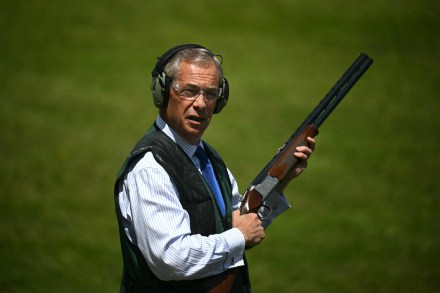
I’m beginning to question our gun laws

Whenever Europeans feel inadequate in relation to America, and have a yearning to console themselves, there is one subject that always comes up: the Second Amendment of the US Constitution, i.e. gun law. Yes, the Yanks may be richer than us. Yes, a dockworker in Delaware can earn more than a British cabinet minister. Yes, America has a dynamic economy and the world’s most powerful military, with a huge lead in science, tech and finance. But remember: ‘in Europe we don’t have mass shootings.’ ‘British children aren’t taught how to dodge bullets.’ ‘You may have Silicon Valley, but we don’t have lunatics wandering around Tesco with AR-15s.’ This feels even truer right now, as America reels from a horrific assassination, by a shooter on a roof with a rifle.

Shouldn’t Greenwich’s Royal Naval College be used for something better?

Britain is to get a new ‘super university’, an enormous centre of higher learning that will, from the next academic year, under a single vice-chancellor, educate some 50,000 students. Under the cumbersome name the ‘London and South East Universities Group’, the new university is a merger of the existing University of Greenwich and the cash-strapped University of Kent with its campus at Canterbury. A vital part of the new university’s campus will be the Old Royal Naval College at Greenwich, one of Sir Christopher Wren’s architectural masterpieces, and a World Heritage Site described as being ‘the finest and most dramatically sited landscape ensemble in the country’.

Bets for the St Leger and Champions Day

It is the last of the five British classic races tomorrow – the Group 1 Betfred St Leger at Doncaster (3.40 p.m.) over one mile and six furlongs. The race has attracted a line-up of only seven runners, which normally means just two places on offer from bookmakers. If this had been the case tomorrow, it would have made each way betting unattractive and I would have given the race a miss from a betting point of view. However, at least three bookmakers are offering three places for each-way thieves like me which means there might be some value to be found. Irish maestro Aidan O’Brien is responsible for three of the four runners at the top of the market: Scandinavia, Lambourn and STAY TRUE.

The Office is the TV show that will never die

A thought hit me when bingeing the first series of The Paper on Sky’s Now streaming service this week: how on earth did it take this long for someone to make a sequel to The Office? Don’t get me wrong, this wasn’t a glowing verdict on the comic merit of The Paper – an Office-style mockumentary set in a struggling regional newspaper in Toledo, Ohio. Rather it was a reflection on the usually mercenary economics of big television. During the pandemic, the American version of The Office racked up an astonishing 57 billion streaming minutes, despite its final episode having aired in 2013. The show premiered in 2005, inspired by the British sitcom created by Ricky Gervais and Stephen Merchant that ran from 2001 to 2003 (and which is itself still a big hit on iPlayer).

How to survive Florence with your family

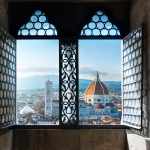
There are many destinations which spring to mind when considering the options for a weekend away with a young family. There are beaches by the dozen, theme parks and glamping opportunities galore. But there is only one Florence. And I cannot say this strongly enough: when it comes to the kids, the Center Parcs of the Renaissance will not let you down. It begins with Tuscany itself, a place so beautiful that you can get Stendhal syndrome on the bus on the way from the airport. And even if your children are glued to their screens, eventually motion sickness will force them to look up and they may glimpse its dreamy vistas, too.

Save our sausages!

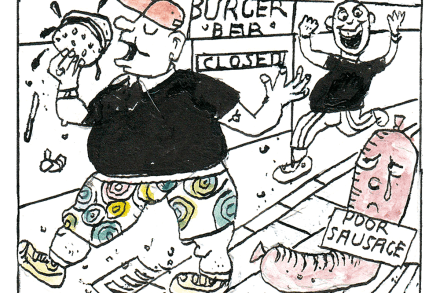
Who first thought of grinding up all those little unused odds and sods from an animal carcass and stuffing them into a bit of intestine? Many people, apparently. Sausages are one of those products which, while seemingly not intuitive, emerged independently all around the world thousands of years ago. As far as we can tell, sausages have been produced since we began butchering animals. The first record of sausage-making is from around 2,000 bc: an Akkadian cuneiform tablet from Mesopotamia mentions intestines filled with forcemeat. Sausages feature in The Odyssey as a simile for Odysseus tossing and turning in bed (‘When a man besides a great fire has filled a sausage with fat and blood and turns it this way and that and is very eager to get it quickly roasted’).

I doubt there’s a better ravioli in London: The Lavery reviewed

The Lavery in South Kensington is named for Sir John Lavery, official artist of the Great War and designer of the currency of the Irish Free State, who lived here, though he died in Ireland and is buried in Putney. Lavery, of course, would no longer recognise South Kensington as his home, and his white, monumental mid-Victorian house – it’s too cold to be compared to a wedding cake, it’s a power cake – is now a fashionable restaurant and ‘event space’, which I put in quotation marks so you know I didn’t write the words ‘event space’, I just typed them out. In houses like The Lavery, I wonder how tall the Victorians were in their heads.

My favourite memory of Geoff Lewis

To be a great jockey takes character as well as ability and Geoff Lewis, whom we have lost at 89, had that in spades. As the sixth of a Welsh labourer’s 13 children, he put in a 5.30 a.m. milk round before he went to school. When the family moved to London, and before he started on five shillings a week as an apprentice to Ron Smyth in Epsom, he was a diminutive pageboy at the Waldorf hotel, a role that wasn’t aided by his severe stutter. ‘It was sometimes so bad,’ he once said, ‘that if I paged somebody they’d probably left before I could get the name out.

Why three is the magic number in these Ashes

And so it begins, the Great Debate: no, not who will be deputy leader of the Labour party but the infinitely more important – and certainly more interesting – matter of who will be trudging out at No. 3 to bat for England in the first Ashes Test at Perth, which is now ominously close. Almost as close as the moment the first bars of Slade’s ‘Merry Xmas Everybody’ starts plinking round the supermarket. For some, the choice of Ollie Pope or Jacob Bethell is like saying whether you’d rather be buried or cremated. And sure, the days of Jonathan Trott, Ian Bell and the great Nasser Hussain might be long gone. But No. 3 could be the key position in these Ashes.

J.K. Rowling is a phenomenal plotter

As I write, a copy of The Hallmarked Man sits beside me. Not being on holiday, spending the morning reading a new detective novel would seem as louche as a pre-brunch martini. Not being David Niven, I’m making the book wait until at least after lunch. J.K. Rowling’s new book, under her pen name of Robert Galbraith, comes in at around 900 pages. I expect to rip through it smartly. I am not an ideal reader of detective fiction, nor the thrillers and mysteries that have a whodunit at the core of their tightly planned plots. My ability to figure out the murderer – even my interest in trying – is vestigial.

Why does an American billionaire want an Oxford pub?

If you’re a fan of American billionaires buying up much-loved British institutions, then you, too, might be rejoicing at news that Larry Ellison has set his sights on purchasing much of Oxford. The squillionaire owner of the software technology company Oracle (net worth: $270 billion, or thereabouts) has started relatively small, however. In addition to spending a huge amount of money on the Ellison Institute of Technology in the city’s Science Park, he has also paid a supposed $10 million for one of its best-known and most-loved alehouses, the Eagle and Child, aka ‘the Bird and Baby’.

David Bowie’s roguish plans for a Spectator musical

David Bowie wrote a musical. Well, nearly. A cache of notes found in his New York apartment after his death indicates that he was planning a new theatre project in the final months of his life. The archive includes the phrase ‘18th cent musical’ among a collection of Post-it stickers filled with ideas and motifs. Creating a musical would have satisfied a lifelong ambition. ‘Right at the very beginning,’ he told the BBC in 2002, ‘I really wanted to write for the theatre. I could have just written for theatre in my living room but I think the intent was to have a pretty big audience.’ He seems to have chosen Spectator as the show’s title.

Lime bikes are dangerous. That’s why I love them

London on Monday night was mad and hilarious. At the Hyde Park Corner crossing, the number of people on Lime bikes must have been approaching 100. Invariably described as menaces, murderers and leg-breakers, these Lime bikes and their riders waited for the traffic light to turn green. When it did, battalions of these 35-kilo machines toppled and wobbled around each other, as the same number came in the other direction, green and white overwhelming the eyes. Yet no knees were crunched, no one fell off and those brave enough managed to render the tube strikes a minor inconvenience. If you believe in the state as protector, nanny and moraliser, and the world as a perfectible place where hazard can be eliminated, they should be banned It was good to see.

Britain’s problem? We’re too nice

Studying our national character and current malaise has convinced me that the root cause of Britain’s problems is that we are too nice. Compared with our nearest European neighbours, let alone with most other countries in the world, being British automatically confers a series of characteristics not generally shared elsewhere. For a start we are polite. We do not shove ahead of other people in queues like the Italians, nor do we scream obscenities at random strangers in the street as they do in New York, and buying a cup of coffee is not regarded as a personal insult by cafés staff, as it is in Paris, for example.

Back-to-school photos have become a vulgar wealth flex

How was National Standing on Doorsteps Week for you? For most, it’s a case of grabbing a picture two or even three days after la rentrée, when you remember that you’ve missed the annual obligation to record the progress of what Mumsnetters call the ‘DCs’ (darling children). Assemble them by the front door, roar at the one who’s kicking off to SMILE and look at ME, lament that you failed to get your sons’ hair cut before they went back as overnight they’ve come to resemble Hamburg-era Beatles, press the button and then bundle them into the car.

Why A Dance to the Music of Time has stood the test of time

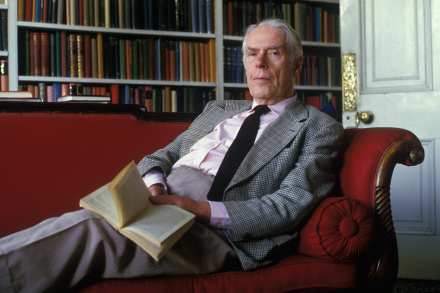
Fifty years ago today, a literary masterwork of the 20th century reached its conclusion with the publication of Hearing Secret Harmonies, the final volume in Anthony Powell’s 12-novel sequence A Dance to the Music of Time. Inspired by the painting of the same name by the 17th-century French artist Nicolas Poussin (which you, like Powell, can see at the Wallace Collection), the series began with A Question of Upbringing, published a quarter of a century earlier in 1951. This introduced us to the English narrator of the whole endeavour, Nicholas Jenkins (uncoincidentally he shares the Christian name of the painter, albeit with an Anglicised aitch), who attends a boarding school – unnamed but modelled on Powell’s time at Eton.

Peter Sellers and the comic tragedy of The Producers

It’s October 1994 and I’m rooting around in a garage in a non-descript LA neighbourhood, a few blocks from 20th Century Fox. The garage is piled high with clothes, cameras, audio tapes, reels of film and, in pride of place, a Nazi storm trooper helmet. This was the last resting place for a mountain of paraphernalia belonging to comedy legend Peter Sellers, who was born 100 years ago today. The house was owned by Sellers’s widow, Lynne Frederick, who had been found dead there just six months earlier. Now her mother lived there alone and was the keeper of the trove. After several G&Ts together, she agreed to allow me access. I was in LA filming a series of interviews for The Peter Sellers Story, a documentary for the BBC’s Arena.

It’s easier than ever to get into university

In the next couple of weeks, hundreds of thousands of young people will be heading off to university. They’ll be bracing themselves for the wholesale regret that freshers’ week will undoubtedly precipitate, and possibly contemplating attending a lecture or two. But among their number there will be some who got nothing like the requisite grades advertised on university websites, because clearing has radically changed the application landscape. Clearing shares certain features with the Grand National: tensions run high and chaos reigns as the starting gun sounds, and competitors jostle for position; a frenzied race ensues, and invariably there are a few casualties along the way.

At last, a garden without the gimmicks

‘Never join a queue.’ It’s not a bad motto. It keeps me away from tourist-choked hotspots. It means I don’t visit venues that offer free admission for children, advertise fast-track entry or are just one stop on ‘a multi-attraction sight-seeing experience’. My advice? If they want you to book a time slot, don’t go. As Bertrand Russell points out in The Conquest of Happiness: ‘Noise and the constant presence of strangers cause fatigue.’ It’s certainly difficult to appreciate great art or admire magnificent architecture in such circumstances. And when I’m studying the text explaining the significance of the Rosetta Stone, I don’t want someone leaning over my shoulder trying to read it at the same time. Especially when they’re chewing strawberry-flavoured gum.

My neighbour Angela Rayner and the lure of the Hove-eoisie

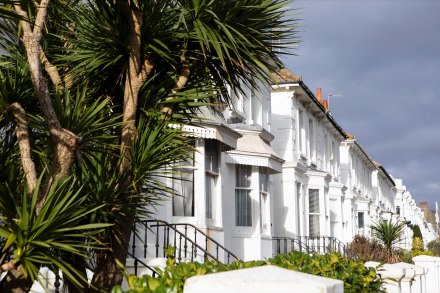
The flat in Hove which Angela Rayner infamously purchased is literally two streets and five minutes’ walk from my place, if I could walk. When I was planning to buy an apartment shortly into the new century, I looked at one in that street and thought: ‘Whoah – that’s a bit steep!’ I’d just sold my gaff to a developer for £1.5 million, so that gives one some perspective on how expensive my ’hood has become, having once been a boring outpost of Brighton. In the end, I decided I preferred Art Deco to Regency – but Mrs Rayner is obviously far classier than me. It’s telling that Ange has moved here to ‘Hove, Actually’ rather than Brighton.

Bets for the autumn double

The ‘autumn double’ refers to the two big handicaps run at Newmarket in late September and mid-October. The bet365 Cambridgeshire is a cavalry charge run over a straight one mile one furlong while the Club Godolphin Cesarewitch is a test of stamina run over twice that distance. The races could hardly be more different in nature but for generations optimistic punters have tried to land a big price double by choosing the winning horse in each contest: the former is run this year on 27 September, the latter on 11 October. Since it is my favourite flat race handicap of the year, I will deal with the Cesarewitch first. Irish trainers have won six of the last seven runnings of the race, often with dual-purpose horses – that’s ones that run on both the flat and over jumps.

Star pupils: aiming high with Marlborough’s astronomy students

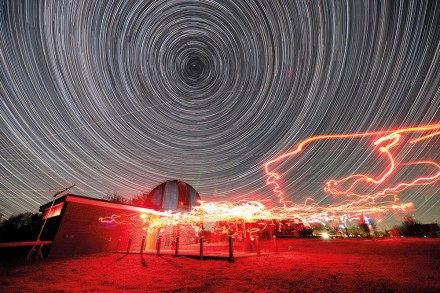
As I trudge up to Marlborough’s observatory, near the top of the playing fields, I’m transported back to my time as a pupil here. I studied astronomy for GCSE, which meant spending many evenings at the observatory, gazing at the night sky. The Blackett Observatory, which houses a superb Cooke 10in refractor telescope, celebrates its 90th anniversary this month. I’ve been invited back by my tutor Jonathan Genton, former head of science and teacher of the GCSE astronomy course, and Gavin James, director of the observatory, who oversees the astronomy programme. ‘Everybody should study astronomy,’ says James. ‘It’s the original science.

The false economy of cutting the Combined Cadet Force

What could be more fun for a 14-year-old boy than messing about in the woods with a gun? My school’s Combined Cadet Force offered precisely that, marching us through the Brecon Beacons and organising mock skirmishes with SA80 rifles (albeit using blanks). When we weren’t trying to shoot each other, we were fighting over OS maps and compasses, trying to find which bit of woodland we were supposed to be sleeping in. One group found a dead body on the side of a Welsh mountain. Another spent an evening drinking vodka and smoking cigarettes with a strange man in a caravan. At some point in the small hours, he got a little too handsy and they all ran back to their bivvies. I was hugely envious when they told us this as we ate powdered eggs, cooked in a mess tin over burning hexamine tablets.

Sir Nicholas Coleridge: ‘Girls at Eton? Never say never’

T he historic graffiti at Eton College, chiselled into its stone walls, wooden panelling and ancient oak desks, serves as a reminder to any Etonian that he’s merely the latest in a long line of boys stretching back to 1440 who have passed through the school and occasionally bent the rules. Two names chiselled together into a wall of the Cloisters are ‘H. COLERIDGE’ and ‘E. COLERIDGE’. ‘Not me!’ says Sir Nicholas Coleridge, Eton’s 43rd Provost, when I visit him on the last day of the summer term, ‘or any of my sons. They’re dated 1817, luckily, so we can’t be blamed.’ ‘The imposition of VAT has been a very damaging thing for education.

Pity the poor offspring of the pushy Pollys

What do tech bros and pushy parents have in common? They’re both fond of citing Samuel Beckett’s most famous quote: ‘Fail again. Fail better.’ For parents, the line is invariably deployed when their ‘gifted’ child has underwhelmed at a crucial juncture. Let’s park the inconvenient fact that Beckett’s line has nothing to do with self-help. Just go with it and nod sympathetically while inwardly enjoying their elaborate contortions in an attempt to save face. Perhaps my favourite example is a West London mother (we’ll call her Polly). Her boy’s failure to get into Cambridge (‘It wouldn’t have been the right place for him anyway, so we’re pretty relieved!’) has proved to be a gift that continues giving.

Should boarding schools be phone-free?

No development has shaken up the cloistered and carefully controlled world of English boarding school life quite as much as the invention of the smartphone. Traditionally, schoolboys might write home once a week. Perhaps they might be able to smuggle in a dirty magazine or other contraband, but for the most part boarders on school grounds were safely tucked away. Today, thanks to smartphones, children are sent to school with access to pornography, internet chatrooms and easy contact with their parents. What horrors might a group of 13-year-olds get up to in a dorm if left unattended with internet access? Should boarding school children be permitted to phone home each night? What horrors might a group of 13-year-olds get up to in a dorm if left unattended with internet access?