Colin Freeman

Colin Freeman is former chief foreign correspondent of the Sunday Telegraph and author of ‘Between the Devil and the Deep Blue Sea: The mission to rescue the hostages the world forgot.’

Trinidad is sick of Britain’s lax asylum system

From our UK edition

As political speeches go, it struck familiar themes. An island nation was being overrun by dangerous criminals, taking advantage of its asylum system. Word was spreading that the country was a soft touch. And as ever, millions of ordinary folks were paying the price. The violence is largely confined to the ghettoes, and many struggle to see why Britain’s asylum system classifies Trinidad as a warzone from which its citizens deserved sanctuary Nigel Farage, on the stump in Clacton-on-Sea in 2024? Or Home Secretary Shabana Mahmoud, perhaps, unveiling her tough new Danish-style migration policy earlier this month? No, the speaker was Keith Rowley, the prime minister of Trinidad and Tobago, 3,000 miles away in the Caribbean. But the island he was talking about was indeed Britain.

Ukraine has entered the grey zone

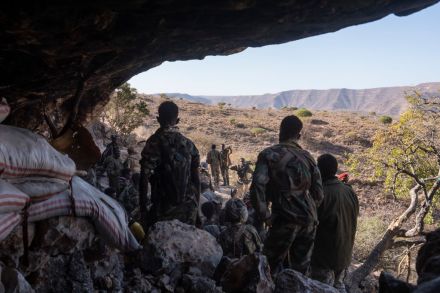
Kharkiv, Ukraine In a bunker on the outskirts of Kharkiv, a group of rookie Ukrainian soldiers are learning the basics of combat medicine.  The temperature outside is minus 20C, and clouds of breath hang in the air – as does the gravity of what they are letting themselves in for. The dummies used for training have fake bullet holes and missing limbs, and during a quiz at the end of the lesson, gruesome scenarios are playing out. ‘If you tie a tourniquet, but there's still bleeding, what do you do?’ ‘What is the significance of cerebral fluid in the mouth or ears?’ Most of these medics will not even be right on the frontline’s ‘red zone’. Instead they work in field clinics a few miles further back, where troops drop off injured soldiers for immediate triage.

Why are music biopics so bad?

From our UK edition

The Led Zeppelin singer Robert Plant was driving through America 20 years ago when he heard a radio station announce that if any listener donated $10,000, they’d never play ‘Stairway to Heaven’ again. Somewhat tired of the song himself, Plant rang up and pledged the cash. ‘It’s not that I don’t like it,’ he later said. ‘It’s just that I’ve heard it before.’ Rather the same attitude seems to have been taken in the band’s new biopic, Becoming Led Zeppelin, which was released in British cinemas last week. The trailer calls it the band’s ‘first ever authorised documentary’, but fans hoping that this means seeing rough cuts of ‘Stairway’ should beware: all that glitters is not gold.

The less cosy side of Danish hygge

From our UK edition

Judging by how well it fares in the annual UN World Happiness Report, there’s not much rotten in the state of Denmark. It regularly tops the UN chart and while it might feel slightly glib to compare wealthy nations with warzones – why can't those gloomy Afghans, languishing at 147th, cheer up? – the wider world can't get enough of those Danish feelgood vibes. This, after all, is the land that gave us hygge, a hard-to-define word translating roughly as ‘cosiness’ – wellness candles, fresh pastries and nights in by the fire. Many Danes have clearly decided that hygge is not quite compatible with open borders and multi-culturalism Recently, however, the Danish criteria for national happiness has shifted somewhat – and it doesn’t involve baked apples or alpaca jumpers.

The Brits who fought in Ukraine deserve to be remembered

From our UK edition

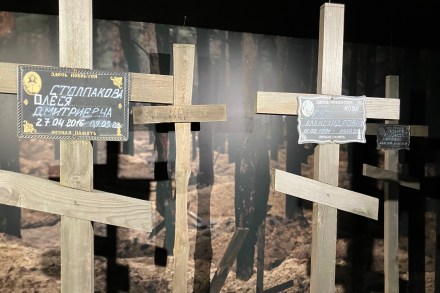
Last week, a West End arts venue hosted ‘Indomitable Ukraine’, a war artefacts exhibition with everything from prosthetic legs to captured Russian battle plans. It was put on by the War Museum of Ukraine and had an added poignancy for British audiences. On a black memorial board was a list of nearly 40 names of British citizens who have died while serving with Ukraine's International Legion – or, as the memorial puts it: ‘defending Ukraine against Russia's aggression.’ As things currently stand, there are no plans for any permanent British memorial to those who have fought for Ukraine Families of the fallen were invited to a special showing of the exhibition last week, where they had a personal audience with Kyiv's ambassador to London, General Valerii Zaluzhnyi.

Tim Shipman, Colin Freeman, Rachel Clarke, Michael Gove & Melanie Ferbreach

From our UK edition

40 min listen

On this week’s Spectator Out Loud: Tim Shipman interviews shadow justice secretary Robert Jenrick (plus – Tim explains the significance of Jenrick’s arguments in a special introduction); Colin Freeman wonders why the defenders of Ukraine have been abandoned; Rachel Clarke reviews Liam Shaw and explains the urgency needed to find new antibiotics; Michael Gove reviews Tom McTague and ponders the path that led to the UK voting to leave the EU; and, Melanie Ferbreach provides her notes on made-up language. Produced and presented by Patrick Gibbons.

Ukraine’s Foreign Legion was doomed from the start

From our UK edition

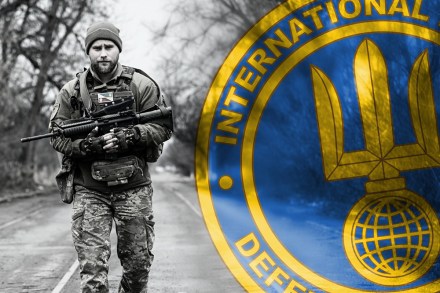
It seems that people would rather fight for a death cult than a democracy. At most, 15,000 foreigners have fought in Ukraine over the past three years. By contrast, an estimated 35,000 foreign fighters joined Islamic State, despite the risk of prosecution when they returned home. Why have so few westerners joined up, given that Ukraine’s Polish border is just a £50 Ryanair flight away? The answer is that despite having a master showman like Volodymyr Zelensky as its recruiting sergeant, Ukraine’s International Legion was a disorganised shambles from the start. Zelensky announced the Legion’s creation just three days into the invasion. ‘This is the beginning of a war against Europe,’ he said, ‘against democracy, against basic human rights.

Why the young worship folk horror

From our UK edition

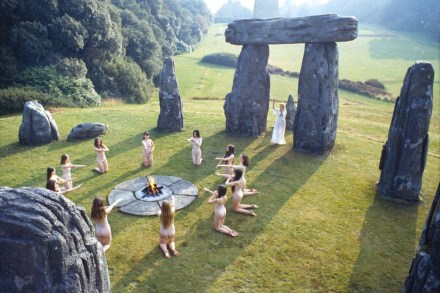
Built in the 1840s, St Giles’s Church in Camberwell bills itself as south-east London’s ‘most stunning Neo-Gothic performance venue’. A niche category, admittedly, but when it comes to hosting events, it’s certainly a broad church. Downstairs, the crypt serves as one of south London’s best jazz clubs. Upstairs, in between services, weddings and funerals, the pews often double as cinema seats, with a film screen erected in the chancel. Jesus Christ Superstar, perhaps? Conclave maybe, with a trigger warning about papal scheming? Far from it. The latest offering was the 1973 horror classic The Wicker Man, all about the remote Scottish island that rejects God’s message.

Who replaces the ayatollahs if the Iranian regime falls?

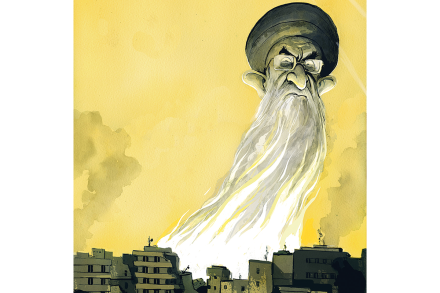
The masked gunmen of Jaish al-Adl are probably not the kind of people Donald Trump had in mind when he talked about “regime change” in Iran. A terror group in Iran’s southeastern Baluchistan region, they have a bloodthirsty record of shootings and suicide bombings, all part of a jihad for a separate Baluchi homeland. They are, however, excited by Israel and America’s bombing campaign, which they see as a once-in-a-lifetime chance to achieve their goal. As they declared recently: “We extend the hand of brotherhood to all the people of Iran to join the ranks of the Resistance.” How long that brotherhood would last is another matter.

Iran

Lunches, kidnappings and coups: my Frederick Forsyth connection

From our UK edition

Back in 2007, I went to war-ravaged Guinea-Bissau in west Africa to report on its rise as the continent's first narco-state. Latino cartels were using it as a staging post for shipping cocaine to Europe, bribing its rulers to turn a blind eye. So much product was being landed that local fishermen would catch stray bales of coke in their nets – a modern twist on Compton Mackenzie’s novel Whisky Galore. Guinea-Bissau’s new drug lords would go on to inspire a novel of their own. Back home on the Telegraph foreign desk in London a few months later, I got a call from no less a figure than Frederick Forsyth. His next novel, he told me, was going to be about the cocaine trade, set in coup-ridden west Africa: Narcos meets The Dogs of War.

What Warfare forgets about Iraq

From our UK edition

In Alex Garland’s new film Warfare, one detail stakes the film’s claim to be the most honest depiction of combat yet. Not the severed foot left lying on an Iraqi street after a bomb blast, nor a wounded US soldier’s screams as a medic bandages up what is left of his leg. Instead, it is that throughout the film’s 20-minute-long gun battle, only one insurgent is shown being felled by a bullet. In real-life combat, enemy fighters do not obligingly linger centre stage – they lurk behind cover, as hard to get a bead on as possible. This was particularly true of Iraq, where most of the fighting was against a hit-and-run foe that was forever vanishing around the corner. Yet in Warfare, it is not just the baddies who do not follow the standard Hollywood script.

Will Trump take a punt on Puntland?

As a man who views the world as one big real-estate portfolio, Donald Trump sees the potential in northern Somalia’s Puntland region. Lousy government, maybe, and definitely more than a few bad guys around. But Puntland has great winter sun and tremendous beaches, folks. It could be just the place to resettle Palestinians from the Gaza Strip. Jordan and Egypt have all but refused to rehouse Gaza’s population and according to Israeli diplomats, Puntland has made the shortlist of new Palestinian homelands. The Trump sales pitch is that this will allow Gazans to create “far safer and more beautiful communities” than their homeland could ever offer. The Strip meanwhile, will be rebuilt into a Dubai-on-the-Med.

puntland

Gavin Mortimer, Colin Freeman, Lawrence Osborne, Lionel Shriver and Anthony Cummins

From our UK edition

34 min listen

On this week’s Spectator Out Loud: Gavin Mortimer looks at how the French right can still win (1:48); Colin Freeman interviews Americans who have fought in Ukraine and feel betrayed by Trump (11:01); Lawrence Osborne details his experience of last week’s earthquake, as he reads his diary from Bangkok (18:38); Lionel Shriver defends traditional, monogamous marriage (24:07); and, Anthony Cummins examines media satire and settled scores as he reviews Natasha Brown’s Universality (31:13).  Produced and presented by Patrick Gibbons.

‘Trump is a coward’: meet the US soldiers who served in Ukraine

From our UK edition

The Ukrainians of Alabama are not the kind of lobbyists whose visits strike fear into pro-Trump politicians in Washington. They are an ad hoc campaign group of expats and refugees who do their best to put Kyiv’s case politely to representatives of Congress and Senate. They do, however, have a secret weapon, in the form of an ex-US soldier from the town of Tuscaloosa, whose backstory is the kind the Beltway finds hard to ignore. Alex Drueke, 42, is an Iraq veteran whose ancestors served in every major American war since the War of Independence. Appalled at Vladimir Putin’s invasion, he joined Ukraine’s International Legion, only to be captured on his first mission, becoming the first American PoW in Moscow’s hands since Francis Gary Powers in 1960.

The sad decline of the local paper

From our UK edition

Once at my old local paper, the Grimsby Evening Telegraph, a trainee made the mistake of sniggering when asked to cover the allotments sub-committee. ‘Don’t ever fuck with allotment holders,’ the news editor warned. ‘It may not matter to you, but they take those little patches of land very seriously indeed.’ Like most of the news editor’s salty words of wisdom, this advice was forged on the anvil of bitter experience. Grimsby’s allotmenteers guarded their marrow and runner bean patches with a Balkan-esque blood-and-soil passion. The slightest mistake could generate no end of angry phone calls and green-ink letters. I am not sure allotment coverage was quite what King Charles had in mind when he lavished praise on local newspapers last week.

In defence of self-publishing

From our UK edition

Years ago, newly triumphant from getting my first book published, I went to my parents’ house for a celebration dinner. Having duly toasted their son’s modest literary success, they then revealed that I wasn’t the new author in their social circle. An old university friend of theirs from Holland – we’ll call him Jörg – had just sent them a copy of his new book, ‘a sort of travel memoir, a bit like yours’. This was not a comparison I welcomed. My book was about quitting my job as pot-holes correspondent on the London Evening Standard to freelance in post-Saddam Iraq – not exactly Michael Herr’s Dispatches, granted, but more gripping, I liked to think, than writing about roadworks on Streatham High Road.

Colin Freeman, Harry Ritchie, Max Jeffery, Michael Gove and Catriona Olding

From our UK edition

35 min listen

On this week’s Spectator Out Loud: Colin Freeman explains how Islamic State tightened its grip on the Congo (1:23); Harry Ritchie draws attention to the thousands of languages facing extinction this century, as he reviews Rare Tongues: The Secret Stories of Hidden Languages by Lorna Gibb (8:00); Max Jeffery highlights the boxing academy changing young lives (13:20); Michael Gove reflects on lessons learned during his time as education secretary (20:30); and, Catriona Olding introduces the characters from her new Provence-based memoir club (29:27).  Produced and presented by Patrick Gibbons.

Why does the beheading of Christians not make headlines?

From our UK edition

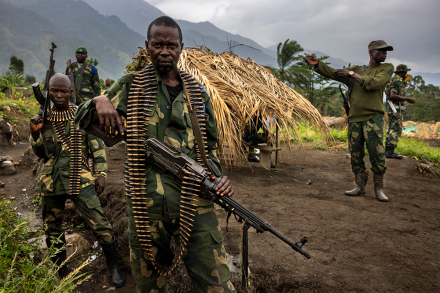
The Congolese chapter of Islamic State has a ruthless way of stopping outsiders reporting their presence to the authorities. Under the edicts of their founder, Jamil Mukulu, who once lived as a cleric in London, anyone who strays across them in their forest hideouts should be killed on sight. ‘Slaughter him or her, behead them immediately,’ Mukulu once commanded. ‘Never give it a second thought, do not hesitate.’ His acolytes take him at his word, even when it’s not just one hapless villager who runs into them, but dozens. Last month, they beheaded 70 Christians in Mayba in the eastern Congo, according to the Catholic charity Aid to the Church in Need, which campaigns on behalf of persecuted Christians worldwide.

Ukraine wants its nuclear weapons back

From our UK edition

Kyiv Had America and the Soviet Union ever fought the battle of Armageddon, it would have started from beneath a patch of muddy fields a few hours’ drive south of Kyiv. It’s here, in an underground base near the once-closed town of Pervomaisk, that Moscow housed 80 strategic nuclear missiles, all pointed at the US. Today it’s a museum, a dark tourism excursion, with a 120-foot long ‘Satan’ missile on display. Satan carried 10 warheads plus 40 decoys, and could have single-handedly flattened Britain. The only disappointment, for the Dr Strangeloves among us, is the base’s ‘nuclear button’ – not a red switch with a skull-and-crossbones, but a dull grey key on a VHS-style console marked ‘Start Up’.

Other artists sing Dylan’s songs better than him

From our UK edition

At the start of the new Bob Dylan biopic A Complete Unknown, Dylan’s protest-singer mentor Pete Seeger implores him not to swap his trusty acoustic for a newfangled Fender Stratocaster electric. ‘A good song can get the job done without the frills,’ says Seeger – who, for all his progressive views, wasn’t very hip to the new sound of rock ’n’ roll. ‘Yeah, but sometimes they sound really good,’ retorts Dylan. It’s a brief exchange, but it shows how the times were indeed a-changin’ – and Dylan’s own music with them. Comercially, abandonment of his folkie roots in search of his inner Rolling Stone was to prove an astute decision. His debut electric single, ‘Subterranean Homesick Blues’, became his first single to chart in the US.