Spectator Life

Spectator Life

An intelligent mix of culture, style, travel, food and property, as well as where to go and what to see.

Three wagers for Newmarket

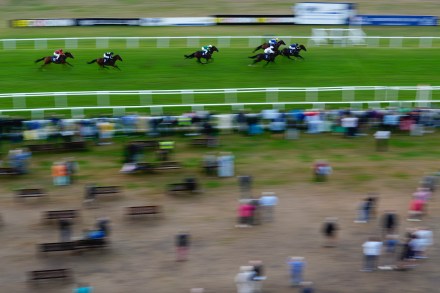
Trainer Jack Channon knows what it takes to win Newmarket’s bet365 Cambridgeshire (tomorrow, 3.40 p.m.) having been assistant to his father, Mick, when the stable won the race three years ago with Majestic. Majestic, now seven and still in the yard that Channon took over from his dad at the start of last year, was 25-1 when he landed the race in 2022 and this is a race that throws up plenty of shocks. Two of the last five winners of the race returned odds of 40-1, one at 25-1 (Majestic) and another at 20-1. Those statistics suggest that, although the two horses at the top of the market, Treble Tee and Fifth Column, have plenty in their favour, those horses’ odds of no better than 5-1 and 7-1 respectively are very skinny for this 24-runner handicap.


The decline of the Booker Prize

‘Prizes are for little boys,’ said Charles Ives, the American composer, ‘and I’m a grown-up.’ It’s a pretty sound rule of thumb. The prizes worth having are usually those which reflect a body of work, not a single achievement. Cary Grant, the greatest leading man in the history of cinema, never won an Academy Award. Neither did Alfred Hitchcock, who made a few half-decent films. They received ‘lifetime awards’ from the red-faced academicians, but those gestures merely endorsed William Goldman’s view that, in Hollywood, nobody knows anything. As Billy Wilder told the producer who asked what he had been up to: ‘You first.’ Nobody takes much notice of the Grammys, which were designed to reward commercial success.

Cigarettes and currywurst in Big Berlin

I’m standing at a bar in a car park on the rooftop of a shopping centre. I ask the bartender if the beer on draught is big or small. ‘That depends on your definition,’ he says. ‘What is big? What is small?’ The oonce-oonce of German trance music makes it hard to hear, and I’m distracted by the solitary figure on the dance floor wearing all black and contorting her body into the shape of a pretzel. ‘Is the beer groß or klein?’ I shout. The bartender – who is well over 50 and has the fashion sense of a Green Day groupie from 2005 – just smirks and says, ‘That’s for you to decide.’ I order the beer anyway. It is small (klein). I don’t tip. This is Berlin. Berlin is big.

Hell is a wine list

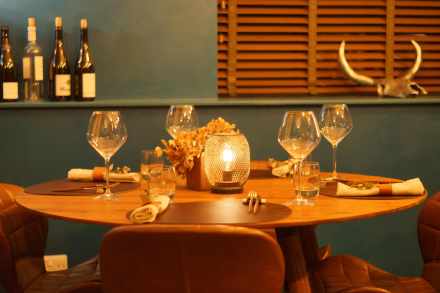
Wine lists give me the fear. I can still recall the prickle of adrenaline when my father handed me the leather-bound menu when I was in my early twenties because I had started working for a wine merchant after university. Should I play it safe or take a punt on something unusual that some people might hate? Perhaps it would be safest to pick the second cheapest. Their drinking pleasure was in my hands. Argh, the pressure. You’d think that after 15 years of writing professionally about wine this anxiety would have faded. It actually gets worse. The more I know, the more indecisive I become. Is the wine a bit too young? Was it a good vintage? Meanwhile the rest of the table is getting thirsty. One can ask the staff but in many places they’re just as clueless, if not more so.

A Mayfair brasserie for people who work, or at least pretend to: 74 Duke reviewed

There is an immaculate brasserie called 74 Duke at 74 Duke Street, Mayfair: this is postcode etymology. Duke Street runs from Selfridges to what used to be the American embassy in Grosvenor Square but is now (I assume) a paranoid hotel: the Chancery Rosewood, which has kept the monstrous eagle on the roof. If Duke Street was ever interesting – I like to imagine Mrs Dalloway having a panic attack in the road – it isn’t now. It sells the eternal detritus of the British rich – watches, capes, meat – who I suspect are into crypto these days. It is all a feint anyway: fake London for fake people, and life is at the edges now. A brasserie for the undead, then, and what to say? It’s very nice, but the last restaurant I reviewed near here was Mister Nice, which wasn’t nice at all.

There’s nothing quite like the Ryder Cup

It’s never been easy to warm to golfers, an overpaid, self-obsessed bunch who rarely fail to ask for more. And it’s even harder to warm to American golfers, who have now insisted on picking up half a million or so for playing for their country in the Ryder Cup. Nice, eh? And this weekend’s Ryder Cup, at the savagely hard Bethpage Black course on Long Island, could, in Donald Trump’s hyped-up MAGA-land, go over the top as it did in Brookline in 1999. On that occasion beered-up US fans (and players) behaved outrageously, swarming over greens, heckling Europe’s players and generally being obnoxious. Well, with a bit of luck this year will be very fruity, too. There’s nothing in sport quite like a Ryder Cup: it’s a team event for individuals.

Oscar Wilde would loathe Stephen Fry

‘I was born to play Lady Bracknell,’ Stephen Fry swanked recently, in an interview to mark a new production of The Importance of Being Earnest, running until January. I can’t be the only one to greet the idea of another round of Fry interviews with a desire to go to bed and not come out till it’s all over. But that would be a long hibernation. For Stephen Fry pronouncements are like professional tennis; it’s always open season. You can’t get away from the clown, particularly when he’s lecturing women on how they should feel about having great hairy men in mascara sharing their private spaces. Magnificently, J.K.

Le Creuset is for amateur cooks

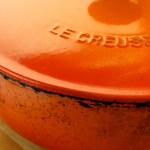
There have long been Le Creuset fanatics. During lockdown, John Lewis reported that sales of Le Crueset increased by 90 per cent. And last year, a sale at a Hampshire outlet store brought a crush of hundreds of people; police even had to attend. Then there was the affair of Pauline Al Said over the summer, a Le Creuset burglar who boasted that she was Britain’s poshest thief. Pots and pans have become part of a competitive aesthetic portfolio that not only indicates your degree of stylishness as a cook, but your attitude to the latest trends in wellness and health. The ideal kitchen is now free of ‘forever chemicals’, and exclusively stocked with glass, wood, cork, ceramic, cast iron and stainless steel.

Shouldn’t we celebrate Rising Damp?

They have been blowing out candles for Fawlty Towers, and it is meet and right so to do. Fifty years old this month, John Cleese’s portrait of a Torquay hotelier at war with the world remains a masterpiece of British comedy. But there’s another Seventies romp we should not ignore, which was just as funny, and featured a central performance every bit as convincing. Leonard Rossiter may be better known as Reggie Perrin in David Nobbs’s series about a dreamer who longs to escape suburbia, but his greatest role was Rigsby, the seedy landlord, in Rising Damp. Eric Chappell adapted the show, which ran for four years from 1974, from his stage play, The Banana Box.

Carrying Peter Mandelson’s coat

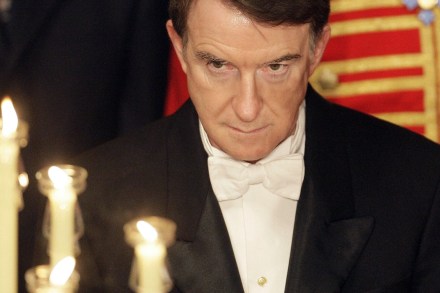
As coats go, it was very nice. A dark blue cashmere Loro Piana number that reeked of quiet luxury. But for a man who once identified as a communist, it was laughable. It was 2016 and I was standing in the atrium of the newly remodelled Design Museum on Kensington High Street. As assistant to the museum’s director, I was engaged in a normal day on the job: as Peter Mandelson’s coat bearer. Other humdrum days at the coalface involved talking to Terence Conran about his dogs, making sure Alexandra Shulman had a hard hat on and holding then culture secretary Matt Hancock’s champagne glass while he posed for pictures. Mandelson, soon to be announced as the chairman of the museum’s trustees, was in the museum for a state visit.

A Bagpuss film is a terrible idea

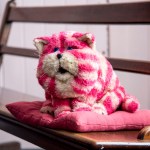
News that the classic children’s TV show Bagpuss is to be given the full film treatment doesn’t bode well for fans of the original series, which ran from February to May 1974. Set in an old-fashioned bric-a-brac shop, each of the 13 episodes featured the eponymous ‘saggy cloth cat’ and his eccentric friends poring over an object delivered to the shop by a little girl named Emily. In a world where brash, epilepsy-inducing cartoons have become the norm, you’d think a whimsical tale about a stuffed cat rifling through detritus might seem old hat to hyped-up, instantly gratified youngsters. But you’d be wrong.

The gospel of garlic

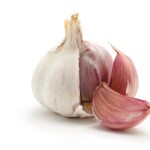
My partner’s mother, Enid, introduced me to duck with 40 cloves of garlic. She told me it originated from an old Jewish Ashkenazi recipe, although the French claim it’s theirs. It doesn’t matter because it’s delicious, with most of the cloves shoved under the crispy duck skin, permeating the meat, and several pushed into the cavity along with half an orange. Because it is cooked long and slow, and the duck is very fatty, the garlic turns mellow, sweet and extremely aromatic. When I asked Enid if she counted the cloves, she held out both hands and said, ‘about this much’. That opened my eyes to the world of garlic as a primary ingredient rather than just a supporting player: I learned that cooking garlic in certain ways can completely transform its flavour.

Wild swimmers are the most boring people in Britain

There’s much to enjoy about the autumn months in the UK. Teenagers are restricted to school playgrounds rather than the high street between the hours of nine and three. Landlords in rural pubs start remembering that they have a fireplace that might be worth lighting. And provincial airports become populated with polite, cashmere-wearing pensioners on their way to the Azores, rather than gangs of stags and hens drinking the Wetherspoons dry at 7.30 a.m. But there is a fly (or should that be waterborne parasite?) in the ointment. There was a time when there was no such thing as ‘wild swimming’. You just called it swimming outdoors.

Happy 200th birthday to our railway

You might have missed this because it hasn’t exactly been saturated with media coverage, but this week is the 200th birthday of Britain’s railway. In fact, it’s the 200th birthday of all railways, since we invented them. It was on 27 September 1825 that service began on the Stockton and Darlington Railway. Travelling a distance of just eight-and-a-half miles at about 15mph, the world’s first public commercial rail service arrived to a crowd of 10,000 and – as would become a characteristic feature of future British rail travel – was delayed by half an hour due to engineering problems. Yes, the worldwide rail revolution began in the north-east of England – the Silicon Valley of rail. I know, not since H.G.

The evolution of the political animal

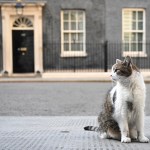
Most of our politicians themselves are not obedient, kindly and loyal. Similarities between candidates and their faithful cat or dog are few – but as trolls now deter supportive spouses and photogenic children from saccharine election leaflet photos, pets are increasingly becoming familial proxies. When Nigel Farage does a TikTok about his dogs Pebble and Baxter, thousands comment approvingly. But finding a family photo of the Reform UK leader is nearly impossible. And that, says Farage and many like him, is entirely deliberate. Political animals are not new. Caligula threatened to make his horse, Incitatus, a consul. Cardinal Wolsey’s cat is immortalised in a bronze statue in Ipswich.

Life lessons from a 105-year-old

I once asked a 105-year-old woman if she had any advice. What lessons had she learned throughout all those years? She paused and reached for the cup of tea I’d brought her. ‘Oh, I don’t know,’ she said and took a sip. And that was that. I’d half expected my mind to be blown, to leave her room practically floating, to hear an illuminating sentence that would unlock life and help me understand how to live better. I’d prepared for enlightenment and received humility. I work in a care home where the average age of its residents is 88. I’ve heard many extraordinary stories from a prisoner of war, a monk, a friend of Frank Sinatra’s. A nurse once told me: ‘The key to happiness is giving it away.’ A hairdresser advised: ‘Be willing to talk.

The no-choice rural restaurant with just two sittings a week

Long Compton is in the Cotswolds, but to the east, where there are no boutique hotels or shops selling artisan candles to tourists. Banburyshire and its surrounds are actual countryside. Fields roll away in the manner Germans call Kulturlandschaft, meaning landscape shaped by centuries of human care. This is the sort of country that makes people write poetry about hedgerows and choral music about sheep: lovely to live in but, by long British tradition, a dismal place to dine out. Discovering a truly great restaurant in Long Compton – population 764 – feels like finding in rural Warwickshire one of those bucolic la France profonde dining experiences that seemed nostalgic fantasies even when M.F.K Fisher described them.

Three bets for Newbury tomorrow

The death this week of film legend Robert Redford reminded me of my favourite quotation relating to gambling. It was uttered by his fellow actor Paul Newman, who was Redford’s co-star in two of their greatest films: The Sting and Butch Cassidy and the Sundance Kid. When Newman played the part of ‘Fast Eddie’ Felson in yet another film, The Color of Money, he said: ‘Money won is twice as sweet as money earned.’ I have this quote framed on the wall of my office and read it regularly as an inspiration to finding winners. Moving on to the task in hand: trying to find a weekend winner. I usually like the challenge of big-field handicaps but the Ladbrokes Ayr Gold Cup tomorrow (Ayr 3.35 p.m.

Peter Mandelson’s greatest sin? Baby talk

There’s was so much to loathe and laugh at in Peter Mandelson’s contribution to Jeffrey Epstein’s ‘birthday book’ (which inadvertently has turned into more of a ‘burn book’). But the words ‘yum yum’ were, for me, in a league of their own. Whatever they were referring to – it could have been the peachy posterior of a pool-boy or a particularly perfect profiterole – they identified Mandelson as a practitioner of verbal infantilisation. For this alone, he deserved to be sent packing. I spent five months in hospital during last winter and spring, and though the nursing staff were generally excellent, we were oft spoken to like children in preschool.

The tyranny of tipping

At the Eurostar terminal at London St Pancras, on my way back to Paris, I stopped at the Station Pantry. It’s a counter at the back of the terminal, and it does a roaring trade because it’s the only coffee place between immigration, security and the trains. There’s little else to do while you wait to be called to board, particularly when there aren’t enough seats for everyone. I ordered an espresso for £3.60. The cashier swung the screen around for me to pay. Ten, 15, 20 per cent? A tip for a cup I was about to carry away myself. I said it was wrong to be asked for a tip on takeaway coffee. She said that if I didn’t like it, I could press the red button and decline. But that’s not the point. This practice of prompting us to leave tips hasn’t come from customers.

The secrets of a British apple pie

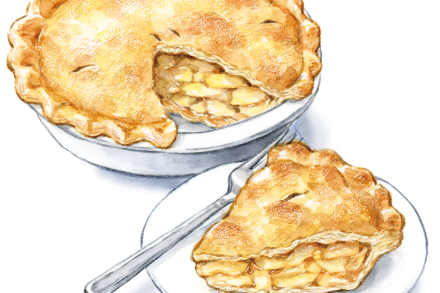
‘As American as apple pie’, or so the saying goes. But what happens if the apple pie in question isn’t actually American? America is the source of many of my most beloved vintage recipes, especially puddings, and particularly pies. But the knock-on effect is that sometimes they can overshadow similar dishes that come from other places. The British apple pie is not quite an underdog in this fight, but it’s certainly less celebrated than its cousin from across the pond. It took a while for apples to take hold in the US. Only crab apples were native to America, and they were small and sour – no good for baking with.

The glory of the Goring

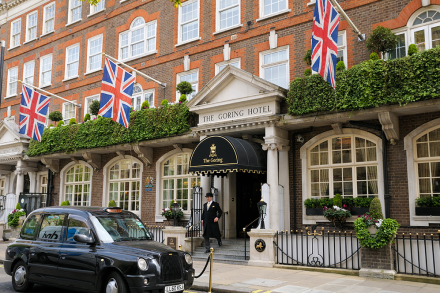
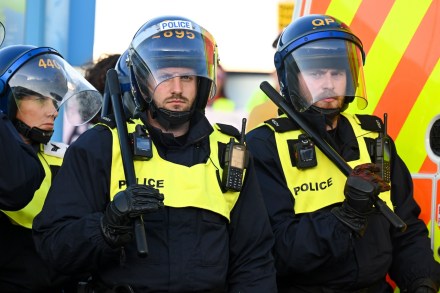
Last weekend, I was in England: among two very diverse aspects of the nation. In recent months, every Saturday, central London has been plagued by demonstrations. I suppose that there must be a right to protest. But what about the right to mosey around Westminster and Whitehall without blocked roads and with any hope of peace and quiet? Last Saturday saw the largest manifestation of all: less of a protest than an English uprising – a flag-waving two-fingered revolt against the liberal intelligentsia. I kept well clear, having no wish to be caught up or kettled, and later there were attacks on the police. This should lead to jail sentences. Two conclusions could be drawn.

I don’t work for the police, honest!

I was 20, and in the recovery room of my local hospital, coming round from general anaesthetic after minor surgery. My mind was lost wherever our minds go in such conditions, steering itself gently back into its familiar harbour. But then, suddenly – or as suddenly as anything can be when you’re in that numbed nirvana – I became aware that someone in the next pallet along was addressing me. He was staring at me from his own fugue state, and slurring the words, ‘You’re that copper. You are. You’re that copper.’ Now, talk to any nurse, and they’ll tell you the very peculiar and often entertainingly uninhibited things that people come out with as they drool back into consciousness.

Will my neighbours please shut up?

For the past decade I have suffered from noisy neighbours in the flat below mine. First it was the stream of student tenants, thundering up and down the communal staircase day and night, banging doors, shouting to each other, playing their guitars. Then at last the flat was bought by a middle-aged owner-occupier, who completely gutted and refurbished the place; the deafening noise and pervasive dust from the months-long building works was almost unbearable. Now that his works are over, I have to put up with the day-to-day clatter and clamour of a neighbour with a lot of Gen Z house guests and a penetrating voice. Noisy neighbours are a plague for those who work at home. Naturally, I find it most maddening when I am in the middle of writing a book or article.

Macron is facing a Roquefort revolution

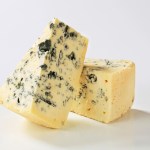
I love Roquefort, having been introduced to it when I was 16 by our French exchange student Geneviève, whose father was a producer of the cheese. She brought some in her luggage, wrapped in many layers of brown paper so that the unique, pungent smell wouldn’t invade her clothes. My parents, gourmet cooks and gourmands, immediately started incorporating Roquefort into their menus. Back then it was difficult to find a blue cheese on the US east coast (although Wisconsin had been making one for centuries). When a food shop called Amanda’s opened in Westport, Connecticut, my Swedish mother would drive the seven miles from where we lived to buy Roquefort and other international gustatory goodies (kuminost – a mild Swedish cheese with cumin – was also on her weekly list).

Miriam Margolyes has nothing to say and is determined to say it

Miriam Margolyes is on the road, bringing joy to every corner of the kingdom, and aren’t we the lucky ones? It’s a kingdom she no longer has much time for, if she ever did, however hard the coiners of trite phrases try to dress her in the garb of a ‘national treasure’. When the tour is over she’s off quick-smart to a new life in Tuscany, where British folk who dislike their native land have always found a bed. There’s a book out as well, so there is no excuse for not paying attention. As dozens of chat shows have tried to persuade us, she is a bona fide ‘character’, fitting into the English pageant somewhere between Lady Godiva and a bearded lady. Have your tummy tickled as she farts merrily along the rolling English road.

Save our satire

When Henry Kissinger was awarded the Nobel Peace Prize in 1973, musician and satirist Tom Lehrer famously quipped that political satire had become obsolete. Today, many people under 50 would be hard-pressed to say who Kissinger was – let alone why the award was controversial. So perhaps, given recent events, it’s time to update the epigram: satire became obsolete the day an Irish comedy writer was arrested by five armed police officers and questioned for hours over a few offhand remarks he made on X. Personally, I never post anything on X. I don’t have the time or energy. And while I’m an implacable supporter of free speech, I also think it behoves us all to exercise discretion about what we say and write. Poking sticks into wasp nests will, inevitably, get you stung.

Cask ale is running dry

Given that almost 1.7 billion litres of beer were poured in British venues in the past year, you’d think we’d be able to keep the country’s biggest beer festival afloat. It is therefore sad to hear that the Great British Beer Festival will be taken off tap next year, its organisers claiming it can no longer afford to get its round in. ‘In the simplest of terms, we did not get enough people through the doors to cover costs,’ according to Ash Corbett-Collins, the chair of the Campaign for Real Ale (Camra), who may well be ruing the decision to move the festival to Birmingham, cited by more sceptical beer fans as a hindrance to the event’s footfall. It’s not the only skunky smell around Britain’s leading beer champions, who appear increasingly tired and emotional.

Bring back the big family

As a species we are richer than we’ve ever been before. We live longer. We have more food to eat than is good for us. We have abundance in all things. And yet we are no happier than we were. In fact, many of us are downright unhappy. Among our woes is an epidemic of loneliness. Some 8.4 million of us are now living alone in Britain, and more than 3.8 million report being chronically lonely. We lock up more people in our prisons than ever and we can see for ourselves the signs of friction in our society, one which is clearly not entirely at peace with itself. So somewhere we have gone wrong. And I think I know where. It’s our families. They are simply too small. The average number of children born per woman in England and Wales has fallen to 1.