Spectator Life

Spectator Life

An intelligent mix of culture, style, travel, food and property, as well as where to go and what to see.

Is there anything worse than being an American ‘soccer’ fan?

New York People are too into politics. I used to be called gay for liking politics in school. They should go back to that. No one used to care about politics. Now everyone’s into it and it’s made people insane. I think it’s partly to do with social media in general. I don’t really care about social media – I wouldn’t have it if I didn’t need it for my job. It baffles me that there are so many people just screaming at, say, the Secretary of Agriculture all day. For no money. It’s probably because they don’t have jobs – the economy can’t absorb labour like it used to. Similarly, podcasts need to die. It should be a humiliation to admit publicly that you listen to one. I only listen to one podcast: Arsenal Vision, about the football team.

‘Italian that just works’: Broadwick Soho reviewed

This column sometimes shrieks the death of central London, and this is unfair. (I think this because others are now doing it.) It is not the city we mourn but our younger selves. Even so, the current aesthetic in restaurants is awful and needs to be suppressed: beiges and leathers, fish tanks and stupid lighting, all are nauseating. But I hated Dubai. You say Atlantis, The Palm, I say enslaved maid crying for her dreams. But there is refuge, at least from the aesthetic, and it is as ever the child of imagination and nostalgia. Broadwick Soho, the newish hotel in the street where typhus was chased down to a water pump, is a rebuke to desperate minimalism.

Nothing can save test cricket 

Forgive me if I don’t join the general ‘Make mine a treble’ hoo-ha about the future of Test cricket after the theatre of the final day of the Oval Test against India, as an injured Chris Woakes made his way to the crease. Why was Woakes ever allowed to bat? His shoulder was dislocated and he was clearly in agony. Of course he wanted to help his country but he should have been stopped by Ben Stokes or Baz McCullum. This was a game of cricket, not the search for the nuclear codes. We knew the last pair would have to run to try to keep Woakes off the strike. What if he had tripped? That happens on cricket pitches – a lot. And what if he had had to face a ball?

The unorthodox appeal of the Shergar Cup

With DJs and MCs inviting the crowd to dance on the parade-ring steps as if they were on a beach in Ibiza, and hectoring them into shouting ‘Yay’ or ‘Neigh’ to racing quiz answers, Ascot was a different place last Saturday – Dubai Duty Free Shergar Cup day. Grimacing traditionalists would have been stamping on their Panamas. But the traditionalists don’t come. Shergar Cup day, a series of team races between groups of three jockeys representing Europe, Asia, Great Britain and Ireland and the Rest of the World, is aimed at a different crowd and it simply doesn’t matter that it’s as artificial as a plastic Gruffalo. It’s an informal bouncy event which attracts a younger, less racing-fixated audience.

Britain needs Peter Mannion MP

The current Labour government grows ever more farcical. Despite its promise to ‘tread lightly’ on people’s lives, we’ve seen war declared on farmers, private schools, pubs, humour at work and even allotment owners. This week came the news that drivers over the age of 70 must take compulsory driving tests, with a mandatory ban if they fail – presumably so that, when younger relatives start ushering them towards the ‘assisted dying’ clinic, they won’t be able to make a quick getaway. Starmer, on winning the election, promised the ‘sunlight of hope’, yet things have rarely felt gloomier. Rachel Reeves may have wept for the nation in parliament last month, but its miseries are so often of her devising. You can’t help wondering what The Thick of It would make of it all.

How England can finally win the Ashes

With the summer’s Test matches over, England’s cricket coach and captain will now be wondering how to avoid our usual trouncing in Australia this winter. Normally we try to win and we get walloped. On the last three occasions we’ve ventured Down Under, Australia have either whitewashed us 5-0 or beaten us 4-0 with one game drawn. And, weather permitting, Australia don’t just win – they usually crush us by massive, embarrassing margins: an innings and 123 runs, ten wickets, 381 runs… These humiliations show that on their home turf Australia are approximately twice as good as we are. Australia often score more runs in one innings than England can manage in two. Unless we take drastic measures, that could well be the fate that awaits us this winter too.

Phones are drowning out our inner lives

I’m sitting in a meditation class at a yoga studio in Chicago, neon lights pulsing pink and purple while the instructor talks over a movie soundtrack. I almost can’t believe I’ve paid $30 to be here. When she runs out of scripted wisdom about mindfulness and presence, she starts ad-libbing: ‘And that doesn’t mean you shouldn’t respect yourself…’ I try to tune her out, focus on my breath, but it’s impossible. She demands our attention. I went to six classes before deciding it was a waste of time. Each week, fewer people showed up. By the sixth class, it was just me and this 40-year-old instructor. Isn’t meditation supposed to train attention through silence and stillness?

Do you have a Facebook stalker?

We’ve all seen appalling stories of people, usually – but not exclusively – women, being stalked by a spurned suitor, and how this can have terrifying and sometimes life-threatening sequelae. However, the popularity of social media has brought about the advent of the less dangerous but mighty irritating social media stalker – or ‘smalker’, as I like to call them. The smalker is usually a spurned friend who has been chewing her lips with fury since you removed her from your Facebook ‘friends’ list. Sometimes they only requested to be your ‘friend’ in the first place so they could lurk on your page, twisting their face into a sucking-a-wasp grimace: an upside-down smile with a wrinkled nose.

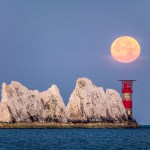
The Isle of Wight is an England that time forgot

‘August for the people and their favourite islands,’ wrote W.H. Auden. My own favourite island in Britain is the Isle of Wight, even though my introduction to it was less than ideal. I was seven years old and had been sent to the island for the ritual initiation for British middle-class males of my generation: immersion in a boarding school with around 50 other pre-pubertal boys. I was, in fact, the youngest boy in the school and this was the first time I had left home. I have already written in these pages about my five years at a boarding school on the island; bizarre and bewildering rather than the hell of paedophilia and punishment described by others writing about their prep school days. But I want to convey here the curious charm of the island itself.

I’ve finally come round to honey

Honey enjoys almost superpower status. It is credited with healing viral infections, cuts, hay fever and insomnia, to name but a few of honey-curing maladies. On a regular basis, a particular honey is discovered that bodybuilders swear by, or religious leaders have considered akin to holiness. I had never been keen, considering it an overly sweet inconvenience of a food: however fancy the spoon used to dispense it, it somehow always ends up on my hands (and my hair) before it reaches the yoghurt. I have tended to stick with a very good quality dark brown sugar when in need of something to take the bitter edge off English strawberries.

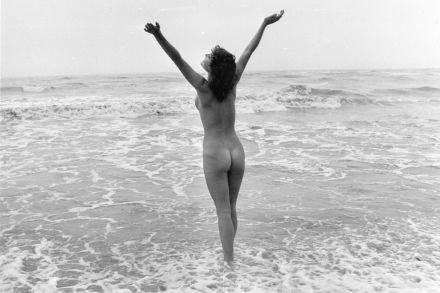
The politics of nudity

A recent, rather beautiful piece published here told of how the writer, Druin Burch, initially somewhat alarmed by the variety of naked bodies he unexpectedly encounters while swimming in the Med (‘I wouldn’t mind if it was only young women,’ he says to his wife) comes to appreciate the loveable imperfection of the human form. I can’t say I’m with him on this. I totally understand fit women wanting to take their tops off in public as an expression of sheer high spirits; as a teenager, I used occasionally to do it. But humanity generally? Put it away, puh-leeze! As a resident of the fair city of Brighton and Hove, I’ve got skin in the game, metaphorically.

The decline and fall of TfL

Don’t get me wrong: London’s transport system is still one of the best in the world. I’d sooner have a backstreet dentist with jittery hands pry my right molar out with a rusty wrench than wait for a bus in Naples or attempt to understand the New York subway map. But that doesn’t mean Transport for London is without fault. The mere thought of the Central line during rush hour is enough to turn the sanest of commuters into a babbling, dribbling, catatonic mess.  TfL customers are dissatisfied: staff are nowhere to be seen; criminals use the Tube network like a labyrinthian tunnel system, evading prosecution at every turn; and strikes and service disruptions have driven a wedge between commuters and transport workers. But it’s not just the Tube.

Am I cursed when it comes to my pets?

You could say my unfortunate track record with pets began in the cradle. At the time of my birth my Hungarian parents had a dachshund named Herr Doktor (because of the serious expression he always wore), or Doki for short. He was very put out by my arrival, as I received much of the attention previously afforded to him, and because my fastidious mother wouldn’t allow him into the nursery. So he upped sticks and moved in with the family next door. But as Doki was unfamiliar with the terrain there, one day he darted on to their driveway at the wrong moment and was run over and killed. While I obviously wasn’t to blame for Doki’s sad demise, I did play a role in it. And in time the incident seemed to fit into a pattern in my life.

All the fun of the feria: why August is the time to visit Málaga

If I were a doctor specialising in alternative treatments, and someone came to me feeling depressed, I wouldn’t send them off with a herb-based elixir or a bunch of St John’s Wort. I wouldn’t cleanse their chakras or refer them to an acupuncturist. I’d send them off to Málaga’s annual fair, which this year runs from 16 to 23 August. Summer in Andalusia is feria season – the best cure that I know of for a bout of the blues. Usually lasting three or four days, or an entire week in the regional capitals, ferias are occasions of pure alegria (joy) and inclusivity.

Let’s scrap football’s post-match interviews

‘The view was stunning.’ ‘The hotel room was well appointed.’ ‘It’s a city of contrasts.’ Such numbing clichés in travel commentary are considered, by anyone remotely au fait with Eric Newby or Patrick Leigh Fermor, to be unacceptable. But if you watch Match of the Day, you’ll know the footballing equivalents of these kinds of asinine blandishments have long been deemed worthy of the kind of critical scrutiny usually reserved for Jonathan Franzen novels. After following the game for 40 years, I’ve finally reached breaking point with the abysmal drivel that comes out of the mouths of players, pundits and managers alike. Of course, they aren’t being paid to be articulate and witty to the cameras – they’re paid to win games of football.

Four wagers for York and Ascot

Ascot’s Shergar Cup meeting tomorrow is a fun event but, in terms of good bets, it is York’s Ebor meeting later this month that excites me more. The four-day event starts in less than two weeks and, unless there is a drastic change in the weather, racing looks likely to take place on fast ground. The most likely winner of the Sky Bet Ebor, Europe’s richest flat handicap, on 23 August is Hipop De Loire, who was desperately unlucky in running in this race a year ago when fifth to another Irish raider Magical Zoe. Willie Mullins’s eight-year-old gelding showed he is in good form when winning easily over hurdles at Galway late last month. However, he is now a top-priced 7-2 and that’s too short for a race this competitive.

‘Mankeeping’ is the secret of a successful marriage

Don’t women have a bum deal? Not only do we have to bear children and make our way on the harsh plains where second-wave feminism and rampant neoliberal professionalism meet, but apparently now we must also perform ‘emotional labour’ for our husbands. Sorry: husbands and partners. This emotional labour has been christened ‘mankeeping’, the latest feminist buzzword. Dreamed up by Angelica Puzio Ferrara, a psychologist at Stanford, it describes the heavy lifting that women in heterosexual relationships do to keep ‘the family harmony alive’.  And it appears to have struck a chord. ‘Mankeeping: finally, a word to describe the emotional labour of my 38-year marriage,’ declared a recent Telegraph headline.

Clapping, going grey, getting naked: how to break your phone habit

I’ve been having trouble with my phone recently. I noticed it particularly while in France a few weeks ago. I’d flop on the sunbed with a book and then spend half an hour scrolling through ridiculous videos online. But then I do it at home, too – go to bed early thinking ‘Ooh good, nice early night with my book’. And then I see a video of a dog jumping into a swimming pool, or a chef cooking a Japanese omelette, or someone removing blackheads from their nose, or a clip of something that might be a cake but also might be a shoe, or someone else offering an improbable DIY tip involving a clothes hanger and a jar of honey, or a video of nail art, or of an influencer promising ‘THE ONLY RECIPE FOR BANG BANG CHICKEN YOU’LL EVER NEED’, and so on and so on.

North Uist’s whisky is one to watch

There are at least two Long Islands. One of them, eternally famous for The Great Gatsby, is a fascinating blend of glamour and meretriciousness. It is separated from the other one by 3,000 miles of ocean and a totally different culture. In this Long Island – actually about 70 islands of various sizes, also known as the Outer Hebrides – Sabbatarianism is frequent, but glamour and meretriciousness are as wholly absent as anywhere in Europe. Over many centuries, the Hebridean Long Island was often beset by conflict. Viking raiders, Scottish kings, great clan chiefs: all fought for supremacy. The Scottish Crown eventually won, though the clan chiefs exercised subsidiary kingships, until the old Highland order was broken after the defeat of Bonny Prince Charlie.

The glorious richness of rillettes

I admit to feeling a little intimidated by charcuterie. I have a clutch of books on my shelf all laying out in step-by-step detail how to craft your own salami or whip up a perfect pancetta. They’re well-thumbed, but not a single one has a cooking stain on it. I’m just too nervous when it comes to the scary stuff. I’m talking about the drying-sausages-hanging-from-the-rafters kind of charcuterie. I’m talking about jerry-rigging anti-pest guards to protect your hams. I can’t quite get past the fact that charcuterie requires hanging meat somewhere in my house, which feels at best frightening and at worst like I’m actively inviting botulism into my home. I’ll say it: I’m a charcuterie coward.

My shopping list for the apocalypse

So far this summer we’ve had the blackouts in Portugal and Spain, that rather astonishing Heathrow fire, yet more sabre-rattling between Russia and America and the former head of the Army warning that Britain must be ready for the ‘realistic possibility’ of war within five years. Then there was an old general on the radio telling civilians to prepare themselves for the struggle both mentally and practically – by stocking up on foodstuffs, loo roll, an FM radio and cash. Normally I don’t do what the radio tells me, but he got me thinking. And it turned out my wife – who is an actuary and is to risk what the Wicked Witch of the West is to tap water – had been pondering something similar. So we’ve begun ‘prepping’.

I’ve been bitten by the ancestry bug

Although a historian, until very recently I have been curiously incurious about researching my own slightly peculiar family. How was it, for example, that my grandfather, originally a penniless Welsh peasant, sired a dynasty that in three generations has spread to three continents and includes a squillionaire who founded a multinational club business with 75 branches in 42 cities around the world? And on the dark side of family secrets, why did my father marry a dying woman just released from Holloway jail after killing her own child? What diseases did my immediate ancestors suffer from, and are they likely to kill me too?

The strange cult of the Trader Joe’s tote bag

Over the years, I’ve made a lot of trips up and down the highway connecting the small Massachusetts town in which I grew up to a strip mall about ten miles away. In this strip mall is a branch of Trader Joe’s, the mid-range American supermarket chain known for its serviceable range of food, decent prices and workaday packaging. I do not drive, and nor do I live in America any more. But when I am staying with my parents, I like to accompany them on their shopping trips as I find American supermarkets fascinating, if freezing. Trader Joe’s is an OK option for my parents; not great, but fine. For good meat, my mother would go elsewhere, and the same goes for fish.

Why truck stop cafés trump motorway service stations

There’s something about motorway service stations that seems to encourage the very worst in human behaviour. They’re places where no doubt usually responsible members of society have long decided that it’s permissible to drop semi-industrial amounts of litter on to the verges, urinate all over the toilet floor and belch with impunity while queuing up for a Whopper at Burger King. For me, it was the full-to-the-brim child’s nappy that someone had left on a chair in the revolting ‘sit down café’ at a services near Preston that made me decide that I would never set foot in a Welcome Break, Moto or Roadchef ever again. I’m lucky; I have a bladder that can tolerate journeys of four or five hours by car. My fiancée, however, is not equipped with such sturdiness.

It’s hard to beat a drawn Test series

‘You can always tell a proper lover of cricket’, Michael Kennedy, the great music critic, liked to say. ‘It’s whether they can appreciate a draw.’ A hit, a palpable hit. By concluding a magnificent Test series at two matches each, after India’s victory in the fifth game at the Oval, even England’s disappointed players may nod in agreement. They fell seven runs short, but nobody lost. Everybody who took part in this contest of equals should feel proud. ‘Proper’ cricket-lovers will have no doubt, for this contest was one for the annals. All five matches went into the fifth day, and India eventually prevailed by the tightest winning margin in their history after Mohammed Siraj, their leonine fast bowler, took his fifth wicket, and ninth in the match.

The Daughter of Time was worth the wait

That it has taken its sweet time getting here cannot be denied, but, at last, it has happened. More than 70 years after the novel by Josephine Tey became an overnight sensation in 1951, a stage adaptation of The Daughter of Time has arrived in the West End. Voted the greatest crime novel of all time by the Crime Writers’ Association back in 1990, The Daughter of Time is Tey’s most unusual but brilliant detective story. It’s her most unusual because its sees her Inspector Alan Grant – the central character in five of her detective stories – solving a crime from his hospital bed while recovering from a broken leg.

Boomers don’t know how hard the young have it

When my father, a barrister who still insists on calling himself ‘working class’, talks to his friends about their early days in London, I almost reel at how pleasant it all sounds. Cheap rent in Chelsea. Jobs they got by word of mouth. Long holidays and longer lunches. It sounds less like real life and more like a Richard Curtis fantasy. My own version of post-university London is somewhat different. I have had a privileged life. I’m one of six children, all privately educated – the result of a Catholic mother, said barrister father and years of school fees paid to institutions that, frankly, struggle to justify their expense. I won’t pretend I’ve had a hard upbringing.

What we could learn from Swiss bins

Every time I’m in Switzerland, where I grew up, I find myself madly squeezing as much rubbish as I can into a garbage bag. It’s a delicate and messy task. In Switzerland, every bag of non-recyclable waste comes with a price tag – and it’s expensive. You won’t be surprised that the Swiss have perfected the art of recycling, aiming to minimise the amount that ends up in those pricey bags. The system is both simple and ruthless. Across Switzerland – except for the canton of Geneva – every household is required to use government-sanctioned bin bags for anything that can’t be recycled. They’re not your ordinary supermarket variety – these bags are sold at a premium to cover the cost of waste disposal. The less you throw away, the less you pay.

There’s nothing extreme about veganism

At a time when Britain feels increasingly unstitched – with families queuing at food banks and sewage drifting from rivers to seas – it’s almost impressive that anyone has the emotional energy to be annoyed by vegans. Yet we continue to provoke strong feelings, and Katie Glass gave strong voice to them in these pages last week. So allow me to be annoying again, and disagree. Katie says veganism is becoming an ‘extremist’ lifestyle. But to be vegan is, quite simply, to opt out. We choose, as consistently as possible, not to hurt, kill or exploit animals – nor to induce others to do it on our behalf. That’s it. What’s truly extreme is the cruelty that vegans refuse to be part of. More than 92 billion land animals are slaughtered for food each year.