Fleur Macdonald

Life’s a bitch: Animal, by Lisa Taddeo, reviewed

From our UK edition

Lisa Taddeo’s debut Three Women was touted as groundbreaking. In reality it was a limp, occasionally overwritten account of the sexual hang-ups of three ordinary women. It took eight years to research and write. It didn’t seem worth it. Luckily, she was also gathering material for a novel, Animal, a book teeming with the rage, frustration and drama so lacking in the debut. The same motifs and ideas —mothers, desire, shame — appear, but with a story that twists and turns. Animal is the first-person account of Joan, a slightly unhinged 37-year-old woman: ‘I am depraved. I hope you like me.’ She leaves New York after her former lover shoots himself in the face in a restaurant while she’s on a date with another man.

Gabriel Matzneff: the paedophile who hid in plain sight

From our UK edition

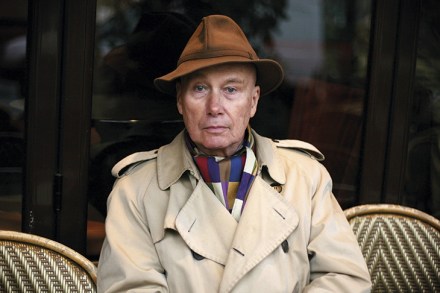
Until this book was published, Gabriel Matzneff was a respectable man. The French author may have written about his affairs with young girls and his travels to the Philippines in search of pre-pubescent boys — insert Gallic shrug here — but he still won literary prizes and enjoyed a state stipend. He was celebrated by the chattering classes, who said little when he brought different adolescent girls as his plus one to interviews. Little V, or V sometimes, was one of those girls. She had slipped in and out of his autofiction for decades. In Consent, her memoir, Vanessa Springora returns the favour and refers to him by his initial. She first met G. at a dinner party in 1986. She was 13, dragged along by her single mother who worked in publishing. He was the guest of honour.

Did Adnan Syed do it?

From our UK edition

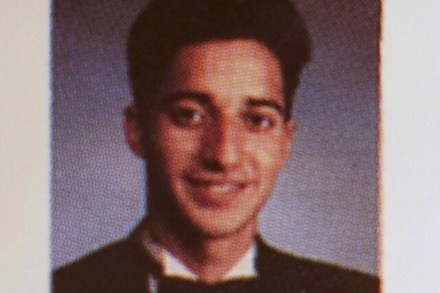
I doubt most people would have been familiar with the relatively unremarkable murder of a Baltimore high school student by her ex-boyfriend in 1999. Until Serial started a couple of months ago. Similarly, you might never have heard of Richard Hickock, Perry Smith or some murder in Kansas. Until Truman Capote. Just as he popularised true crime by making it as exciting as fiction, Sarah Koenig has done the genre a favour by making it a bit more listener-friendly. Now one and a half million are tuning in and Hae Min Lee and Adnan Syed are on BBC Radio 4 Extra. The story goes as follows. While Koenig was a journalist on the Baltimore Sun, she investigated the incompetence of a certain prosecutor Cristina Gutierrez.

Ever wondered what Joan of Arc’s breasts were like? Wonder no more

From our UK edition

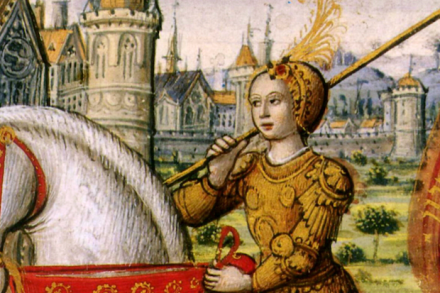
Just as she arrived a bit late to the Hundred Years War – about three quarters of the way through – Joan of Arc takes a while to appear in historian Helen Castor's biography. In fact she only turns up, with a small band of men, on page 86 in Chinon, the bolt hole of the king, when he’s apparently on the verge of quitting France because it had all got too much. Given that he was originally third in line, had been in opposition to his slightly simple father, Charles VI, le bien-aimé, and was now fighting his mother, Henry V of England, as well as the Burgundians who had had control of Paris since 1418, it’s hardly surprising that he’d had enough.

It’s about time a man won the Booker again

From our UK edition

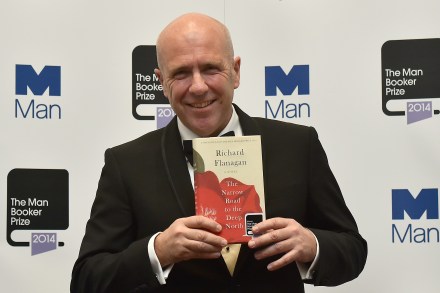
I bet fifty quid on Howard Jacobson winning the Man Booker. My original bet was actually on a ‘Yes’ vote below 40 per cent in the Scottish referendum and Bet365 then gave me £100 to bet on something else. I spent half of it on Jacobson and the other half on the Conservatives winning the last by-election. The less said on that the better. My reasoning for plumping for Jacobson made more sense. Anti-semitism is in fashion at the moment, so a novel about a mysterious holocaust seems timely; he's a tried and tested literary heavyweight, so there'd be no accusations of dumbing down; and he’s a man - and after wins from Hilary Mantel and Eleanor Catton, it felt time to redress the gender balance.

David Cronenberg’s Map to the Stars: threesomes, incest, a dead dog and whiny farts

From our UK edition

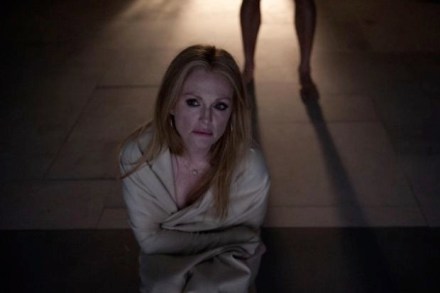
In a scene that sticks from Map to the Stars, David Cronenberg’s Grand Guignol of a Hollywood satire, Julianne Moore, playing an ageing Hollywood never-has-been, sits on the loo in front of her PA, expelling tired whiny farts from her arse, while listing – her trout pout doing its best impression of a quivering anus – the names of the laxatives and prescriptive drugs she needs as if they were old friends. Except she doesn’t have any friends; the only people she knows are casting directors who don’t call back. And it’s no wonder Havana Segrand’s bodily functions have stalled (surely a first for Cronenberg).

The book that turned me into Rod Liddle

From our UK edition

We all have what Andy Miller calls a 'List of Betterment': 50 or so books that, if read, would surely make us a better person - book clubs, gulp that Pino down, and discuss. Granted, it's tough being a bastard if your nose is always in a book. And from The Year of Reading Dangerously: How Fifty Great Books Saved My Life, a memoir of 12 months spent working through a List of Betterment, it’s difficult to picture Andy Miller ever being a bastard. He’s a thoroughly amiable sort. The reasons he decided to take drastic action with said list are simple. He explains: 'We have been working parents for three years. In that time I have read precisely one book.

Locke: a great excuse to gawp at Tom Hardy’s lovely neck

From our UK edition

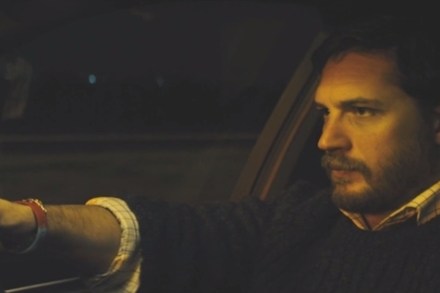
The ancients thought that the seat of female hysteria was the womb. My theory (just as credible) is that male charisma resides in the neck. The most magnetic films stars have always had impressive upper spines. Marlon Brando’s neck was so thick it was simply a continuation of his temples with only a jutting chin to betray the difference. While James Dean’s sudden bare nook between hair and leather collar is the definition of sexy vulnerability. Tom Hardy, one of the most exciting actors of the moment, is just as well endowed. His neck, playing the serial killer in Nicolas Winding Refn’s Bronson and a charming forger in Christopher Nolan’s Inception, was in constant danger of overshadowing his head (not to mention the other actors on screen).

Half of a Yellow Sun: only Freddie Forsyth and the Bodenesque tribalwear rescue this snoozefest

From our UK edition

I'm not one of those who automatically think the book's better than the film. Efficiency is a good thing and if a film can successfully cram 500 pages into two hours, it's to be applauded. We all have things to do. So, I was looking forward to watching Thandie Newton and Chiwetel Ejiofor in a refresher course on Chimamanda Ngozi Adichie's Orange Prize winner, Half of a Yellow Sun. The film, set in the late 1960s in Nigeria during the civil war, follows two twin sisters from a wealthy Igbo family. Olanna is headstrong and principled (a suitably brittle Newton) while Kainene is sassy and practical (a sexy Anika Noni Rose). The former ends up with an idealistic academic Odenigbo, played by Ejiofor, and is shuttled around Nigeria as they flee the spreading turmoil.

Stoner by John Williams – review

From our UK edition

Faced with a book as simple and true as Stoner, it’s easy to fall into the trap of intentional fallacy. It is the portrait of a quiet farm boy, who receives his Doctorate of Philosophy, teaches literature at the University of Missouri, then dies at the age of sixty-five. His colleagues hold him in no particular esteem. We know all this from the first page. This story of hard graft without recognition, gratifyingly, for literary sleuths, has parallels with the author's life and the reception of his work. John Williams' grandparents were farmers and, after completing his PhD in Missouri, he taught at the University of Denver for the following three decades.  First published in 1965, despite a glowing mention in the New Yorker, Stoner only sold about 2,000 copies.

Cult fiction – Amity and Sorrow by Peggy Riley

From our UK edition

There's an attraction, certainly, in joining a cult. Not a Sheryl Sandberg working women type cult but a good old fashioned we're all in it together wearing hemp skirts type cult. No need to chivvy the nanny, check the Blackberry or prepare for 8am meetings. Simply pack the children off to daycare (the yard) and hoe some vegetables. That's pretty much it for the day – apart from some worship and chatting to close female friends – until it’s time for hallucinogenic weeds and sex with a man who says he loves you. Amity & Sorrow, the debut novel for new imprint Tinder Press by Peggy Riley, explores the appeal of polygamous cults. It begins brutally, a crash that leaves the occupants of the car as bewildered and disorientated as the reader.

The Gamal by Ciarán Collins – review

From our UK edition

My editor told me to read this book and write this review. Six hundred words, he said. Just like the psychiatrist Dr. Quinn instructed Charlie, the protagonist of said book, to write one thousand words a day. Therapy apparently. The big reveal is exactly why Charlie needs therapy. The suspense is meant to keep you reading. Charlie is known locally in the village of Ballyronan, Cork where he lives as a 'gamal' ('a bit of God help us'). In medical speak that’s ODD. Oppositional Defiant Disorder. In practical terms it means he can't resist reminding us how little he wants to be writing what we're reading and what a waste of time this all is. I could do a Charlie at this point and threaten to copy out the telephone book rather than write.

Review – Invisible Romans, by Robert Knapp

From our UK edition

It's tempting to reduce the Roman Empire to a roll call of famous men and their infamous deeds. The Republic toppled with Caesar on the steps of the senate; freedom of speech was curtailed as brutally as Cicero's tongue; democracy became an act on Octavian assuming his stage name. However Robert Knapp, Professor Emeritus at the University of California, isn't interested in that version of history. Like Mary Beard, who pottered around Rome deciphering inscriptions for the BBC, he’s concerned with ordinary folk. His Invisible Romans range ‘from fairly wealthy to modestly well-off and downright poor, male and female, slave and free, law-abiding and outlaw’.

What’s love got to do with it? | 30 January 2013

From our UK edition

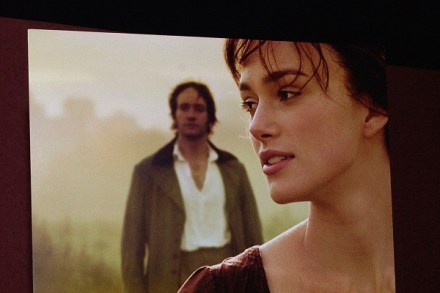
In her Times column on Monday (£), Libby Purves valiantly attempted to fit together two things that were obviously on her mind. Discussing Pride and Prejudice, which is 200 years old this week, in relation to the modern permutations of marriage was sure to be a delicate operation. Purves argued that the book's appeal lies in both its wit and the intellectual and emotional foreplay between Elizabeth and Darcy. What might seem ‘subversive’ for modern sensibilities, Purves suggests, is the fluttering of Elizabeth's heart when she sees the size of Darcy's pile. Nowadays, she argues, marriage is about ‘love’, of course. It doesn't matter about class, wealth or gender. That seems naive.

The Galactic Empire of Amazon

From our UK edition

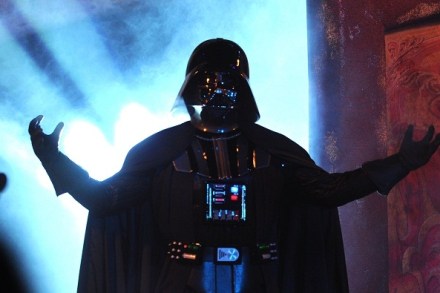
I think that most people working in publishing think they're involved in some giant role playing game. Rather than simply running around muddy fields on a Saturday, dressed in tin foil, they've decided that their nine-to-five is in the grip of a massive capitalist conspiracy. On one side, traditional publishers and retailers form the Rebel Alliance, our only hope against the Galactic Empire’s evil totalitarian rule (AKA Amazon with Apple and Google as understudies). Jeff Bezos, of course, stars as the evil and mysterious Emperor Palpatine, whose methods of deceit are infinite. Anakin Skywalker's betrayal pales alongside James Daunt's. Rather than the stomach-clenching revelation "I am your father", Daunt's shocker was "I'm going to stock the Kindle".

Jobs for the girls

From our UK edition

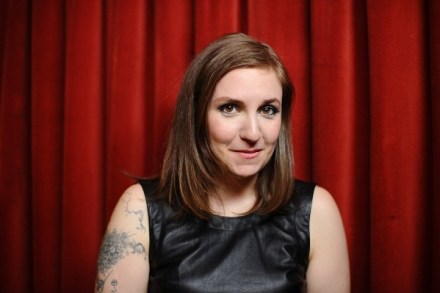
Unless you're a twenty-something year old woman, you probably have no idea who Lena Dunham is. Well you will soon. Until now Dunham's cult followers have been downloading her HBO series, Girls, illegally but at 10pm tonight viewers will get a chance to see it on UK TV. Lena Dunham is the latest pin up for those of us young women who think Caitlin Moran (a drooling fan of hers) is a little too old, a little too Wolverhampton and a little too successful to be a figurehead for our rudderless ship. Happily married since she was twenty-four, Moran isn't exactly representative. Girls seems to have hit a nerve with young women who are nearer the norm: waiting for their career to kickstart, sleeping with reluctant inappropriate men and all the while still believing the world owes them one.

Richard Millet and the nihilism of multiculturalism

From our UK edition

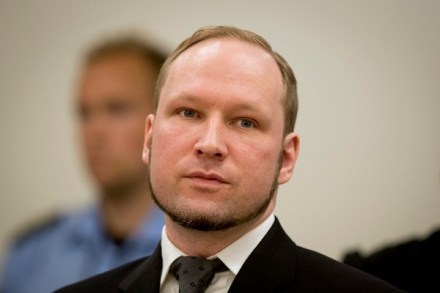
It’s the last day of banned book week but perhaps we should spare a thought for banned editors. An editor at Éditions Gallimard, who worked on Jonathan Littell’s The Kindly Ones, recently published three essays (with another house). The first, an account of his amorous adventures in Amsterdam, and the second, ‘Ghostly Language’, are, according to the author, to be kept in mind when tackling the final essay ‘Antiracism as the Literary Terror’ and the appendage, his pièce de resistance, ‘The Literary Eulogy of Anders Breivik’. That, in sum, is why Richard Millet is – for all the wrong reasons – one of the most famous essayists in France right now.

Nina Bawden dies age 87

From our UK edition

Author of classic children’s novel Carrie’s War and the Booker shortlisted Circles of Deceit, Nina Bawden has died today aged 87. Apart from writing over forty novels for adults and children, she campaigned for justice in one of her last books after the 2002 Potter’s Bar railway crash took the life of her second husband Austen Kark. Interspersed with love letters, Dear Austen tells of ‘the lamentable failure of all governments since 1945 to take proper responsibility for the country’s rail infrastructure’ and it was her attempt to do what she could ‘to put that negligence right’. Read an extract here. Bawden also read The Spectator on occasion. In January 1986 she wrote into the letters page.

Across the literary pages: Jeanette Winterson

From our UK edition

The fanfaronade for Ian McEwan's latest book Sweet Tooth, a seventies spy novel tantalisingly based on his own life and featuring a cameo from Martin Amis, has begun ahead of its publication date tomorrow. Two puff interviews (one in the Guardian and a slightly sexier one in the Daily Mail) with McEwan managed to include everything we already know about him. The first review in the Financial Times promises a 'rich and enjoyable' read. Wonderful. Given we'll be hearing quite enough about the book (which wasn't–gasp–nominated for the Booker Prize) we'll look at another big beast captured in the literary pages this week: Jeanette Winterson. The Daylight Gate is the second novel in the Hammer literary imprint series after Helen Dunmore's The Greatcoat.

Blast from the past: The Teleportation Accident reviewed

From our UK edition

He'd probably agree with Edward Gibbon's assessment of history as 'little more than the register of the crimes, follies, and misfortunes of mankind' but Ned Beauman's instinct as to why we do what we do is a lot more basic. We're motivated by sex: whether we're having it or - as is more often the case in Beauman's world - not having it. And he might have a point. Take for example Ernst Hanfstaengl who described his former buddy, a certain Adolf Hitler, as "a man who was neither fish, flesh nor fowl, neither fully homosexual nor fully heterosexual... I had formed the firm conviction that he was impotent, the repressed, masturbating type." A committed Freudian might call that motive enough.