Dea Birkett

Dea Birkett is author of Serpent in Paradise, about her time spent on Pitcairn Island.

At last, a museum of real British culture

From our UK edition

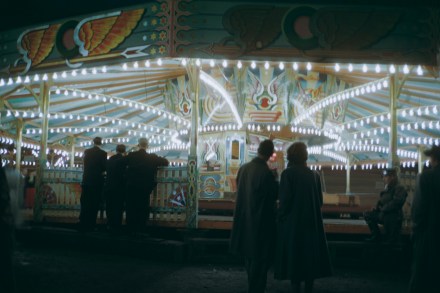
Pin yourself to the spinning wheel as the knife thrower aims his blades. Take a Northern Soul twirl on the talcum-powdered floor. Play ‘With My Little Stick of Blackpool Rock’ on George Formby’s banjolele. At last popular entertainment, from Sooty to Strictly, is being given its rightful part on the nation’s stage. These fabulous artforms, nurtured in Britain’s seaside resorts, are getting their own interactive museum. The moment you step outside, you hear the seagulls screech, smell chips cooked in the same fat since last season, taste the salt in the air Showtown museum, a neighbour to Blackpool’s iconic Tower, is an extravaganza.
Will Elon Musk’s Starlink cause a mutiny on Pitcairn?

From our UK edition

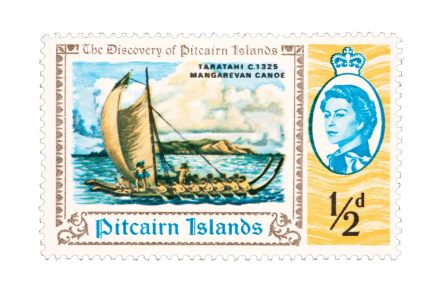
What difference does the internet make? Critics blame it for a range of ills, from social collapse and child abuse to obesity. So shouldn’t we greet with some caution and even sadness the recent announcement that Elon Musk’s Starlink satellite broadband is to reach tiny Pitcairn Island in the Pacific Ocean, home to the handful of descendants from the 1789 mutiny on the Bounty? Will the advent of Zoom calls and the ability to stream The Crown turn this idyllic tribe into socially fractured, screen-obsessed time-wasters? Is high-speed connectivity the beginning of the end for this Pacific paradise? I think not. Because this 38-strong community collapsed long before Musk was crowned the richest man in the world. It doesn’t take Starlink for paradise to turn sour.

What The Banshees of Inisherin gets wrong about Ireland

From our UK edition

It’s a rocky rural idyll on the edge of the Atlantic Ocean. The craggy sea cliffs – Europe’s highest – are swathed in the orange setting sun. Animals – sheep, cows, donkeys – gambol rather than walk on the ancient bog and jump over the babbling brooks. The sand is golden, the ocean as green as the land. Even when it’s lashing down, there’s a rainbow framing the fleet of three fishing boats in the quaint harbour. This verdant set for Martin McDonagh’s new film The Banshees of Inisherin is actually a sea-washed, beach-framed, dry-stone-walled island called Achill, off County Mayo on the West Coast of Ireland. (Inisherin literally translates as ‘Island Ireland’.) But despite its natural beauty, this island isn’t portrayed as a utopia.

Balancing act

From our UK edition

In a British circus, you will no longer find big cats, dancing bears or sea lions balancing on balls. Anne, the last elephant, paraded around the ring for the final time almost a decade ago, after a circus career lasting more than 50 years. The only wild animals that continue to perform under the big top are a fox, three camels, three raccoons, four zebra, half a dozen reindeer, a zebu, and a macaw called Rio. This menagerie travels with two small family--run traditional circuses, Circus Mondao and Peter Jolly’s Circus. Almost a million pounds have been spent on each animal, trying to get them banned from performing.

The death of the guidebook

From our UK edition

Is it the end of the road for the guidebook? Since Mariana Starke wrote Information and Directions for Travellers on the Continent in 1820, with tips on the most ‘tolerable’ inns and how to hire a horse carriage, travellers have been packing a volume of advice alongside their identity documents before setting off for foreign terrain. But last week, one of the world’s most widely read guidebook publishers, Lonely Planet, changed course. It released the first half-dozen of 35 ‘Anti-guidebooks’, declaring that the guidebook is dead. This new series – including Ireland, Portugal, Scotland and Japan – boast the familiar blue spine and two-tone globe logo that has accompanied my trips over decades.

In search of the Iliad

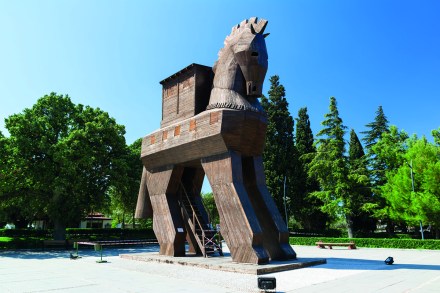
A wooden horse, a fallen hero and Helen, the most beautiful woman in the world. These three things transformed a hillock in Asia Minor into a legendary city. Few places can conjure up such stories of love and loss, homesickness and heroism, gallantry and grief as Troy. Over 3,000 years after Homer wrote in The Iliad of the 10-year siege of King Priam’s mighty citadel, I’m standing on an unremarkable patch of scrubland in northwestern Turkey. This unpromising site claims to be the real Troy — the very spot where Zeus’s daughter Helen fled to make love to Paris; where the mighty Hector, the Trojan general, fell at the hands of Greek warrior Achilles; and where the giant Trojan Horse entered the city concealing Greek warriors in its wooden belly.

troy

As circus gets serious, is all the fun of the fair lost?

From our UK edition

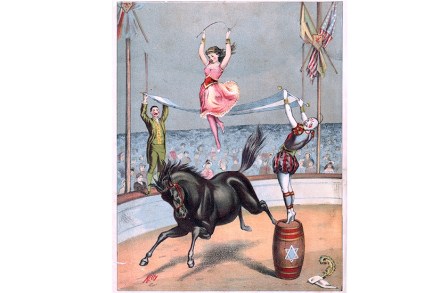
What’s so serious about a red nose? How should we analyse the ‘specific socio-historical relations’ and ‘aesthetic trends particular to geographic context’ of the circus? How can we ‘codify’ equestrian performance in the ring? With the publication of The Cambridge Companion to the Circus, this artform has tumbled out of the Big Top and into the library and lecture hall. It’s a recent arrival to lofty, learned spaces. When Vanessa Toulmin of Sheffield University, widely regarded as the world’s leading expert on circus and fairground history, first ventured into academia, she did so under the guise of an ‘early film historian’, as circus wasn’t regarded as worthy of study.

Keem Bay, Ireland: the best beach in the world

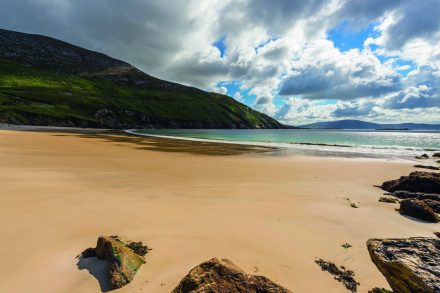
It’s a nail-biting cliff-edge ride down switchback, stomach-churning, hairpin bends. When you finally reach sea level, the Atlantic wind may be so strong and the rain so sharp that you can barely stand on the crescent of sandy shore. The distant islands of Clew Bay — 365 of them to match the days in the year — are nothing more than blistery shapes in the sea mist and wave spray. Yet this nerve-wracking mountainous route is a journey worth making. Despite — or maybe because of — being far from the madding crowd on Achill Island, off the west coast of Ireland, Mayo’s Keem Bay has been voted one of the top 12 beaches in the world, beating contenders in Fiji, Hawaii and Bermuda.

Keem

Why do we envy nomads but treat Travellers so badly?

From our UK edition

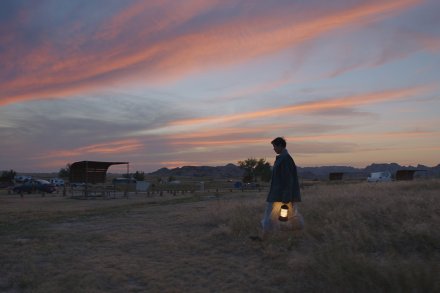
Oh for the open road! Who doesn’t want to abandon the suffocating suburbs – waking to an alarm at the same time every single morning, hearing brown envelopes pushed through the front door, filling the dishwasher, paying that damned mortgage – and head out for endless sunsets falling over infinitely empty land? Nomadland, starring Frances McDormand as a woman who leaves her home behind after she loses her husband and her job and travels around the United States in a campervan, is predicted to win Oscar for Best Picture this weekend. The film, whose large cast mainly consists of real-life nomads, has led to a flush of appreciation and enthusiasm for a less settled life.

The Florence Nightingale museum has been abandoned

From our UK edition

The Florence Nightingale Museum is unwell. Just as the government announced that Nightingale hospitals were being ‘reactivated’ to cope with the surge in coronavirus cases, the museum’s Director David Green also had something important to say. To prevent the museum becoming financially insolvent, their galleries are closing indefinitely. Any attempt to reopen in the coming months would just be ‘prolonging the inevitable’. I hope the Prime Minister is aware of this irony. He’s certainly keen to highlight the Lady with the Lamp’s legacy.

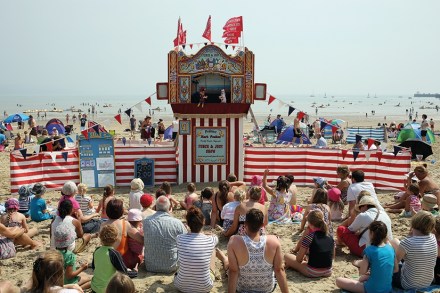
Has Covid killed off Punch and Judy?

From our UK edition

They’re one of the country’s most famous married couples. You just need to spot his colourful jester outfit and the long tassle bobbing from his sugarloaf hat, and you know it’s Mr Punch and his wife Judy. But now, with the Covid restrictions, this familiar sideshow is under threat. Mr Punch may be swinging his final blow. Punch and Judy’s red-striped puppet booth has been popping up in Weymouth, Dorset, since 1880. Mark Poulton first saw the mayhem caused by hooked-nosed Mr Punch and his giant baton in the 1970s when he was four years old. He was transfixed and decided that when he grew up he would become a professor, the title bestowed upon a booth operator.

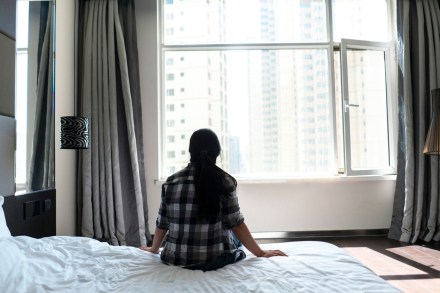
How to travel in the captivity of your home

From our UK edition

We can’t travel with ease anywhere, anymore. First it was Spain, now Luxembourg is the latest holiday spot to require a two-week quarantine on return. But there is one destination that is guaranteed to be hassle as well as quarantine free: your home. If you’re wondering how you can make your 15-foot square lounge the border of your annual vacation, there’s a guidebook to help. It was written in 1790 by young Frenchman and amateur hot-air balloonist Xavier de Maistre. Maistre had been condemned to 42 days confinement in his Turin studio flat for taking part in an illegal duel. Rather than sit on his sofa and mope, he took up his pen and wrote A Journey around My Room, a manifesto on how to travel while going nowhere.

The curious history of Britain’s last circus building

From our UK edition

Guess which theatre is the first to open to the paying public post-Covid? Not Lloyd Webber’s London Palladium, where small audiences have been invited on trials, nor any of the other West End giants. This weekend the Great Yarmouth Hippodrome — Britain’s last stand-alone circus building — is welcoming audiences to its ringside seats for the first time since March. The Hippodrome is tucked behind a row of kerchinging arcades on Great Yarmouth’s decaying, half-lit seafront. But its imposing red brick facade, built by legendary showman George Gilbert in 1903, leads into a lobby glinting with art deco-glass. Its performance space is a traditional 42ft diameter sawdust ring that can be flooded and filled with water like a pool.

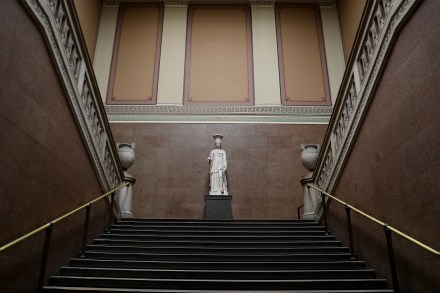
Museums should stay shut

From our UK edition

It’s been a promising week for museums. In Denmark, Germany and Australia some of their most famous galleries – Potsdam’s Museum Barberini, Sydney’s Museum of Contemporary Art, the ARoS Aarhus Art Museum – will all be open within a week. In the UK, the Department for Digital, Culture, Media and Sport established a taskforce ‘paving the way for reopening’ and Arts Council England have declared that ‘helping the sector to reopen is a priority’. The Museums Association issued a statement: ‘We believe that it is possible for many museums to reopen to the public in the first phases of lifting the current lockdown.

The faded charm of the Isle of Wight

From our UK edition

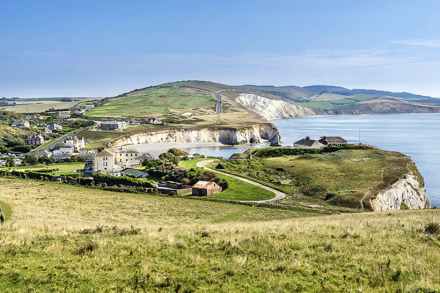
I was worried my first trip to the Isle of Wight might be too late. These days, a holiday island would surely be no more than fanciful tearooms with hardening scones and flashing arcades. But alighting from the ferry at Ryde, I not only stepped into another place, but another time. It may not be fanciful or flashy, but the Isle of Wight has a faded charm, in the white-painted hotel fronts along the esplanade, the over-manicured patches of public gardens, and a pier without any fruit machines, but with a railway running all the way along it. I travelled around this 1950s throwback in a futuristic fashion — by electric bike — soaring up hills as if mere molehills. I’d never been on one before, and they go quite fast with very little effort.

Why I’m sick of politics being described as a circus

From our UK edition

Jon Sopel has a new book out this month – A Year at the Circus. But the BBC’s North America editor hasn’t spent the last 12 months taming roaring lions in a sawdust ring or swinging on a trapeze wearing a skin-tight sparkly leotard. He’s been covering Trump’s presidency. And the ‘circus’ he refers to is the chaos and infighting inside the Oval Office. The book’s jacket shows a picture of the White House with a red and white striped circus tent perched over the stucco roof railings. ‘At the heart of Washington, there is a circus. It's raucous, noisy and full of clowns,’ Sopel declares. This distinguished member of the White House Press Corp is not alone as a political commentator in using circus to describe incompetence.

Fool’s paradise

From our UK edition

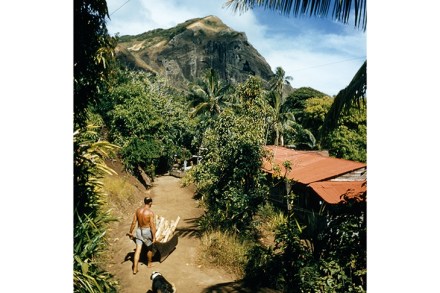
Islands have a special appeal. We imagine that on an island we’ll somehow ‘get away from it all’. In the era of Brexit and climate concerns, Pitcairn Island in the Pacific, more than 3,000 miles from the nearest landmass, is flooded with requests from people hoping to settle there. I would advise them to think again. I spent several months living on Pitcairn — a mile-by-mile-and-a-half volcanic rock battered by a hostile ocean, home to a handful of descendants from the Bounty mutineers and the Tahitians they took with them. But I did not, as I’d hoped, discover a self-reliant paradise. What my time on Pitcairn taught me is that islands are no Edens.

A circus film with no circus

From our UK edition

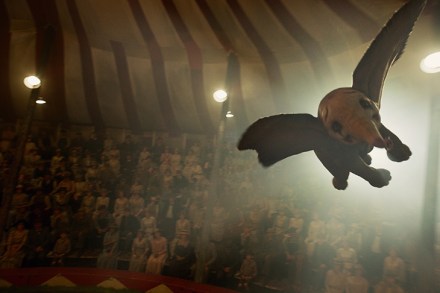
Dumbo is an elephant we can’t forget. More than 70 years since Disney’s 1941 film, the big-eared baby is still the most famous pachyderm on the planet. Director Tim Burton has dared to enter the ring with this iconic grey beast and remake the Disney classic not as a cartoon, but as live action. In his 2019 Dumbo, there are two competing circuses — a traditional, down-on-its-luck, tented American circus run by ringmaster Max Medici (Danny DeVito) that thunders across America by rail and the huge, sinister theme park Dreamland, run by the avaricious, unprincipled and flamboyant V. A. Vandevere (Michael Keaton), whose character bears a passing resemblance to Trump, not least the endlessly played with and thinning strawberry-blonde hair.

Doing it for themselves

From our UK edition

They cut virgin paths through tropical forests, paddled dugout canoes over West African rapids, sailed along the Yangtze in a sampan, climbed the Rocky Mountains with a gun-toting guide, galloped across the Iraqi desert in search of sheikhs, slept under the stars and ate a lot of snake. It’s easy to be seduced by the exploits of the Victorian women travellers. Broadcaster Mariella Frostrup pays homage to ‘their courage, curiosity and pioneering spirit’ in her new book, Wild Women and Their Amazing Adventures Over Land, Sea and Air, a collection of 50 pieces of travel writing by women. Caryl Churchill’s Top Girls, now revived by the National Theatre in London, features the 19th-century traveller Isabella Bird in the cast of celebrated proto-feminists.

Big cats and acrobats

From our UK edition

We’re celebrating 250 years of circus this year. In 1768, the retired cavalryman and entrepreneur Philip Astley, together with his trick-rider wife Patty Jones (whose act was to gallop around the ring smothered in a swarm of bees) took a piece of rope, laid it in a circle on a piece of marshy land at London’s South Bank, and filled it with astonishing acts — tumblers, acrobats, jugglers, clowns. This was the very first circus. Every circus, anywhere in the world, began at that moment. The extraordinary new art form — a collection of street acts and horse tricks, infused with spectacle and risk and set in a circle — quickly trotted off around the world. It first sailed to Dublin, then spread throughout Europe and over to America, India and Australia.