Caroline Crampton

Kate Andrews, Mary Wakefield and Caroline Crampton

From our UK edition

19 min listen

On this week's episode, Kate Andrews argues that the government's social care reform plans simply don't add up (00:55). Mary Wakefield makes the case for church doors to reopen (06:55) and Caroline Crampton reviews Tom Chivers's new book, London Clay (13:25).

The watery life of the capital

From our UK edition

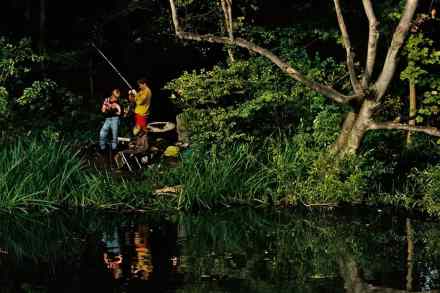
To write about London and its rivers is to enter a crowded literary field. Many aspects of watery life in the capital have been documented for public consumption over the past 150 years, from Hilaire Belloc’s lament for the river’s lost monasteries in The Historic Thames to Peter Ackroyd’s doorstop, London: A Biography. More recently, it is previously unremarked everyday stories which have found a home on many publishers’ lists. The practice of mudlarking especially of sifting objects from the river’s mud has held readers in thrall. Sometimes it sounds as though the Thames foreshore at low tide must be as busy as a King’s Cross platform during a pre-pandemic rush hour.

She didn’t go quietly: Caroline Norton’s campaign for married women’s rights

From our UK edition

When Caroline Sheridan married George Chapple Norton in 1827 she ceased to exist. According to the legal status quo, as a wife she no longer had any rights separate to her husband. He could abuse her, claim her work as his own, spend her earnings and prevent her from seeing their children — and still be on the right side of the law. The Case of the Married Woman is the third book in Antonia Fraser’s unofficial trilogy about the major legal upheavals of the 19th century. The previous two volumes have dealt with the Roman Catholic Relief Act of 1829 and the Reform Act of 1832 — both turning points in the understanding of individual rights.

One man’s rubbish is another man’s treasure

From our UK edition

All it takes to turn a cast-off into a prized possession can be a bit of imagination. To a passerby, a bookcase left on the pavement might be perfect for that impossible-to-furnish alcove. An empty bottle, once the waves have worn it smooth, could become a precious jewel for a beachcomber. In an instant a bored child will fish a piece of cardboard from the bin and transform it into a rocket, raft or portal to another dimension. One man’s rubbish, as we know, is another man’s treasure. The subject is explored in Rag and Bone by the photographer Lisa Woollett, who has a personal connection with discards. Her grandfather was a dustman and her great-grandfather a professional scavenger on the Thames foreshore.

A late winged victory

From our UK edition

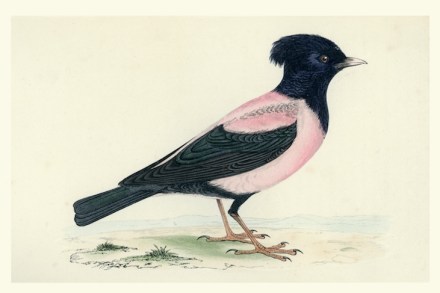
At first glance, the 17th-century natural historian Francis Willughby is an ideal subject for a biography. He lived in interesting times, as the adage goes. He was born in 1635, seven years before the start of the English civil war, and after a youth spent under Cromwell’s rule, came of age as the monarchy was restored. He was a landowner, and travelled extensively in Europe. Best of all, he mixed with many of the celebrated minds of his time. As an original member of what became the Royal Society, Willughby included in his circle Sir Christopher Wren, John Evelyn, Robert Hooke and John Wilkins. Why, then, has his life never been written until now?